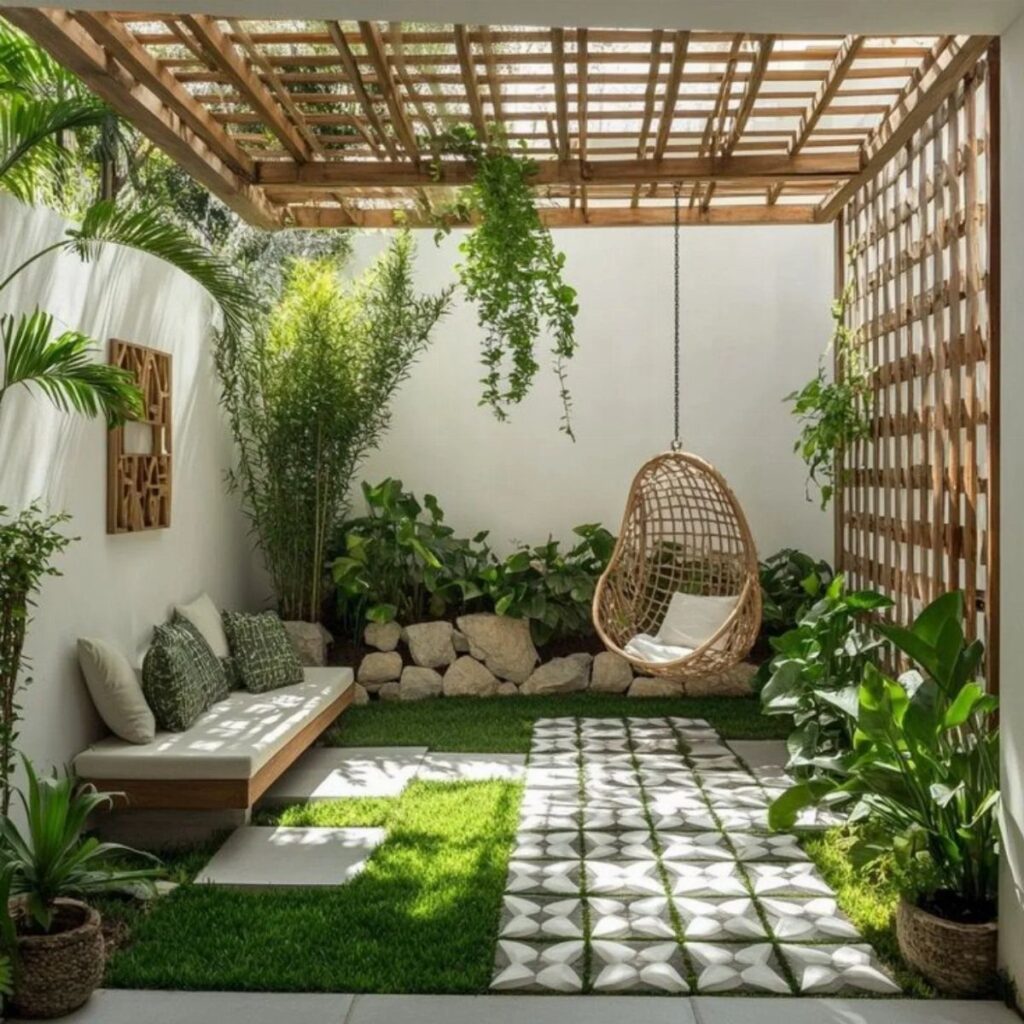
These ideas run from a scatter of microgreen seed on a windowsill to concrete raised beds that do not move once poured, which means the first thing to settle is how much of your weekend you are willing to give and whether you need the result to travel with you.
Projects that ask only a Saturday morning still deliver sound, living green; the ones that demand a full season reward patience with structure that lasts.
The proof is in the materials named: a lattice shell-shaped planter, terracotta you can lift yourself, and a submersible pump you replace before August, because stores move on to fall stock.
[link-whisper-related-posts]1. Container Planting
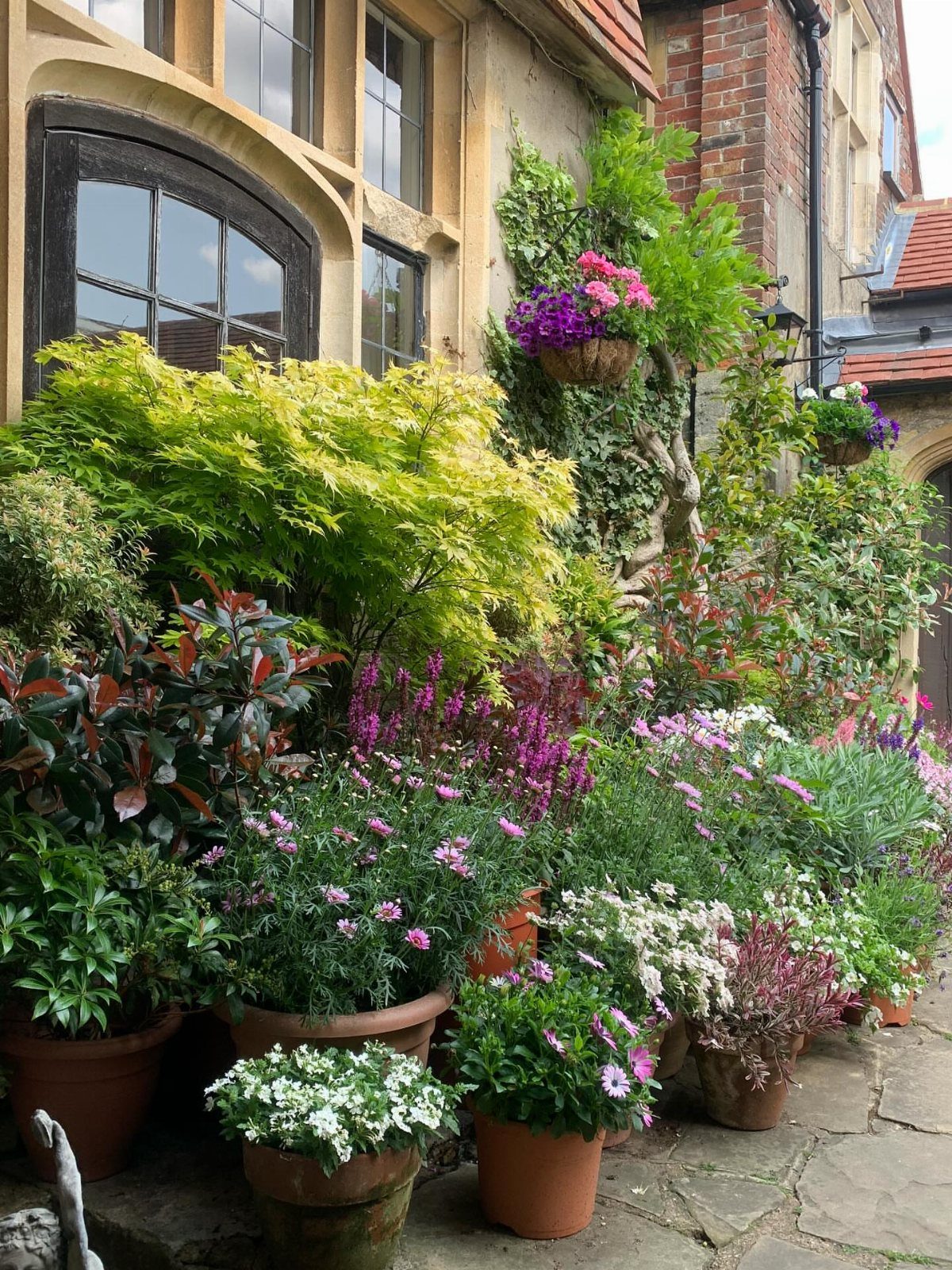
Clustering containers against a wall turns any edge into planting space without tearing up ground. I check drainage first: every pot needs a hole, and a saucer or feet to keep stone or wood underneath from staining.
The mix of heights in this setup, from ground-level bowls to elevated urns, matters more than matching the pots themselves.
I would start with one large ceramic planter as an anchor and build around it with smaller terracotta or resin pieces that I can lift myself when the season ends.

Elegant, Glazed Design – Features the stylish look of ceramic with a glossy finish and horizontal brush lines that enhance your plant’s natural beauty; available in bold, vibrant colors to suit any decor.

High-Quality PE Material with Drainage Hole: Crafted from durable and flexible PE material, these grow bags are built to withstand outdoor conditions without cracking. The bottom drainage hole provides essential airflow to roots and prevent overwatering and root rot, ensuring your plants thrive in a well-aerated environment.
2. Wall Planters
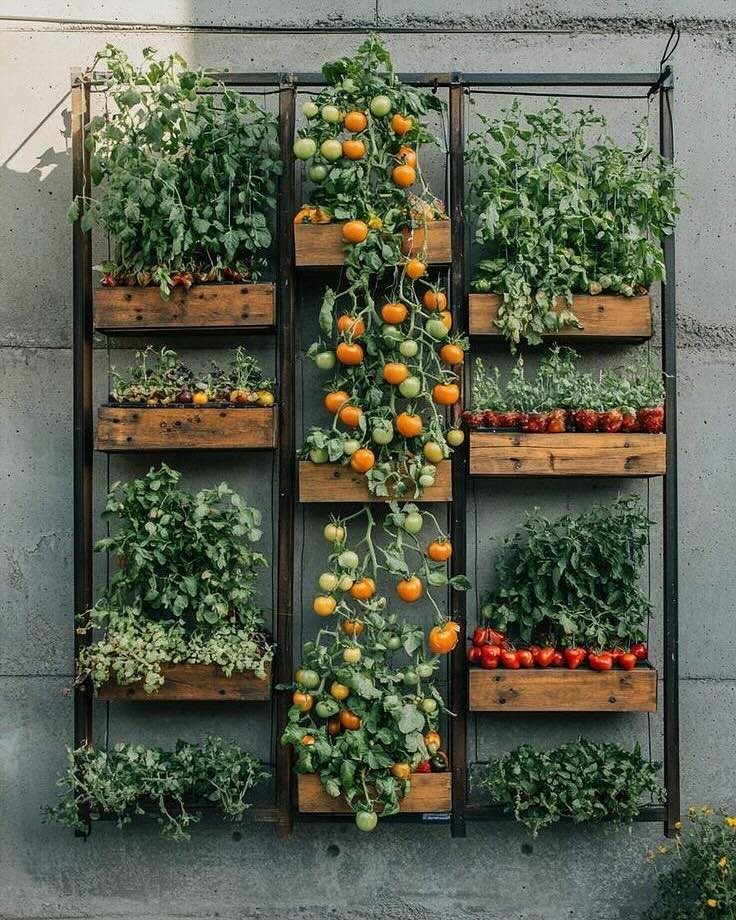
A metal frame with individual wooden boxes lets you bolt a garden to concrete or brick that has no soil to offer.
The boxes I see here are shallow, which suits herbs and determinate tomatoes over deep-rooted peppers; I would measure my wall space, then decide whether I need a full-height span or a shorter one that I can reach without a step stool.
Pressure-treated lumber holds up outdoors, though I would line the interior with landscape fabric to keep soil contact minimal and extend the box life another season or two.

VERSATILE WALL DECOR: Perfect for flowers, herbs, succulents or faux greenery. Ideal for indoor walls, balconies, patios, kitchens, or entryways.

This contemporary set of half-moon stoneware planters features an intricately embossed hatch design
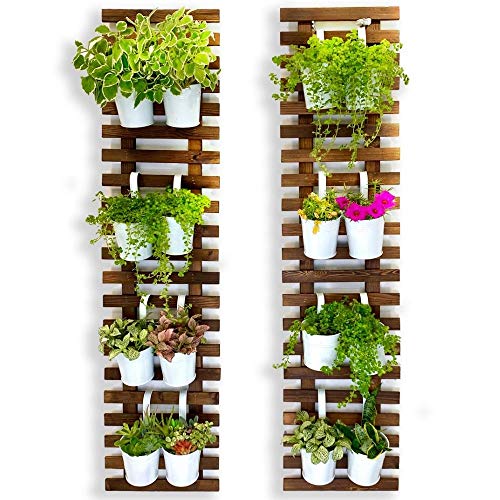
29x120cm (11.4" x 47.2") x 2 pcs. Plants, flowers, pots, decorations are NOT included
3. Hanging Baskets
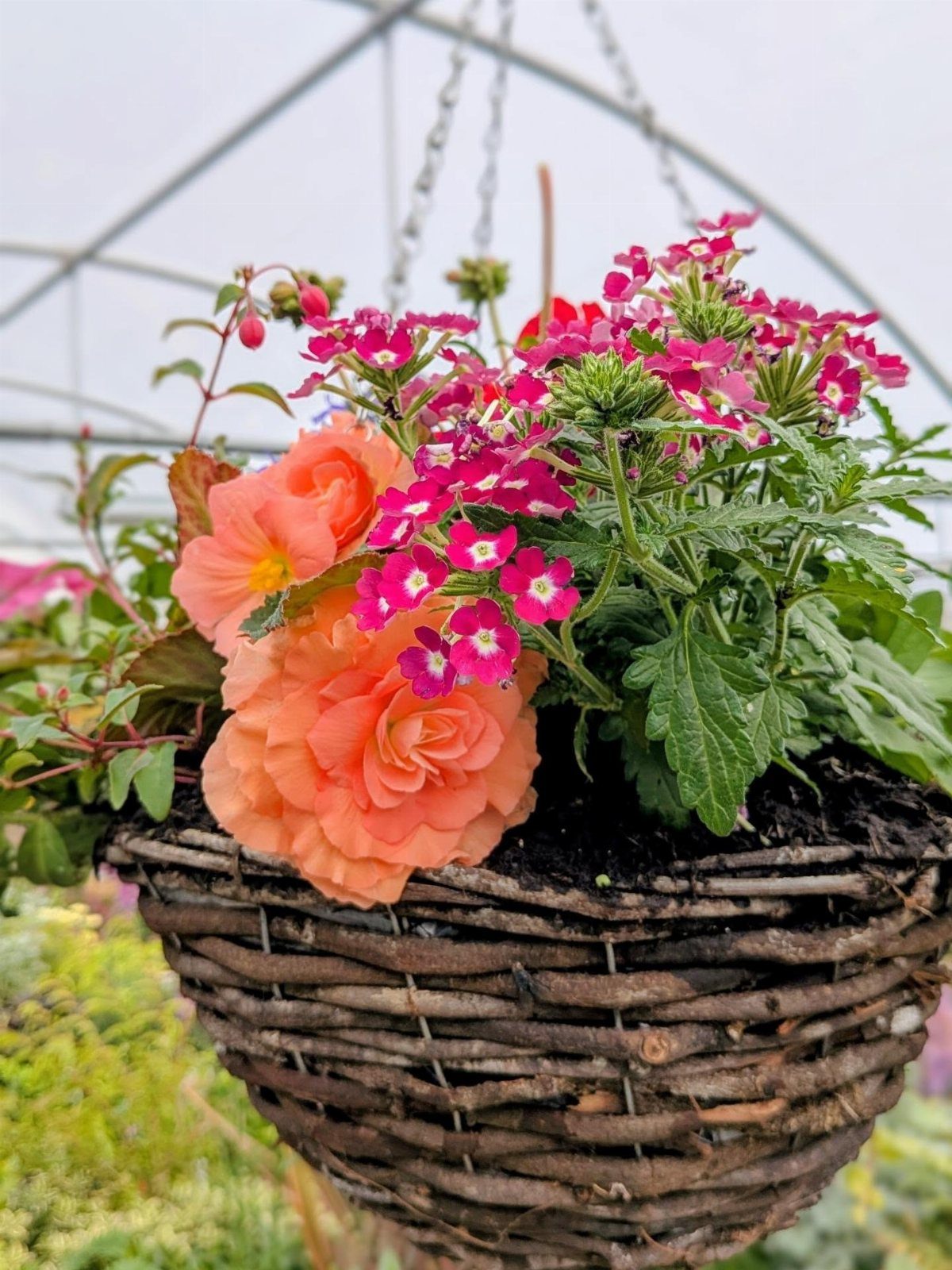
Hanging baskets draw the eye up and free every surface below for something else.
The twig weave on this one is decorative, but I would check the chain hardware before I buy: S-hooks rust, and a basket at full water weight needs a ceiling joist or a bracket rated for outdoor use at minimum.
I plant trailing verbena at the rim so it cascades over the sides early, then tuck begonias deeper where their blooms stay upright and catch light from below.

🌿HIGH-MATERIAL&QUALITY:Fake hanging plants made of high-quality materials offers outstanding durability and realistic appearance, and is UV resistant and waterproof, so you can hanging plants artificial decor with confidence.
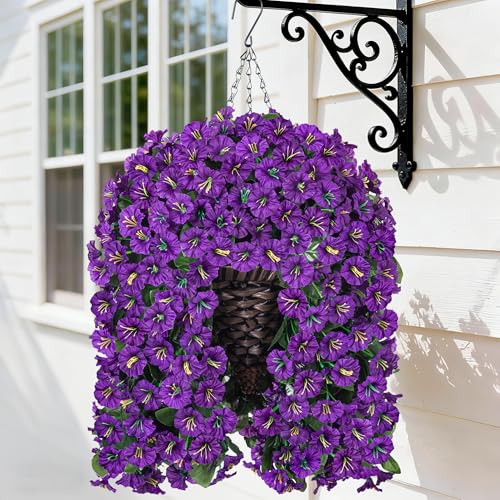
BEAUTIFUL HANGING FLOWERS: HyeFlora artificial hanging orchid flower has rich blossom and leaves filled in a handmade cone shape rattan basket.

Quantity: Package includes 4 pcs Artificial Hanging Succulents Faux Burro's Tail Picks Trailing String of Pearls Succulent Sprays. Each artificial burro's tail pick has 3 long trailing stems and two short trailing stems, presenting a lush and vibrant look.
4. Divide Spaces
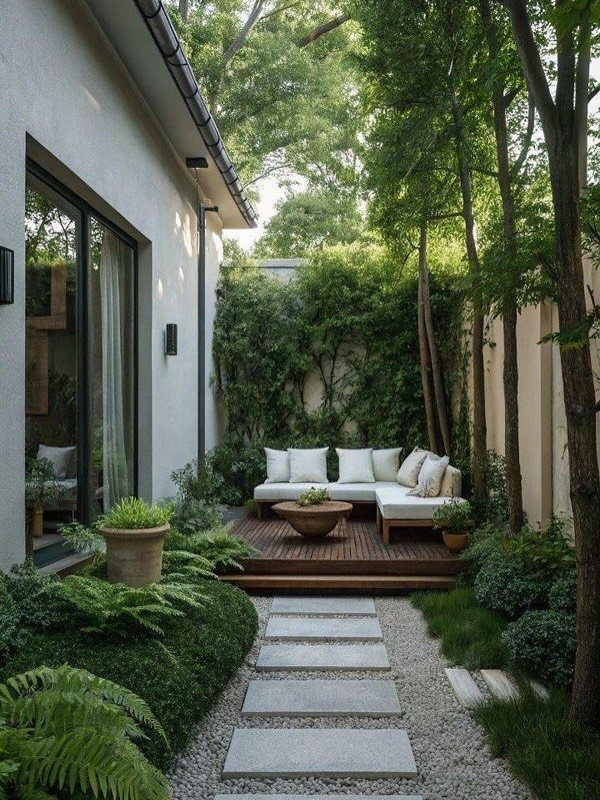
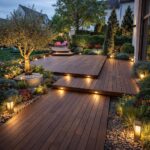
A path of stone over gravel that ends at a raised deck gives this narrow yard two rooms where there was one corridor.
The deck adds a small lift in height and a change of flooring, which is enough to mark the shift without a hedge or fence that would close the space in.
I would keep the planting continuous across both sides so the transition feels intentional, not chopped up; the gravel itself needs a steel or brick edge if I want it crisp after a season of foot traffic.

Heavy Duty Metal Construction: Black rectangular planter is made of thick steel, sturdy and not easy to deform, built to withstand all outdoor elements for long-term use
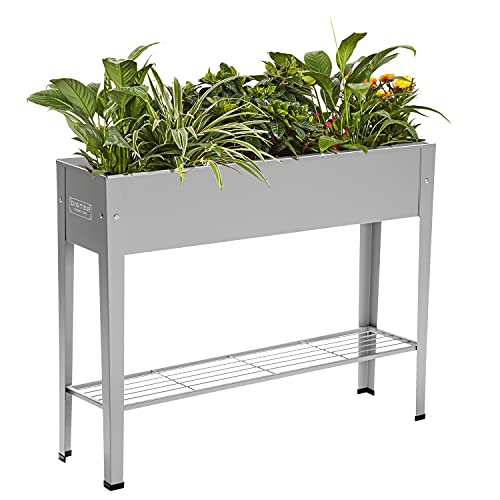
Ergonomic: The raised planter box with legs eliminates the need for excessive bending, making gardening easier.

Durable Steel Frame: Constructed of heavy duty steel frame with anti-rusty coating for long time outdoor indoor use.
5. Raised Beds
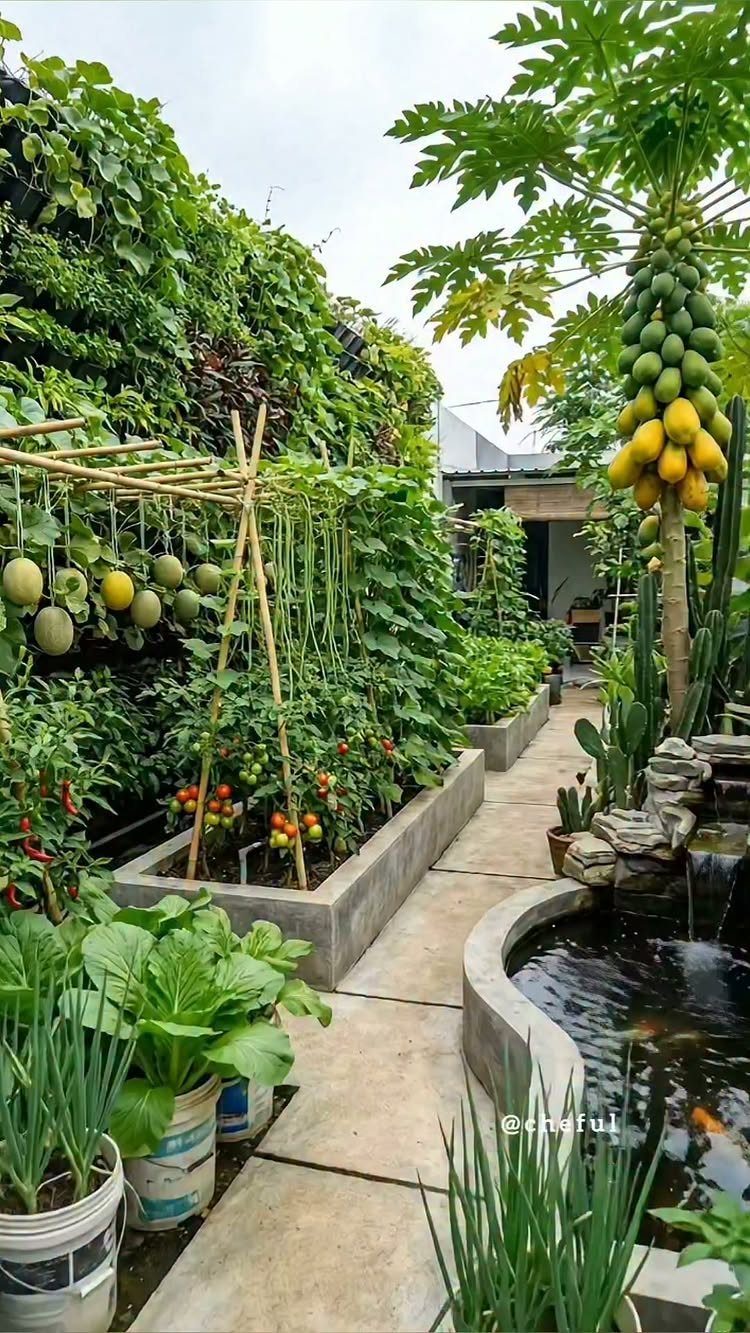
Concrete raised beds warm faster in spring and block invading roots better than timber, though they cost more and do not move once poured.
The narrow footprint here, slim enough to reach the center from either side, lets me tend the bed without stepping in and compacting the soil.
A trellis at the back for melons doubles the vertical crop; I would set the posts in concrete footings if my area sees wind, because a full vine load can topple a freestanding frame.

Efficient Sump Pump: Aquastrong sump pump with 1HP powerful motor. Draining water up to 4500GPH Per Hour( 75 gallons per minute) at 5ft. Lift water up to 30ft of vertical height

Fast Water Removal with Powerful 1HP Motor: This submersible water pump delivers up to 4755GPH, quickly draining water from pools, hot tubs, and flooded basements.

Specs & Dimensions: 4.33*3.5*4.1 inches; Max flow rate: 800 GPH (3000L/H); Max lift height: up to 10 ft.; Wattage: 50W; Voltage: 110-120V
6. Microgreens
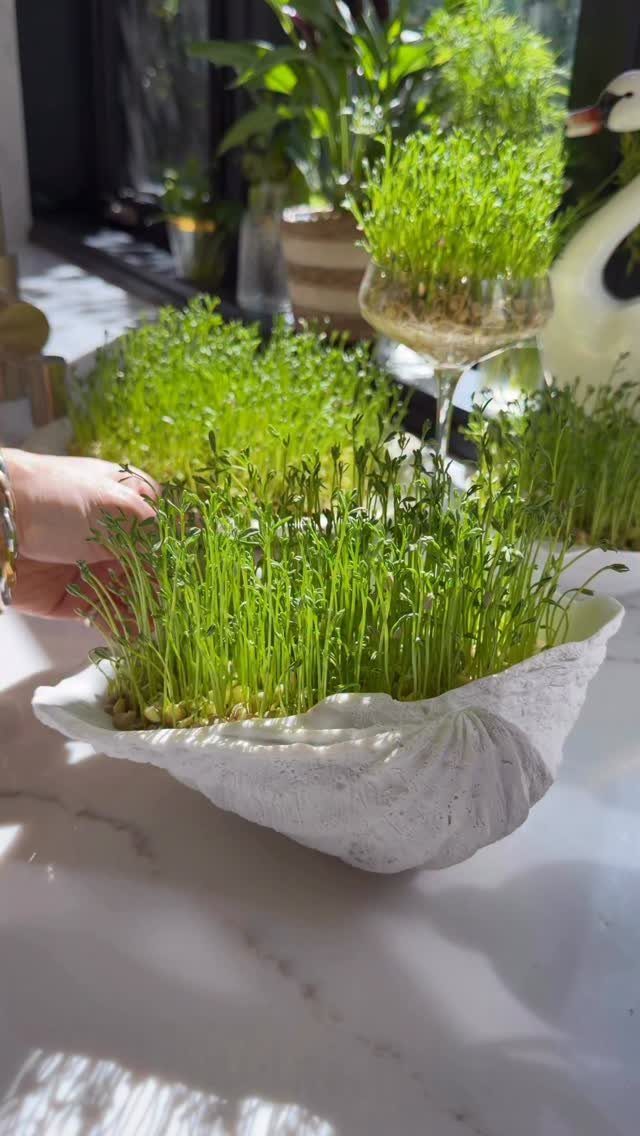
Microgreens fit on a windowsill, need no outdoor season, and harvest fast from a scatter of seed, often before a full week is out.
The shell-shaped planter is charming, but any shallow dish with drainage handles the job; I would start with lentils or broccoli seed, keeping them dark and damp under a paper towel until sprouts stand about an inch tall.
One grower I follow removes the cover then and moves the tray to light so stems stretch upright instead of leaning.
No grow light is necessary if a south-facing sill gets a stretch of direct sun through the middle of the day.

【3 Sizes Clear Orchid Pots】Orchid pots for repotting set come in packs of 6 and are available in 3 sizes(4.3", 5.5", 6.1"). Various sizes and sufficient quantities to suit different growing periods of orchids, and is ideal for growing and transplanting orchids

Plant Pots / Flower Pots - Invest in a beautiful garden to harvest the seeds of love, with the set of pots for indoor or outdoor plants
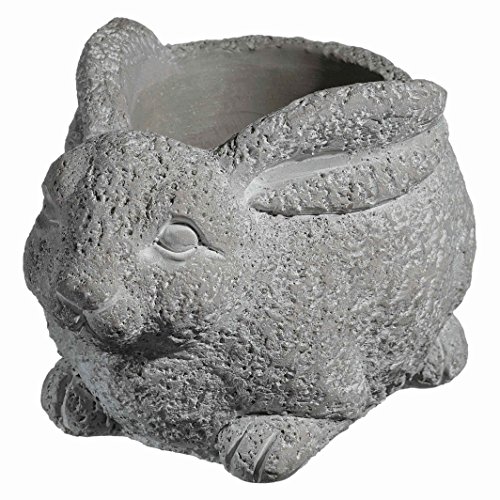
CONTEMPORARY DESIGN: This animal plant pot adds an adorable touch to any space. You can use this cute planter as a display piece indoors on your deck, desk, or table or outdoors on your porch or patio.
7. Small Fountains
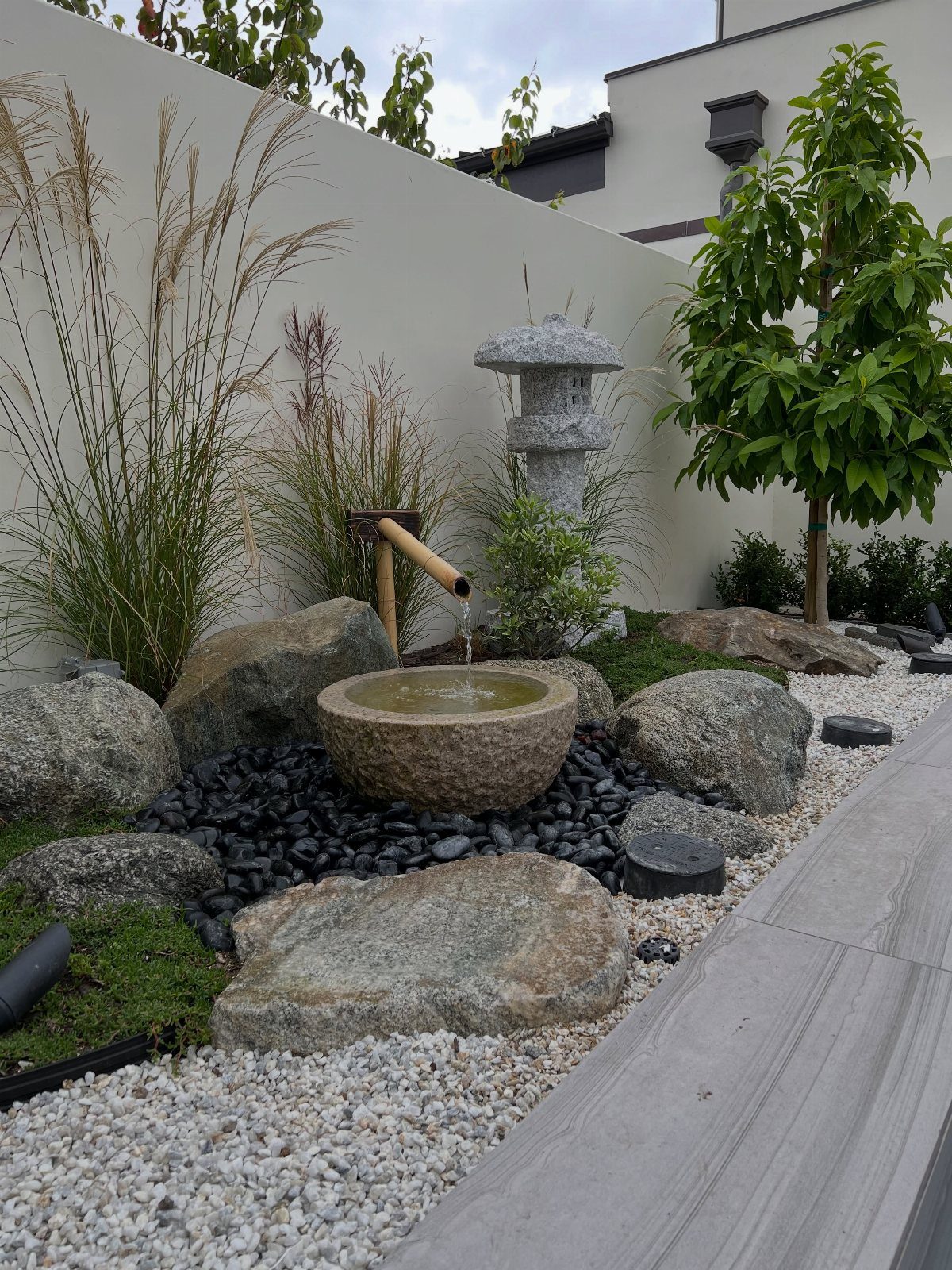
I would place mine where I already sit, not where I hope to; the sound carries but the visual anchor needs a doorway, a bench, or a path crossing to justify the space it takes.
A round basin collects less debris than a wide shallow one, and a small submersible pump pulls easier from depth than from a saucer.
I keep a spare pump; they fail in August when the stores have moved on to fall stock. The black pebbles around this one are smart: they hide the cord and any leaf that slips past.

【36 Pocket Vertical Garden】Features 36 individual planting pockets, allowing you to grow herbs, flowers, succulents, strawberries, vegetables, and other plants while maximizing vertical space.

2-PACK SET: 4x4x4 inch. Pick the right size for your plants to prevent unpleasant experiences and potential wastage of resources. These wood box plant decor provide a compact and versatile option for displaying your favorite plants or creating captivating centerpieces. Plants NOT included.

Innovative Space-saving Design: maximize your gardening potential with our stackable wall planter system; Each piece measures 9.45" x 5.71" x 5.51" and features two pockets, The overall dimensions are 47.5"x33"x5.5" offering ample growth space for a variety of plants; Nice for Fence Balcony Wall Decor, these vertical wall planters change limited spaces into gardens effortlessly
8. Window Boxes
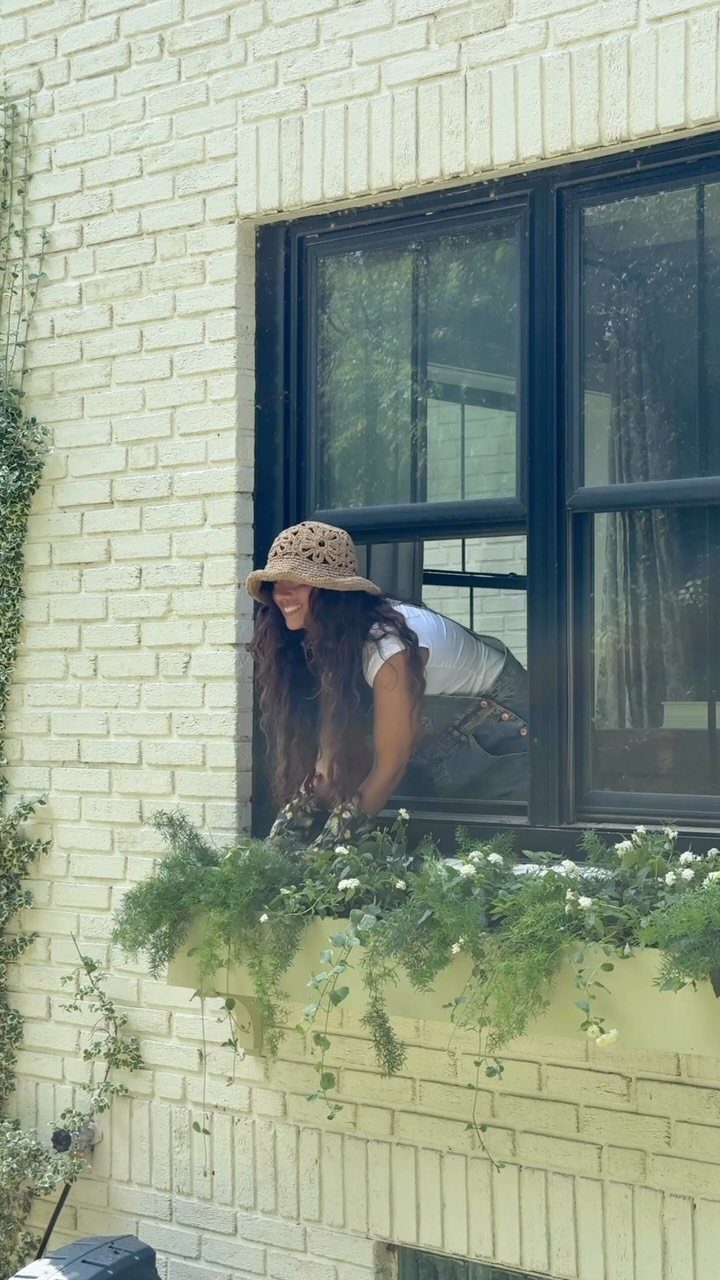
A box below the sill puts planting where none existed, as long as the brackets reach something solid.
I would check my framing before I order: vinyl siding over foam will not hold a loaded box, and even brick needs anchors rated for the weight of wet soil plus mature growth.
The black frame on this window makes the green foliage read crisp; a white box against white trim would disappear.
I line my boxes with coco fiber, which dries fast and suits herbs or annuals I plan to replace each season. A south- or west-facing exposure is non-negotiable for blooms; greens tolerate east light.

Lifelike and Vibrant - Instantly elevate your home with these 2-Pack fake pothos vines. Each vine stretches 43.3 inches with lifelike multi-green leaves and natural veining. Unlike real plants, our fake plants feature fade-resistant colors and realistic textures that blend seamlessly into any decor style - from modern apartments to rustic farmhouses. Includes realistic butterflies for an extra touch of charm.

【Package Content】:2pack of artificial hanging plants, fake ivy total length is about 3.6 feet. The artificial hanging plant has 5 forks and about 160 fake green leaves.

✅ Package Include: 2 bundles artificial bougainvillea Trailing flower Vines. Fully flowers and leaves near nature life like real flower/leaves.
9. Light-Coloured Paving
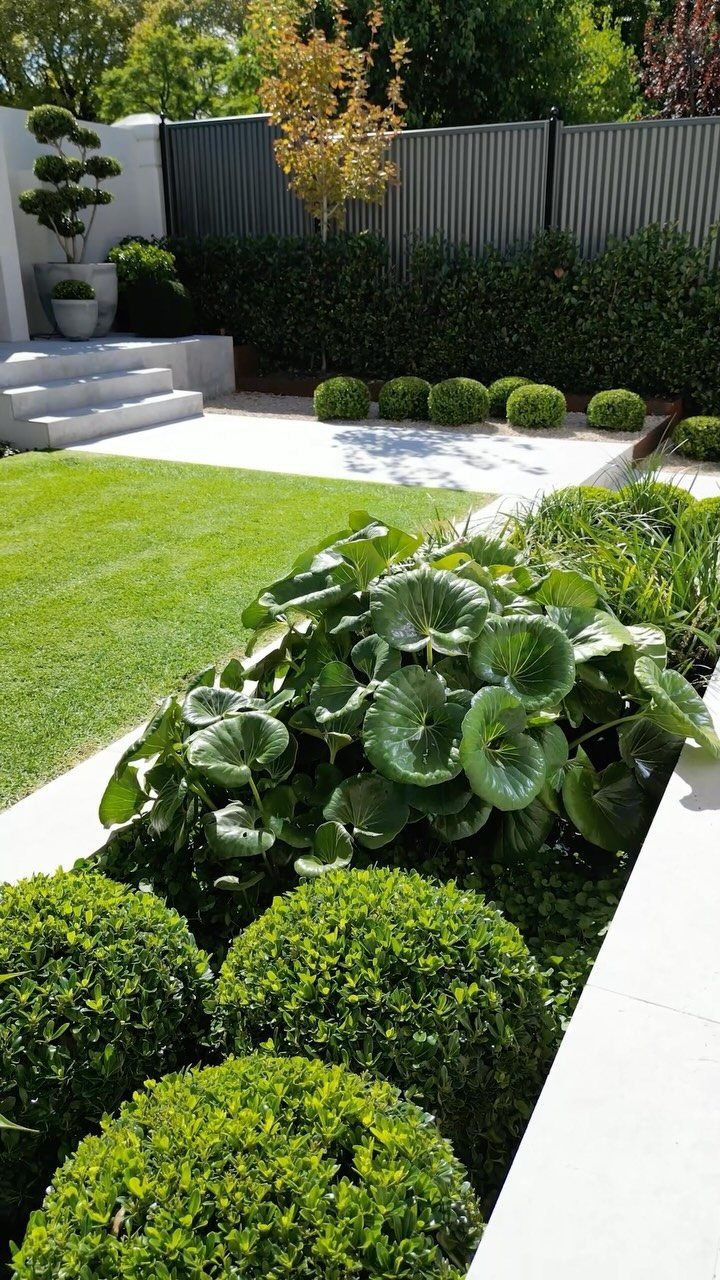
Pale stone and concrete steps bounce light around a small yard instead of swallowing it the way charcoal or red brick do.
The cost runs higher than poured concrete tinted standard gray, and pale surfaces show every leaf and footprint until the next rain.
I would choose a tone just warm enough to avoid the institutional look of pure white; the limestone here hits that middle.
A corrugated metal fence at the perimeter reads as texture rather than mass, which helps when the paving itself already carries visual weight. Sealing on a schedule keeps the color honest and stops organic stains from setting.

More suitable raised garden bed size and Volume:67"L x 20"W x10"H, 7 Cu. Ft. You can cultivate plants, like vegetables, flowers, herbs in your patio, yard, garden, and greenhouse.

✅ Robust construction - Cocoyard sleek black elevated metal planter box is crafted from heavy-duty, weather-resistant materials. Unlike flimsy plastic or rotting wood alternatives, this structural masterpiece features a premium finish built to withstand intense sun, heavy rain, and freezing winters without cracking or warping.

Raised Garden Bed: Cultivate plants like vegetables, flowers, herbs in your patio, yard, garden, and greenhouse
10. Agapanthus in a Narrow Border
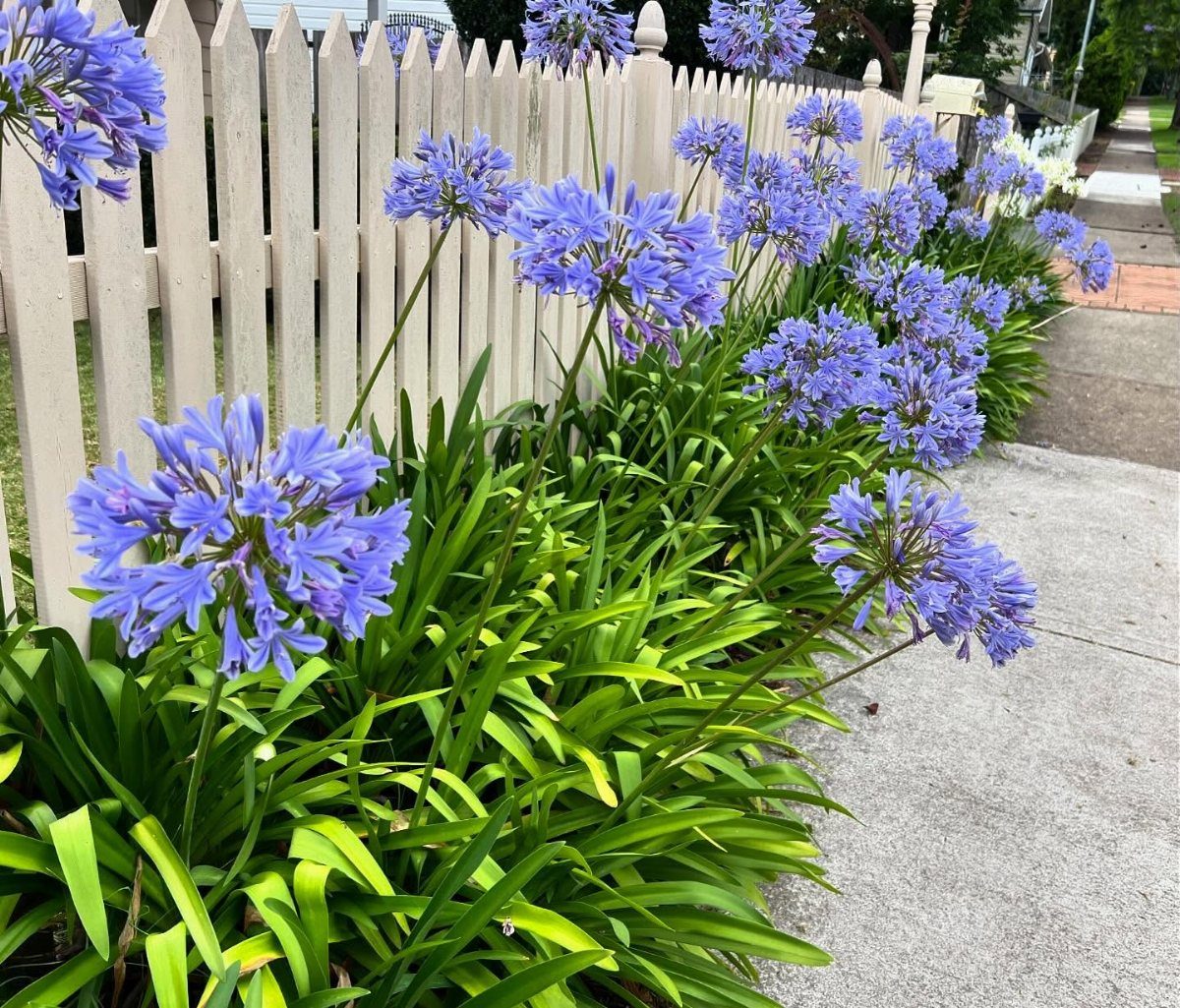
A planting strip barely wider than a boot still holds agapanthus, whose strap leaves stay vertical and whose flower heads float above them on stalks tall enough to clear a fence line.
The clumps multiply slowly, so I would space them at half their mature width and accept some soil showing for the first 2 seasons. Full sun hardens the leaves and pushes bloom; half shade gives floppy foliage and fewer flowers.
I would not mix them with spreading perennials in a bed this slim; the agapanthus roots resent competition and the border has no room for error. A white picket behind purple bloom is the classic pairing for a reason.

WATER FLOW CONTROL -- The GROWNEER water pump features a control knob to adjust the flow of water, allowing you to achieve the desired water pressure. The maximum flow rate is 550 GPH (2000 L/H). Note: It's recommended to use a residual current protection socket or circuit breaker when using outdoors
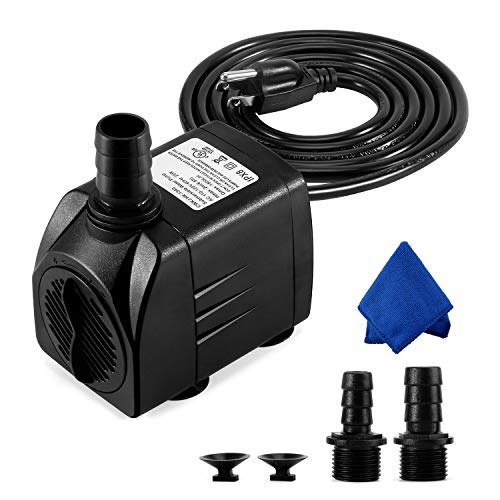
PROVIDE YOU COMFORT & QUIET ENVIROMENT--Our fountain pump’s ultra-quiet operation will let you feel that the sounds of the water pouring out of your fountain is such a relaxing and tranquil sound, and you will love sitting out on your patio watching the squirrels and birds bath and now the peaceful sounds of our fountain make it even more enjoyable.
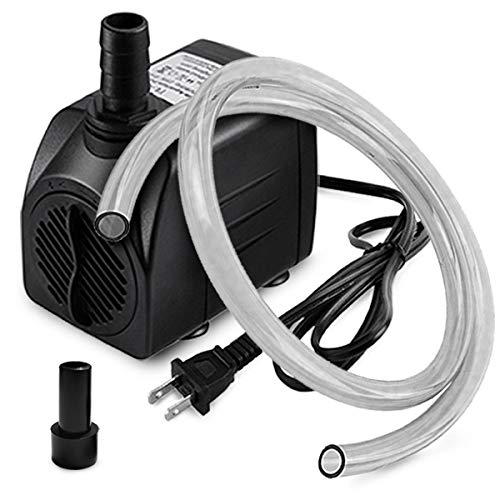
Multi Function: Pumps can help you to circulating your aquarium, and creat a nature aqua world for the fishes. Our pumps can continuously supply stable flow, a good choice for medium fish tanks, small pond, fountains, water spring artworks, garden, aquaponic, aquaculture and many more.
11. Dwarf Fruit Trees in Containers
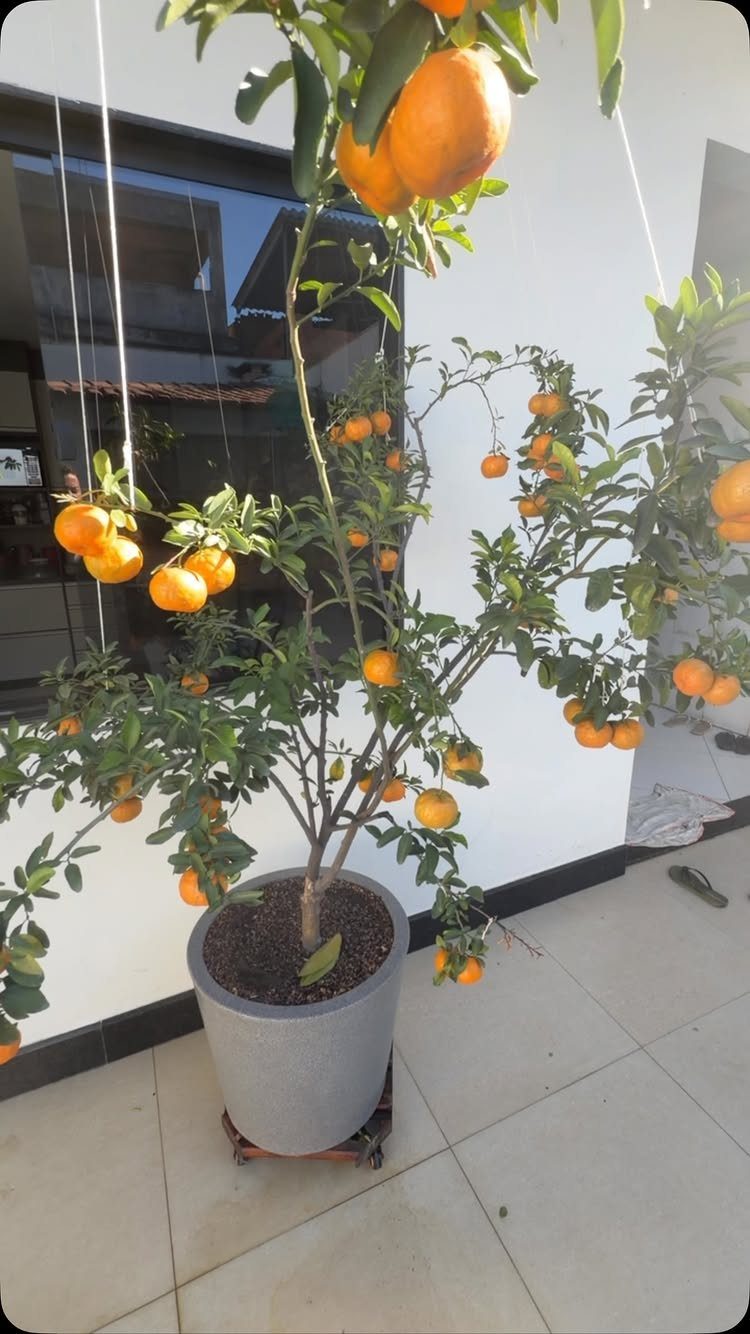
A citrus on a wheeled caddy moves for frost protection, for patio cleaning, or simply to chase the sun as the season turns.
The pot must be large enough that a full day without water does not stress the rootball; I would start with a generous container for anything older than a nursery sapling.
The weight goes somewhere, and tile or concrete handles it better than a wood deck I mean to keep dry.
I feed with a formula labeled for citrus, not a general bloom booster; the nitrogen ratio matters for fruit set and the foliage that feeds it. The caddy needs locking casters if my patio slants at all.
12. Layered Plant Heights
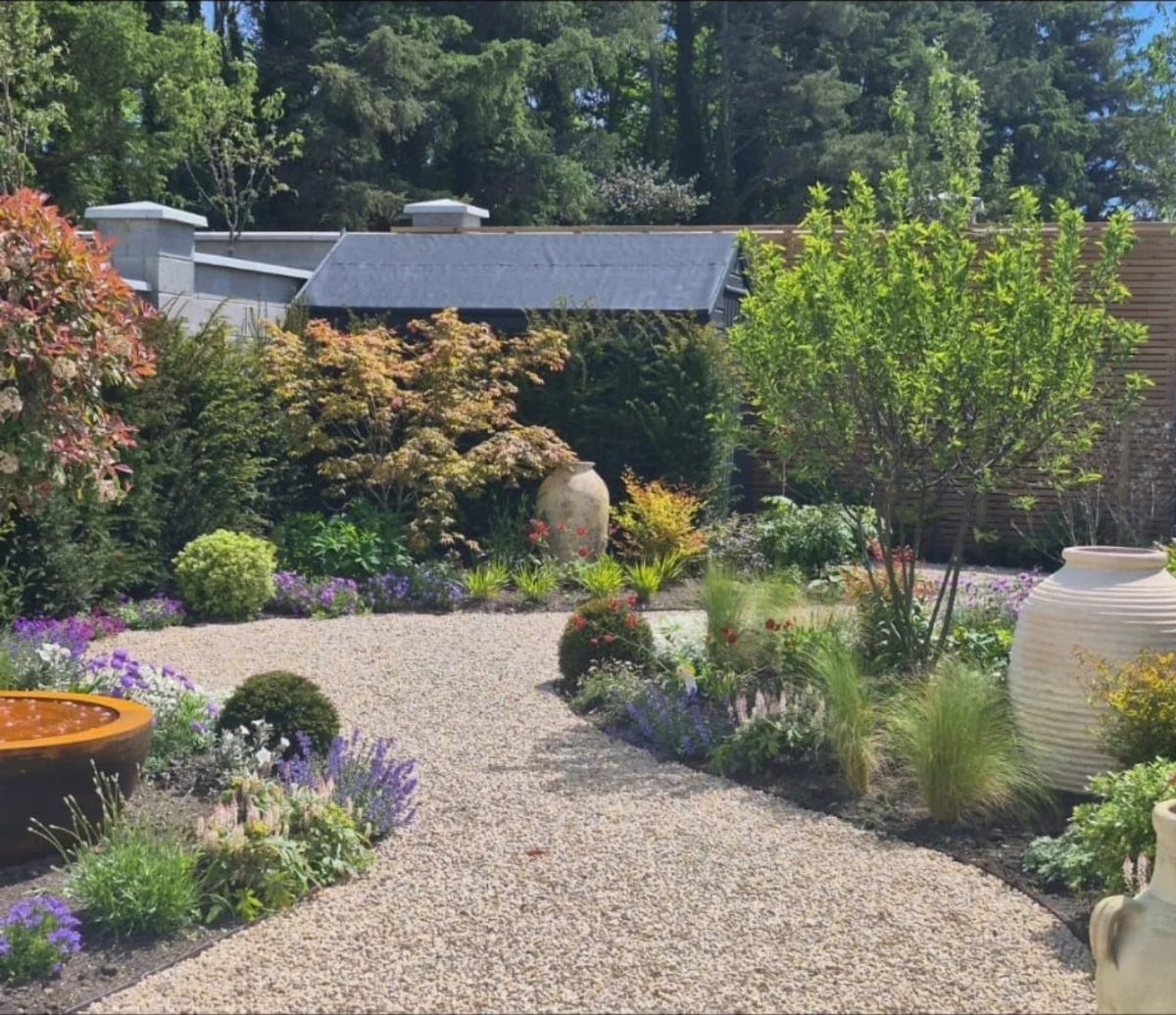
Gravel paths show the structure of a garden because nothing hides the layout; the plant heights do the work instead.
I would put my tallest element at the back or the center, depending on where the viewer stands, then step down through knee-high grass to ankle-level ground cover at the edge.
The large urns here do not hold plants; they act as sculptural mass at a height no perennial reaches in year one.
Without some evergreen or woody structure, a layered border collapses in winter; I would include at least one shrub or conifer for every three herbaceous plants so the skeleton holds.
13. Outdoor Lighting
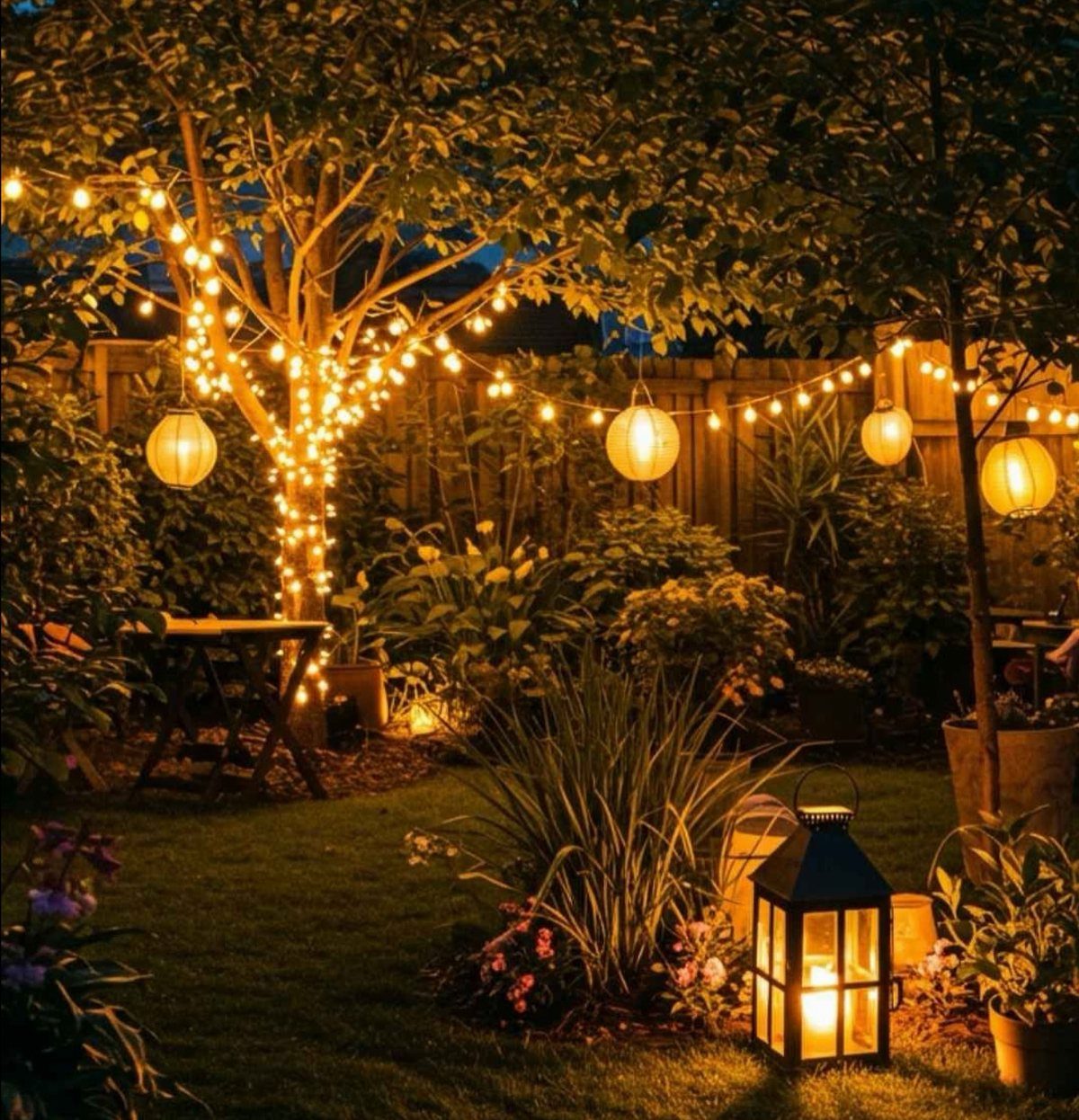
Outdoor lighting buys usable hours after sunset in a space too small to abandon at dusk.
I would start with string lights on a dimmer, not a fixed output, because paper lanterns that put out a steady glow after sunset can blind by the time the night goes quiet.
Battery candle lanterns go anywhere the cord cannot reach; I check the run time before I buy, since swapping cells every weekend is a chore I would skip in favor of rechargeables.
Cool white LEDs read harsh against foliage; 2700K warm white matches flame and keeps the garden looking borrowed from evening, not from a parking lot.
14. Use of Mirrors
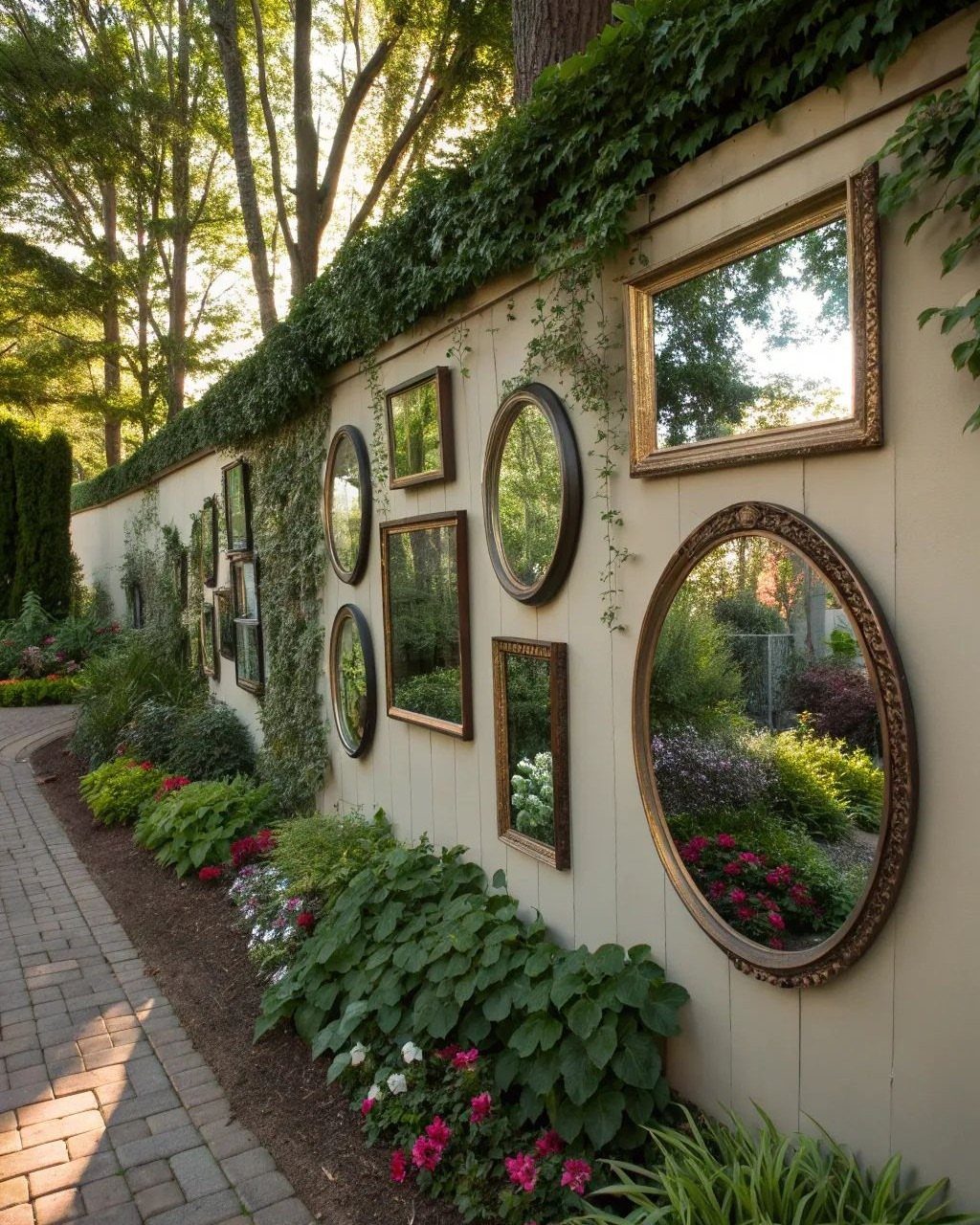
A mirror on a fence wall doubles the visual depth of a narrow garden the way a window does, except you choose what it reflects.
The mix of oval and rectangular frames in this setup breaks up the fence line better than one uniform grid, though I would keep the frames weather-sealed metal or synthetic; wood swells and the silvering behind glass fails in humidity.
Placement matters more than size: I would angle slightly downward to catch planting, not sky, since blue reads as empty space and green reads as ground continued.
"Generally, most areas are on view in small gardens, so do consider your use of materials and keep the palette simple with possibly only two to three different variations of finishes. This will create a more harmonious, balanced end result," suggests Butter.
15. Plants Along Staircases
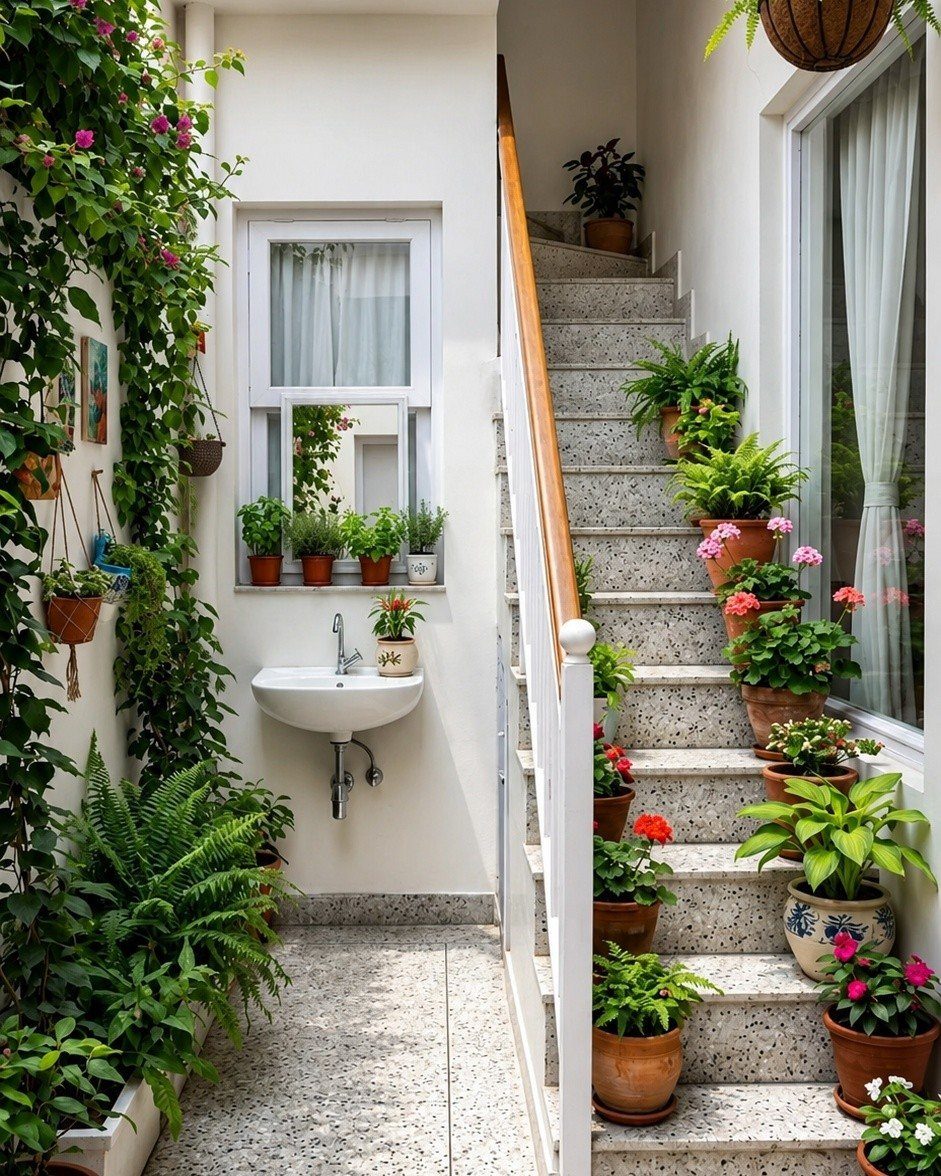
Stair risers and landings hold pots where flat ground offers none, though I would leave the treads themselves clear; a misstep carrying groceries ends the charm fast.
The varying pot sizes here step with the staircase rhythm, and the white wall behind makes each silhouette read crisp. I would cluster by water need, since a daily sprinkler on one step drowns a succulent two steps down.
16. Winding Stone Stepping Path
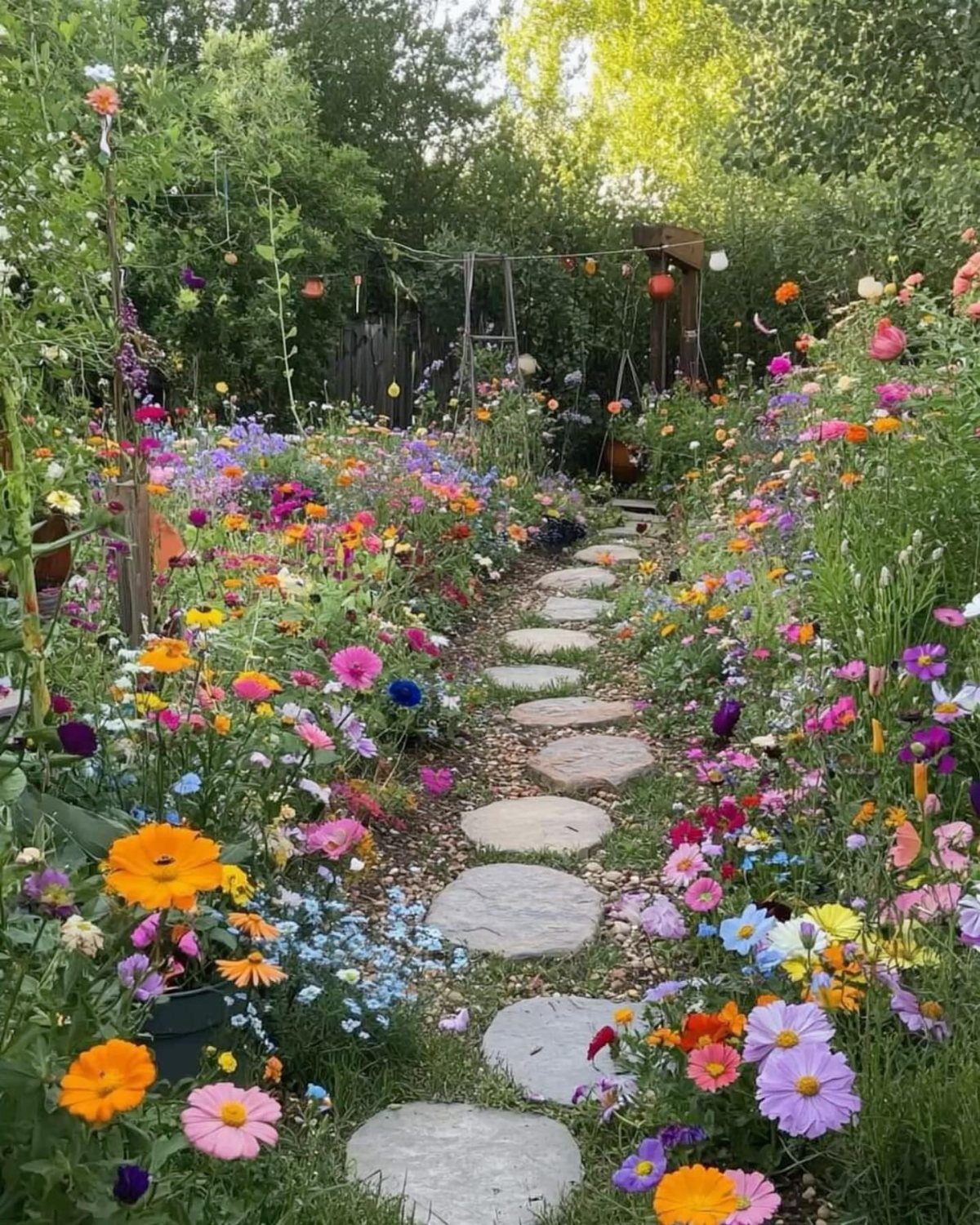
Round stepping stones set into gravel let you walk through planting without compressing the soil that feeds it; the curve slows the eye and makes a short yard feel longer than a straight run would.
I would space stone centers a comfortable stride apart for most, and set each one slightly above the gravel so water drains off and the stone stays clean underfoot.
The gravel depth needs containment, or it migrates into lawn within a season; steel or brick edging buried flush with the soil line holds it in place.
17. Vertical Hydroponic Garden Towers
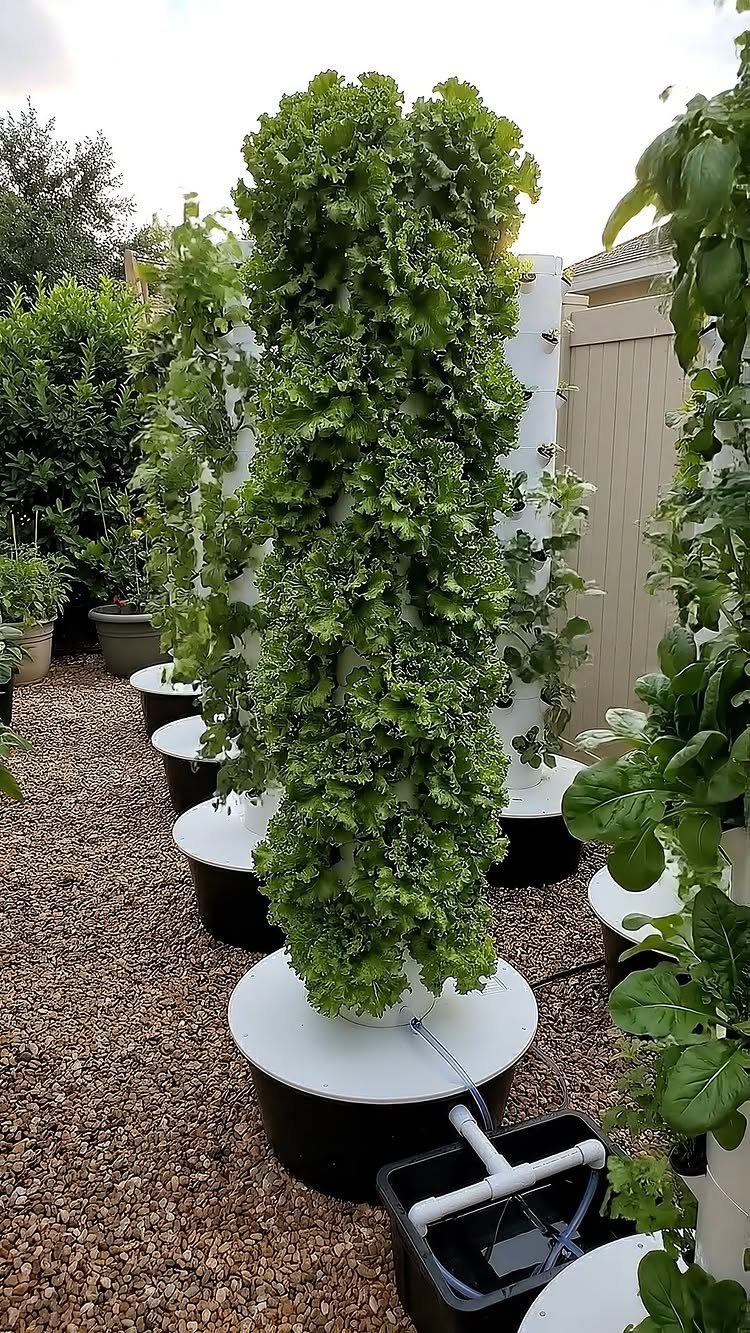
A hydroponic tower packs lettuce production into a footprint smaller than a patio chair, though the pump runs on electricity and the reservoir needs topping off every few days in summer heat.
White plastic reflects light back into the leaves and stays cooler than dark colors; the gravel pad underneath catches drips and keeps the unit stable.
I would place it where I can reach every face without circling, since towers that need maintenance from all sides waste space in a small yard. Nutrient solution is an ongoing cost, not a one-time setup.
18. Bistro Patio with Artificial Turf
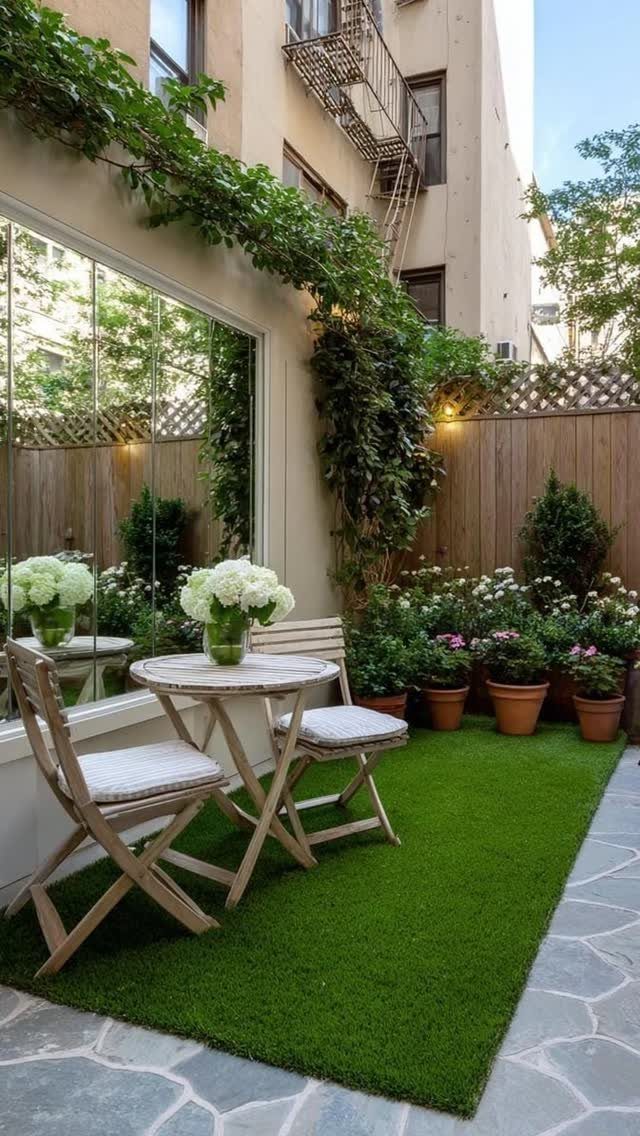
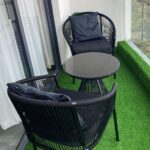
A patch of artificial turf under a bistro set gives the look of lawn without the mower, the watering, or the mud; I would choose a pile height short enough that chair legs do not wobble and long enough to look like something growing.
The turf base needs compaction and a slight slope for rain, or puddles form where the low spot sits.
Potted plants along the fence keep the perimeter alive and shifting with the season, since the turf itself stays fixed and identical in January as in June.
A mirror on the fence wall, as visible here, pushes the boundary back visually; I would place it to reflect the potted greens, not the empty sky above them.
19. Hanging Vine Canopy
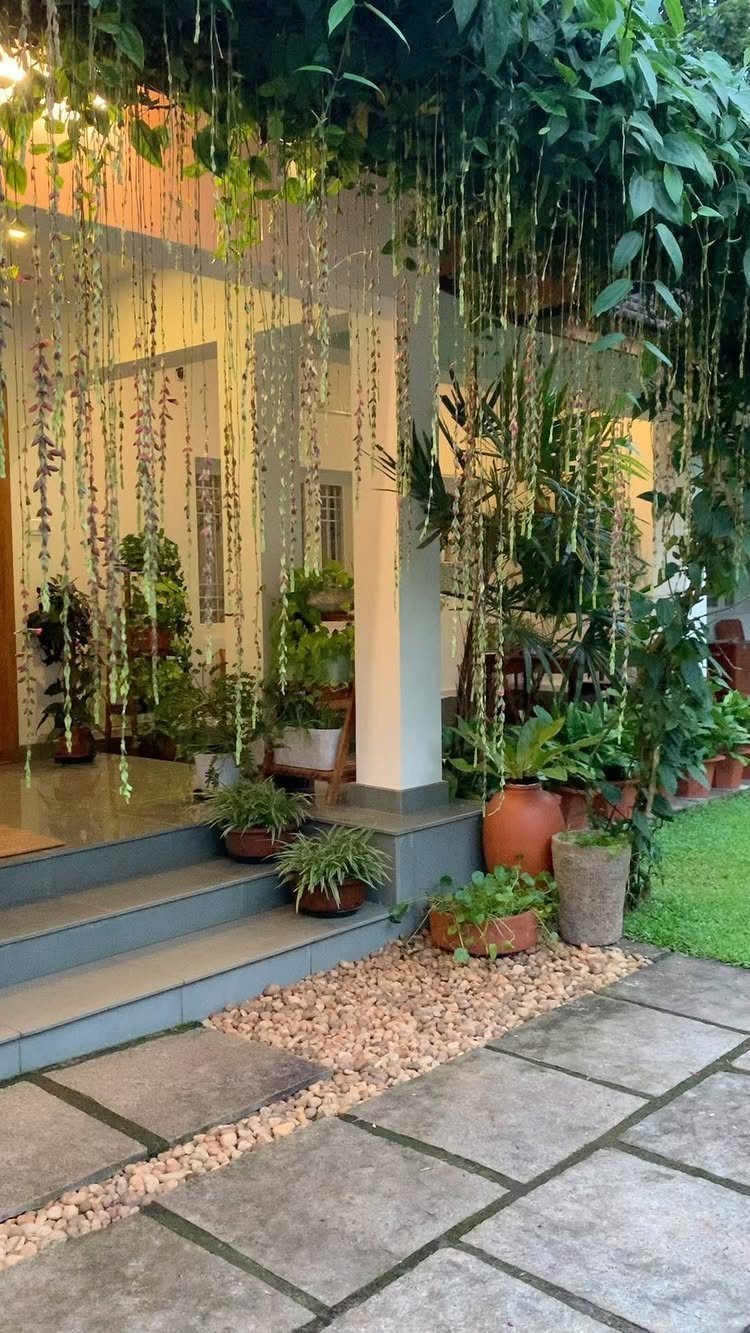
Flowering vines trained over an overhead frame turn a paved courtyard into a green room with a ceiling you can walk through. The stone paving below needs no adjustment; what changes is the air above it.
I would build the frame from galvanized steel pipe or rough-sawn timber rated for outdoor use, with cross bars close enough that young stems have something to grip.
The vines themselves want a head start in pots at the base, not bare-root planting into gravel; root access to soil buys faster coverage and saves a season of waiting.
Wisteria or clematis suits this curtain effect, though wisteria demands regular cutting to keep the tendrils slender and hanging rather than woody and upward-bound.
I would check the structure every spring before leaf-out; last year’s wood gets heavy, and a sagging vine canopy is harder to fix than a sagging frame.
Maximizing Small Spaces
Vertical space is the first thing I would exhaust before I touched another horizontal foot.
Wall planters, hanging baskets, and vine frames all pull growth upward instead of outward, which keeps the ground plane open for walking, sitting, or another pot.
The eye follows height naturally, so a narrow yard with something overhead reads larger than the same yard flat to the fence line.
I would not fill that vertical space with anything random.
A few exceptional plants cost more per plant but fewer total; in a small bed, that math works. One compact evergreen with winter berries and spring bloom covers two seasons where three lesser plants might have managed one each.
Iceberg climbing roses or Golden Showers on a wall give repeat bloom from late spring through first frost, which matters when there is no soil to spare on a plant that flowers once and then sulks the rest of the season.
Seasonal Interest
A small garden has no room for a plant that performs for one month and disappears.
I would pick for duration first, color second. Rosa ‘Flower Carpet Amber’ runs eight months, and ‘Lady of Shalott’ from June to October; either one carries a border longer than three short-season perennials managed between them.
Erigeron karvinskianus and Erysimum ‘Bowles’s Mauve’ flower straight through summer without a break.
Structure is what keeps the garden from going vacant in November.
Small-scale trees and shrubs with bark, berry, or persistent leaf give the skeleton that perennials cannot. A shrub with spring flowers, fall color, and winter silhouette justifies its footprint year-round.
Creating Privacy
Privacy in a small yard needs to work in layers without swallowing the space whole. I would start low: edible or ornamental groundcover as the floor, then dwarf shrubs and deciduous bushes as the mid-story.
These break the view at seated height without a wall that blocks light and air. Taller grasses and small trees come last, placed where they screen the specific sightline that matters, not broadcast around the perimeter.
A trellis with annual or perennial vine covers the vertical gap without the bulk of a hedge.
Clematis armandii on a sunny fence gives evergreen cover plus fragrance; ornamental ivy handles shade. Even a balcony fits this: a planter with built-in trellis or a simple frame bolted to the rail.
I would keep the planting continuous across any divider, though; a gap in green reads as a gap in screen, and the eye finds it fast.
Frequently Asked Questions
What are some tips for small gardens?
I would exhaust vertical space first with wall planters, hanging baskets, and vine frames before taking another horizontal foot.
Cluster containers against a wall to turn any edge into planting space, and divide the yard into zones with a change in flooring or a small lift in height rather than a hedge that closes the space in.
How can I make my small garden feel bigger?
A mirror on a fence wall doubles visual depth the way a window does, except you choose what it reflects; angle it slightly downward to catch planting, not sky, since green reads as ground continued.
Cool-toned plants like blue and lavender recede in the field of vision, though I would pick for duration of bloom first and color second.