Around deck landscaping can be a morning with a shovel and a bag of mulch, or it can run to shade structures, stone retaining walls, and a fire pit that reshapes how you use the space.
I start by asking what the deck actually needs: something level to walk out onto, a screen from the neighbor’s driveway, or just green that frames the boards instead of letting them float in the lawn.
A 2-inch mulch layer costs next to nothing, takes part of an afternoon, and is the difference between landscaping that looks like an afterthought and landscaping that looks deliberate.
[link-whisper-related-posts]1. Container Gardens
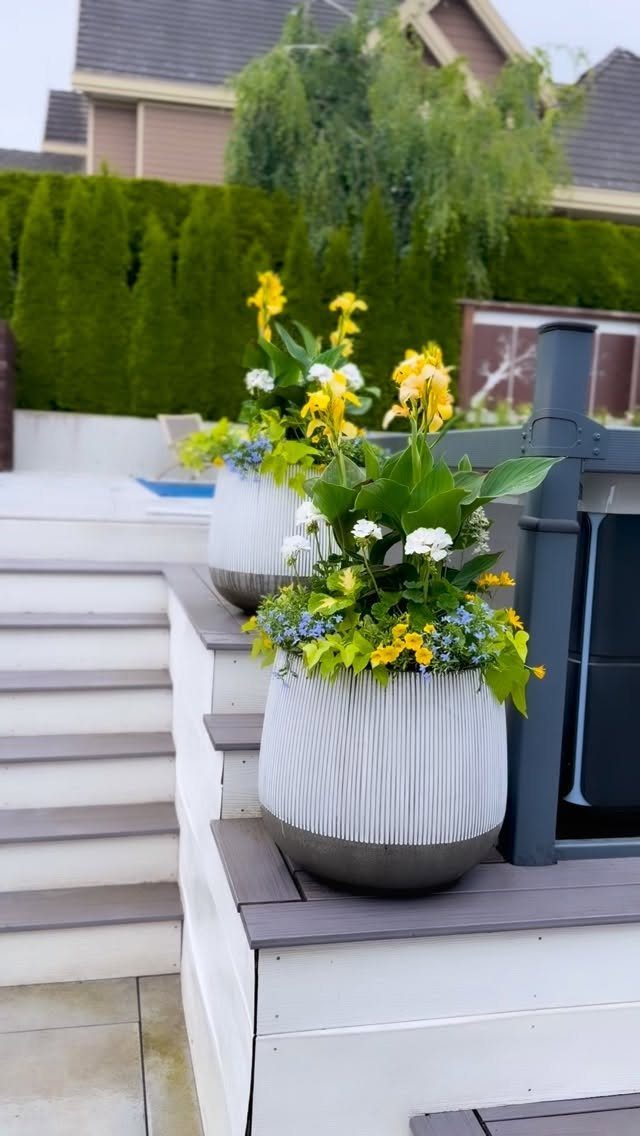
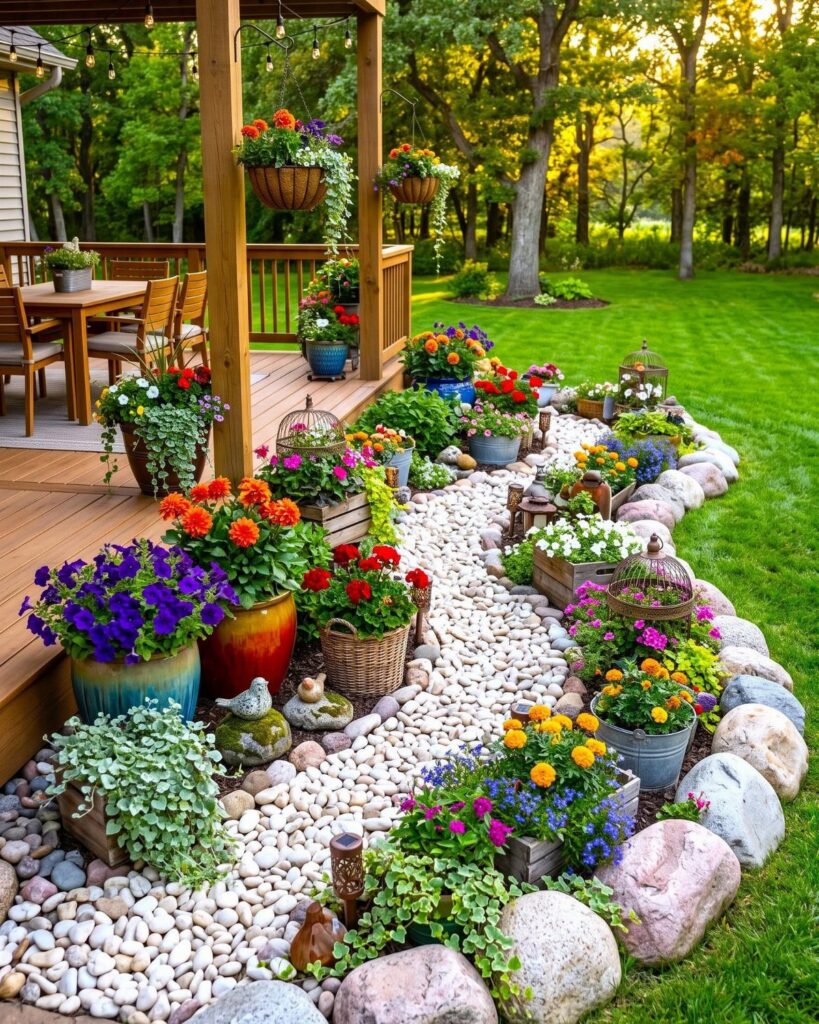
Pots let you rearrange color until the layout feels right, which matters when you are still figuring out how you use the deck.
I would check that the fluted ceramic and ribbed styles shown can handle your sun exposure; unglazed terracotta dries out fast in full sun and cracks in hard freezes.
Planters on steps need a flat base or a wedge to sit stable, and anything on a ledge wants a weight check before the next storm.

Space-Saving Design with a Natural Matte Finish: Features a versatile design that maximizes your outdoor space while providing an attractive natural matte appearance

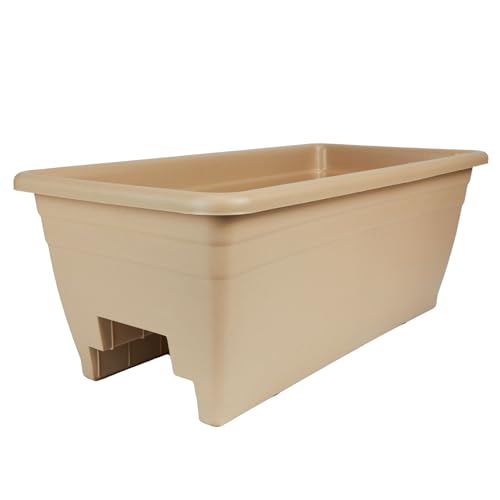
VERSATILE USE: Measuring 12" D x 24" W x 9" H, these outdoor planters fit standard 2" x 4" and 2" x 6" deck rails. Ideal for flowers, herbs, or plants, and suitable for patios, decks, railings, fences, or garden areas.
2. Add Decorative Rocks and Paths
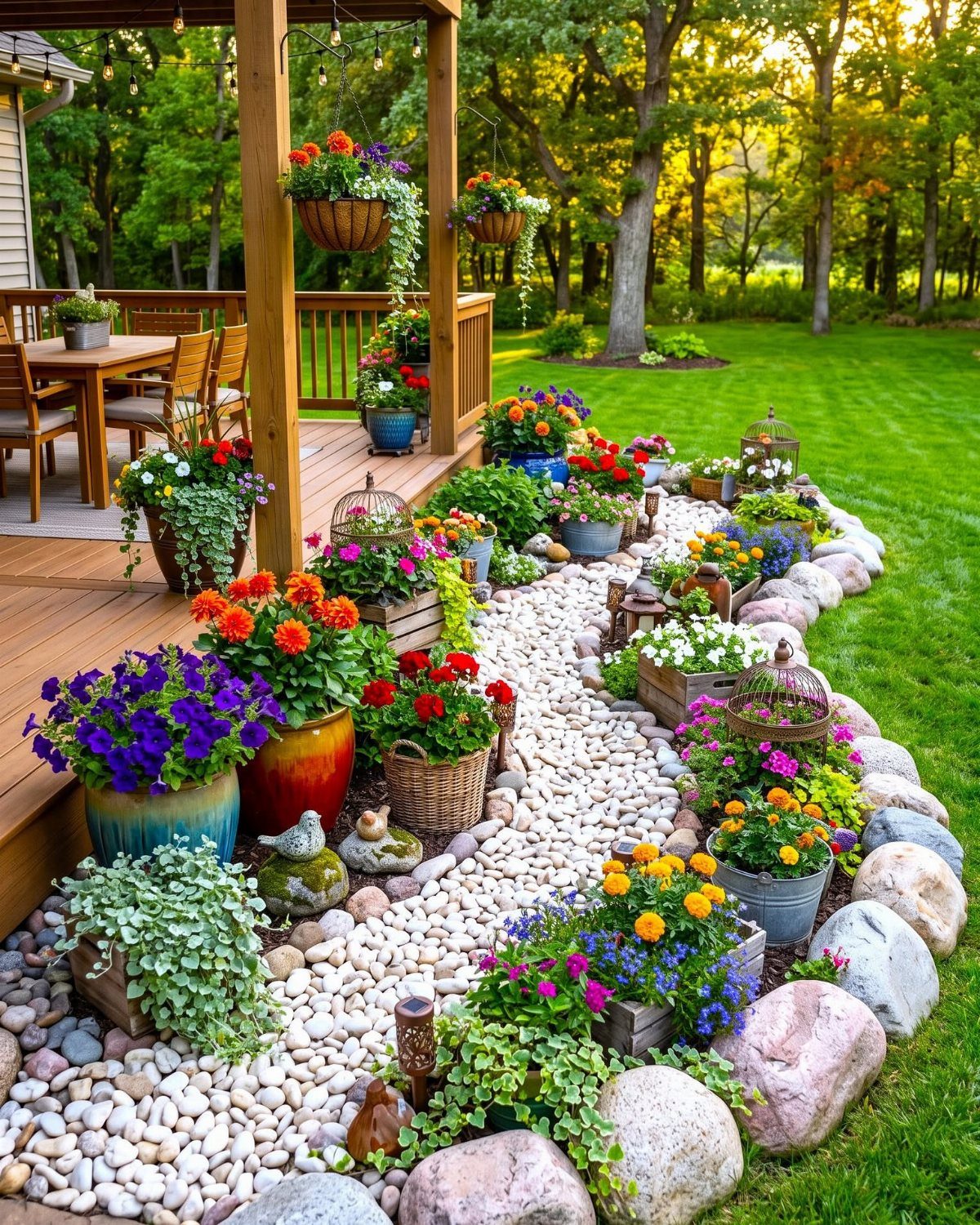
White river stone and large decorative rocks do not need watering or weeding, so this suits anyone who would rather sit on the deck than maintain around it.
A curving path along the deck’s edge needs landscape fabric underneath and enough depth over it to keep the pebbles from sinking into soil.
River stone shifts underfoot, so it is not my pick for a path you will walk daily, but it is excellent for visual structure you set once and leave.

Premium Grade Basketweave White Carrara Marble Mosaic Tile w/ Nero Marquina Black Dots. Italian Bianco Carrera White Venato Carrara Honed 1 x 2 Basket Weave Mosaic w/ Black Dots Wall and Floor Tiles are perfect for any residential / commercial projects. The Carrara White Marble Basketweave Mosaic Tile with Nero Marquina Black Dots can be used for kitchen backsplash, bathroom flooring, shower surround, dining room, entryway, corridor, kitchen backsplash, spa, etc.

【Natural Stones】This river rocks are natural lightly polished for smooth effect, comes in a variety of natural colors. Resists fading for long-lasting beauty

Premium Grade Ice Flower Blossom Carrara Marble & Bardiglio Gray Mosaic Tile. Italian Bianco Carrera White Venato Carrara w/ Bardiglio Gray Polished 12 x 12 Ice Flower Blossom Mosaic Wall and Floor Tiles are perfect for any residential / commercial projects. The Carrara White Marble Ice Flower Blossom Mosaic Tile can be used for bathroom flooring, shower surround, kitchen backsplash, corridor, spa, etc.
3. Layered Plants Around the Deck
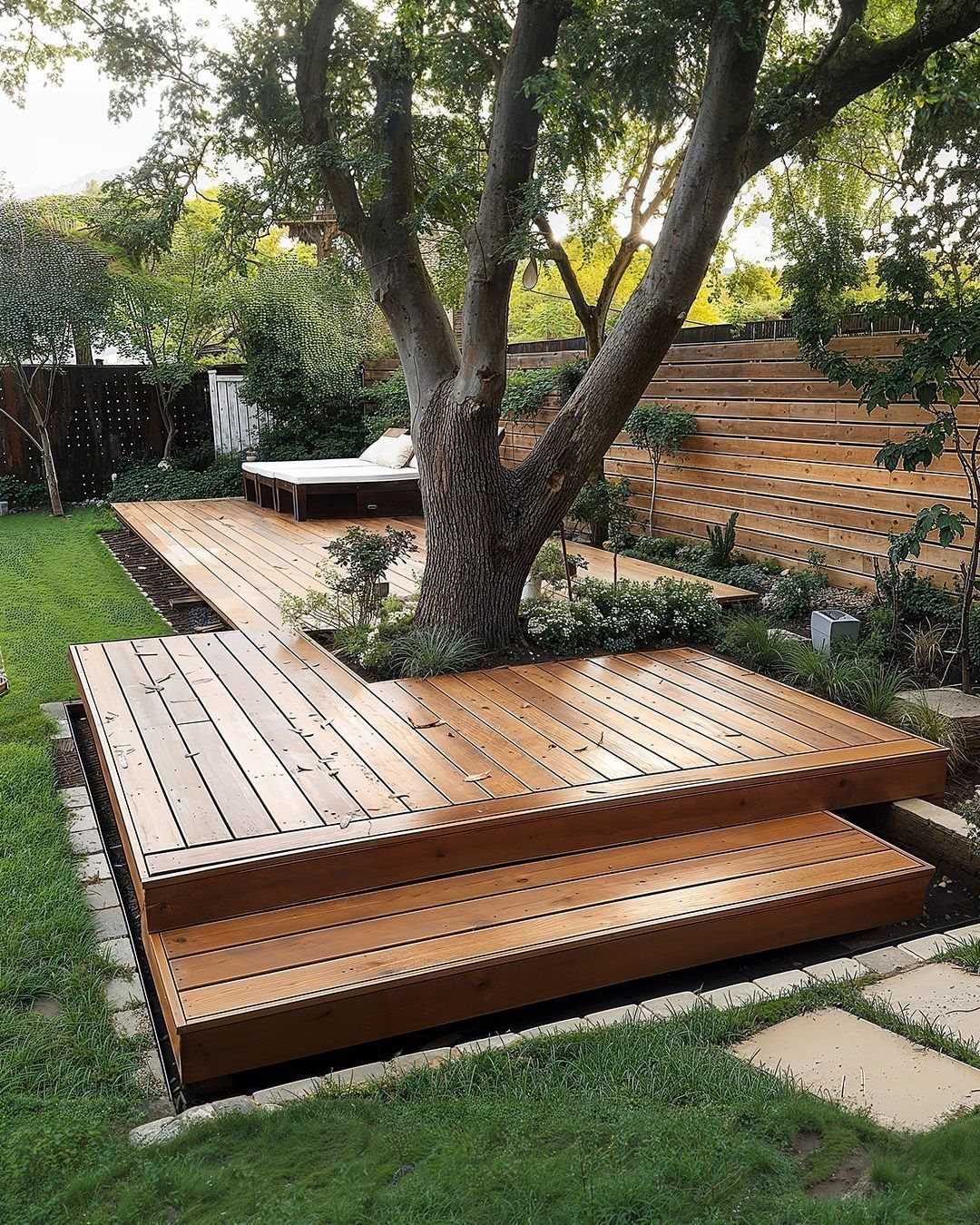
A multi-level deck built around a tree uses the trunk as the anchor that everything else wraps around; the garden beds follow the deck’s tiers instead of fighting them.
I would start with what is already there, mature or not, and add layers outward from low ground cover to mid-height shrubs.
A horizontal slat fence gives privacy without blocking light the lower plants still need, so I would match my tallest layer to whatever structure you have, or add one if the deck sits exposed.
Building a deck is great but adding foliage can be just as exciting. Aesthetically, plants help anchor a deck to the surroundings so it doesn’t stick out like the proverbial sore thumb.

STYLISH NATURAL WOOD: This FSC certified wood screen is made with real wood meaning no two boards have the same grain color, finish, or wood knots differing it from vinyl outdoor privacy fence screen panels.
4. Use Grass-Block Pavers
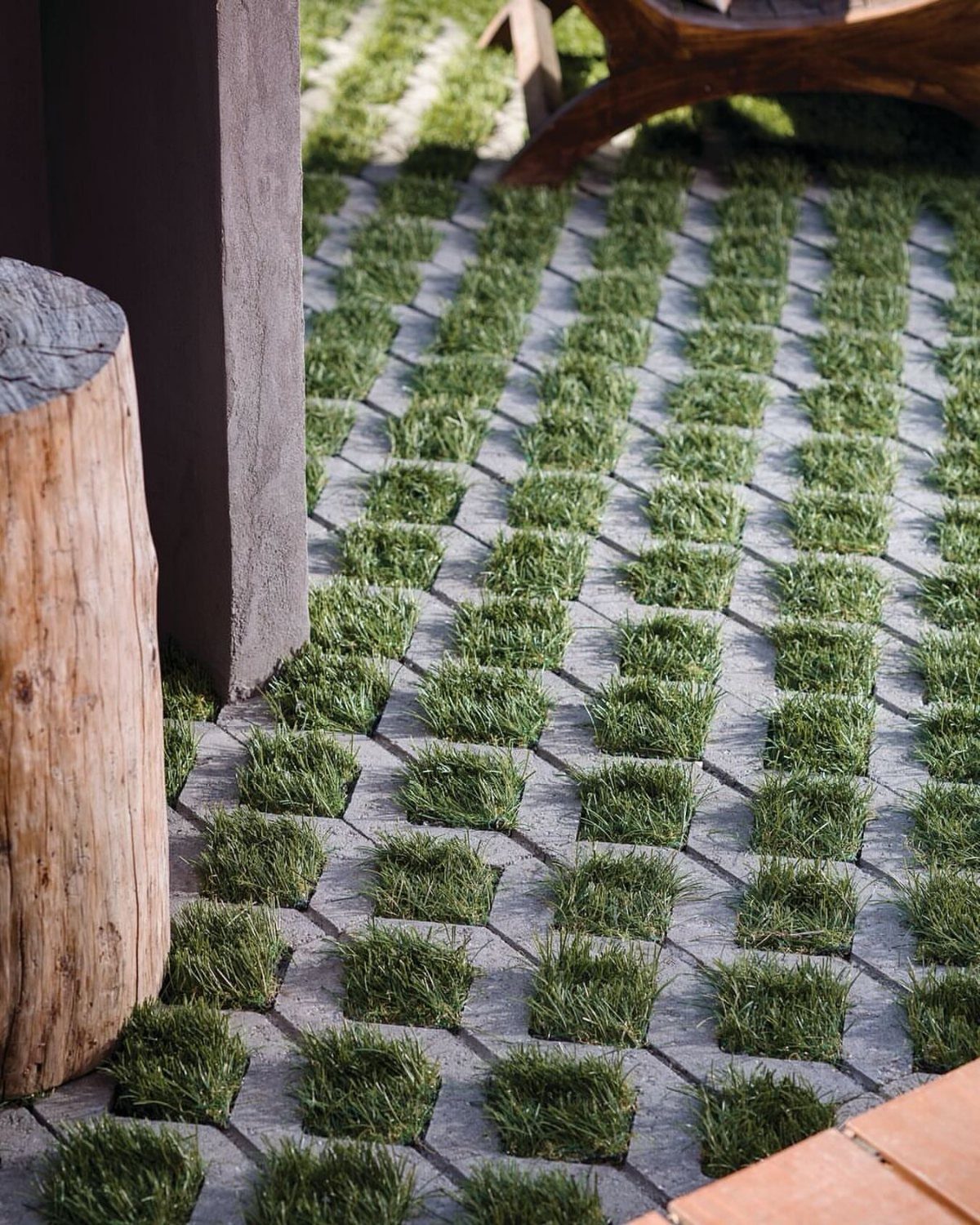
Concrete frames with grass tufts running through them handle runoff better than solid pavement, and the checkerboard pattern breaks up a wide area without the cost of full stone.
I would set these on a compacted gravel base with sand on top; the grass needs soil contact in each opening, so the paver thickness matters.
You are mowing around and slightly through this surface, which trades the clean edge of solid pavers for the cooler look of green between grey. It is more work to maintain than concrete alone, less than a full lawn.

✅ 100% QUALITY🌲 Betonex Concrete Molds Plastic Molds for the making patio concrete tiles. Reusable Paving mold for concrete - Easy to use to create a wonderful garden walkway, garden path stones, stepping stones, pathway, backyard path.

Brand and Type: NDS brand grass pavers designed specifically for turf applications

HEAVY-DUTY, DURABLE CONSTRUCTION : Our permeable pavers each piece measures 41 x 41 x 2.5 centimeters (16x16x1inch) and is made of thick, high-strength plastic mesh that can withstand vehicular traffic without deformation, ensuring the long-term durability of your permeable paving system
5. Shade Structures Around the Deck
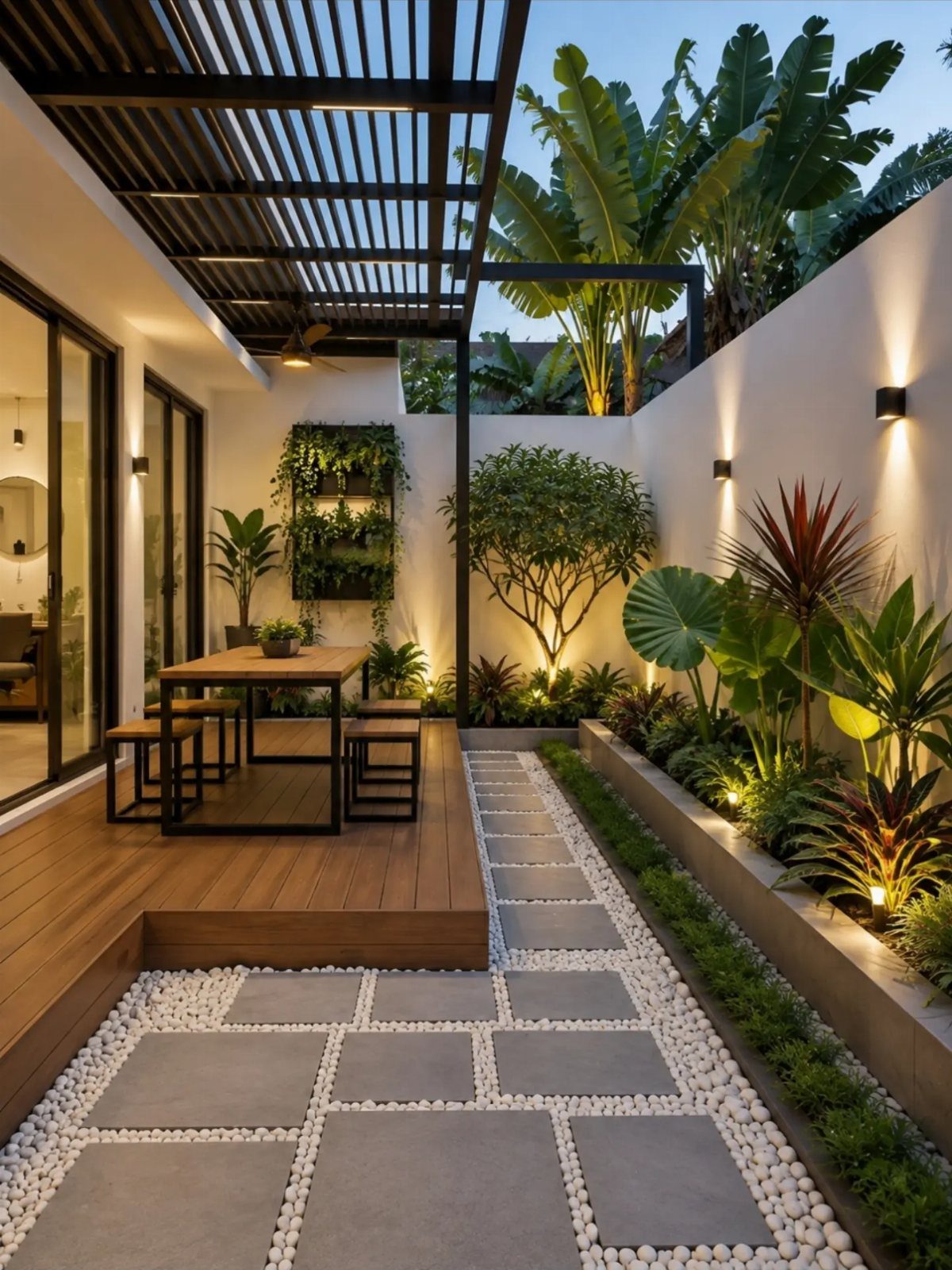
A pergola over part of the deck gives you a defined room without walls; a slatted roof filters sun rather than blocking it, which I prefer for climates where full shade feels too dim.
The dark wood and black finishes shown read modern against tropical planting; in a lighter setting I would consider natural cedar or aluminum for the same structure.
Build to your deck’s load capacity, or anchor posts in concrete beside it if the existing frame cannot take the extra weight.

【Universal Fit for Most Railings】Stop worrying if it will fit! Our adjustable railing planter boxes bracket (made of sturdy, powder-coated iron) securely mounts on any railing from 1.6" to 4.9" wide. This no-drill design protects your property, giving you a stable, custom fit for your balcony, deck, or patio fence.

Versatile Design for Gardening & Decor: Measuring 16.9"L × 7.2"W × 5.7"H, these flower boxes outdoor are ideal for small and medium plants. The window flower boxes outdoor fit perfectly on balconies, apartment patios, herb garden, kitchen windowsills and fences decor. Grow herbs, flowers and fresh veggies easily to make the most of your limited space.

DURABLE PLASTIC: The Brixton Railing planter is made from high-grade recycled plastic, making it impact, scratch and UV-resistant
6. Use Lighting to Highlight Landscaping
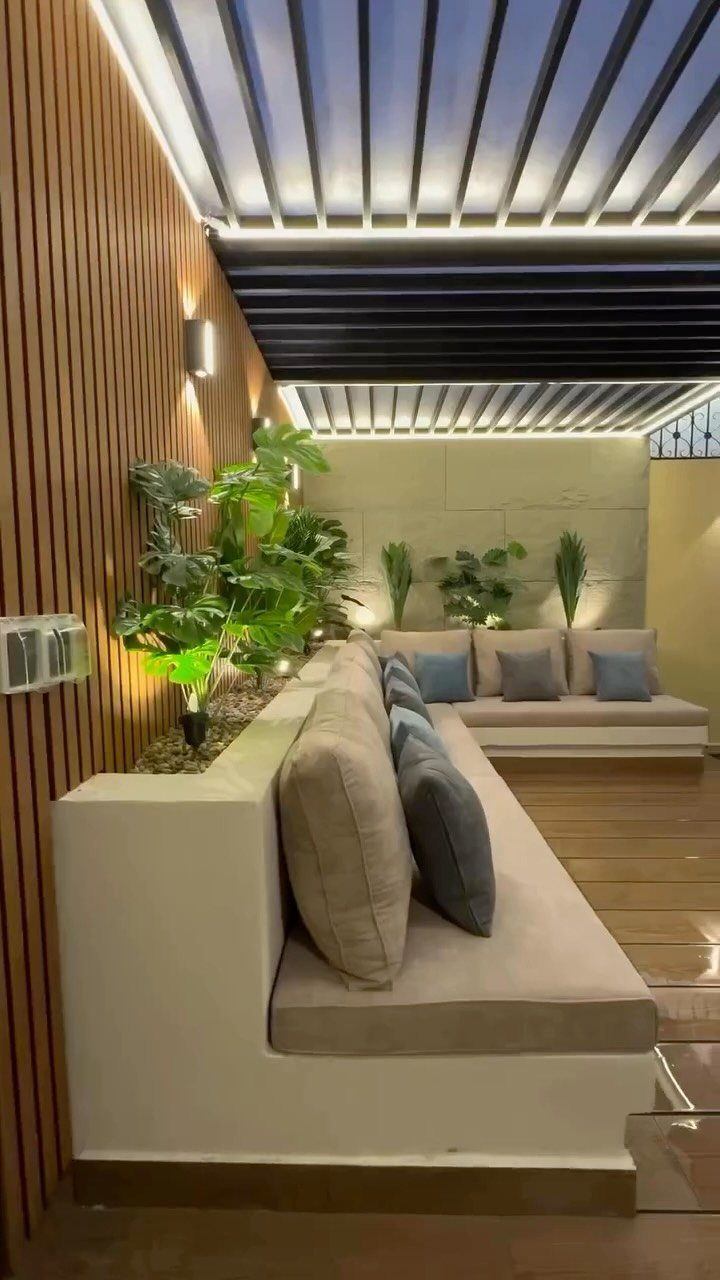
Strip lighting in the ceiling slats plus uplights behind the seating turns the planter bed into a feature after dark, and the warm tone keeps the space usable without feeling like a parking lot.
I would run LED strips on a dimmer; full brightness is rarely what you want, and the adjustability costs little extra.
Built-in seating means the lights are wired during construction, but retrofitting a planter bed with uplights is a single afternoon with low-voltage kits if you have an outdoor outlet within reach.


Premium Grade Basketweave White Carrara Marble Mosaic Tile w/ Nero Marquina Black Dots. Italian Bianco Carrera White Venato Carrara Honed Large Basket Weave Mosaic w/ Black Dots Wall and Floor Tiles are perfect for any residential / commercial projects. The Carrara White Marble 2 1/4 x 3 1/8 inch Basketweave Mosaic Tile with Nero Marquina Black Dots can be used for kitchen backsplash, bathroom flooring, shower surround, dining room, entryway, corridor, kitchen backsplash, spa, etc.

Premium Grade White Thassos Marble Chair Rail Tile. Greek Thassos White Pure White Marble Polished 2 x 12 Chair Rail Wall and Floor Tiles are perfect for any residential / commercial projects. The Thassos White Marble 2x12 Chair Rail Molding Tile can be used for kitchen backsplash, bathroom flooring, shower surround, dining room, hall, etc.
7. Water Features
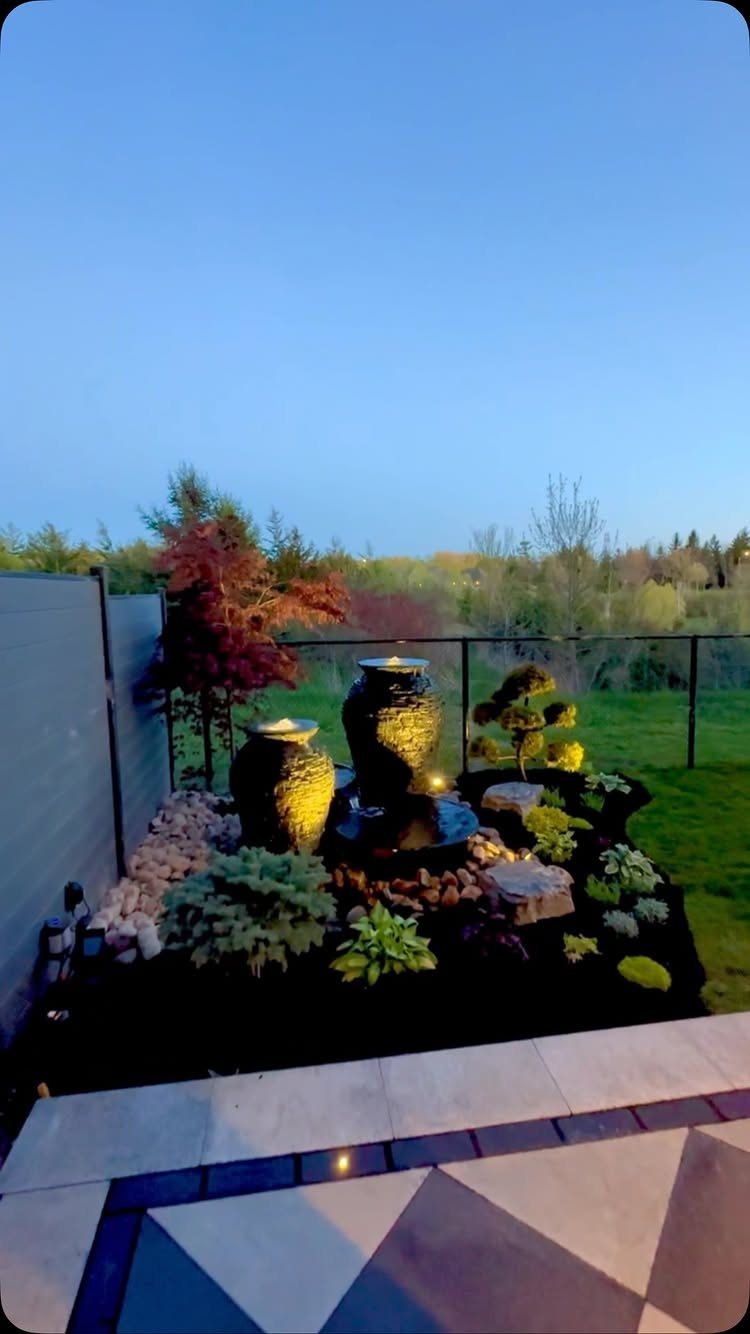
Tiered urn fountains in a bed beside the deck give you the sound of moving water without the space a pond demands.
Expect to top off the reservoir every few days in summer heat, and plan on pulling the pump before your first hard freeze.

Upgrade today with the 2026 Latest Upgraded Version and enjoy fuller greenery, stronger installation, and instant privacy
8. Create a Fire Pit Area
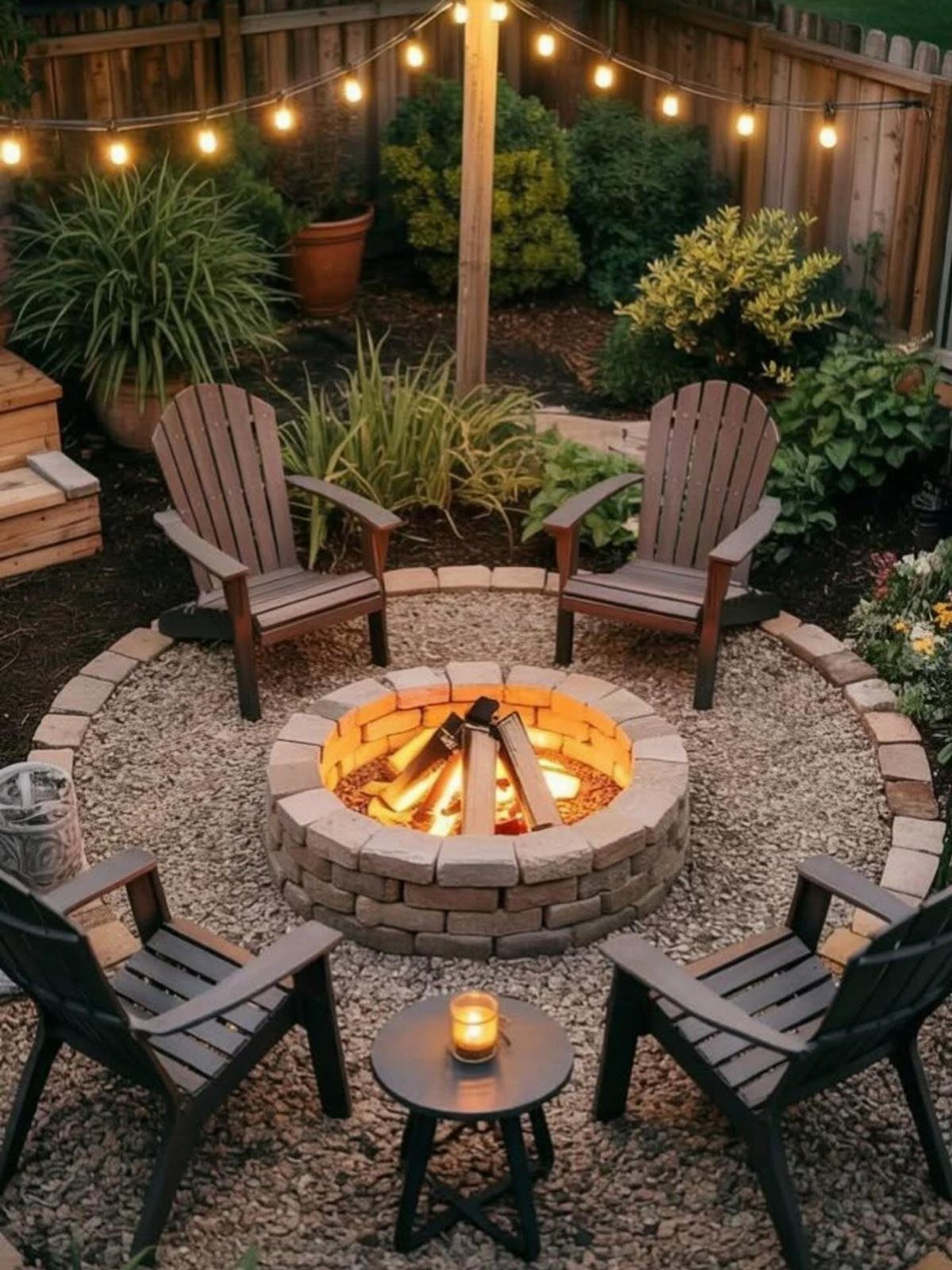
A gravel circle with a stone fire pit and Adirondack chairs turns the area just off your deck into seating that works on cool nights.
The loose stone base shown will wander underfoot and scatter into the lawn, so I would edge it with steel or the same stone that rings the pit.
String lights overhead need anchor points rated for tension if you are spanning a wide distance between posts.
Keep the pit well back from the deck surface, depending on local code, and check whether your jurisdiction requires a permit even for above-ground units.
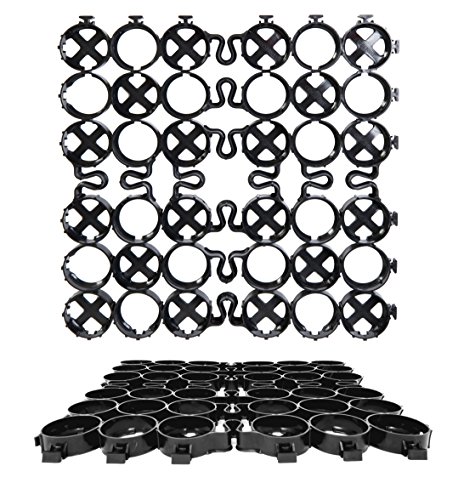
EASY TO USE: Our lightweight permeable pavers are easy for any level of DIYer to install; Feel proud of your own outdoor home improvements!

DURABLE AND ECO-FRIENDLY: Crafted from 100% recycled plastic, our gravel paver system delivers exceptional strength and longevity; This Permeable Paver System includes 14 units with a 2" depth, covering an area of 35 square feet

DURABLE AND ECO-FRIENDLY: Crafted from 100% recycled plastic, our gravel paver system delivers exceptional strength and longevity; This Permeable Paver System includes 14 units with a 2" depth, covering an area of 35 square feet
9. Lush Privacy Hedges Around Deck
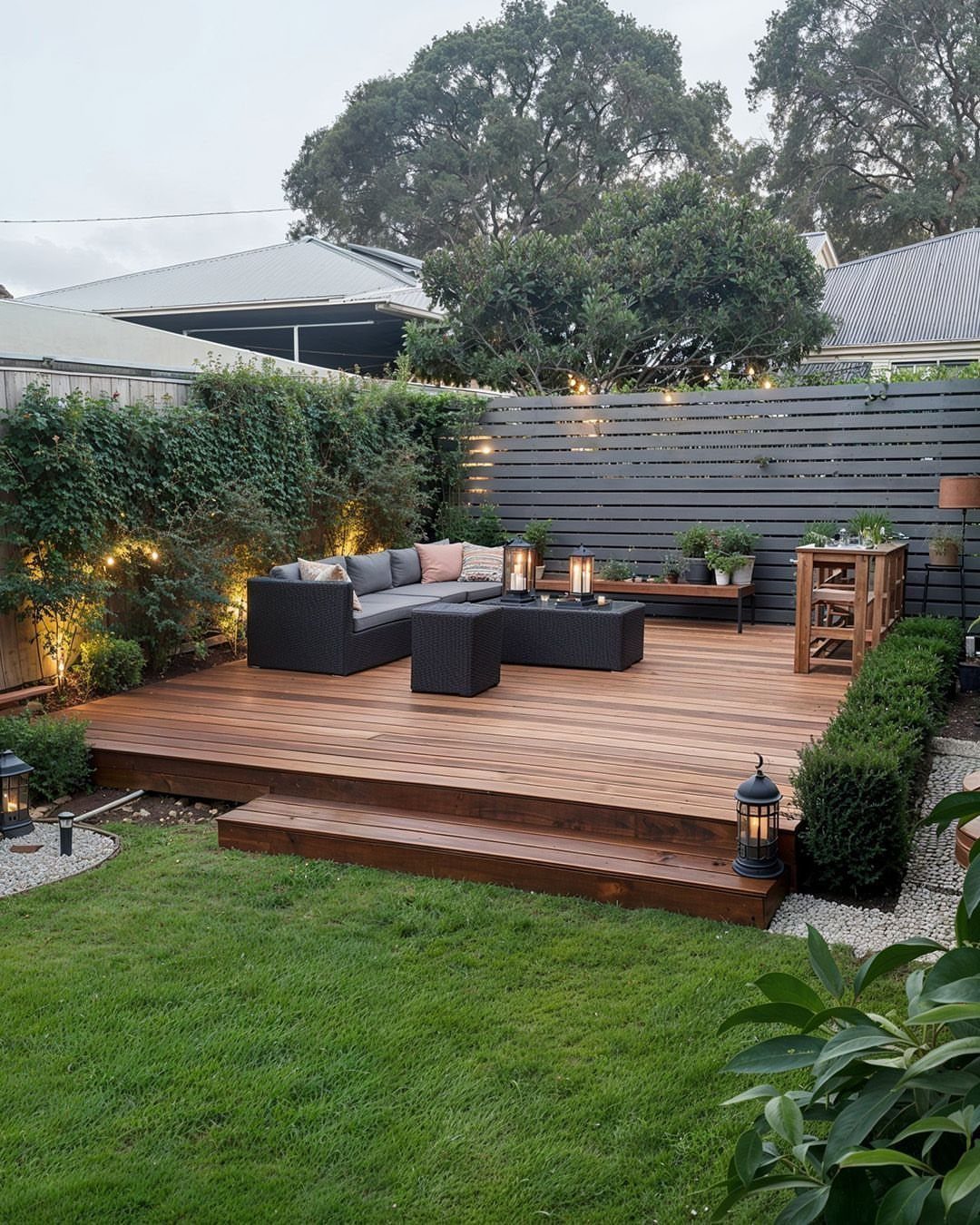
A clipped hedge on the deck side plus a slat screen at the perimeter gives you 2 layers of privacy that work at different heights.
I would plant the hedge far enough from the deck boards that mature growth does not trap moisture against the wood; give it the usual minimum clearance.
Boxwood grows slowly, so buy the size you need rather than waiting it to fill in.
The horizontal slat fence shown blocks sightlines without the solid weight of a stockade fence, which matters on a small lawn where mass would close the space in.

10. Integrated Stone Retaining Wall Beds
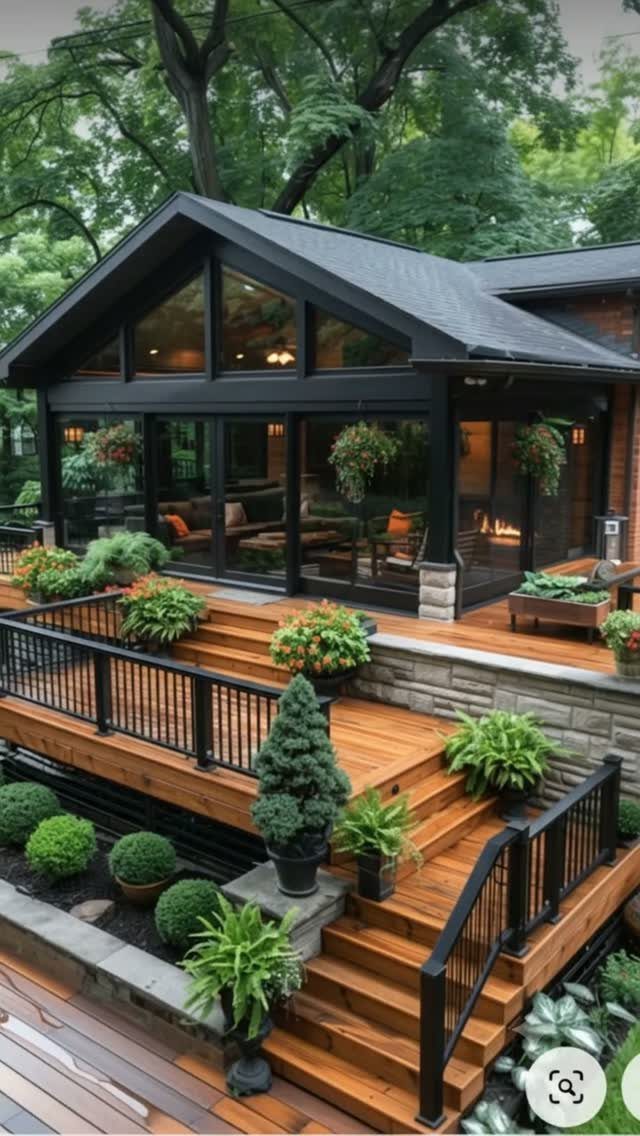
Stone retaining walls built into the deck’s levels turn the earth you excavate into planting beds instead of a slope to mow.
Black metal railings run between stone pillars here, so the wall footing and the deck post footings need to line up or be kept separate enough that settling in one does not stress the other.
I would set pots on the wall caps rather than planting directly in retained soil, which tends to dry from above and stay wet below.

Premium Grade White Thassos Marble Pencil Liner Tile. Greek Thassos White Pure White Marble Honed 5/8 x 12 Bullnose Trim Wall and Floor Tiles are perfect for any residential / commercial projects. The Thassos White Marble 5/8x12 Pencil Moldings can be used for kitchen backsplash, bathroom flooring, shower surround, dining room, hall, etc.

Premium Grade White Carrara Marble Square Mosaic Tile. Italian Bianco Carrera White Venato Carrara Honed 5/8 x 5/8 Mosaic Wall and Floor Tiles are perfect for any residential / commercial projects. The 5/8x5/8 Carrara White Marble Square Mosaic Tile can be used for kitchen backsplash, bathroom flooring, shower surround, dining room, entryway, corridor, spa, etc.

Premium Grade Octagon White Carrara Marble Mosaic Tile w/ Nero Marquina Black Dots. Italian Bianco Carrera White Venato Carrara Honed 2 inch Octagon Mosaic w/ Black Dots Wall and Floor Tiles are perfect for any residential / commercial projects. The Carrara White Marble Octagon Mosaic Tile with Nero Marquina Black Dots can be used for kitchen backsplash, bathroom flooring, shower surround, dining room, entryway, corridor, kitchen backsplash, spa, etc.
11. Curved Decking with Tropical Borders
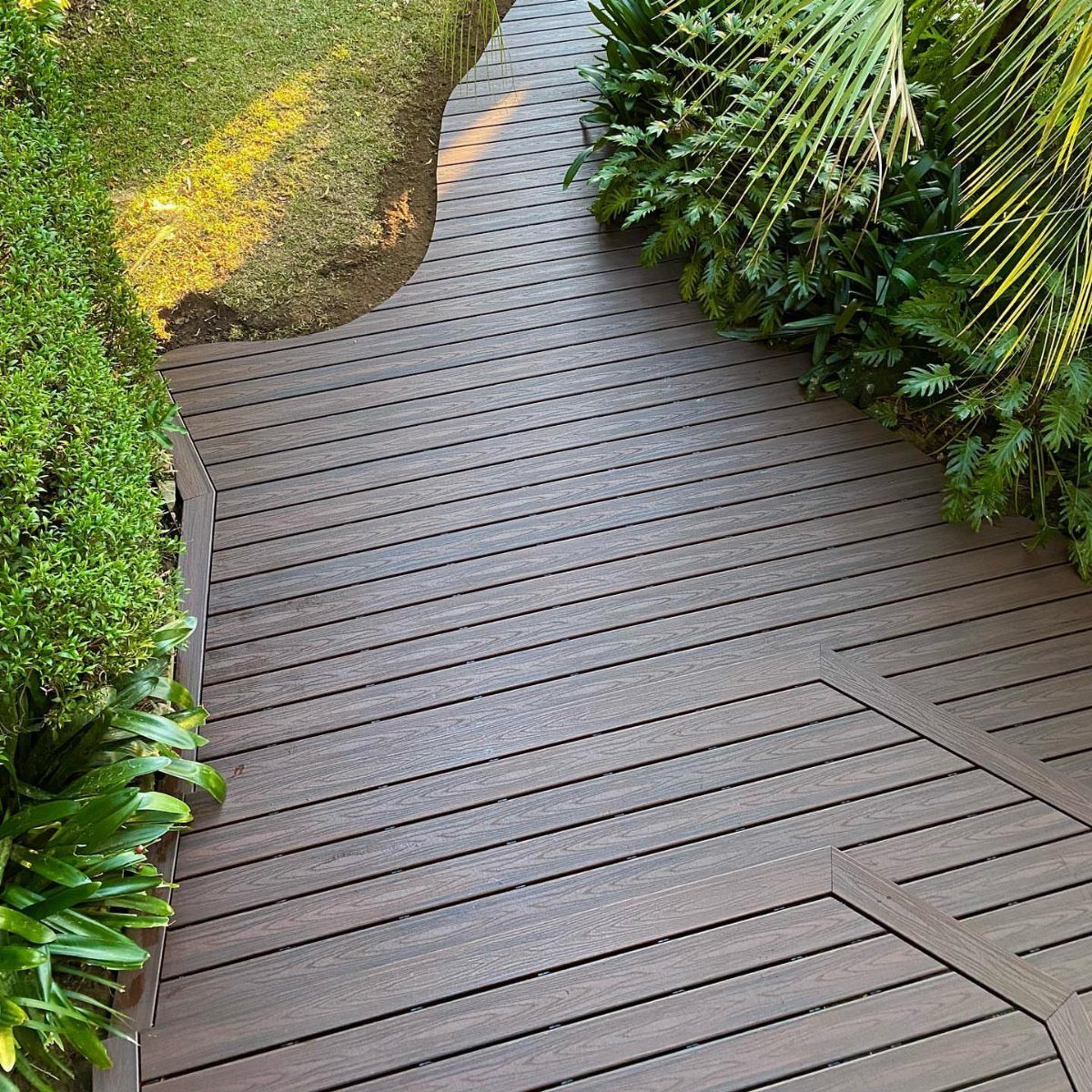
A curved deck edge planted tight to tropical foliage reads as a single gesture rather than structure plus landscaping.
The palms and hedges shown need a hardiness zone match or a plan to overwinter them; in zone 7 or lower I would swap in hardy banana or large grasses for the same scale without the replacement cost each spring.
Curved decking costs more per square foot than straight runs because every board is cut to fit, and the tighter the radius the more waste you generate.
I would keep the border planting simple and dense, as the curve itself carries the visual weight.
Maintenance and Care
Mulch is the step most people skip and later regret. A 2-inch layer locks in soil moisture and gives beds a finished edge that bare dirt never achieves.
I would spread it after planting but before the summer heat sets in; water first, mulch second, or you seal in dry soil instead of wet.
Watering needs shift from daily for new plantings to weekly for established roots, so I adjust rather than set a timer and forget it.
Pruning keeps shrubs from crowding walkways or blocking the low windows common on ranch-style homes, and the clippings go straight to compost if they are disease-free.
Pest checks are quick if you make them routine: curled leaves, stippled color, or the sticky residue called honeydew all show up early on plants you pass often.
Fertilizer belongs on the schedule only where the plants actually call for it; more is not better, and hungry-looking annuals in pots are a different case than established beds.
Choosing the Right Plants
Hardiness zone is the filter that eliminates most disappointment before you buy.
The large shrubs or small tree you anchor a bed with must survive your winter, not just your summer; everything else fills around that anchor. I would check the USDA zone map for your zip code, then read the tag.
Perennials and ornamental grasses give structure without the replanting cost of annuals, though they take longer to reach size.
A shorter grass reads as a soft wall; a taller one becomes a screen, so the mature height on the tag matters more than the pot size in the cart.
Soil conditions are harder to change than plant choice. Wet clay and dry sand each have lists of plants that tolerate them, and matching the plant to what you have beats amending a whole bed.
Planning Your Layout
A garden hose on the ground is the cheapest design tool I know.
Lay it in curves around the deck perimeter, step back to the sightlines you will actually use, and adjust until the border looks intentional from the windows and the seating.
Paint marks the line once the hose proves it; digging starts after that, not before.
Spacing is the mistake that shows up once everything has filled in and you can no longer fix it easily.
The tags give mature width, and I would respect it even when the bed looks sparse at planting. Crowded roots compete for water and air, and the thinning you promised yourself rarely happens on schedule.
Landscape fabric under mulch or stone is worth the hour it takes to roll out, but cut it in an X for each plant, not a circle that lets weeds colonize the gap.
The fabric stops seeds from below; it does not stop blown-in weed seed on top, so the mulch layer still matters.
Frequently Asked Questions
How do I landscape around a deck step by step?
Start by laying a garden hose on the ground to map curves around the deck, then step back to the sightlines you will actually use and adjust until the border looks intentional.
Once the curve holds up from every angle, spray paint traces over the hose so the line survives when you pick it up.
Landscape fabric goes down next, and I cut an X for each root ball so the flaps overlap and block light; a circle leaves seams where weeds push through.
Water first, then spread a 2-inch mulch layer before summer heat sets in. Spacing matters more than how the bed looks at planting, so respect the mature width on the tags even when it looks sparse.
What are some good ideas for landscaping around a patio?
Container gardens let you rearrange color until the layout feels right, which matters when you are still figuring out how you use the space.
Decorative rocks and paths suit anyone who would rather sit than maintain, though river stone shifts underfoot and is not my pick for daily walking paths.
How is a deck different from a patio?
A deck is a raised platform, usually with open space underneath; a patio sits right on the ground.
Most decks anchor to the house with no roof or walls, while patios are poured or paved at grade level and stand free.
Landscaping around a raised deck means working with moisture clearance and that exposed understructure, which ground-level patios never force you to think about.
What low-maintenance border and privacy ideas work well?
Rock beds keep edges tidy and need no watering or weeding, with landscape fabric underneath and enough depth to keep pebbles from sinking into soil.
Boxwood fills in at a crawl, so I buy the mature width I want from day one rather than nursing a 2-gallon plant through five years of waiting.