These 7 backyard fence ideas run from a weekend of lashing bamboo poles to the heavy labor of stone-filled gabion cages, with budgets that swing just as wide.
What separates one choice from another is not style alone but what your yard is actually doing: flat ground with good drainage opens every option, while a slope or a soil-retention problem pushes you toward stepped panels, custom-cut wood, or gabion cages filled with stone.
A 6-inch minimum clearance under cedar boards, set on gravel and pavers, is the kind of detail that keeps a wood fence from rotting at the base where water wicks in first.
[link-whisper-related-posts]1. Horizontal Slat Fence
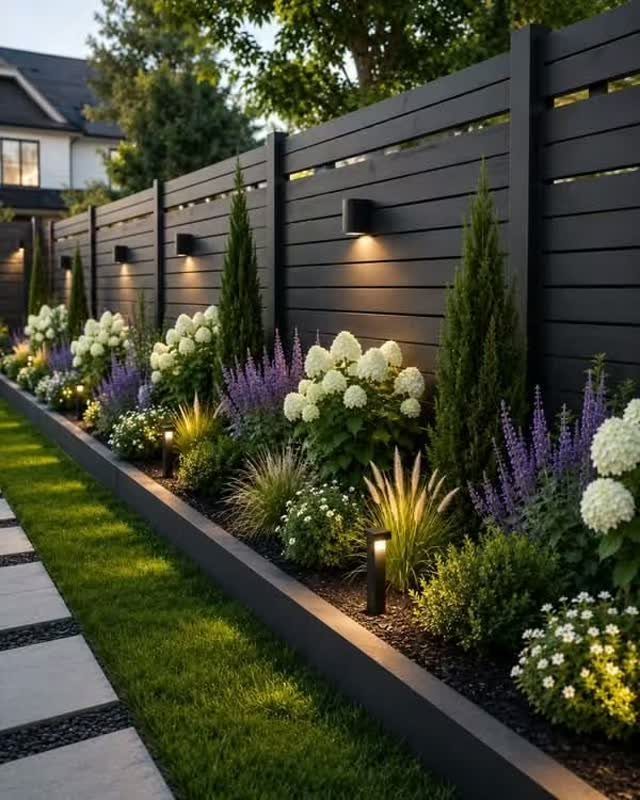
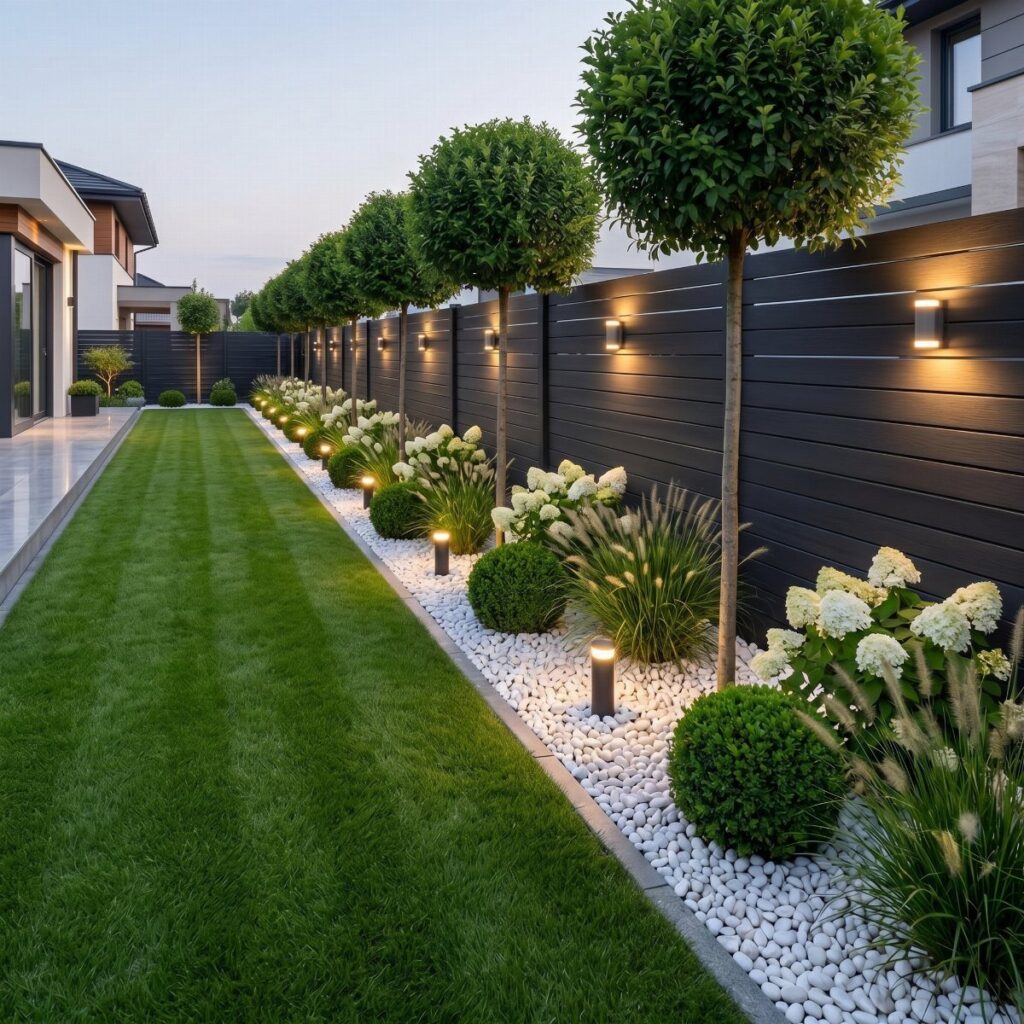
Black-stained horizontal slats give a fence its modern face. I like this style for small yards where the lines stretch the space visually, and the gaps between boards let air move through while still blocking the view at eye level.
Check your local code before spacing those slats; most towns cap gap width for pool areas and some require solid backing if the fence sits on a property line.
Top rail lighting looks best when you plan for it during the build rather than retrofitting later.

Enhanced Outdoor Comfort: Enjoy your outdoor space with a patio Blade Slats With Bottom Locking Channel privacy fence that provides a sense of seclusion; the mesh fence allows airflow while blocking unwanted views
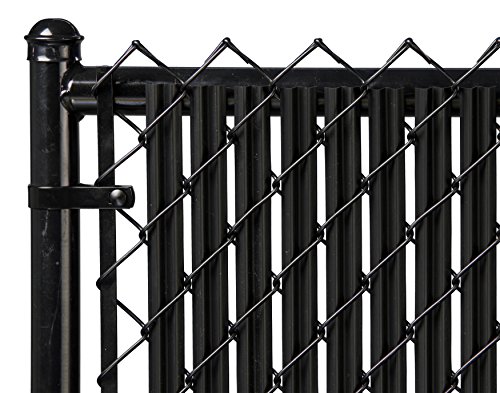
Black Ridged Slats for 4ft chain link are deliberately cut to about 44.5in long. These fence inserts are designed primarily for 4ft 11 or 9 gauge chain link with a two inch diamond. Also works in economy chain link with a larger diamond pattern, but privacy will be less. Slats must be installed correctly and be fully inserted inside the wire mesh of your fence to achieve the desired results. Cannot be used to extend the fence height. Not suitable for fences on a steep slope.
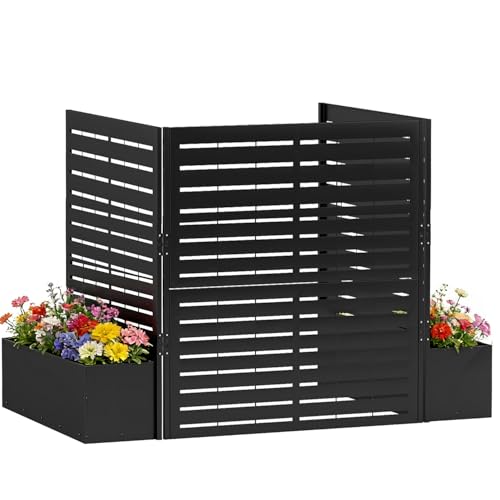
No Ground Pegs Required: Features bottom-connected planter boxes that use the unit's weight for stability without foundation pegs, protecting concrete floors while ensuring a secure and attractive setup
2. Bamboo Fence
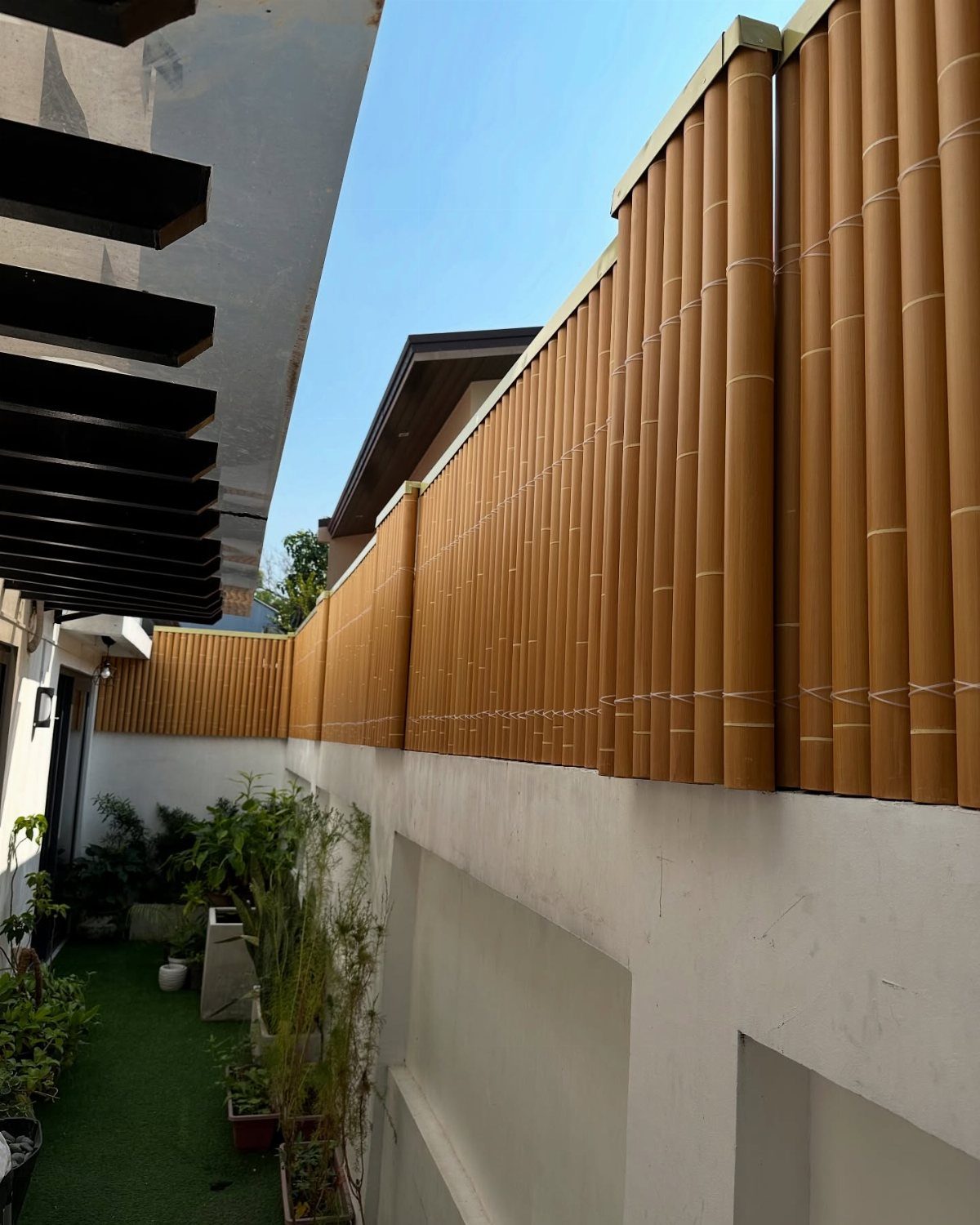
Bamboo poles lashed or framed into a screen read tropical without the weight of lumber.
I would use this where a stucco or concrete wall already exists but falls short on privacy, extending a white boundary wall upward just enough to block sightlines.
Live bamboo in the ground spreads aggressively in most US climates; stick with cut poles.
Replace them more often in wet climates, as soon as they gray and split. For a cleaner look than rope lashing, I would build a simple wooden frame and set the poles into routed channels.

EASY ORDERING: Everything you need for your fence project is in the box except for the final post. Only ONE additional post, BL19112, is required for the end of your project. A gate is available by searching BL19111.

Sufficient Quantity: our product package includes 4 x Vinyl pocket rails; These are precision-crafted and come in an aesthetic white color adding value and elegance to your property; Trust our quality and design to provide your property with an attractive, durable and secure construction

3. Composite Privacy Fence
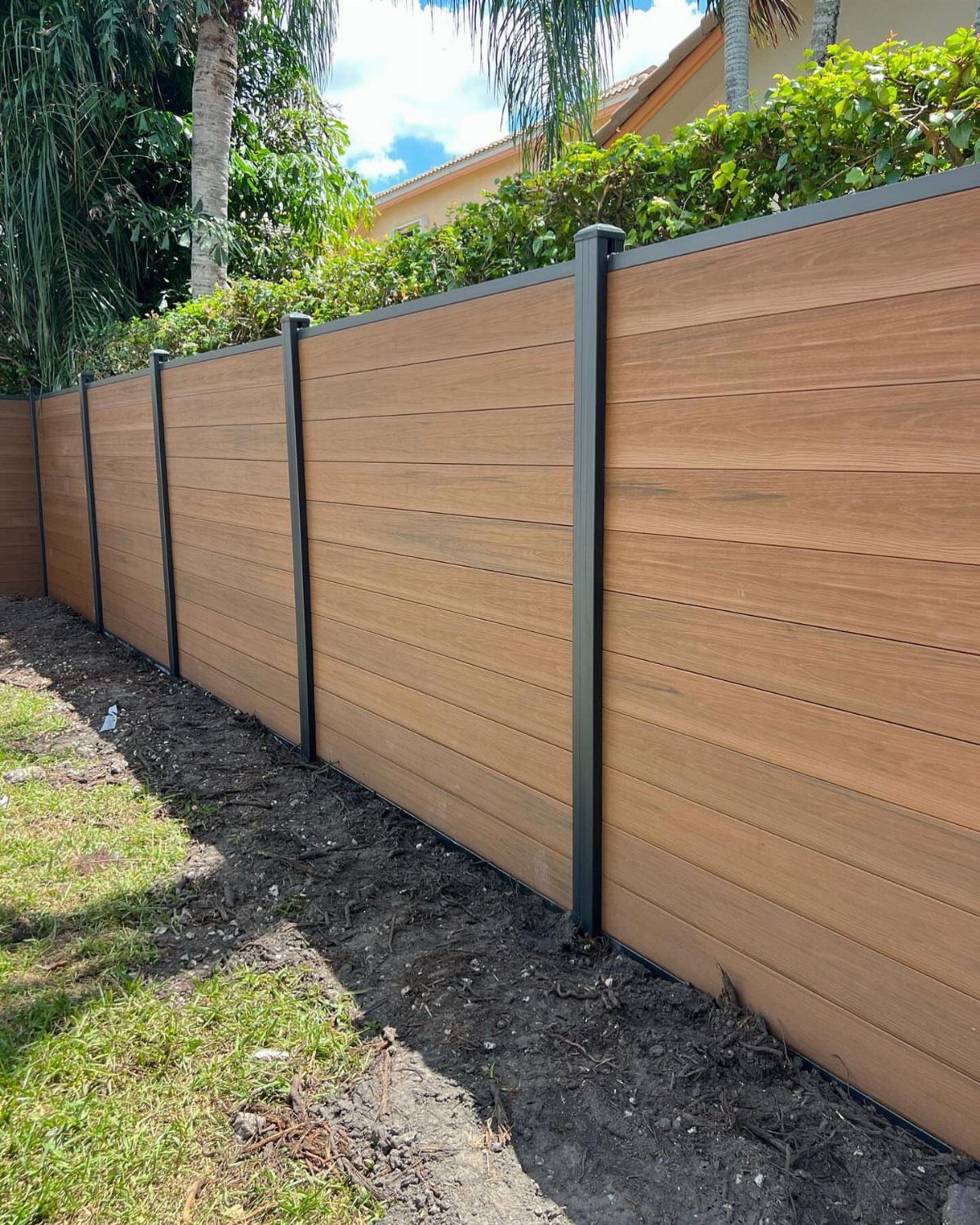
Composite boards give you the horizontal look of stained wood without the yearly sanding and sealing. The wood-grain embossing has gotten better; from a normal viewing distance I can rarely tell, though up close the repeating pattern gives it away.
Budget roughly a third to a half more up front than pressure-treated lumber. I would spend that premium on the street-facing side or anywhere I am tired of restraining.

REALISTIC WOOD-LOOK WITHOUT THE MAINTENANCE: Beautifully embossed wood-grain boards provide the warm, natural look of real wood in Slate Grey or Walnut Brown — no staining, sealing, or painting required

Neighbor Privacy, Not Blackout: Blocks direct line-of-sight while allowing airflow — designed for comfortable backyard privacy, not a solid wall or tarp.

COMPATIBILITY: Compatible with 6ft H x 6ft W WamBam Privacy Fence Panels and 6ft H WamBam Fence Posts
4. Vinyl Privacy Fence
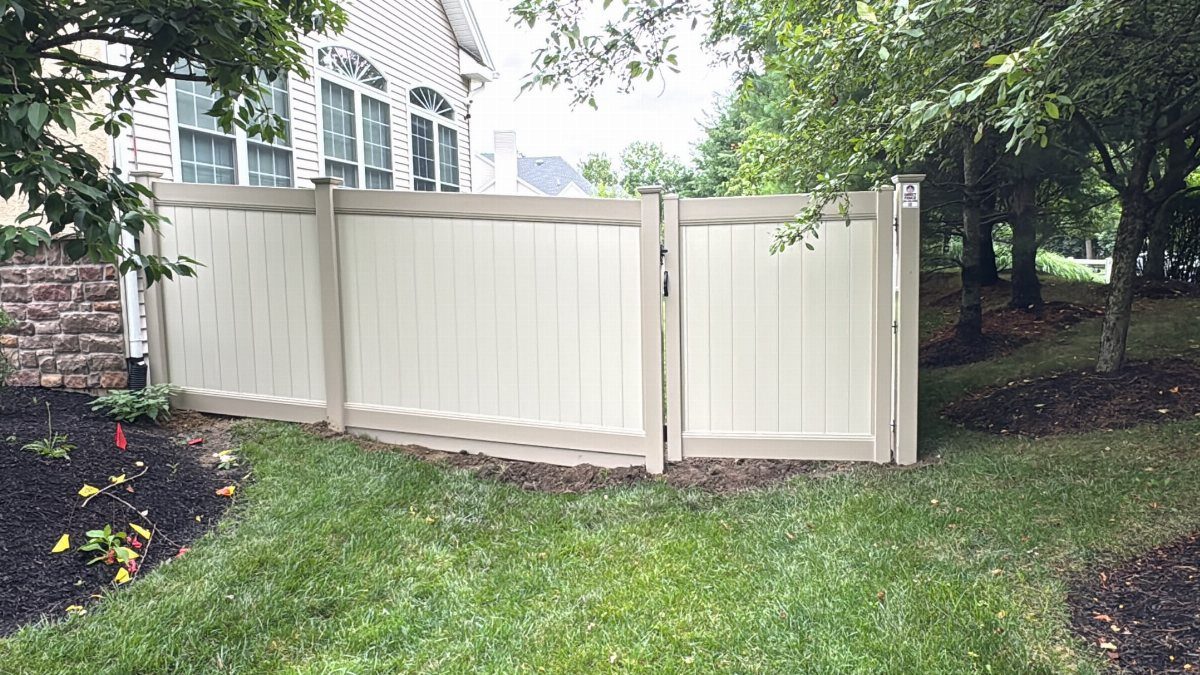
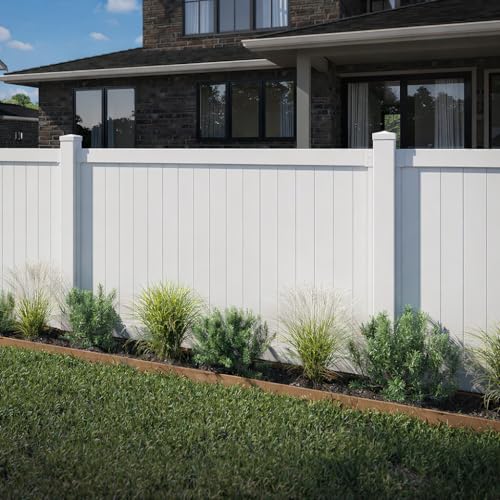
Off-white vinyl panels interlock to block sightlines completely, which makes this the choice when privacy matters more than breeze. I find the color limits me; beige or white reads suburban default, and darker vinyl fades unevenly in sun.
No painting, no staining, no rot: that is the whole pitch. Hit it with a pressure washer every couple years and check that the bottom rail has not filled with soil, which traps moisture and warps the panel from below.
Gate hardware on vinyl flexes more than on wood, so I would upgrade to a metal frame for any gate I plan to use daily.

GREENES PREMIUM RAISED GARDEN BED: Greenes Fence Premium line of cedar raised garden beds allows you to create an open-bottom frame to support your garden. Raised garden beds give your plants the room they need to grow in the location of your choice. Our cedar frame is left untreated, which means it is organic and safe to grow vegetables, herbs, and fruits in.

DIMENSIONS: Each panel measures 32” H x 48” W

Order is for a 4-Pack of fencing, giving a total of 32 feet of fencing in length
5. Cedar Privacy Fence
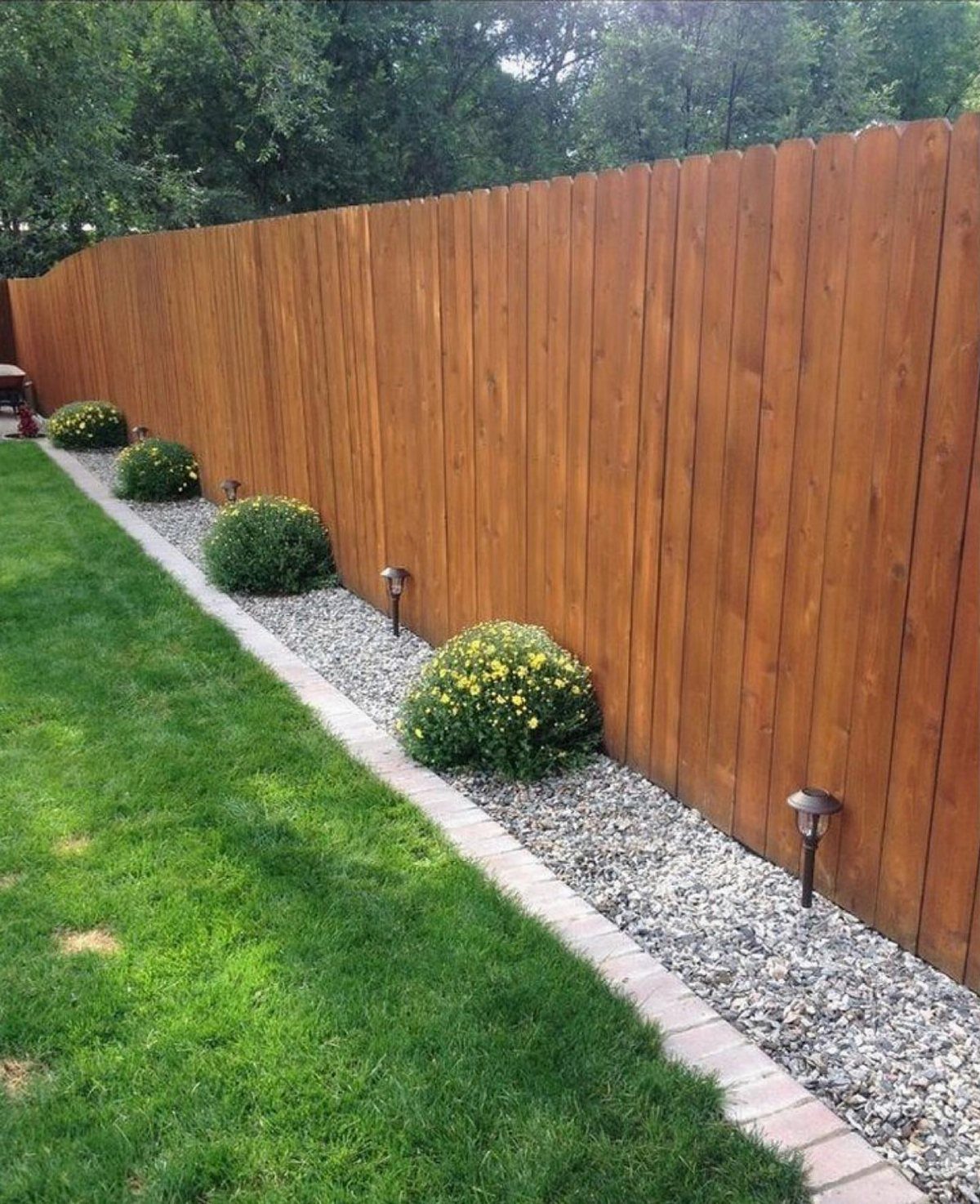
Overlapping pickets on a cedar frame give you a solid wall, no gaps at all. I would stain rather than paint; paint peels on rough-sawn cedar, and the natural oils resist rot better left to breathe.
The gravel bed and pavers at the base do more than look tidy. They keep soil off the bottom of the boards, which is where water wicks in and starts decay.
A 6-inch clearance is the minimum I would allow. Cedar costs more than pressure-treated pine and weathers to silver-gray fast unless you restain; I like that aged look, but budget for either the product or the maintenance.

This gabion set of three different sizes is a great choice for both home and business landscape design

Quantity in Package: each package you buy gives you 1 gabion baskets for retaining wall; Use them together for a harmonized look, or separately to create distinctive points of interest in your landscape

HIGH QUALITY. The AdirPro Gabion Basket is made of rust-proof and weather-resistant rigid galvanized steel to withstand harsh weather conditions and not degrade. This makes it very stable and durable.
6. Gabion Wall Fence
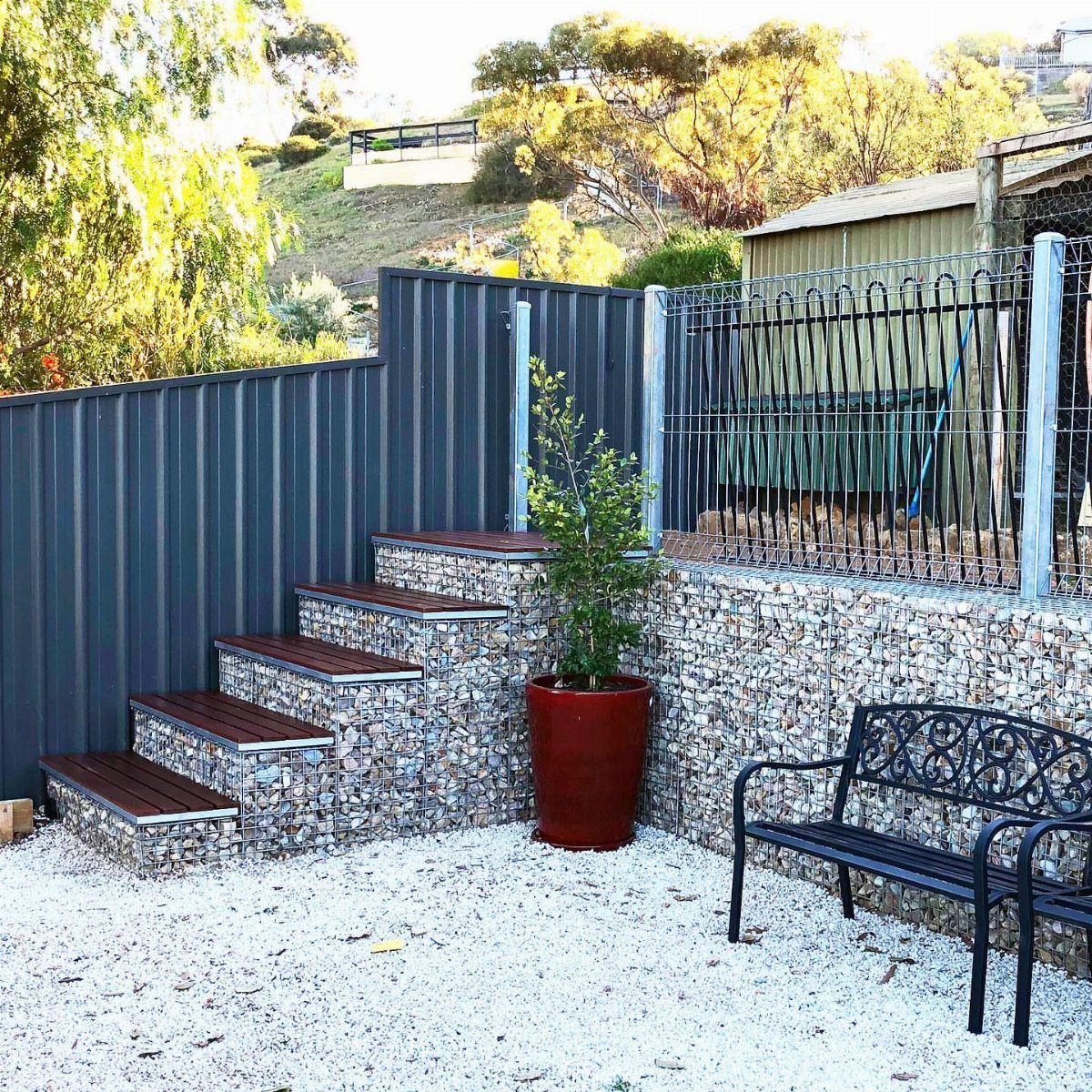
Wire cages filled with stone turn a retaining wall into architecture. The stones here are large enough not to rattle through the mesh, and the stepped build follows a slope without engineered footings for each level.
I would not attempt this on flat ground where a standard fence post does the job; the labor and stone delivery punish you for overbuilding.
Where you need to hold back soil or manage a grade, gabions settle into the landscape in a way concrete never does.
Cap the cages with a solid course, stone or timber, so the wire does not snag clothing at shoulder height.
Black Ridged Slats for 6ft chain link are deliberately cut to about 68.5 inches long. These fence inserts are designed primarily for 6ft 11 or 9 gauge chain link with a two inch diamond. Also works in economy chain link with a larger diamond pattern, but privacy will be less. Slats must be installed correctly and be fully inserted inside the wire mesh of your fence to achieve the desired results. Cannot be used to extend the fence height. Not suitable for fences on a steep slope.

Dimensions: Length: 492 feet; Includes: 246 feet of fence privacy strip*2, 200PCS buttons*2, two hole punches.
Black Ridged Slats for 5ft chain link are deliberately cut to about 56.5 inches long. These fence inserts are designed primarily for 5ft 11 or 9 gauge chain link with a two inch diamond. Also works in economy chain link with a larger diamond pattern, but privacy will be less. Slats must be installed correctly and be fully inserted inside the wire mesh of your fence to achieve the desired results. Cannot be used to extend the fence height. Not suitable for fences on a steep slope.
7. Decorative Panel Fence
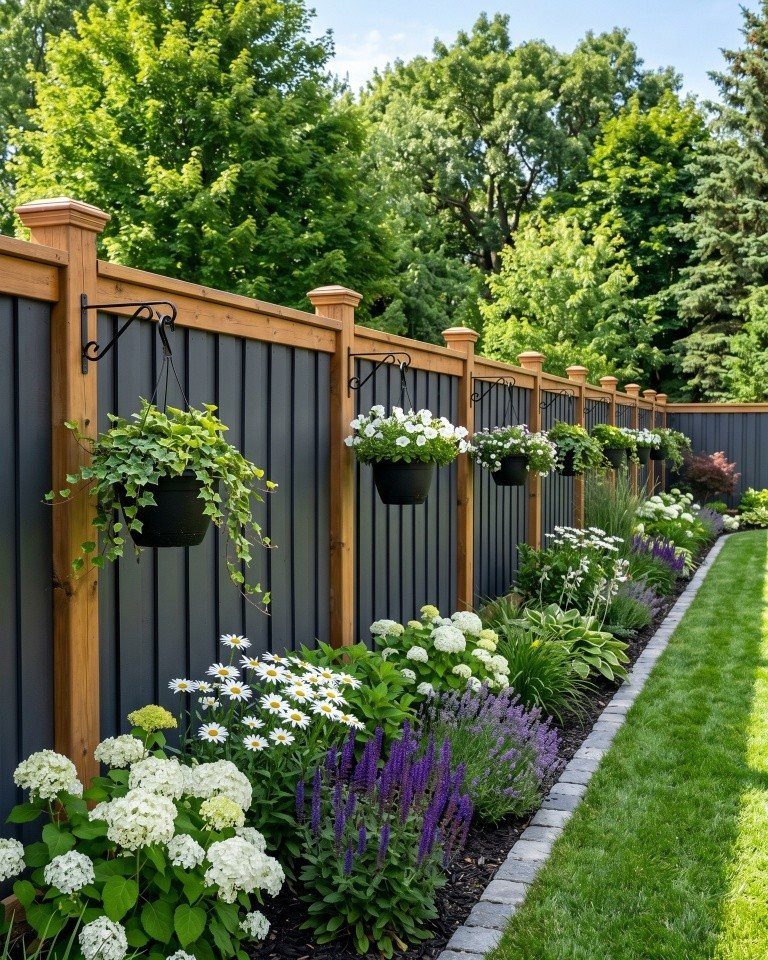
Modular panels let you mix materials within the same run: vertical slats in one section, open lattice in another, solid board where you need it most.
I would plan the layout on paper first, since the post spacing has to match whatever panel width you choose.
Dark slats with natural wood posts give you 2 tones to build on, and hanging baskets add a third layer without looking cluttered.
Check that your posts are rated for the combined load of panel plus wet soil in a planter.
Metal-framed panels go up faster than all-wood builds but limit you to the manufacturer’s dimensions. I would go wood-on-wood for an irregular yard where I need to cut panels to fit.

Backyard Privacy Enclosure: Our vinyl fence panel set includes 3 panels measuring 50 x 50 in, ideal for concealing outdoor items like trash bins, pool equipment, and air conditioners, keeping your backyard neat and attractive while meeting HOA guidelines
FINISHING POST REQUIRED: This vinyl fence is designed to scale, so you will need to order a finishing post to complete your yard fence or pool fence project (item BL19042). A compatible gate is available by searching BL19106.

Backyard Privacy Enclosure: Our vinyl fence panel set includes 2 panels measuring 50 x 50 in, ideal for concealing outdoor items like trash bins, pool equipment, and air conditioners, keeping your backyard neat and attractive while meeting HOA guidelines
Choosing the Right Fence Design
Your home’s architecture should steer the fence style more than the current trend does. I would match the fence’s visual weight to the house: lighter, more open fences for smaller footprints; solid massing for two-story walls of brick or stucco.
Yard layout matters for what the fence has to do, not just what it looks like.
A flat yard with good drainage lets you choose almost any system. Sloped ground pushes you toward stepped panels, gabion cages, or custom-cut wood; manufactured vinyl and composite panels hate irregular grades and leave awkward triangular gaps at the base.
Privacy and aesthetics pull in different directions, and I would decide which one wins before picking a material. Solid cedar or vinyl blocks sightlines completely but stops breeze and can feel like a box.
Slatted or lattice sections let air and light through while still defining the space. Most yards need both: solid where you sit, open where you walk.
The right yard fencing on your property can make a real statement! Ideally, you want a backyard fence that both serves its function and complements your style.

Premium Privacy & Protection: Our PVC privacy screen delivers 95% visual blockage, effectively shielding your garden, balcony, or patio from prying eyes. The tightly-woven oval tube design also reduces noise and helps deter wildlife, creating a more secluded and secure outdoor living space.

High-Quality Privacy Fencing:Our composite fence panels are crafted from sustainable wood-plastic composite materials,not only offering the authentic texture of natural wood but also have a range of advantages,including environmental friendliness and durability.

Privacy Solution: Most economical way for privacy over chain link fence, porous decorative concealment, existing cyclone wire fence, wood retaining wall, welded wire fence, chain link fence, privacy barrier around swimming pool, block nose neighbor see through, add privacy to acre back yard backdrop, front yard, patio, garden and porch; hide street, road, construction site, pet kennel pen, block surrounding noise and street view, stops dogs from barking at neighbors.
Maintenance Tips for Fences
Wood fences demand the most schedule from you. I would clean and restain cedar every 2 to 3 years in sunny climates, sooner if the finish starts to powder or gray unevenly.
Pressure-treated pine holds up longer with a good oil-based stain, but once the surface opens to water, rot accelerates fast. Sealing end grain matters more than face coating; the cut tops of posts and pickets drink water first.
Composite and vinyl forgive neglect better. A bucket of mild soap and a soft brush handle most dirt; pressure washers work but I would keep the fan tip back to avoid etching the surface.
Trim plants back 6 inches or more from any fence line. Ivy and dense shrubs hold damp air against boards and can stain vinyl green.

Complete Kit with Heavy Duty Posts: This 6ft tall privacy fence gate comes as a full, ready-to-install set, including 2 rust-resistant aluminum posts, a lockable handle, caster wheel, and all mounting hardware. No extra purchases needed, perfect for quick backyard, garden, or pool area installation

Package contains 4 CritterGuard fence panels

GREENES FENCE CLASSIC RAISED GARDEN BED: Greenes Fence Classic line of cedar raised garden beds allows you to create an open-bottom frame to support your garden. Raised garden beds give your plants the room they need to grow in the location of your choice. Our cedar frame is made in the USA of North American Cedar and left untreated, which means it is organic and safe to grow vegetables, herbs, and fruits in.
Local Regulations for Fencing
Local height limits vary by town and often by zone within the same town.
Most residential areas cap backyard fences at 6 feet and front yard fences lower, sometimes 3 or 4 feet. I would pull the actual code for your address, not rely on what a neighbor built; variances and grandfathered lots create confusion.
Setback rules keep fences away from property lines, usually 2 inches to 6 inches but occasionally more on corner lots where sightlines matter for traffic.
Building on the line itself sometimes requires a party-wall agreement or solid backing on the neighbor’s side, which changes your material choice and cost.
HOA guidelines can ban specific materials or colors outright.
I have seen associations prohibit chain link, unfinished wood, or any fence visible from the street above a certain height. Get the written standards before you order posts; approval boards move slowly and retroactive compliance means tearing out work.
Most towns also require permits for fences over a certain height or any fence with concrete footings, and utility locates are mandatory before you dig.

『Landscape Design Gabion Wall』This gabion wall is a great choice for both residential and commercial landscape design. The gabion basket offers an easy way to build a strong retaining wall wherever you need to keep out the wind, precipitation, etc.

Spacious Capacity: Designed to comfortably accommodate up to 4 standard garbage bins, this enclosure helps maintain a clean and organized outdoor space in your garden or patio area.

Durable and Robust Design: Constructed with heavy-duty galvanized steel, this gabion wall offers high structural stability for residential and commercial landscape projects.
Frequently Asked Questions
What is the cheapest way to fence in a backyard?
Repurposed pallets cost next to nothing if you can source them locally. You can bracket whole pallets to posts for a grid pattern or strip them for individual slats.
Either way, the wood is free and the look is one of a kind, though it takes more labor than prefab panels and the lifespan is shorter.
What are the latest fencing trends?
Black-stained horizontal slats are what I see most often in new builds right now; the long lines pull the eye sideways and make a narrow yard feel wider than it is.
Mixed materials within the same run, like modular panels that alternate slats, lattice, and solid board, are showing up more often too.
Composite boards with improved wood-grain embossing are replacing stained wood for homeowners who want the look without yearly maintenance.