These 12 ideas run from a weekend gravel pad with a steel ring insert to a sunken lounge that needs drainage planning, so the deciding factor is how much of the project you are willing to build versus buy.
A 3-foot diameter pit with string lights overhead handles most Tuesday nights; the outdoor kitchen bar and movie screen setup are for yards where the fire pit is the main room.
Local setback codes decide half the placements before aesthetics even enter the conversation, so I would check my ordinance first.
[link-whisper-related-posts]1. Fire Pit Patio with Built-In Seating
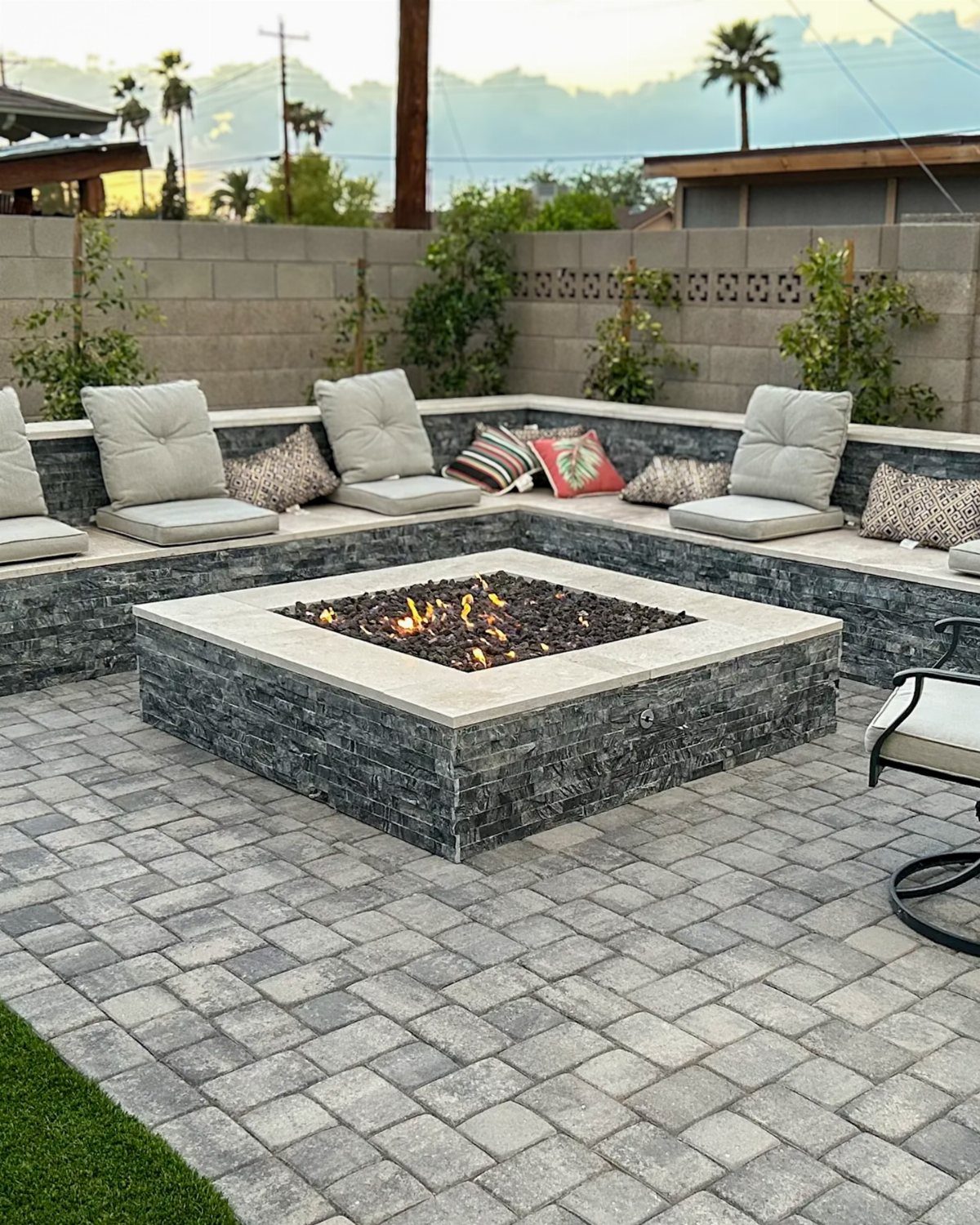
Built-in seating turns the fire pit and its surround into a single structure, which saves the space separate chairs would eat up and keeps the whole area feeling intentional.
I would check my local code before pouring footings for the bench; many areas require a setback from property lines or specify minimum clearances from combustible surfaces.
The stone veneer on the pit and bench needs to match or complement, not clash, and seat cushions sized for the exact depth make the difference between looking finished and looking like an afterthought.

PREMIUM QUALITY - Build your own fir pit with this all-in-one kit! The kit includes 84 pavers, a control panel, 2 vent blocks, and tumbled lava rock. The 42” Square Crystal Fire Plus Burner Insert and Plate rate at 105,000 BTUs


Durable & Safe -- Crafted with durability, our fire rings are constructed using high-quality steel materials that can withstand high temperatures. Additionally, it provides a secure barrier, effectively keeping ash and debris from falling through the gaps, ensuring a tidy and controlled environment. With its robust construction, our firepit liner guarantees long-lasting performance, allowing you to relish countless hours of warmth and relaxation around your fire pit.
2. Gravel Fire Pit Area
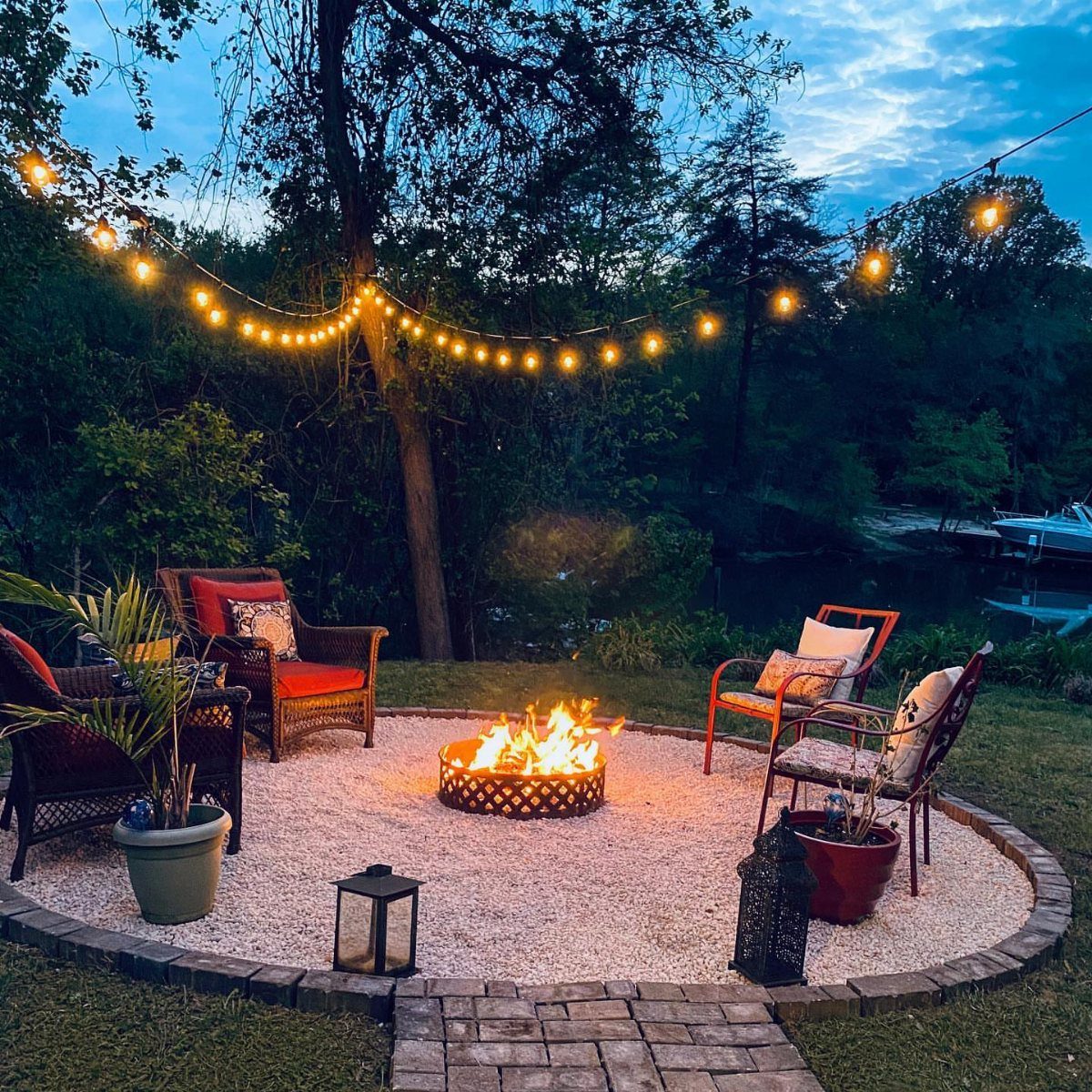
Gravel drains fast and forgives uneven ground, which makes it the friendliest surface for a weekend project on a modest budget. I would lay landscape fabric first; without it, you will be pulling weeds from the stone for years.
A brick paver edge does the real work of holding gravel in place, so do not skip it or substitute plastic edging that heaves in frost.
For the fire pit itself, a steel ring insert protects the surrounding stone from direct heat and extends its life significantly.
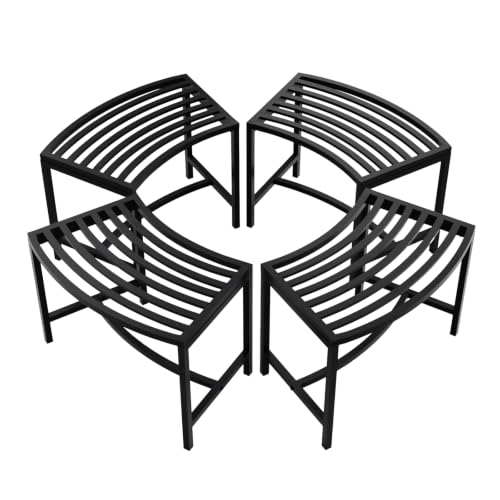
Built to Last: Crafted from heavy-duty iron, our backless patio benches feature a durable, smooth non-toxic finish. The reinforced T-shaped base design provides exceptional stability, safely supporting up to 300 lbs per bench.

【Built-in Table Design】Enjoy a couple cups of tea while you have a chat with the person sitting next to you. Our 2-seat wooden bench has a guest-friendly design with a built-in table between its adirondack seats, this patio bench provides enough space for books and cups while without taking up floor space, so that you don’t need to buy an additional coffee table. There is room for two person to sit on each side, this sofa promotes shared moments of leisure and conversation in your outdoor space.

Durable Fir Wood Construction: Crafted from 100% solid fir wood, this backless curved bench is designed for year-round use, withstanding various weather conditions and wear throughout all seasons while providing lasting durability and stability.
3. Fire Pit Paver Patio
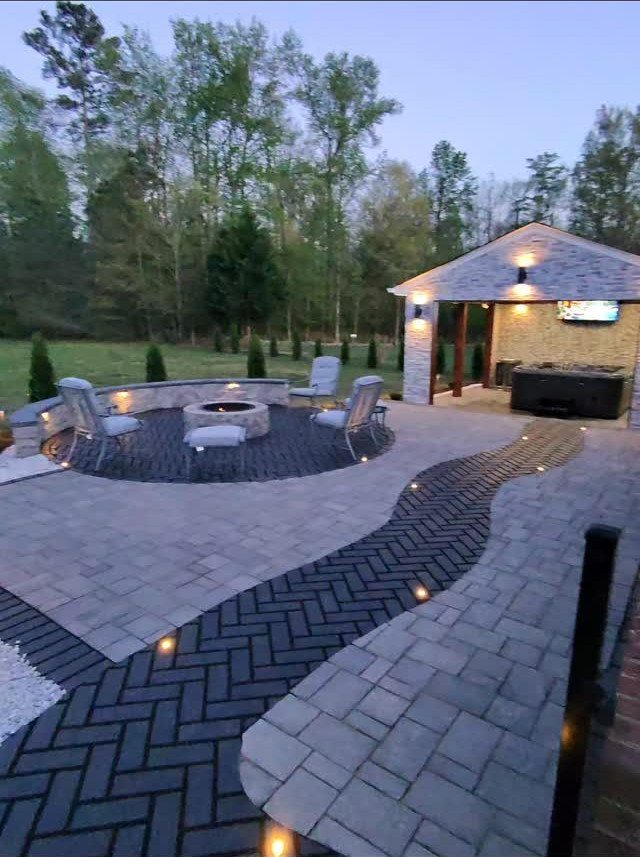
A paver patio with a fire pit ring at its center reads as designed rather than assembled, and the herringbone pattern visible here adds enough visual interest that the space does not need much else.
If your yard slopes, a retaining wall can level the patio and double as casual seating with a capstone wide enough to sit on.
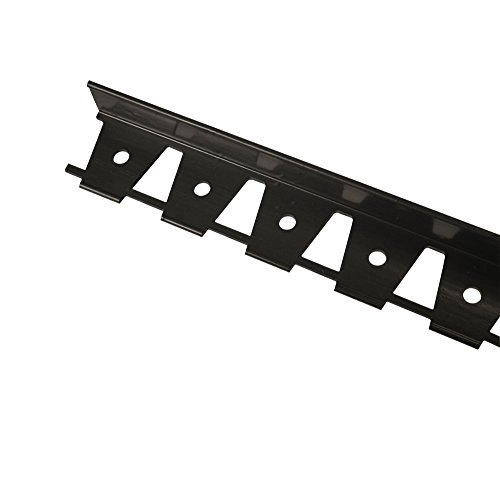
SNIP TO FLEX PAVER, BRICK, OR LANDSCAPE EDGING: Create a beautifully landscaped yard and paver designs without having to hire a professional with easy to install commercial grade edging

EASY TO INSTALL: EasyFlex Aluminum No-Dig Edging provides an easy installation for a permanent and maintenance-free edging solution
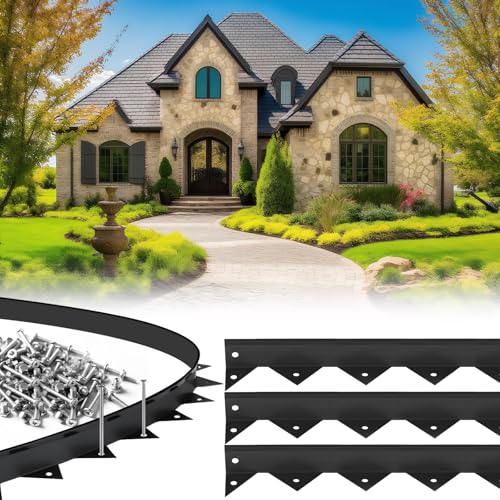
Easy to Install: creating stunning landscaped courtyards and intricate paving brick patterns is possible without the need for professional help, as these edges are simple to install and of commercial-grade quality
4. Fire Pit with Outdoor Kitchen
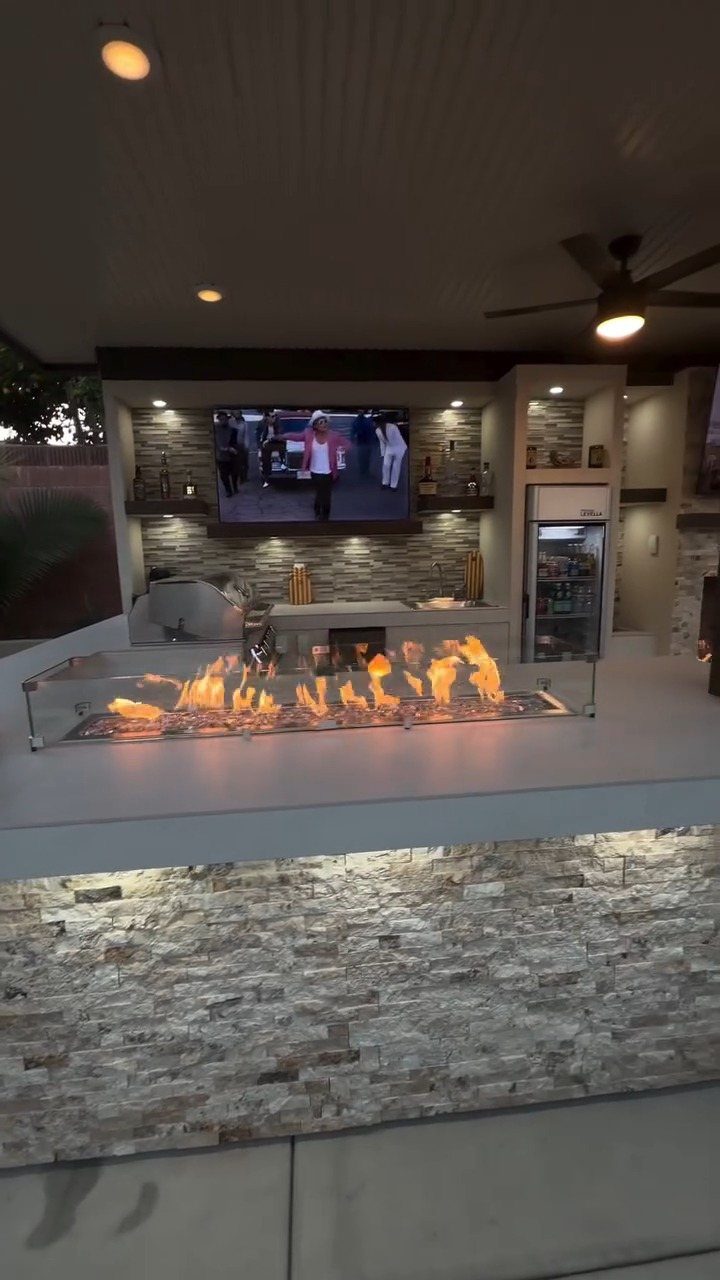
A linear gas fire feature built into the bar counter gives guests a place to gather without crowding the cook, and the covered structure means you will use it on nights when a standalone pit stays cold.
I would run a dedicated gas line rather than relying on propane tanks; the cost upfront is higher but the flame stays consistent and you are not hauling cylinders.
The television mounted behind the bar works only if the roof extends far enough to block direct sun on the screen, so test your sightlines at the hour you actually plan to watch.

Easy Installation: The 7-piece fire pit ring insertion kit is easy to assemble and can be assembled in just a few minutes.Seamless design allows for easy installation and integration into your DIY fire pit project.Fixed with screws, it will not easily fall off during use. Let you have more time to enjoy the joy brought by flames.
Easy Installation: The 8-piece fire pit ring insertion kit is easy to assemble and can be assembled in just a few minutes.Seamless design allows for easy installation and integration into your DIY fire pit project.Fixed with screws, it will not easily fall off during use. Let you have more time to enjoy the joy brought by flames.
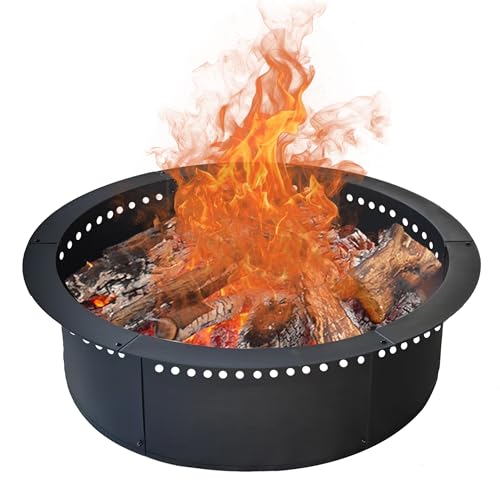
Easy Installation: The 7-piece fire pit ring insertion kit is easy to assemble and can be assembled in just a few minutes.Seamless design allows for easy installation and integration into your DIY fire pit project.Fixed with screws, it will not easily fall off during use. Let you have more time to enjoy the joy brought by flames.
5. Sunken Fire Pit Lounge
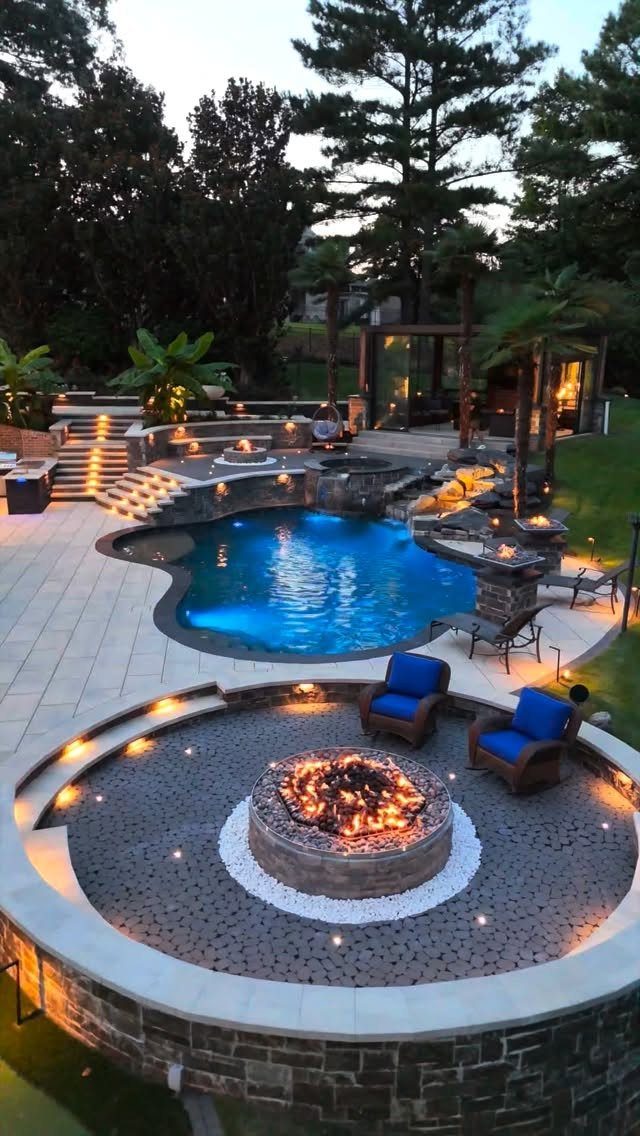
Lowering the seating area changes how enclosed the space feels; you are sitting below grade with the fire at eye level, which reads as private even in an open yard.
I would confirm my water table and drainage before digging; a sump pump in the pit floor is not the romantic addition anyone wants.
2 armchairs spaced for conversation, not a crowd, suit a household that entertains in pairs rather than parties.

HEAT REFLECTOR: Maximizes warmth by pushing heat forward—perfect propane fire pit for patios and backyards.

Embrace the Warmth: The 32″ x 32″ x 25″ propane fire pit generates an impressive 50,000 BTUs of heat to create a comfortable and relaxing atmosphere for your guests. ETL certified for peace of mind, this fire pit table is ideal for bringing everyone together for loads of fun and laughter.

【Powerful & Efficient Heating】Fire pit table Features with 50,000 BTU stainless steel burner delivering strong and even flames to warm perfect for cool-weather gatherings while maximizing fuel efficiency.A propane outdoor fire pit table can provide the atmosphere needed for a great time!
6. Classic Stone Fire Pit with Seating Area
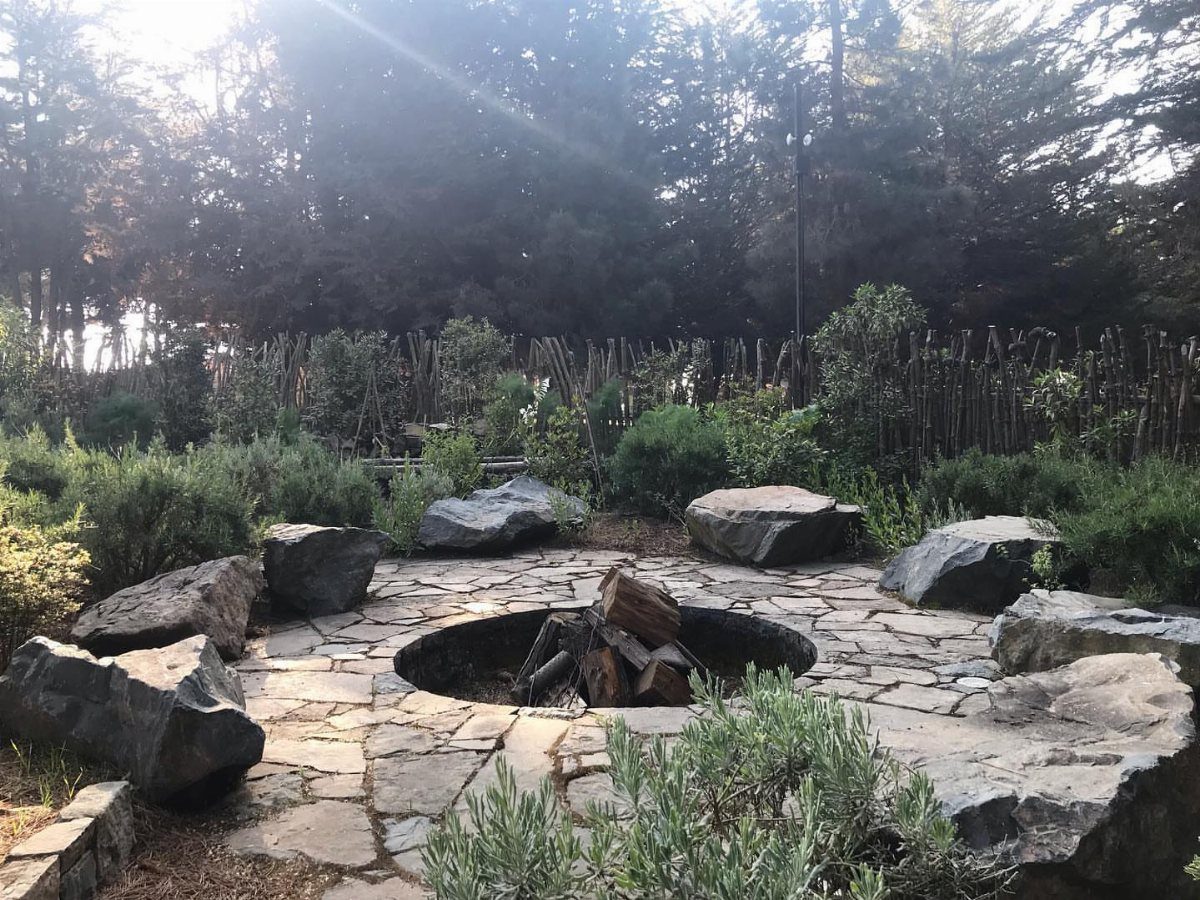
Boulders for seating eliminate the cost and construction of built benches, and their irregular shapes make the area feel less designed than discovered.
I would select stones with at least one flat face; a rounded boulder looks natural but is genuinely uncomfortable to sit on.
The flagstone patio here is laid in a radial pattern that echoes the pit shape, which takes more cutting than a random layout but gives the space its deliberate character.
Stacked wood inside the ring, ready to burn, turns the pit into a visual feature even when unlit.

Fire pit control panel

PREMIUM QUALITY - Build your own fir pit with this all-in-one kit! The kit includes 64 pavers, a control panel, 2 vent blocks, and tumbled lava rock. The 42” Square Crystal Fire Plus Burner Insert and Plate rate at 105,000 BTUs
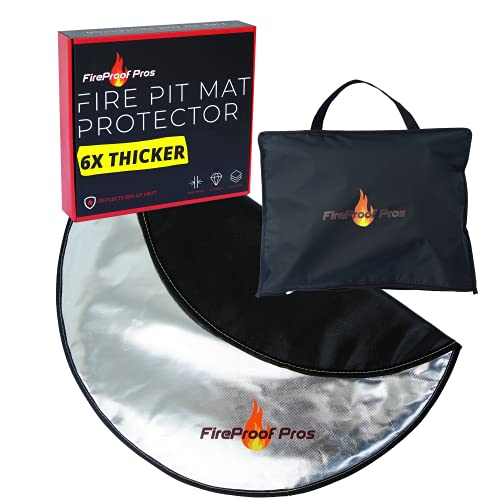
6x Thicker: It’s natural to wonder if a regular 1mm firepit mat has enough thickness to protect your grass, cobbles or timber. Afterall it seems really thin! And, in most cases you’d be right. But because we’re the original Fireproof Pros, our mats are always 6.0mm thick for pro fireproof protection!
7. Fire Pit with Pergola
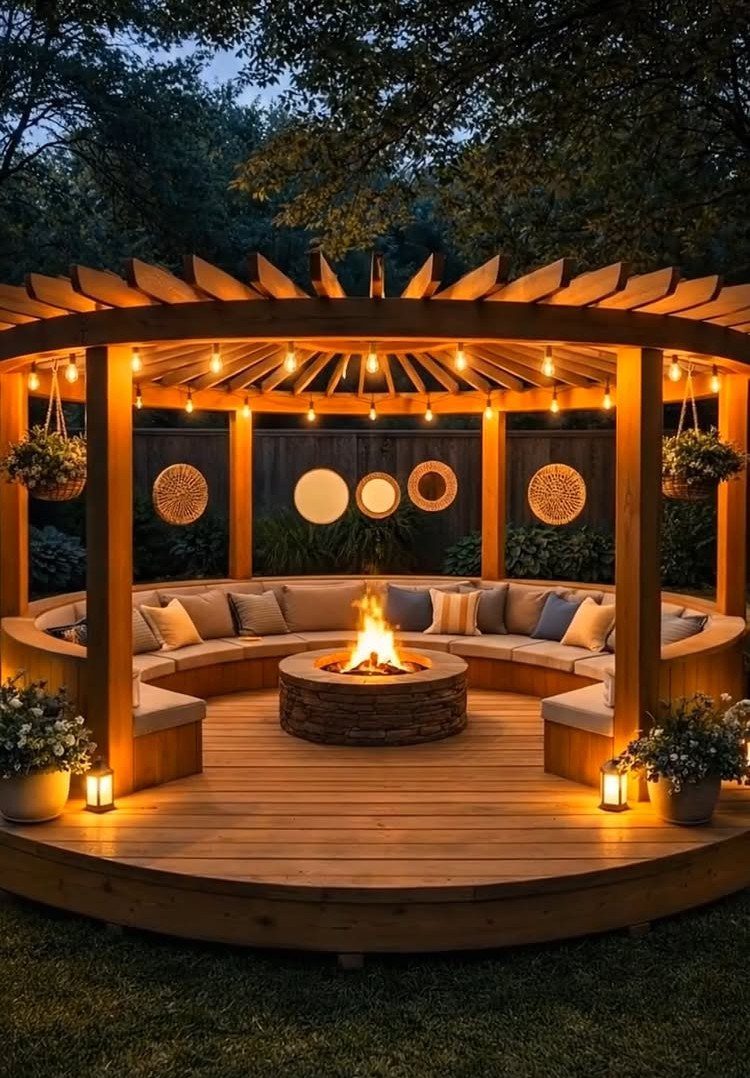
A round pergola frames the fire pit as a room without walls, and the overhead structure gives string lights something to hang from that does not depend on tree branches.
I would check the span rating on any kit before buying; a 12-foot circle in 2 x 6 lumber will sag within a season if the beam size is underspecified.
The bench following the pergola curve uses the same radius for both, which means cutting every joist to a different length and is not a project for someone who measures once.
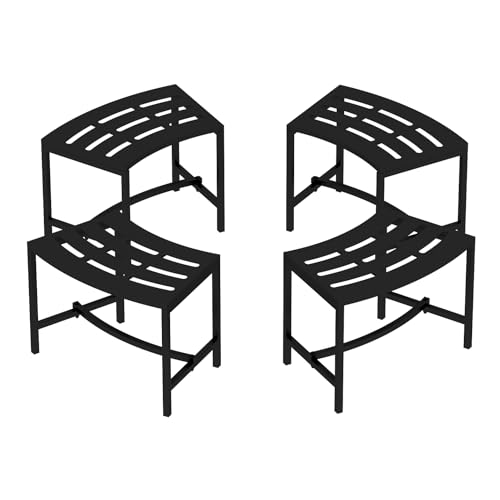
🍧【HEAVY DUTY】Our outdoor backless benches for fire pits are made of heavy-duty iron with a smooth, non-toxic coating. The T-shaped structure makes the fire pit benches more sturdy, with a maximum weight capacity of up to 300 lbs.


🍧【HEAVY DUTY】Our outdoor backless benches for fire pits are made of heavy-duty iron with a smooth, non-toxic coating. The T-shaped structure makes the fire pit benches more sturdy, with a maximum weight capacity of up to 300 lbs.
8. Fire Pit with Surrounding Garden
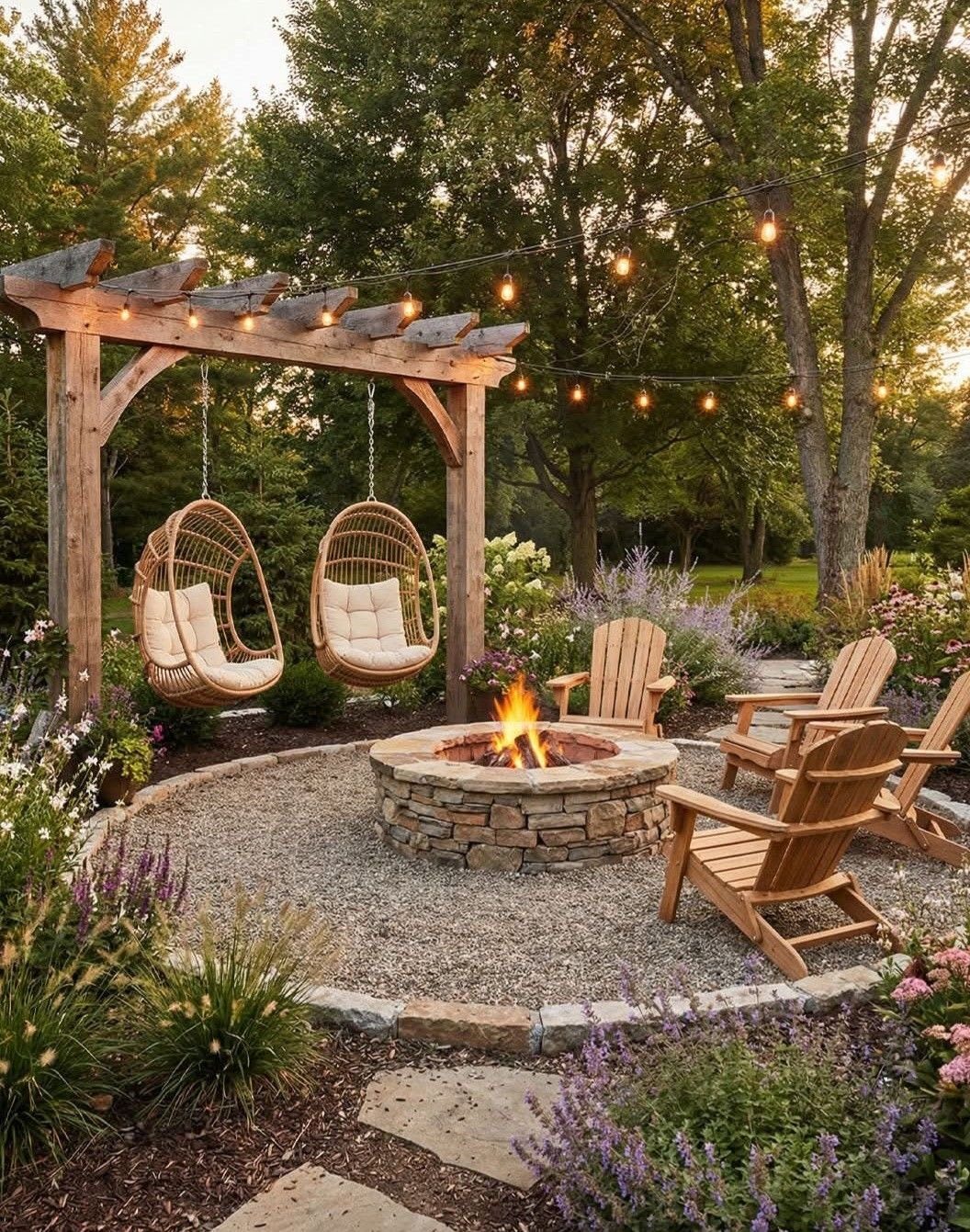
Flower beds at the perimeter soften the hardscape and give the eye somewhere to rest from stone and gravel, which keeps the space from feeling like a parking area.
I would keep plantings well back from the pit ring; sparks travel farther than you think, and an irrigation line too close to the heat is a repair waiting to happen.
The gravel here is compacted enough for chair legs but loose enough to drain; crushed stone with fines, not pea gravel, achieves that balance.
Easy to Install: creating stunning landscaped courtyards and intricate paving brick patterns is possible without the need for professional help, as these edges are simple to install and of commercial-grade quality

Easy to Install: creating stunning landscaped courtyards and intricate paving brick patterns is possible without the need for professional help, as these edges are simple to install and of commercial-grade quality

BENEFITS: TRUEGRID DECO permeable pavers will stabilize walkways or ribbon driveways, prevent gravel migration, and create a decorative walkway between parking spaces
9. Modern Gas Fire Pit Table
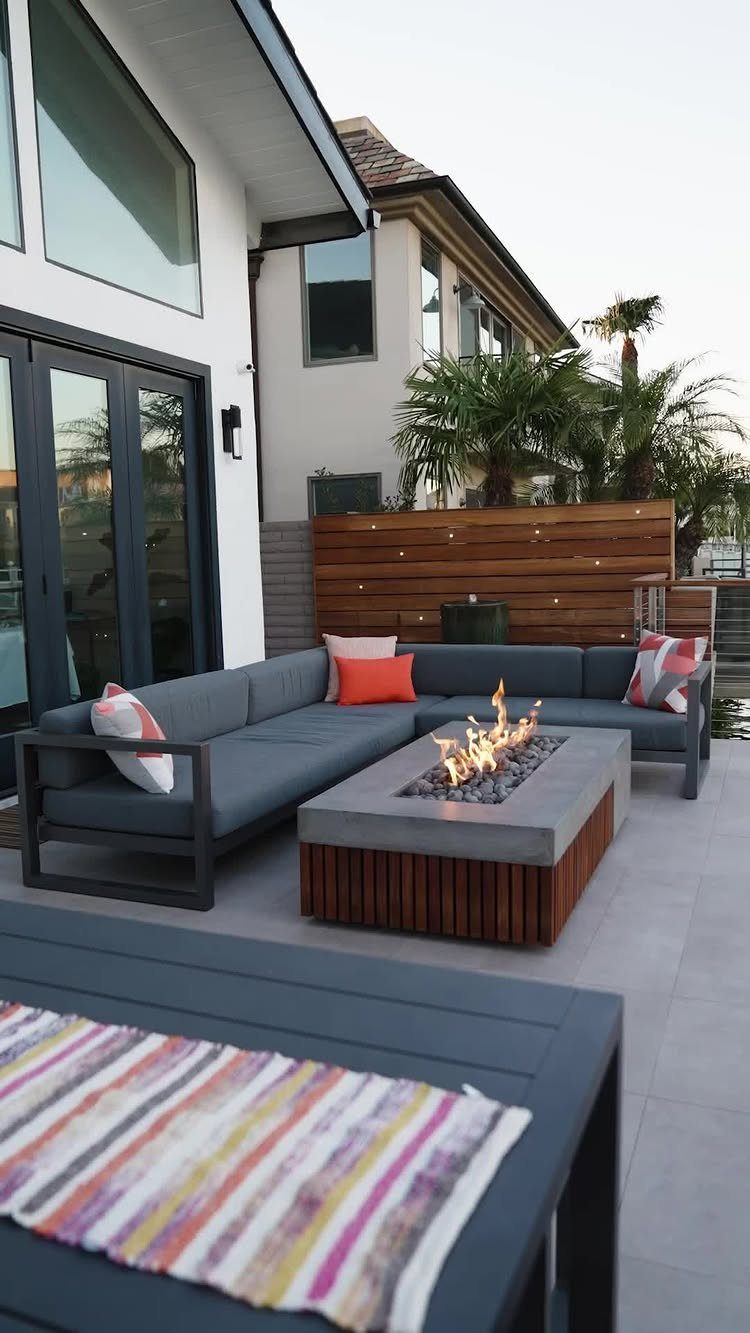
A rectangular fire table at coffee height doubles as a surface for drinks when the burner is off, which matters on a small patio where every piece needs to earn its footprint.
The concrete-and-wood combination here needs sealing on both materials; unsealed concrete pits under leaf stain and unsealed wood warps at the joint.
I would confirm the BTU output before buying, as many tables at the low end put out more glow than heat on a cool evening.

Open Bottom Design – Perfect for DIY Stone/Brick Fire Pits: This is a fire pit liner / insert only, not a complete fire pit. It has no bottom, allowing direct ground contact or placement over sand/gravel. Designed to be surrounded by stones, bricks, or pavers for a custom, professional-looking outdoor fire pit. Ideal for above-ground or in-ground DIY projects.

Superior Strength Meets Premium Craftsmanship (Utility Patent Pending): This 36"heavy-duty steel fire pit ring is built tougher and thicker than standard models and other smokeless fire pit ring—delivering long-lasting durability and more impressive, smokeless flames. This 36"heavy-duty metal fire pit ring is a high-end centerpiece designed to elevate every outdoor gathering. [Utility Patent Pending]

Superior Rust Resistance & Durable Construction: Crafted from 0.7mm zinc-plated steel with an additional black high-temperature anti-rust powder coating, this fire pit ring achieves a total thickness of 0.8mm. It offers exceptional corrosion resistance against moisture and rain, significantly outperforming ordinary cold-rolled steel and ensuring long-lasting outdoor use.
10. Fire Pit with Outdoor Movie Screen
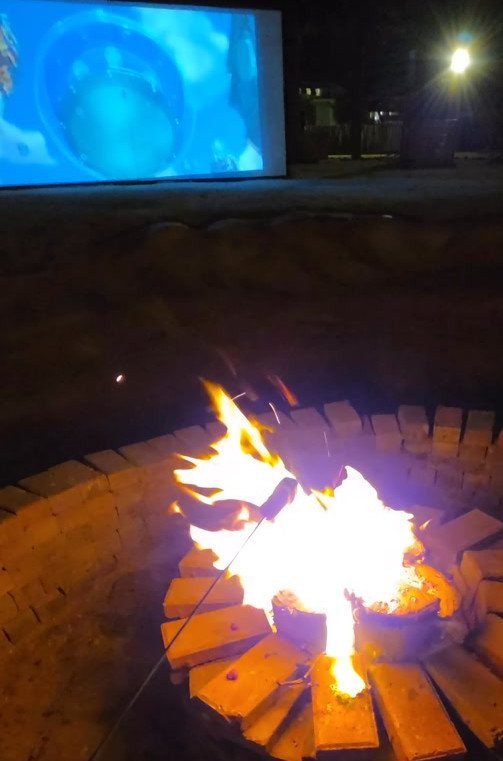
I would run power for the projector from the house on a cord rated for outdoor use, not an indoor extension through the grass.
The marshmallow stick in the foreground tells you the viewing distance; any closer and the firelight washes out the projection.

IDEAL DECORATION FOR OUTDOOR: BALI OUTDOORS gas fire pit is the perfect combination of elegant appearance and functional features, slender body capable with heavy-duty tempered glass wind guard keeping the fire gorgeous even during a breeze, decorative blue fire glass stone reflect the dancing flames for you in a cozy night

SPECIFICATIONS - 30" x 10" Rectangular Fire Pit Burner with a 1/2" NPT threaded male inlet. This burner is rated for up to 125,000 BTU’s.
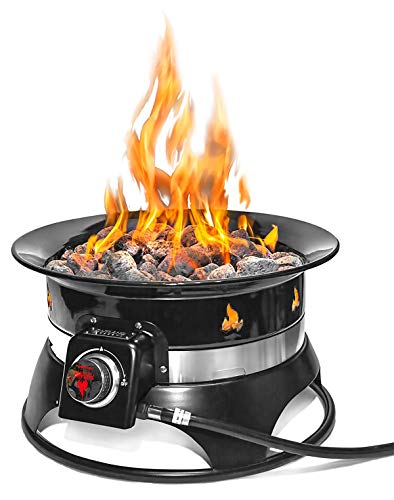
✓ PERFECT NO MESS CAMPFIRE: Say goodbye to dirty ash, expensive firewood, and bothersome smoke and enjoy a clean realistic propane campfire. The perfect outdoor centerpiece for camping trips, RV travels, tailgating get-togethers, beach parties, and family evenings on the backyard patio.
11. Fire Pit with Custom Art Installation
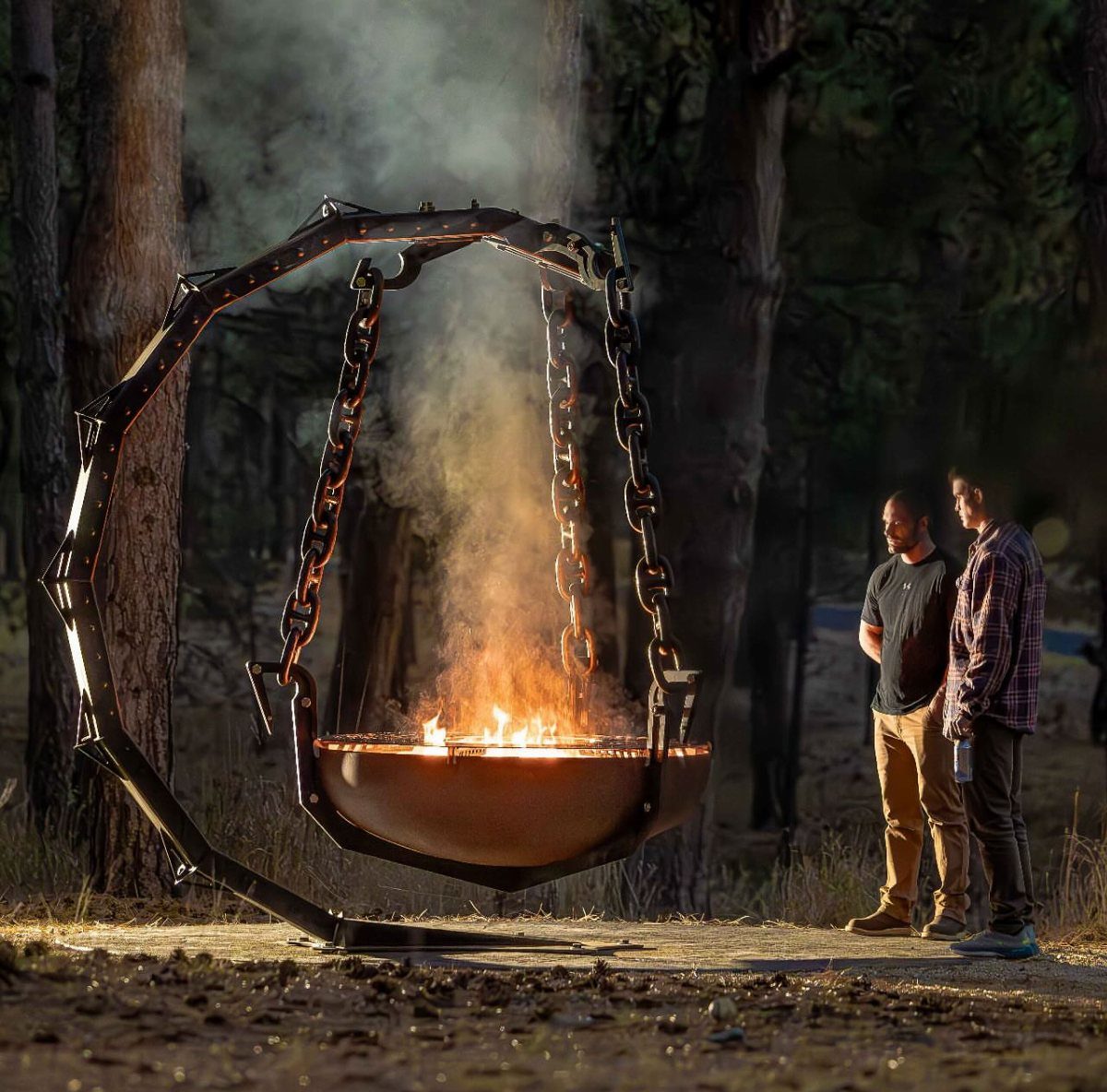
A suspended fire bowl on a steel frame turns the pit itself into sculpture, which suits a clearing or courtyard where the structure reads as intentional rather than improvised.
I would have a fabricator confirm the chain and frame rating for the loaded weight; the arch carries live load and heat stress together, and garden-center hardware will not.
The bowl shape concentrates the fire smaller than a ring of the same diameter, so this format warms fewer people more dramatically.
12. String Lights Overhead
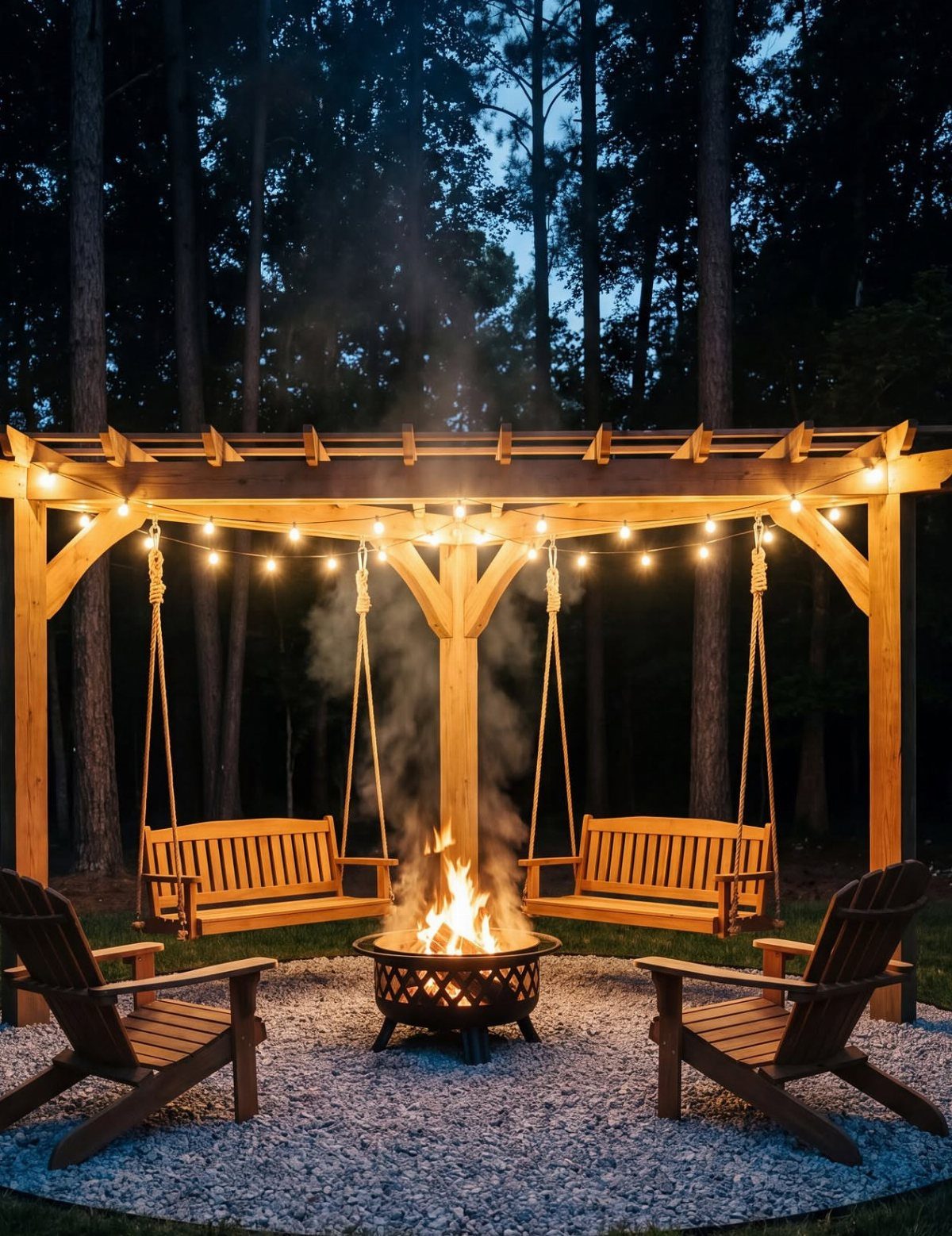
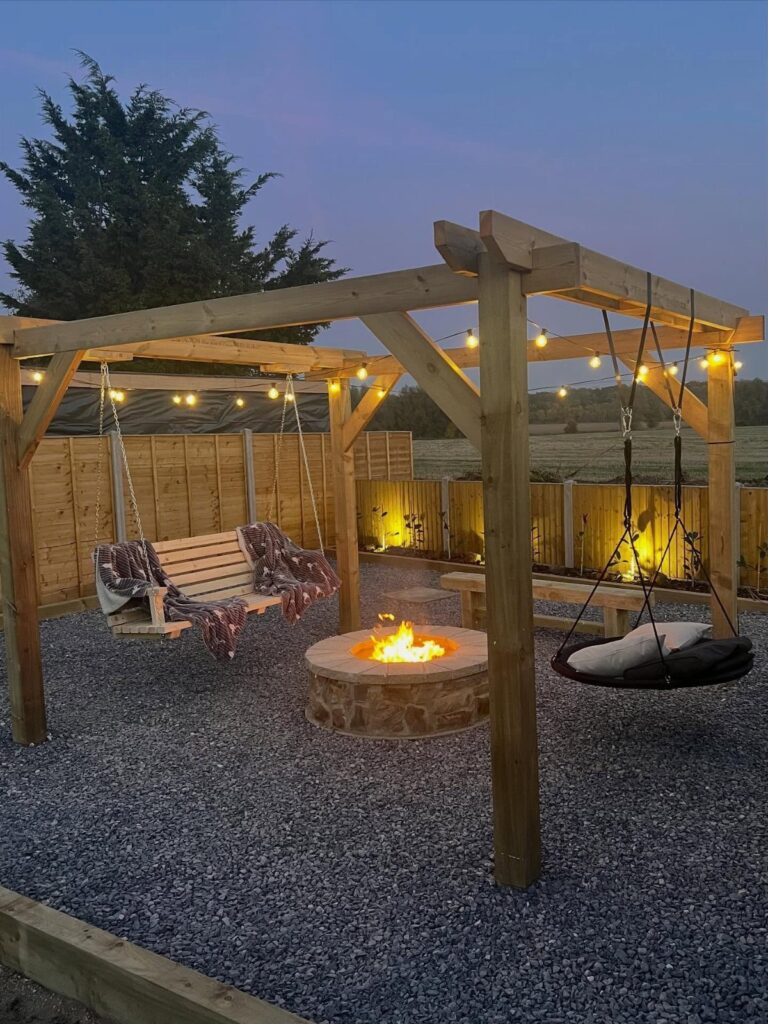
Overhead string lights cost less than any permanent fixture and move the mood from backyard to somewhere you want to stay past sunset.
I would buy commercial-grade sockets, not retail holiday strings; the wire insulation breaks down in UV, and a season of sun turns the cheap stuff into a shorting hazard.
The pergola rafters here give attachment points every 2 feet, which keeps the catenary shallow and the bulbs from swinging in wind.
A dimmer on the circuit is worth the extra cost; full brightness is for working, not for sitting around a fire.
Fire Pit Safety Guidelines
Local codes usually want some breathing room between a fire pit and anything that can catch, including your house, fence, or low branches overhead, so I would pull out the actual ordinance for my address before I commit to a spot.
Checking with my city or county before finalizing placement, not after construction starts, has saved me from headaches on other projects.
Wind direction matters for wood-burning pits specifically; smoke and sparks drift toward seating areas or neighboring yards more often than people account for.
Stone, concrete, or gravel under the pit is the safest base, though a heat-resistant mat on a wooden deck can work for smaller, contained fires if you keep it small and stay nearby.
Gas or propane needs air moving through and a shutoff you can reach without thinking, both planned in from the first sketch.
Choosing Fire Pit Materials
Natural stone and stacked boulders look like they grew there, but the cutting and fitting pushes the price up and the timeline out.
Poured concrete sits in the middle of the price range, particularly if you stay with a plain square or circle. Brick hits a dependable middle price point and slides into both traditional layouts and ones that split the difference.
Steel shows up in clean, modern builds; thicker metal and better finishes cost more, though the install itself moves faster than masonry.
I would not match my fire pit brick exactly to my house veneer; something that ties into the color scheme without mirroring it reads as intentional rather than accidental.
A ring of pavers or a steel insert you drop in yourself is the cheapest way to get a permanent pit that still looks finished.
Fire Pit Size Considerations
A 3-foot diameter suits intimate settings. An in-ground pit does not need to be a hole; just deep enough to bury the ring and hold a few logs is plenty.
At 12–14 inches off the ground, the rim is right for resting your feet; push to 18–20 inches and the wall itself becomes a bench.
I would not go above 20 inches, the flames become harder to enjoy from a seated position. An 80–120 square foot patio area handles a small fire pit space without crowding.
I would size for the people who actually sit out there on a Tuesday, not the crowd from the Fourth of July; a layout you can move through beats one you have to squeeze into.
Stone or brick walls eat up space beyond the burn area, so the outer ring spreads wider than the fire itself.
Frequently Asked Questions
Are fire pits harmful to your health?
Wood-burning fire pits release smoke and particulates that can irritate lungs and eyes, especially for people with asthma or other respiratory conditions.
Gas and propane fire pits burn cleaner, with no ash or drifting embers to worry about. I would still use any fire pit in a well-ventilated, open area and avoid sitting directly in the smoke path, regardless of fuel type.
How big does a fire pit area need to be?
An 80–120 square foot patio area handles a small fire pit space without feeling crowded. I plan for the regulars, not the reunion crowd; a layout I can walk through without bumping a knee beats one that looks generous on paper.
How far should a fire pit be from my house?
Local codes usually require some breathing room between a fire pit and anything combustible, including your house, fence, or low branches overhead.
I pull the ordinance for my exact address before I mark a spot; plenty of towns want 15 feet or more.
Calling the city or county desk before the first shovel hits dirt has saved my weekend more than once on other builds.
What are the best materials for fire pits?
Natural stone and stacked boulders look organic and weather well, but the cutting and fitting pushes the price up and the timeline out. Brick lands in a steady middle on cost and slides equally well into traditional or transitional settings.
Steel fits clean, modern frames and goes up quicker than block or stone, though I pay more for heft and a finish that lasts.
What is the current trend in fire pits?
Gas fire pit tables with slim profiles draw attention now; the flat top doubles as a place for a glass when the burner is off.
Gas fire pits in general are trending because they offer easy ignition, consistent flame, and no ash cleanup.
Wood-burning pits still dominate where the classic campfire experience matters, particularly in colder regions where fire pits extend the outdoor season into fall and winter.