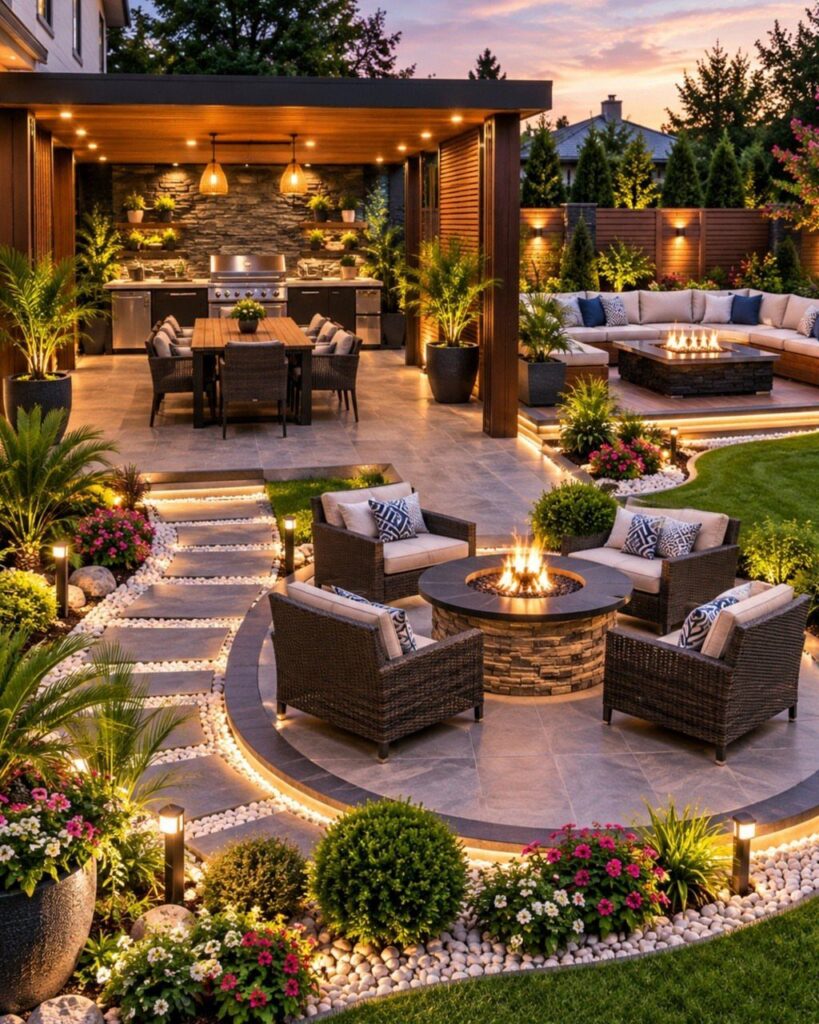
These 9 backyard patio ideas run from solar path lights you stake in after dinner to a retractable awning that needs professional mounting, so the deciding factor is how permanent you want this to be.
A shade sail anchors into masonry to handle hundreds of pounds of wind load, while vertical planters mount on an existing fence with little more than a drill and an hour.
[link-whisper-related-posts]1. Outdoor Lighting
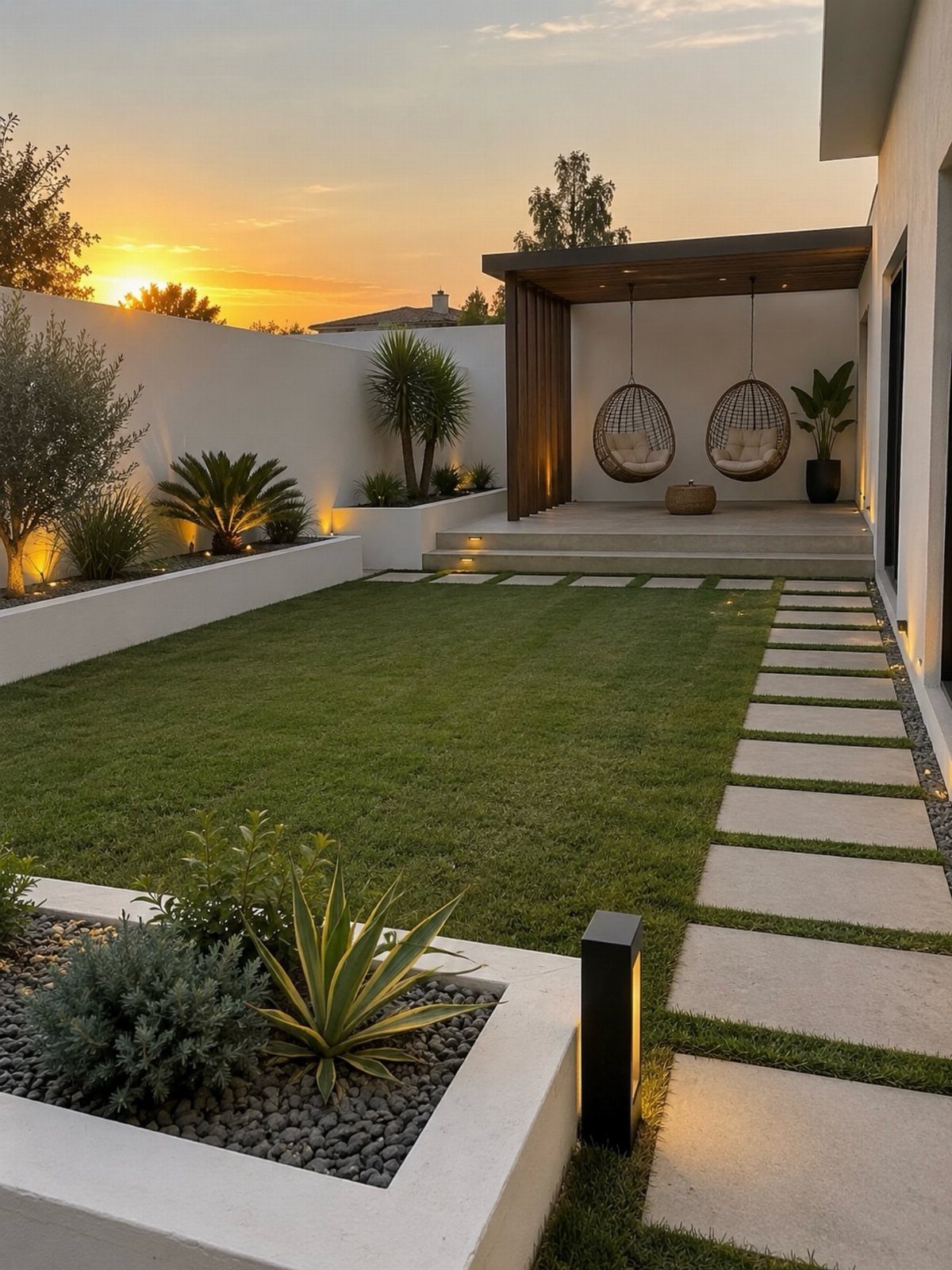
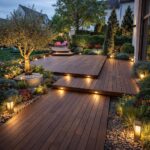
Outdoor lighting turns a patio from invisible to inviting once the sun drops.
I would start with what’s already wired, if anything; adding a new circuit usually needs an electrician and adds up fast. Solar path lights are the cheap fix, though they dim by midnight.

【Unique and Enchanting Design】Solar outdoor walkway lights are designed to provide an attractive pattern, also as a focal attractive in your planter for outdoor plants and lights up your garden at night. Enhance the beauty of your path, garden, patio, lawn, yard, walkway and planter with the distinctive water-ripple pattern of our solar pathway lights. Its enchanting touch will surely captivate anyone who sees it

【Auto Turning ON/OFF】These solar ground lights (H 3.9"x D 3.3") feature an intelligent light sensor for automatic dusk-to-dawn operation. Powered by sunlight, these garden lights charge in 4-6 hours and illuminate for 8-10 hours, offering a sustainable, hassle-free outdoor lighting solution for eco-conscious buyers
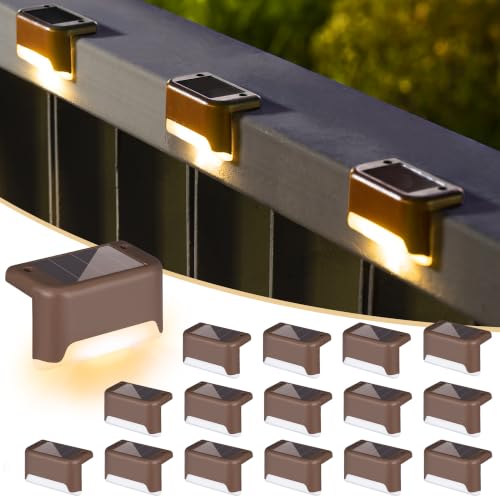
【Warm Light without Dazzling】This deck light features a 𝐁𝐫𝐨𝐰𝐧 𝐬𝐡𝐞𝐥𝐥 and warm white LED, decorate and illuminate your fence, deck, stairs, patio, balcony, yard, or garden. It ensures safer nighttime navigation for the whole family when going downstairs
2. Built-in Benches with Colorful Cushions
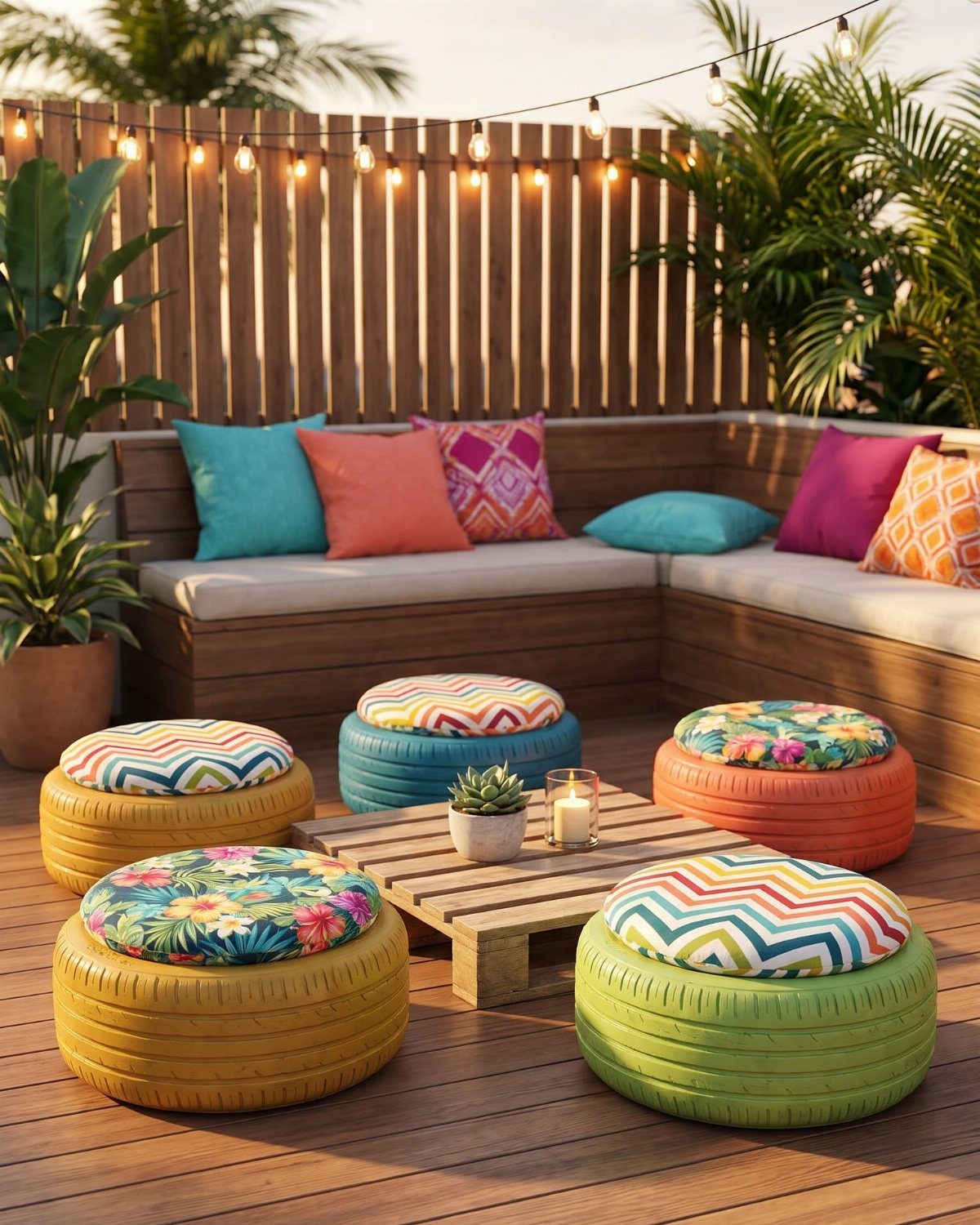
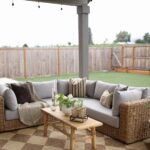
Built-in benches squeeze seating into corners where freestanding chairs would fight for space. Check your cushion fabric: Sunbrella or similar solution-dyed acrylic survives 2 seasons longer than big-box patio sets.

🔥【Portable Camping Propane Fire Pit】Our portable camping propane fire pit includes a carry kit for easy carrying. It is rainproof and rust-resistant, protecting the fire pit from various weather conditions.(⚠️ Not Heat Resistant lid: Do not place the lid on the fire pit while it is in use. Allow the fire pit to cool completely before covering it.)

✓ PERFECT NO MESS CAMPFIRE: Say goodbye to dirty ash, expensive firewood, and bothersome smoke and enjoy a clean realistic propane campfire. The perfect outdoor centerpiece for camping trips, RV travels, tailgating get-togethers, beach parties, and family evenings on the backyard patio.

Perfect for Small Spaces – Crafted from concrete composite for durability, this propane fire pit features a bowl-shaped top and a base with stacked stone texture, offering a stylish, vintage-inspired look. Compact in size, it’s ideal for patios, balconies, and poolside areas, bringing warmth and ambiance without taking up much room.
3. Fire Pit
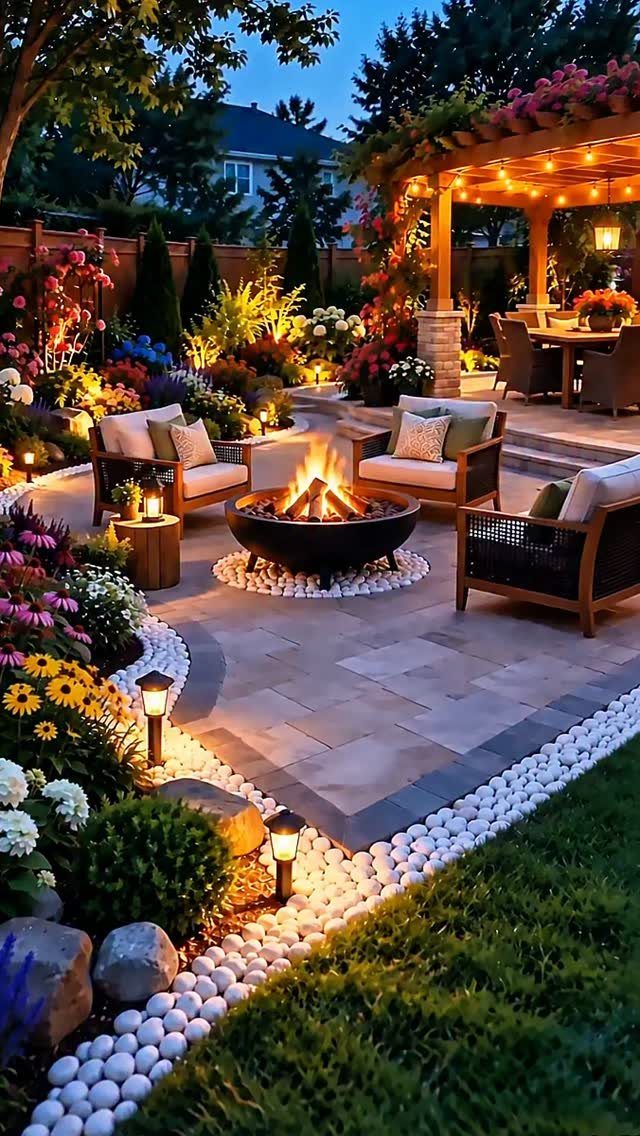
A fire pit gives people a reason to stay outside after dinner and a place to face while they talk.
Propane starts faster and smokes less, but I like wood for the sound. Check local burn ordinances before you buy anything; many counties ban open wood fires May through October.

Perfect Fit & Easy Installation: Our Privacy Screen Fence measures precisely 5' x 50', making it a perfect fit for fences 5 feet or slightly taller. It can be easily installed on chain link fences, existing cyclone wire fences, wooden retaining walls, welded wire fences, and more. For easy and secure installation, we've included grommets placed vertically every 1 foot and horizontally every 2 feet, with 4 grommets at each corner. We also provide 80 zip ties for added convenience.

Brown Fence Slat - Designed for a 4' high fence, slats are approximately 44.5" in length to accommodate the bottom locking channel and to prevent the slats from being above the top of the fence. (Available Colors: Beige, Black, Brown, Gray, Green, Redwood, Royal Blue, Sky Blue, White)
Perfect Fit & Easy Installation: Our Privacy Screen Fence measures precisely 6' x 50', making it a perfect fit for fences 6 feet or slightly taller. It can be easily installed on chain link fences, existing cyclone wire fences, wooden retaining walls, welded wire fences, and more. For easy and secure installation, we've included grommets placed vertically every 1 foot and horizontally every 2 feet, with 4 grommets at each corner. We also provide 80 zip ties for added convenience.
4. Privacy Fencing
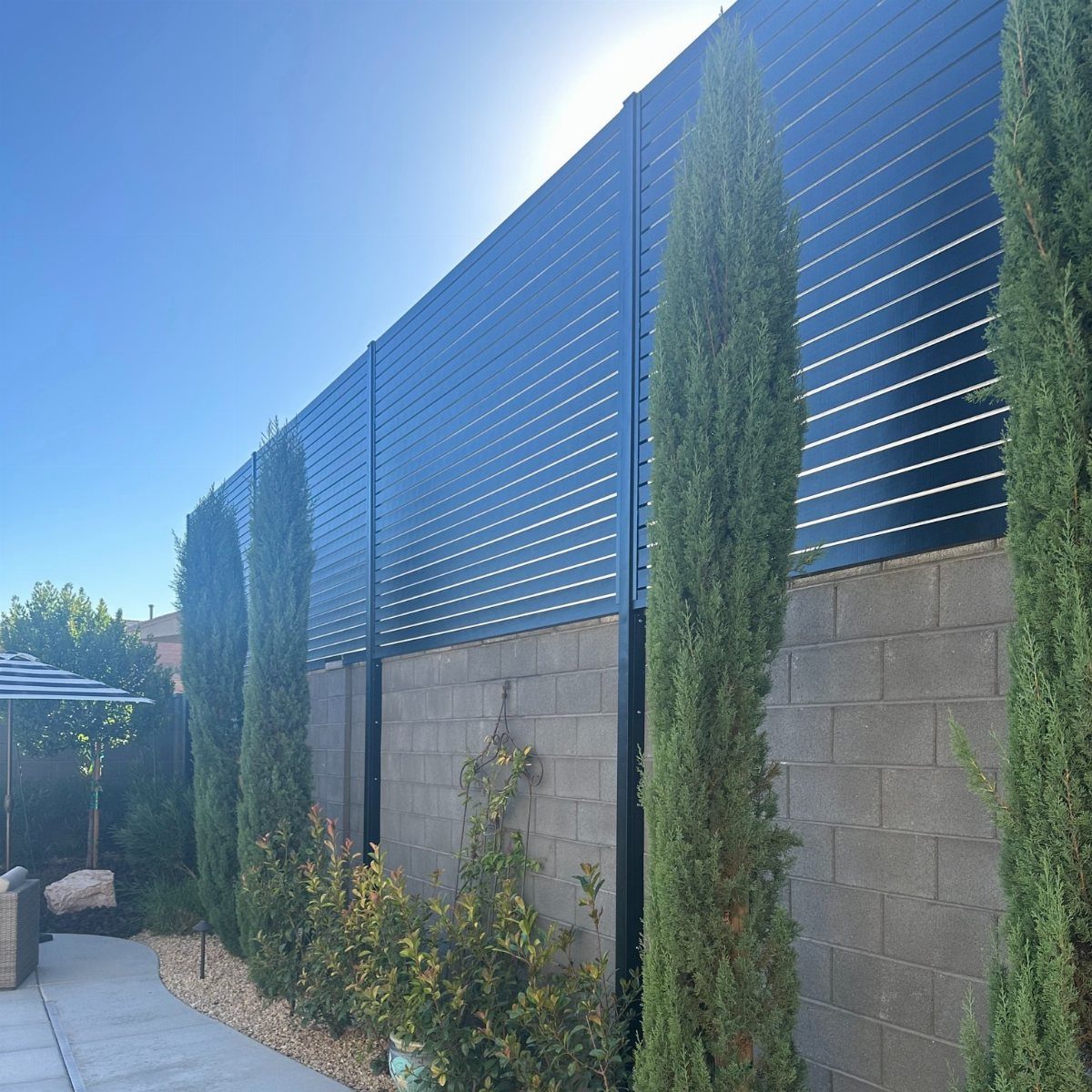
Privacy fencing blocks the sightline without swallowing the yard. Horizontal slats read more modern than vertical boards, and the gap between slats determines whether light still filters through.
Italian cypress puts on noticeable height each season if you want living backup, but it needs room of its own width at maturity.
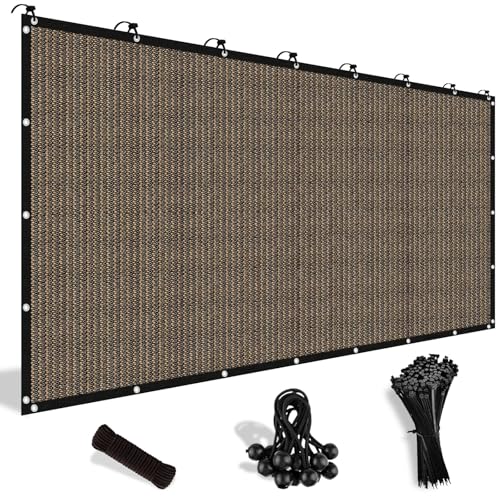
90% Sun Block: Shade&Beyond shade cloth with grommets provides 90% UV protection and resists UV fading. With excellent shading and heat insulation, you can get a shady retreat and keep your belongings away from the sun's harsh effects. By lowering the temperature under its shelter, these sunshades for patio always allow you to enjoy a cool and refreshing outdoor experience, making them ideal for patios, gardens, and more

UP TO 87% SHADE AND UV RESISTANT: Gorilla Grip Shade Sails will transform your patio; the thick material is UV resistant and provides up to 87 percent shade; helps you stay protected and comfortable in bright sunlight
90% Sun Block: Shade&Beyond shade cloth with grommets provides 90% UV protection and resists UV fading. With excellent shading and heat insulation, you can get a shady retreat and keep your belongings away from the sun's harsh effects. By lowering the temperature under its shelter, these sunshades for patio always allow you to enjoy a cool and refreshing outdoor experience, making them ideal for patios, gardens, and more
5. Hanging Bench
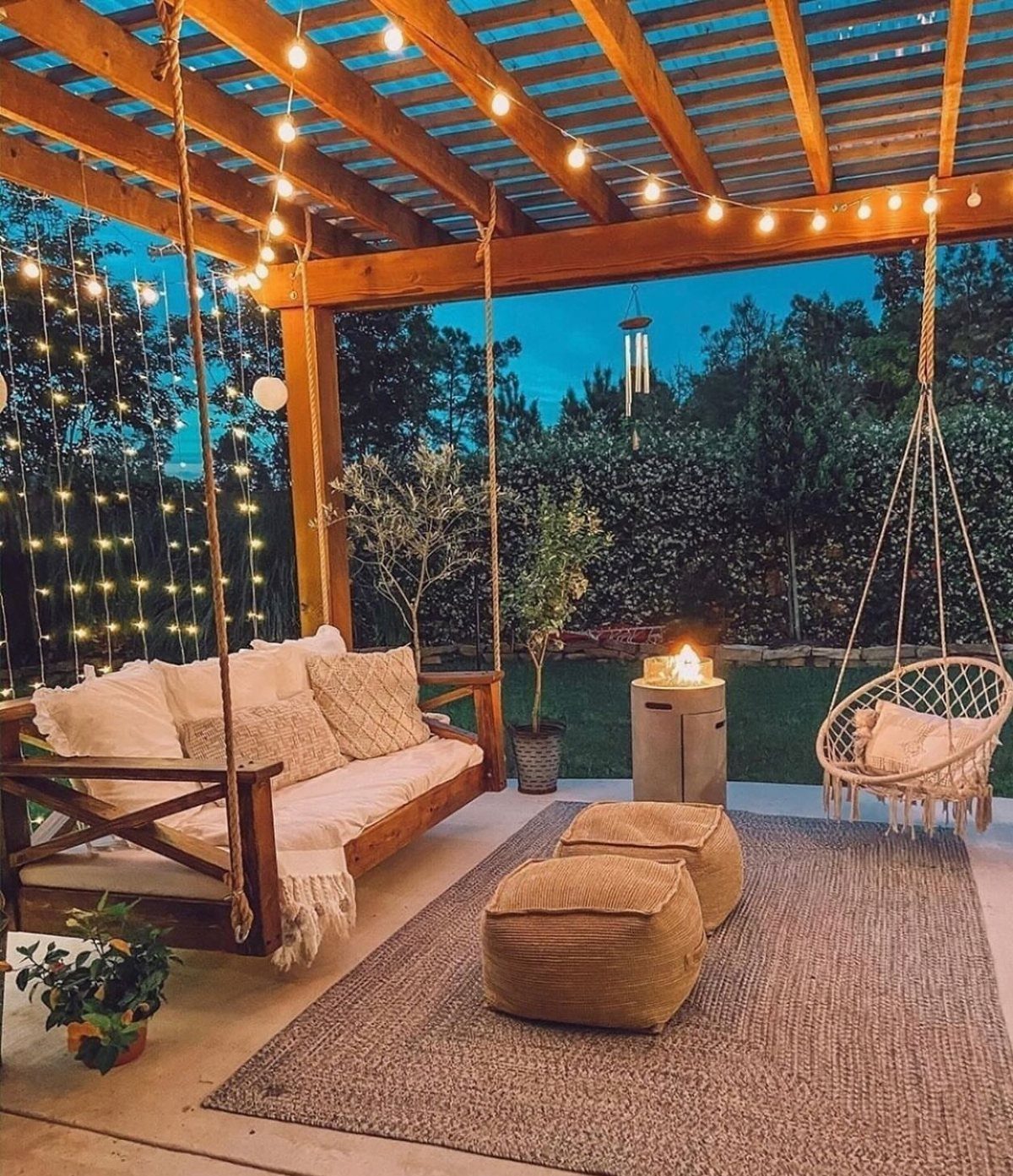
A hanging bench frees up floor space while adding motion that makes a patio feel less static.
Rope or chain length sets the swing arc, and I would keep it low enough for easy entry without scraping the ground. Check the hardware every spring; sun rot on rope is real and sudden.

Universal Awning Mounting Bracket for Retractable Awnings, Heavy-Duty Iron Roof Installation Kit, Adjustable Angle Awning Support Frame for Patio, Balcony, and Window Shade, Silver

High-quality Fabric-Made of 280g/m³ polyester fabric, which is anti-UV ( 50 UV+ solar protection), windproof 30mph, rain protection and fade resistant. But we also recommended to put it away in stormy weather to extend its service life.

High-Quality Material: Our retractable side awning is made from 180g/m² high-density polyester fabric with a PU coating, providing excellent waterproof performance and tensile strength. It effectively blocks wind and rain, resists UV rays (UV30+), extends its lifespan, and ensures stable shelter for outdoor activities.
6. Minimalist Furniture
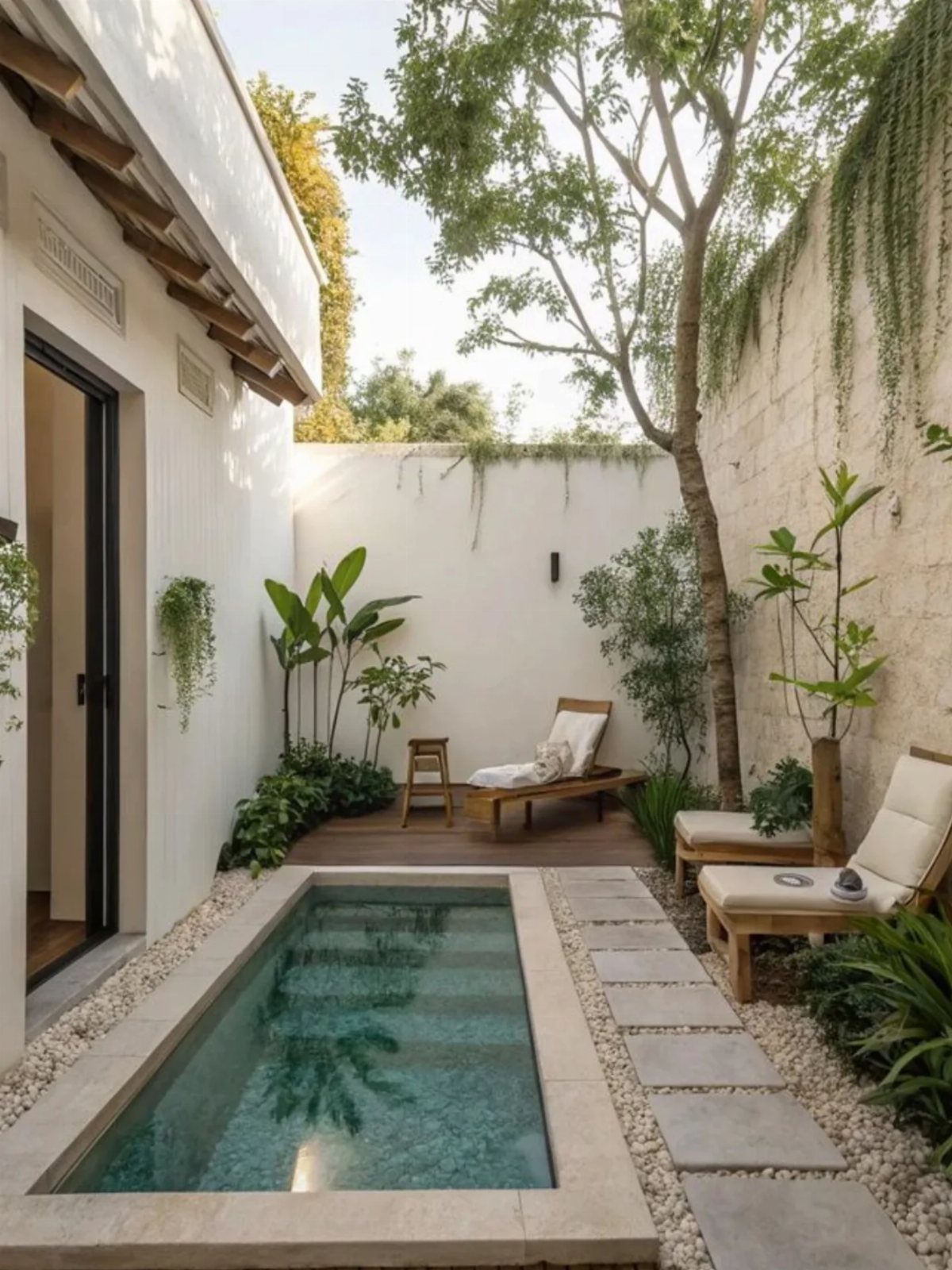
The wooden loungers have clean lines but no storage, no adjustability, no side table; I would add one low cube for drinks if I were using them daily.
Pebble ground cover drains well and stays cooler than concrete, though furniture legs sink in without pavers or pads. This look asks for restraint: one material for seating, one for hardscape, green as the only pattern.

【Solar Garden Lights】Mini solar pathway lights outdoor (H 2.4"x D 2.7") made of stainless steel and plastic. The small size of this solar lights outdoor waterproof makes it more suitable as an ambient light to decorate your garden and walkways. It also serves as a perfect marker light for driveways and night games

SOLAR OUTDOOR LIGHTS:Gigalumi solar lights are powered by the sun.They automatically charge during the day, over a period of 6-8 hours. Then, they turn on automatically at night, providing at least 8H of lighting.A suitable choose for beautifying the garden or as a perfect gift for family and friends

This solar yard lights is equipped with automatic sensing. Simply switch it to 'on,' and it will automatically absorb solar energy for charging during the day, providing warm illumination automatically at night
7. Vertical Planters
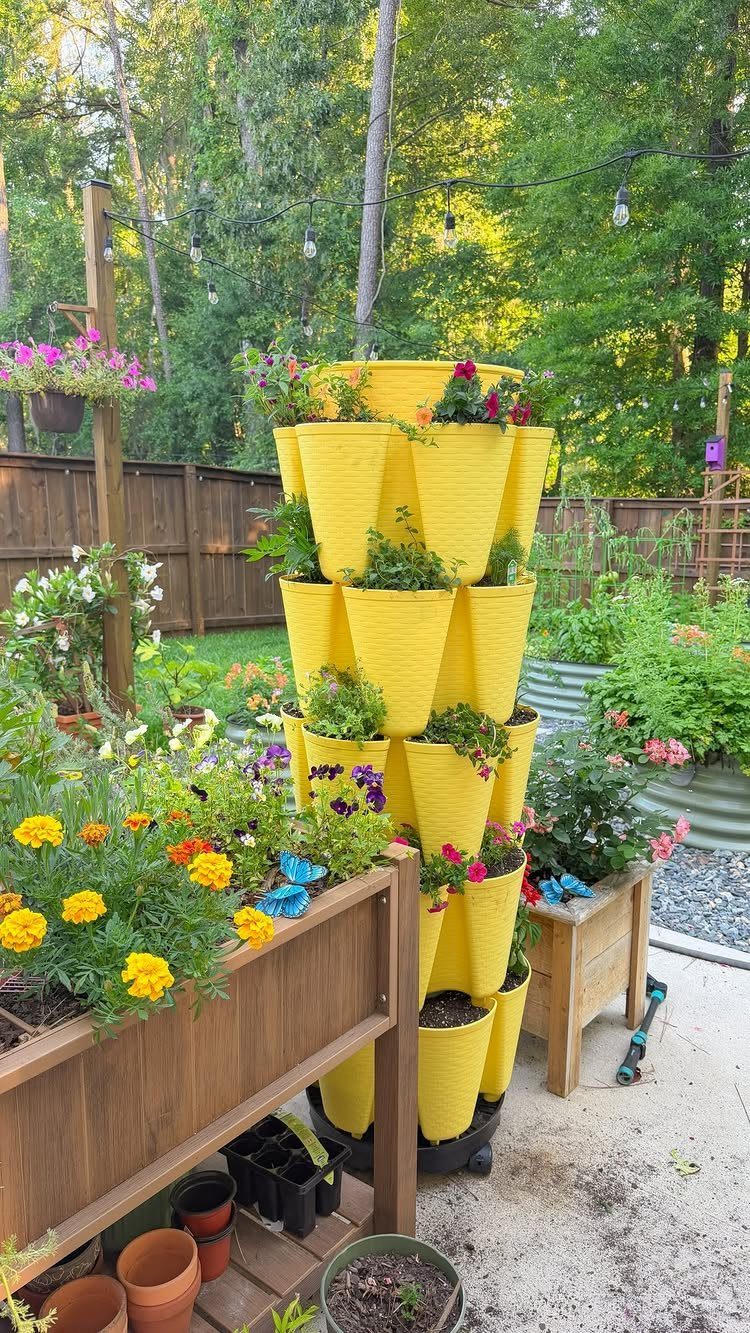
A vertical planter stacks growing space upward instead of spreading it across the patio floor. A modular tiered planter lets you add levels as your plant collection grows or your wall space allows.
Drainage matters more than color: each tier needs holes or the roots rot from the top down. I would set this on pavers, not grass, since water stains concrete and soggy soil warps wood decks.
Herbs work better than tomatoes; shallow tiers suit leafy greens and trailing flowers, not root vegetables. Check that the base is wide enough for the height; a tall tower on a narrow foot tips in wind.

✅【The Fire Pit is Easy to Carry and Move】- Fire Pit Carrying Bag with two way separating zipper, it’s easy to get the bowl in and out of. Durable top handle, It fits makes transporting the fire pit while camping so easy.

Perfect no mess campfire: with our fire pit say goodbye to dirty ash, expensive firewood, and bothersome smoke and enjoy a clean realistic propane fire pits for outside. The perfect outdoor fireplace for camping trips, RV travels, tailgating get-togethers, beach parties, and family evenings on the backyard patio.

Made by durable power-coated steel, built with the highest quality components and stainless-steel burner, decorative wind glass shield included and work with 20lb LP tank (tank no included). Whether on a deck, patio, or in the backyard, this tabletop fire pit will definitely create a soothing ambiance anywhere you want to be whatever family and friend's activity.
8. Shade Sail
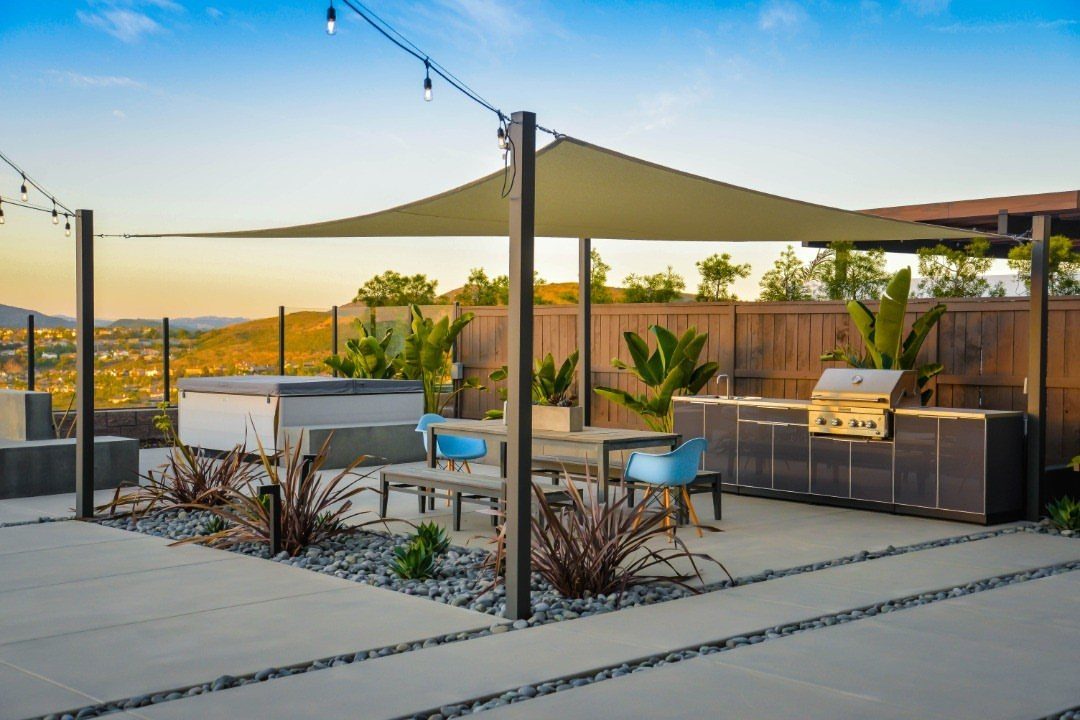
A shade sail stretches fabric in tension between anchored points, making shade look like architecture instead of an afterthought. Triangles are the common shape for shade sails; rectangles and overlapping layers run steeper in price but give more coverage.
Anchor points need serious hardware, into masonry or deep-set posts, because wind load on a sail that size is measured in hundreds of pounds.
I would plan the angle so morning or evening sun still hits where I want it; a sail too low traps heat underneath. Take it down before winter in snow country; the weight tears fabric and pulls anchors loose.

Outdoor Privacy Screens: Our horizontal slat vinyl fence panel set includes 1 panel measuring 5ft x 4ft, ideal for concealing outdoor items like trash bins, pool equipment, and air conditioners, keeping your backyard neat and attractive while meeting HOA guidelines.

【 Friendly reminder 】: The pillar anchor is inside the pillar. Please refer to the installation video below to take out.

Privacy fence: The fake leaves of this artificial ivy privacy fence screen look very realistic, and can be used to decorate rooms, gardens, fences and as a balcony privacy screen to meet your coverage needs and create a fresh, comfortable and private green background space for you.
9. Retractable Awning
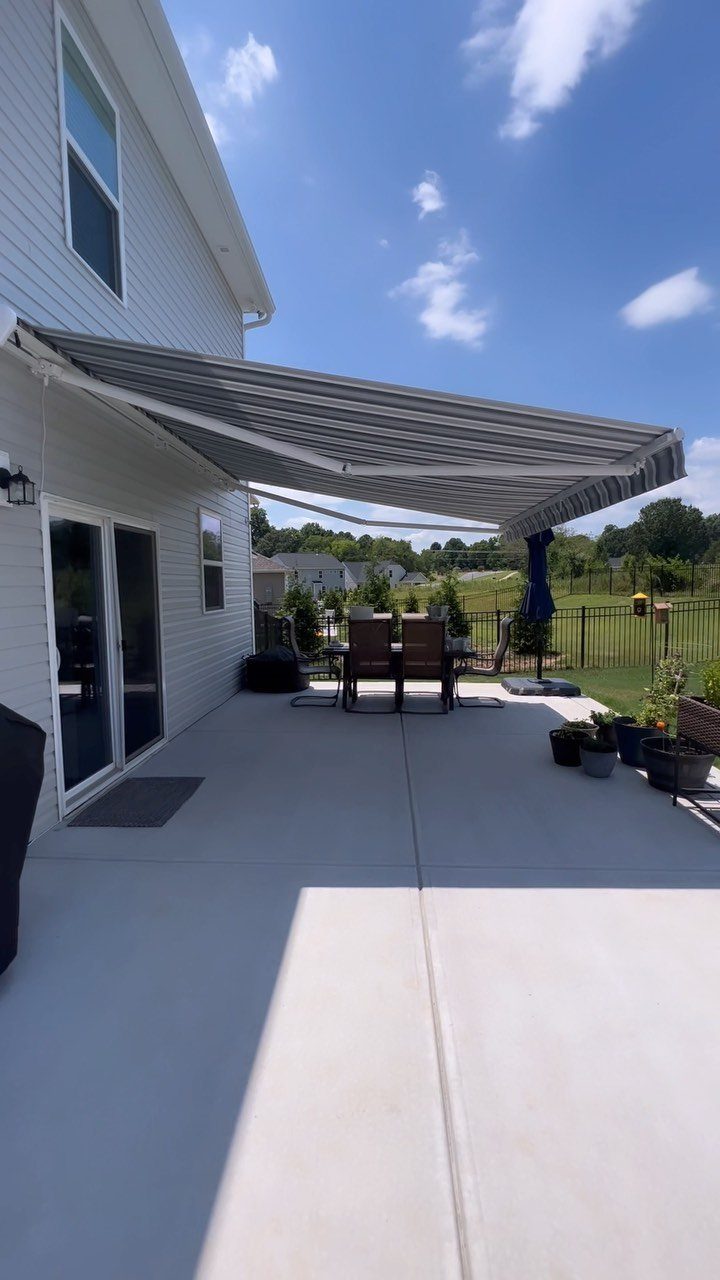
A retractable awning rolls out for shade and back for sun or starlight, which matters when your patio faces west and the evening glare is brutal.
Acrylic fabric is the standard for retractable awnings; it fades slower than canvas but still needs cleaning once a season.
Mounting height is the detail that decides it: too low and you lose the view, too high and rain pools on the slope. I would check the pitch before buying; too shallow and water pools instead of running off.
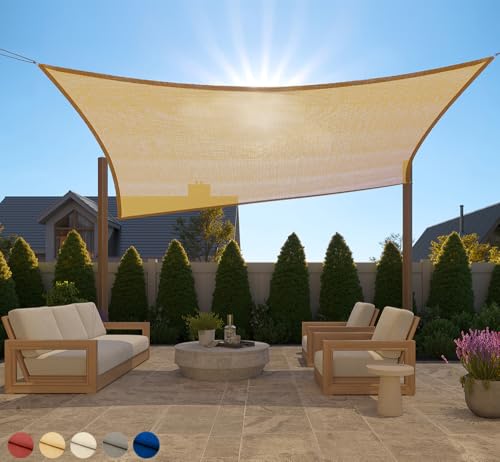
UP TO 87% SHADE AND UV RESISTANT: Gorilla Grip Shade Sails will transform your patio; the thick material is UV resistant and provides up to 87 percent shade; helps you stay protected and comfortable in bright sunlight

UP TO 87% SHADE AND UV RESISTANT: Gorilla Grip Shade Sails will transform your patio; the thick material is UV resistant and provides up to 87 percent shade; helps you stay protected and comfortable in bright sunlight

【About Measurement】Please refer to the diagrams before purchasing. You’ll need to leave 0.5-1 ft of space for accessories to avoid buying an oversized shade. Due to the characteristics of this fabric, there may be a tolerance of ±2 inch from the outer edge of one D-ring to the outer edge of the other D-ring
Choosing Patio Materials
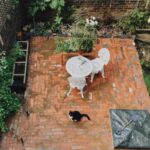
Natural stone, brick, concrete, and gravel each carry their own math. I would decide on budget before falling for a look, since the spread between cheapest and costliest runs wide.
Poured concrete sits at the affordable end and takes stain or finish if plain gray bores you.
Stamped concrete mimics stone or brick at a lower price; the pattern holds up but the color can fade unevenly. Exposed aggregate adds texture and grip, which matters more than most people think until the first rain.
Natural stone and brick cost more upfront and need a proper base; settling or frost heave shows in cracks you cannot patch to match.
Gravel drains fast and goes in over a weekend, though chairs sink and it scatters into lawn.
I would pour concrete for a permanent patio under a thousand dollars, or stamp it if the house facade already mixes materials and the patio should echo that.
“So scale, as in an indoor room, is the critical feature, along with material choices.” Meaning: A petite patio will look nicer with small bricks or river-run pebbles.
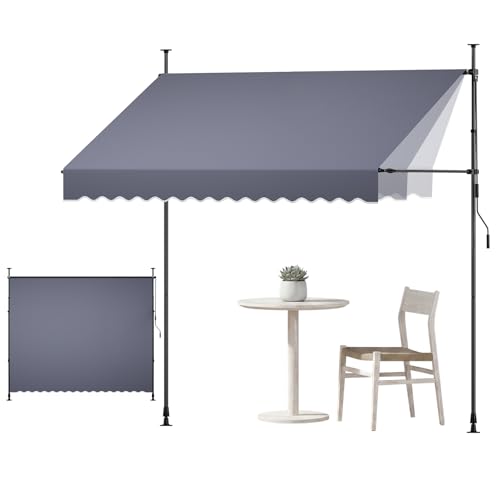
UPF 80+ Fabric: This manual retractable awning uses 180 g/m² polyester with PU coating. It provides level 4 colorfastness to resist fading, while UPF 80+ shields against sunlight and reduces heat. The water-resistant canopy blocks light rain for comfort

High-Quality Material: Our retractable side awning is made from 180g/m² high-density polyester fabric with a PU coating, providing excellent waterproof performance and tensile strength. It effectively blocks wind and rain, resists UV rays (UV30+), extends its lifespan, and ensures stable shelter for outdoor activities.

FOR HOME AND BUSINESS USE - The patio awning is ideal for shading of windows, in balcony, courtyard, patio, cafes and restaurants with back porches, providing protection from UV rays and make the space looks elegant.
Frequently Asked Questions
What is the most popular patio?
I would not chase popularity; I would match the patio to the house and how you actually use the space.
Poured concrete is the most common material I see in real budgets under $1,000 because it lasts and takes stain if plain gray wears on you.
What are some ideas for a narrow patio?
Vertical planters stack growing space upward instead of spreading it across the floor, and a modular tiered unit lets you add levels as your wall space allows.
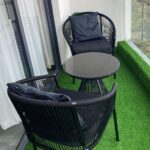
A bench fixed along the wall turns dead corner space into actual seating, which matters when every square foot counts. Compact, movable furniture and distinct zones marked with outdoor rugs also help a narrow patio feel intentional rather than cramped.
How big of a patio should I build?
I would decide on budget before falling for a look, since the spread between cheapest and costliest materials runs wide.
A patio needs to fit your actual use: dining for six takes more depth than two loungers and a side table.
I would lay out your actual furniture on the lawn with walking space around it before committing to dimensions; a patio that swallows your setup feels like a parking lot, and one that crowds it feels like a waiting room.