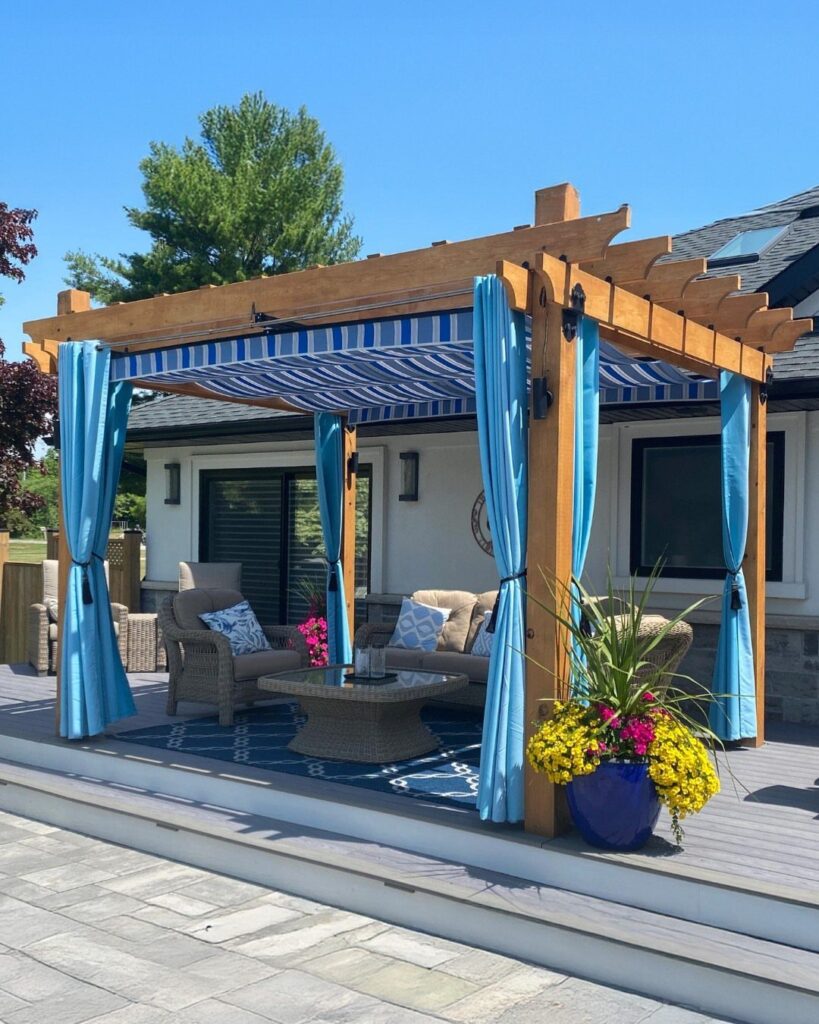
These backyard shade ideas range from a shade cloth clipped to electrical conduit for a vegetable bed to a full stone pavilion with a slatted ceiling and built-in fans, and the right one comes down to how permanent you need it to be.
Temporary options like a party tent break down after the afternoon; a solid roof extension changes how much light reaches your house windows for decades.
[link-whisper-related-posts]1. Patio Umbrellas
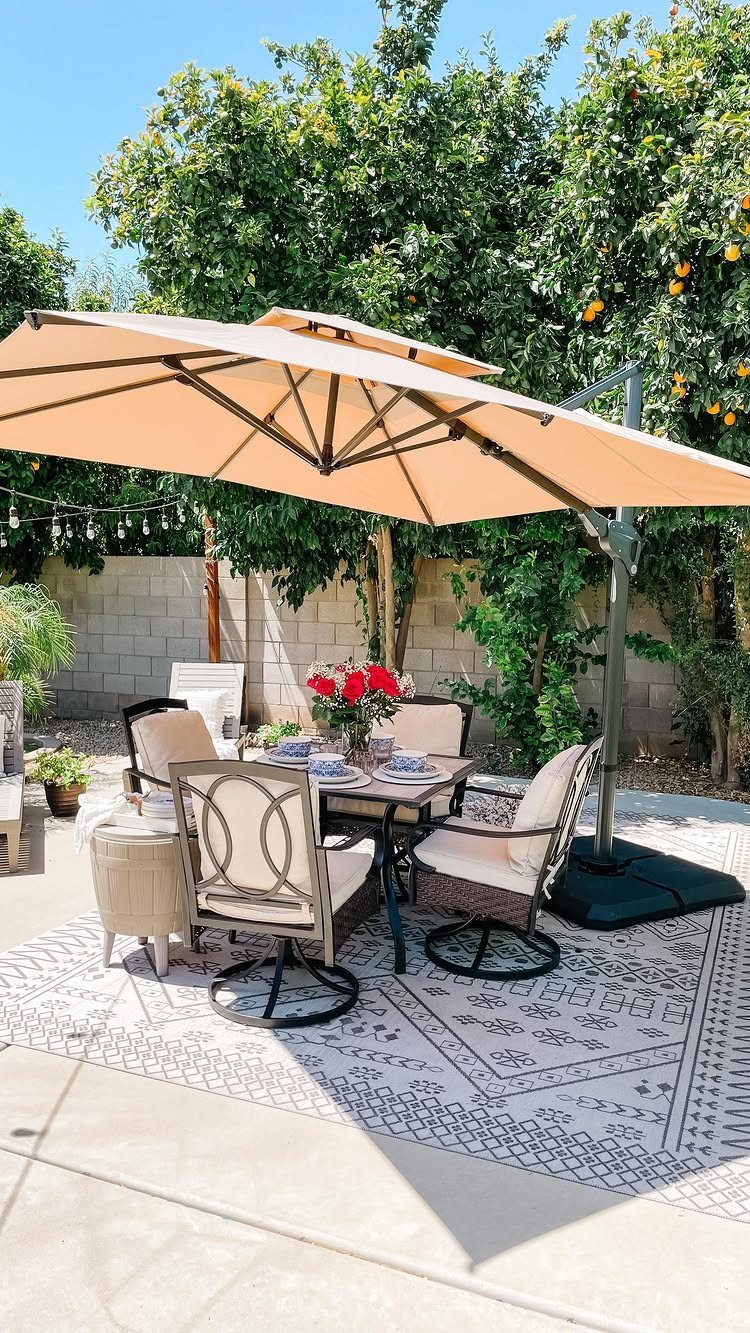
A cantilever umbrella like this one frees up the center of your table and tilts to track the sun.
I look for a heavy base that stays put in wind; water-filled bases cost less, but I would spend the extra on a resin base you fill with sand.
Check that the pole diameter matches your table or base before you buy, and measure your clearance: the arm needs room to swing without hitting a wall or fence.

MOVE 300+ lb UMBRELLAS WITH EASE: Built-in caster wheels make it easy to roll even the heaviest cantilever umbrellas into place. Two locking wheels keep your setup secure and steady

DURABLE CONSTRUCTION: Made of rugged, weather-resistant HDPE plastic, with molded injections and UV-protection to prevent cracking and material degradation

Heavy-duty & weather-resistant: Made of HDPE plastic to withstand impact and constant movement, and treated with a weather and UV-resistant coating
2. Shade Sails
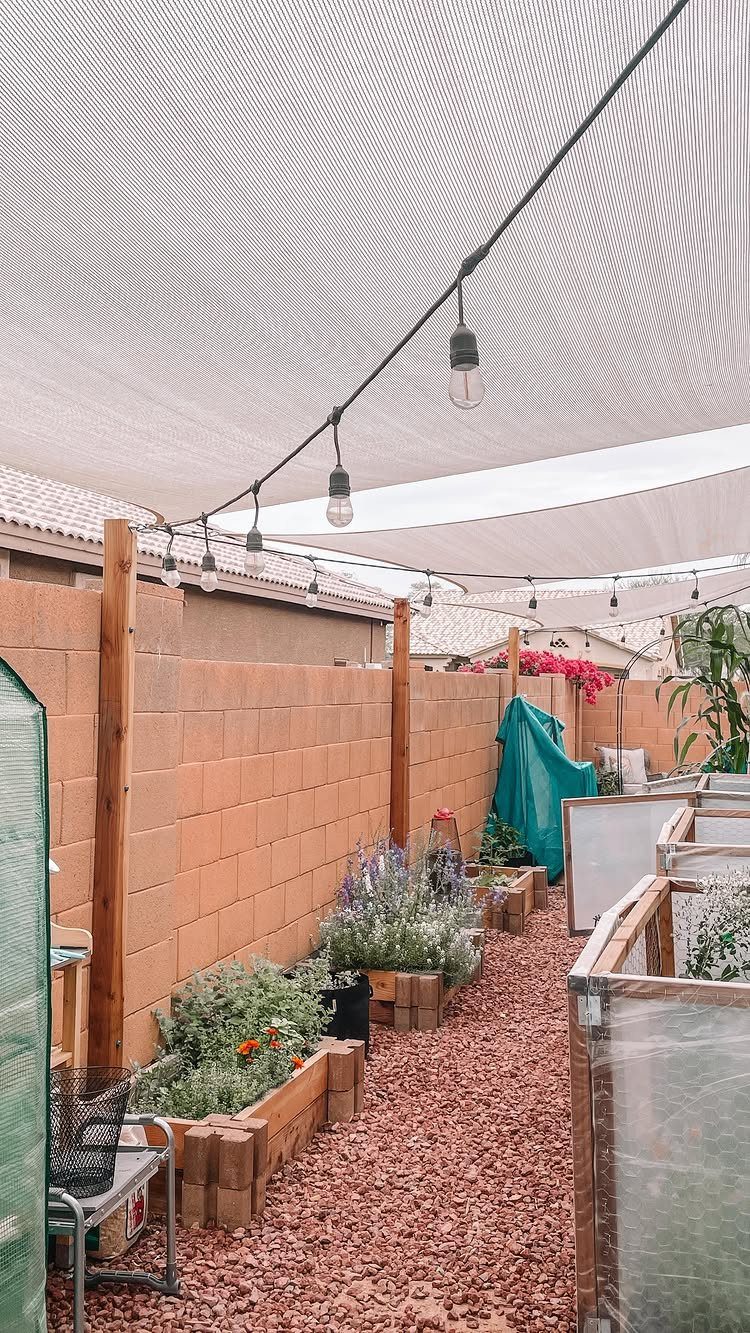
Shade sails work best when you have several solid anchor points already in place, posts or walls at different heights so water runs off.
Overlapping sails let you adjust coverage as the sun moves; leave a gap between them for airflow.
I would use marine-grade stainless hardware, not the kit stuff, and plan on retensioning the fabric after the first season. Gravel ground like this drains well and keeps mud off the sail edges.

Heavy Duty & Premium 304 Stainless Steel: Our shade sail hardware kit is crafted from high-quality 304 marine-grade stainless steel, delivering exceptional strength, durability, and corrosion resistance. Every component—from turnbuckles to wire ropes—is built to withstand harsh outdoor conditions, ensuring long-lasting, rustproof performance. The sleek silver finish is neutral and versatile, blending seamlessly with any patio, garden, or outdoor decor.
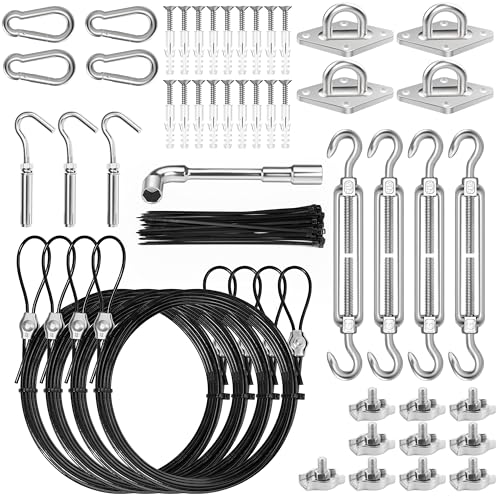
Complete Accessory Set: The Sun Shade Sail Hardware Kit includes 4 PCS 10ft nylon-coated steel wire ropes, 4 adjustable turnbuckles, 4 grommets, 4 snap hooks, 4 expansion hooks, 10 rope clips, 20 nylon expansion tubes, 1 socket wrench, and 28 tie straps. Everything you need for secure and flexible installation in various outdoor settings.

All-in-One Sun Shade Sail Hardware Kit: Our complete sunshade hanging kit includes everything you need for easy installation: 2 turnbuckles, 2 snap hooks, 4 pad eyes, 16 screws, and 16 expansion anchors. Ideal for sun shades outdoor patio, pergolas, awnings for patio, and outdoor sails for shade waterproof.
3. Retractable Awnings
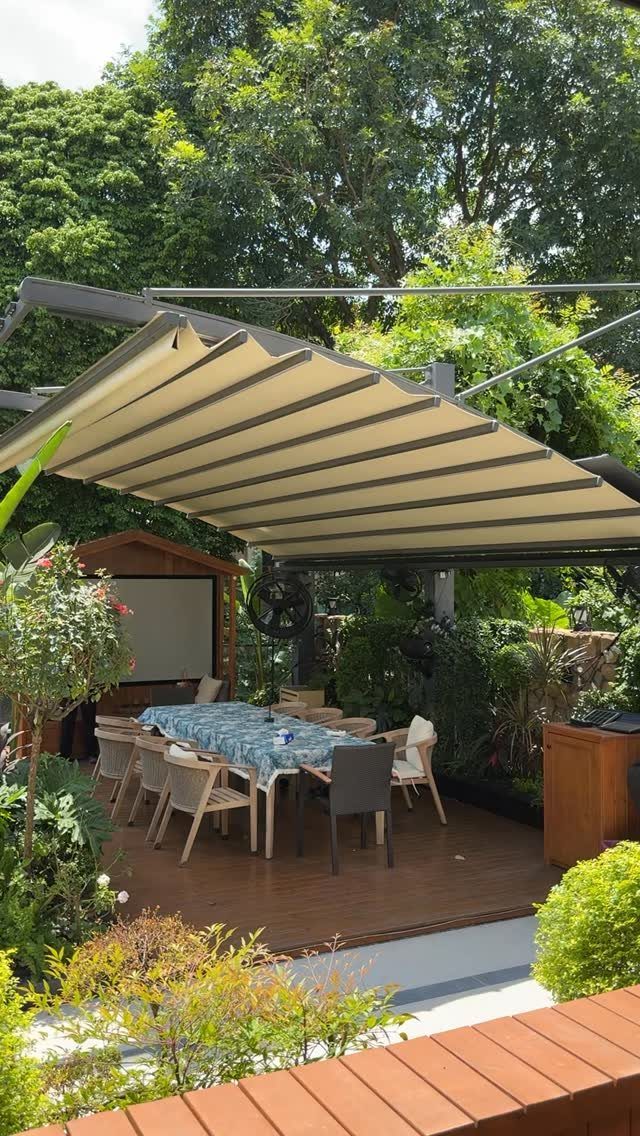
A retractable awning mounts to your house wall and extends over the patio when you want it, rolls back when you do not.
I would check the slope so rain sheds, steeper if you get snow load. The motor and fabric are the parts that fail, so I look at warranty length on those two specifically.
Measure your projection carefully; the awning should clear your table with the chairs pulled out, and I add a little extra for safety.

High-quality Fabric-Made of 280g/m³ polyester fabric, which is anti-UV ( 50 UV+ solar protection), windproof 30mph, rain protection and fade resistant. But we also recommended to put it away in stormy weather to extend its service life.

Sunshade & Rain Protection: Beat the heat and stay dry! This 12x10 ft retractable awning is made of durable 280g polyester fabric with a water-resistant PU coating and UV80+ protection, helping to block harmful sun rays while keeping you shaded and comfortable. With fade-resistant color and a sturdy design, it’s built for long-lasting use in your patio, garden, or balcony!

Dual Motorized & Manual Modes: This electric retractable awning features an 18 ft power cord and supports remote control within 16.4-32.8 ft. A built-in motor ensures smooth extension with limit stops, and a 4.92 ft hand crank allows use during outages
4. Pergolas
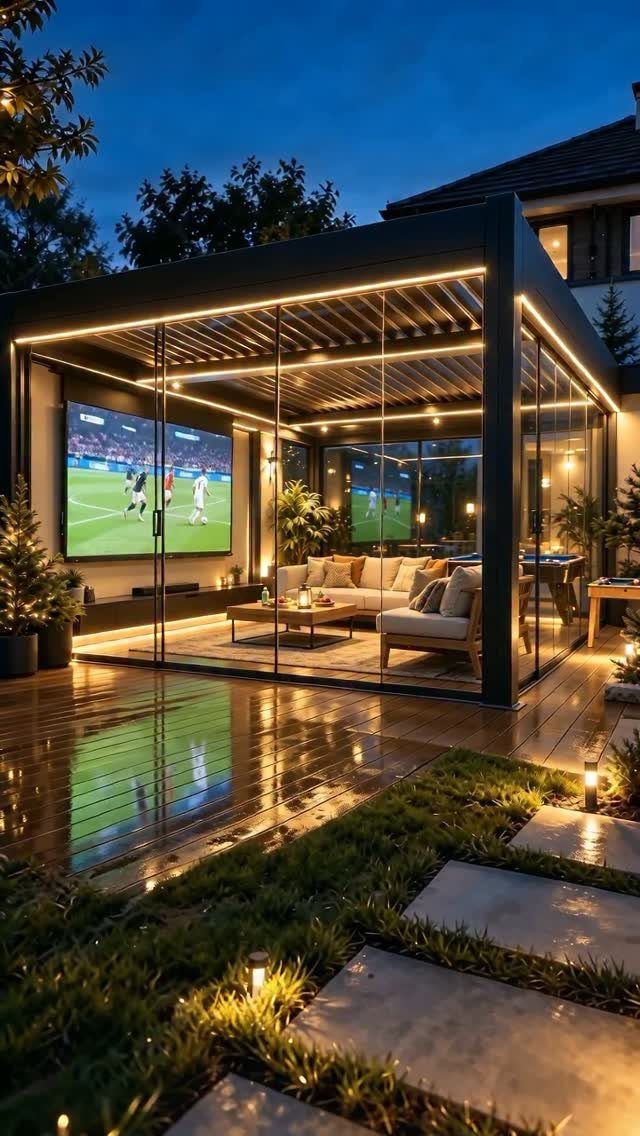
A pergola gives you dappled shade and a ceiling for lights or fans without blocking all the sky.
A louvered roof is the upgraded version; I would go that route if the budget allows, since fixed slats only cut sun at certain angles.
LED strip lighting tucked into the beams is easier to wire during construction than after. I would plan for generous headroom, and I would not build one tight against your house wall without checking local setback rules.

【28 Inch Outdoor Ceiling Fan with Light and Remote】Our portable hanging fan easily installs on most ceilings or gazebos using the included hook and screws.

Expansive 52-Inch Airflow Coverage: Unlike smaller 42-inch units, this 52-inch ceiling fan is engineered for medium to large living spaces. Whether it's a spacious master bedroom, an open-concept living room, or outdoor areas like patios, breezeways, gazebos, and porch, our wider blades move a significantly larger volume of air, ensuring every corner of the room — or your favorite outdoor retreat — reaches your desired comfort level faster. (Note: Not to be directly exposed to rain.)
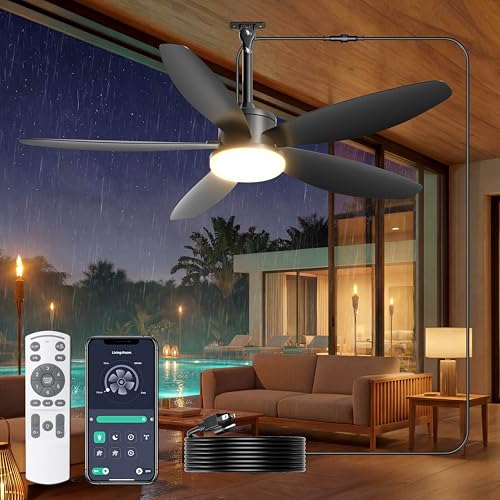
WET RATED PLUG-IN OUTDOOR CEILING FAN: This 42-inch outdoor ceiling fan features an IP65 waterproof housing, safe for both indoor and outdoor use. With an extra-long 16.4FT cord, it supports direct plug-in for covered patios, gazebos, porches, pergolas and canopies—eliminating expensive electrician hardwiring to save your installation time and cost
5. Outdoor Curtains
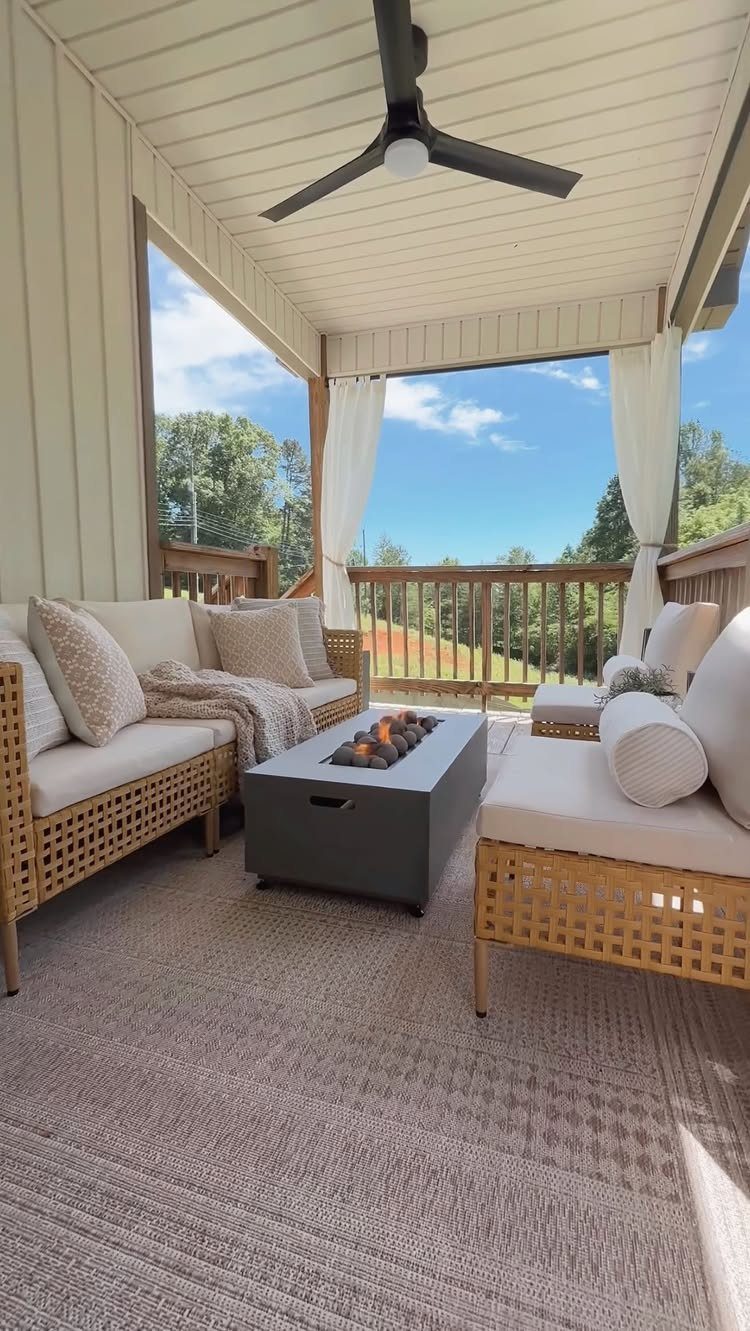
Outdoor curtains turn a covered deck into a room you can close off from sun or neighbors. I use rust-proof grommets and a curtain rod rated for exterior use; the cheap indoor stuff corrodes in one season.
Tying curtains back works for morning shade and afternoon breeze, but I would add a tie or magnetic holdback at the bottom for wind. Washable fabric is non-negotiable; pollen and bird droppings accumulate fast.
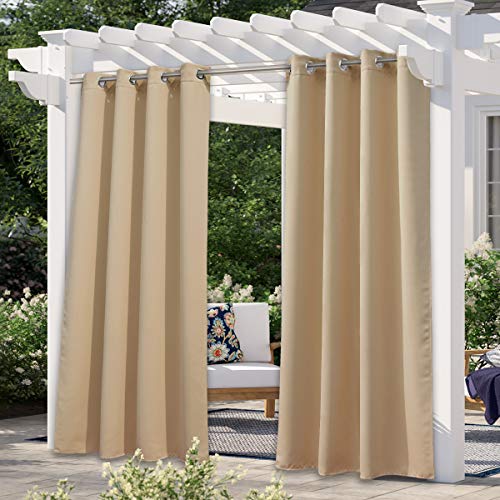
Ready Made: Sold as 1 panel. Crafted with advanced waterproof technology, ensuring durability against rain, wind, or shine. Features 1.6'' STAINLESS STEEL GROMMET for easy hanging. Both sides of the curtain are identical in material and color.

☔All-Weather Windproof & Waterproof: Made from premium 220gsm thick fabric treated with a waterproof pretreatment, these curtains shed rain and water on contact. The bottom can be anchored via back tabs (grommets, or rod pockets), combined with the included rope – effectively stopping flapping in gusty winds. Rustproof grommets ensure long‑lasting use.
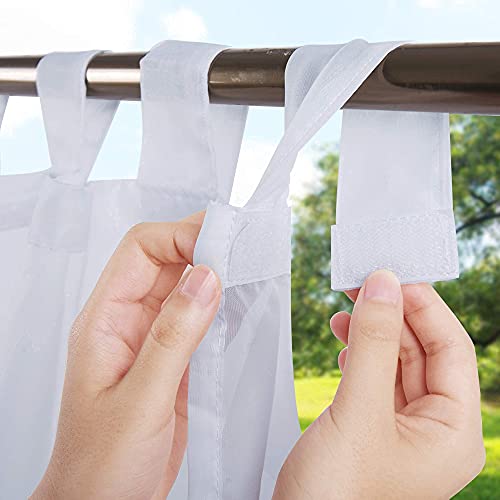
PACKAGE INCLUDED - 1 sheer curtain + 1 free curtain rope. Detachable tab top design with inner diameter 3", which fits most of the rods.
6. Deciduous Trees
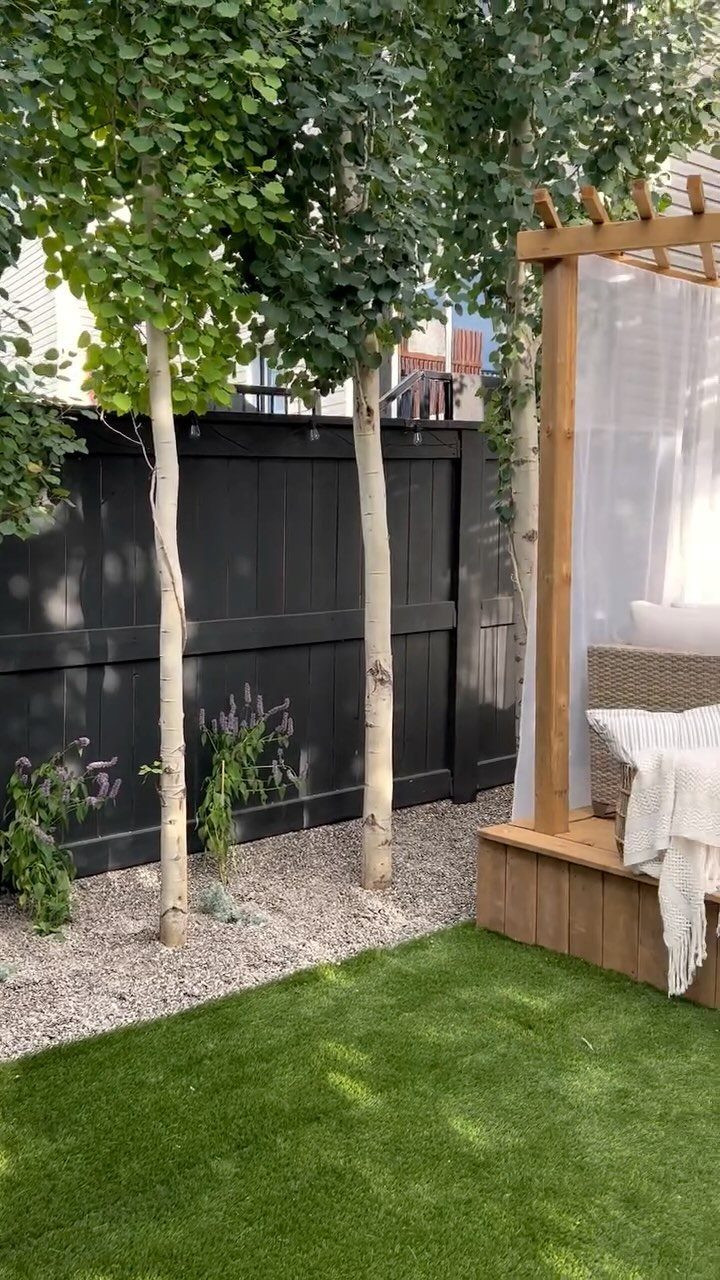
Deciduous trees shade in summer and let light through bare branches in winter, which no built structure does.
A slender habit, birch or aspen, fits tight spaces without overwhelming a pergola or fence line. I would plant well away from the house foundation, and I would check mature height against overhead lines.
Gravel mulch like this keeps weeds down and avoids the root rot that lawn watering can cause in trees that prefer drier soil.

Extra Large Capacity: This refillable umbrella base is designed with two reservoirs, the total weight can reach to 253-363 lbs when filled with water or sand. This heavy weight ensures your umbrella stays stable outdoors.

Sturdy umbrella stand outdoor base: Our 40-pound umbrella base provides a secure hold for your umbrella. It is designed to be used with a patio table and umbrella

PREMIUM PATIO DÉCOR: The BLUU BANYAN umbrella has a classic, floating design that will transport you to your last relaxing vacation on the beach. The eight Velcro straps around the perimeter of the umbrella can be used for hanging your favorite decorations or sparkling lights!
7. DIY Shade Canopy
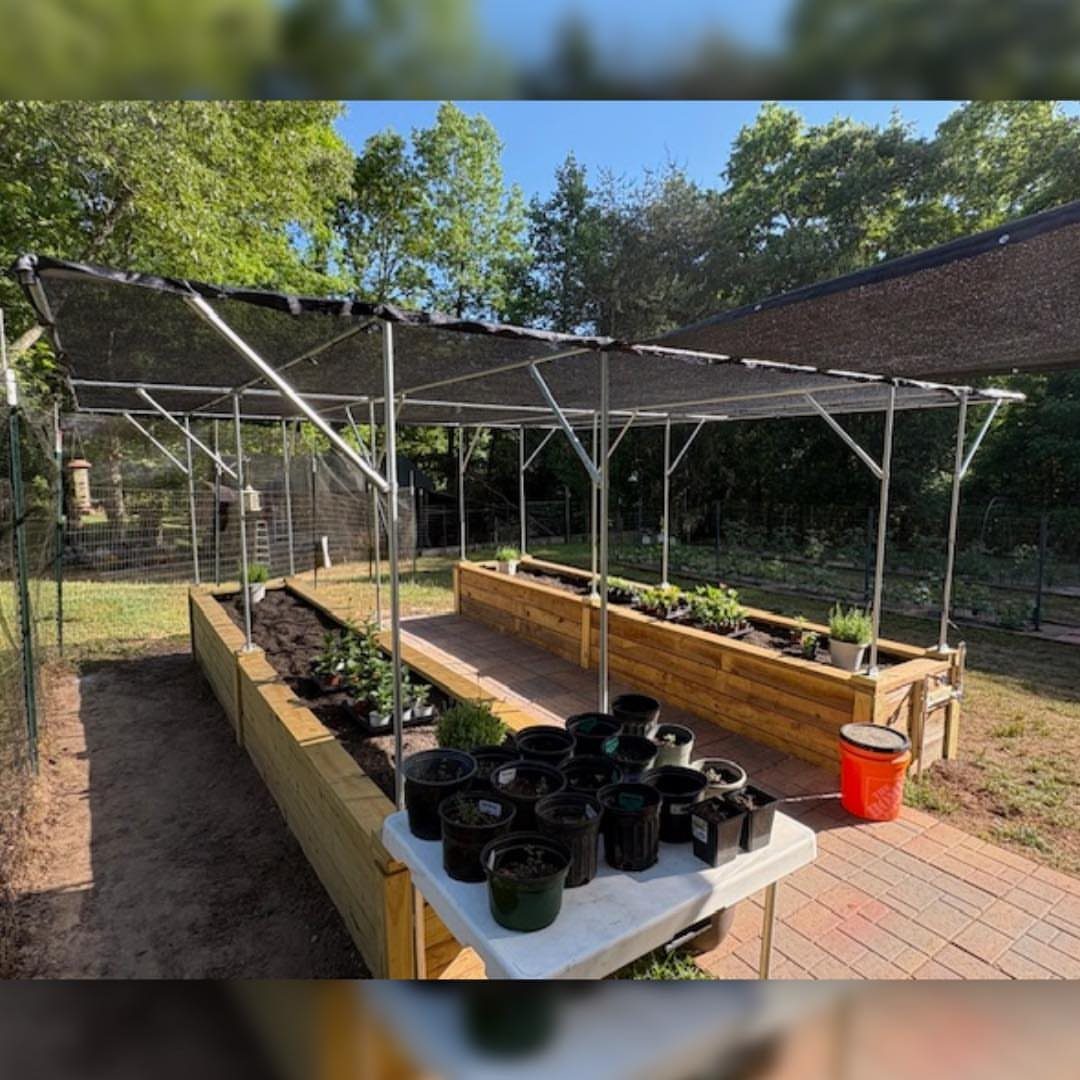
Metal pipe and fittings let you build a frame to whatever length your garden beds run, then clip shade cloth over the top.
I would use electrical conduit for the uprights and elbows; it threads together without welding and still holds up to a wind gust.
Secure each leg with a T-post hammered beside the bed, not just soil. The cloth should overhang the frame, or the sun sneaks through the edges at low angles.
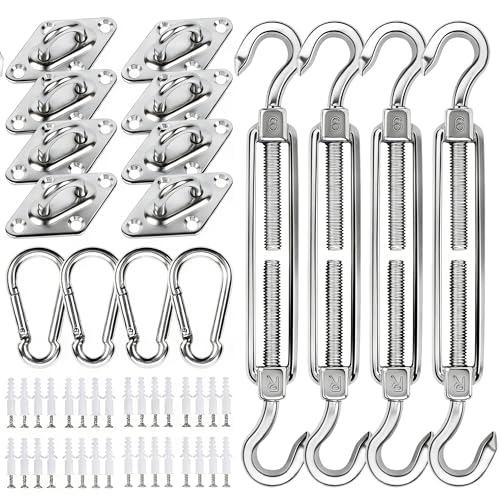
[One Kit for Any Design]: Conquer any shade sail project—rectangle, triangle, hexagon, or custom shapes—with one comprehensive 80-piece kit. Ditch the confusion of piecing together multiple sets. Plus, when installing common square or triangle sails, the extra hardware acts as your instant backup plan, saving you time and hassle if a replacement is ever needed.

Accessories Include:Sun shade sail hardware kit includes 79 accessories, 4pcs of 10ft nylon coated wire ropes, 4 adjustable turnbuckles, 4 grommets, 4 snap hooks, 4 expansion hooks, 10 rope clips, 20 nylon expansion tubes, 1 socket wrench and 28 tie straps. Enough accessories to meet the various needs of your different occasions

Heavy Duty 304 Stainless Steel with Ratchet Winch : HYASIA shade sail hardware kit ratchet winch set is constructed from high-quality 304 marine-grade stainless steel, featuring a robust ratchet winch design for effortless tensioning. Every metal component—from the winch to the rope clamps—is built to withstand harsh outdoor conditions, ensuring maximum strength, durability, and corrosion resistance for years of reliable use. for toldos para patio exterior waterproof applications.
8. Tents
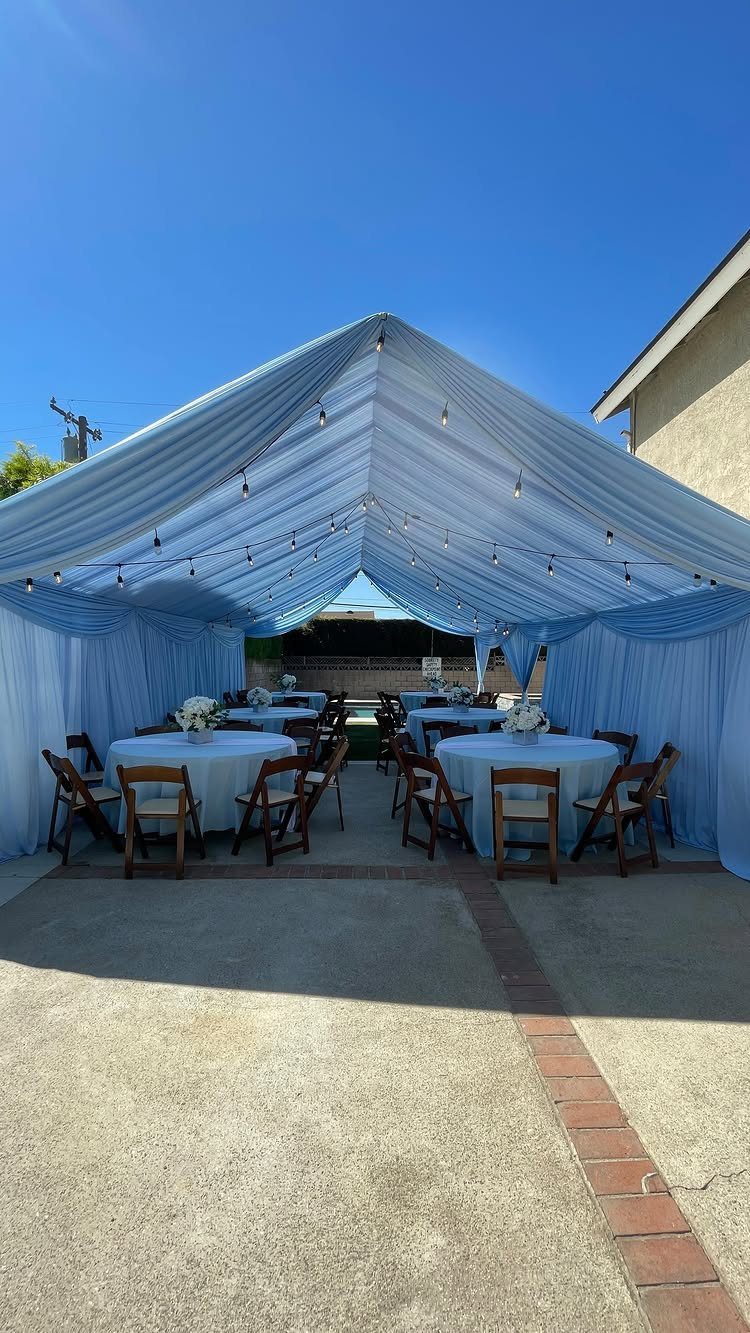
A party tent is the fastest way to shade a crowd for an afternoon, and the breakdown is the point, not the flaw.
I would check whether the legs adjust for a sloped patio like this one; uneven ground makes a table wobble and stresses the frame.
Stakes work on grass, but on concrete you need weight plates at every leg, and they are not always included. I would reserve budget tent models for calm days only; the frame tubing dents if someone leans hard while dancing.

PERFECT SUNSHADE - WEATHER RESISTANT: KELIXU Retractable awnings for patio have excellent UV protection on sunny days and can shelter you from the wind and rain when icy or wet. Once it gets dirty, you can easily take it off and clean it. Moreover, we recommend that you put the patio awning away in extreme weather to extend its life

【Electric Motorized & Remote Control】: Retractable awning with upgraded electric motor. Opens and closes smoothly by remote control, eliminating manual struggle. Also includes a manual hand crank for backup operation in case of power outage, ensuring you are never stuck.

UPF 80+ Fabric: This manual retractable awning uses 180 g/m² polyester with PU coating. It provides level 4 colorfastness to resist fading, while UPF 80+ shields against sunlight and reduces heat. The water-resistant canopy blocks light rain for comfort
9. Modern Gazebos and Pavilions
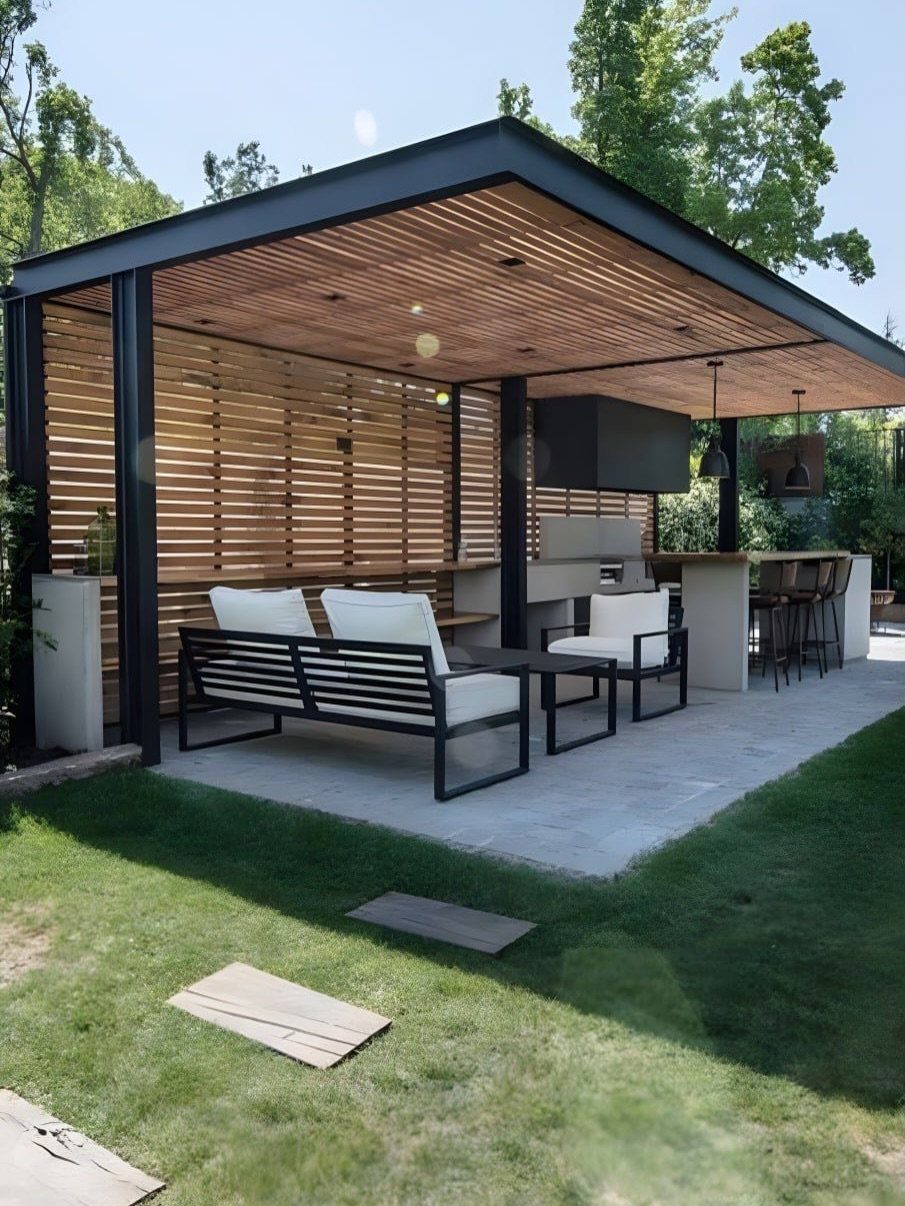
A pavilion with a slatted ceiling reads as architecture, not an afterthought, and the solid roof lets you run ceiling fans and speakers safely.
I would match the wood species of the slats to my house trim, or go intentionally different with black metal so it does not look like a near-miss.
The stone patio underneath already handles drainage; if you pour concrete instead, slope it away from the house. I would keep the kitchenette under the roof but move the grill to open air, where the smoke has somewhere to go.

IP65 Full Weatherproof Protection: Engineered with a superior IP65 rating, this outdoor ceiling fan is built to withstand harsh outdoor elements like heavy rain, snow, dust, and salt spray. Feel confident installing it in exposed areas like pergolas or gazebos for year-round use, ensuring your exquisite outdoor life is never interrupted by the weather

[REMOTE CONTROL & APP CONTROL]:The caged ceiling fan with light has 6 speeds and sleep timer (2H) settings make it easy to maintain the ideal comfort level. You can effortlessly adjust the airflow and lighting preferences through either the remote control or the dedicated app. Tips:App control requires Bluetooth

WET RATED PLUG-IN OUTDOOR CEILING FAN: This 42-inch outdoor ceiling fan features an IP65 waterproof housing, safe for both indoor and outdoor use. With an extra-long 16.4FT cord, it supports direct plug-in for covered patios, gazebos, porches, pergolas and canopies—eliminating expensive electrician hardwiring to save your installation time and cost
10. Solid Patio Roof Extensions
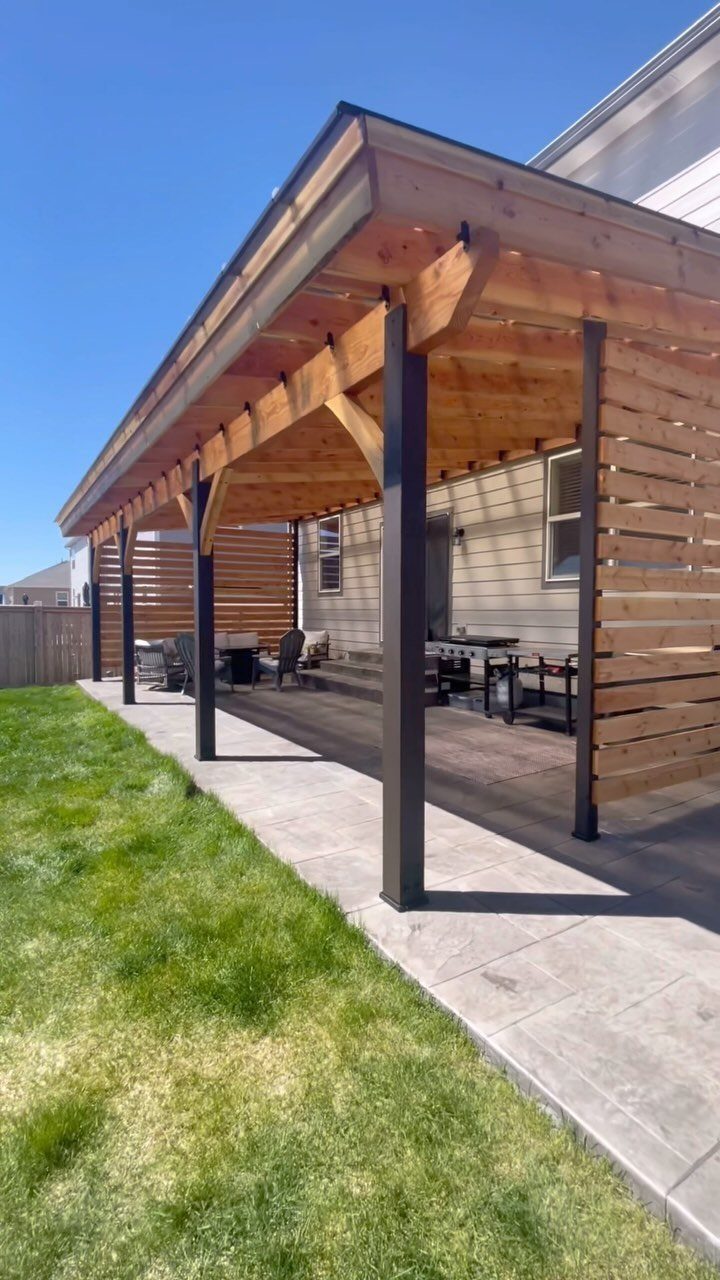
A solid roof extension turns your patio into an outdoor room you can use in any weather, though it blocks the light that reached your house windows.
I would keep the roof flat or nearly flat, with a slight pitch forward so water runs to a gutter, not your siding.
Dark metal posts against light wood is a combination I would repeat, but I would check that the color matches any existing railings before I order.
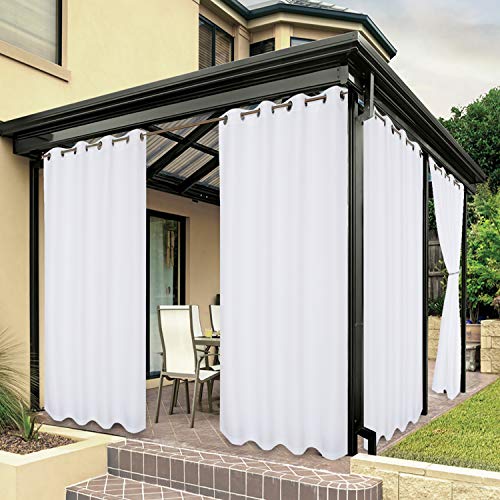
WHAT'S IN THE PACKAGE? Each set includes 1 outdoor curtain measuring 54" wide by 84" long. The curtain features rust-proof 1.6-inch grommets that allow smooth opening and closing for easy daily use.

Heavyweight, Light Filtering Indoor Outdoor Curtain Panel Set

Windproof Design for Ultimate Stability: As the curtain’s standout feature, its reinforced structure and robust fabric resist strong winds effectively—staying taut without flapping wildly or blowing off. Enjoy a calm, undisturbed outdoor space (patio, deck, or porch) even on breezy days, no need for frequent readjustments.
Benefits of Adding Shade
Shade drops the temperature on your patio enough to matter, which means your air conditioner works less and your summer electric bill shrinks.
I would place coverage on the west and southwest sides first; that is where afternoon sun pours in and where a tree or sail blocks the most heat before it hits glass.
Natural shade from deciduous trees costs nothing to run and adjusts itself.
Maples and oaks leaf out in April or May depending on your zone, give full shade by June, and let winter sun through bare branches exactly when you want it.
Vines on a pergola take seasons to fill in, but wisteria or grapevine gives dappled light that no fabric replicates.
I would combine green shade with a hard structure: a sail or pergola handles the gap while a tree grows, and the mixed look reads as intentional, not temporary.
Privacy follows from placement. A curtain or vine wall on the property line blocks sightlines without a fence permit, and the same tree that shades your windows screens you from the neighbor’s second story.
Choosing Shade Materials
UV-rated fabric is the standard for anything you expect to last more than one summer.
Shade sail cloth varies in how much UV it blocks; I would hold out for the highest rating I could find, because lower-rated fabric lets enough through to fade cushions by late summer.
Marine-grade thread and stainless grommets matter as much as the cloth itself; the sail tears where the hardware fails, not in the middle.
For permanent structures, aluminum costs more upfront and never needs paint. I would use it for posts and frames in humid climates or within a mile of salt water; steel rusts at the joints where powder coating gets nicked.
Wood needs regular resealing in full sun, which is not a small commitment. If you build with cedar or redwood, the maintenance is lighter, but I would still budget for a weekend of sanding and oiling.
Color choice is structural, not cosmetic. Light fabric reflects heat and keeps the covered area cooler; dark fabric absorbs it and radiates downward.
I would pick white or sand for curtains I touch, charcoal for a sail high overhead where the heat dissipates before it reaches me.
Placement Considerations
Afternoon sun, roughly 2 pm to 5 pm, is the heat you feel most and the angle that drives you inside.
Map your patio at 4 pm on a July Saturday; the patch that forces you to squint is where shade pays off first.
I would not cover morning east light unless you sleep out there; that sun is mild and you lose the early warmth on spring weekends.
Tree placement is the decision you cannot undo. I would keep any deciduous tree with a broad crown well back from the house, which leaves most suburban lots one, maybe two, candidates.
Slender aspens fit tighter spaces but are short-lived and sucker, so I would plant them where the shoots are mowable.
Overhead lines are the hard limit. I would call for a free utility locate before I dug, and I would still hold every tree well below a service line at maturity.
The only way to fix a wrong placement is a chainsaw and a stump grinder; the right spot from the start is cheaper by thousands.
Frequently Asked Questions
How can I shade the side of my house?
A wall-mounted awning gives you shade on demand: extend it when the sun is harsh, roll it back when you want the sky.
I would check the pitch so water runs off instead of pooling, and size the projection so it covers the table even with chairs pushed back.
A solid patio roof extension builds a true outdoor room, but your house windows will lose the daylight they used to get.
What are some ideas for garden sun shades?
Shade sails need sturdy anchor points set at different heights so rain drains, and layering two or three lets you shift coverage as the sun travels.
A DIY shade canopy built from electrical conduit and fittings lets you clip shade cloth over garden beds to whatever length you need.
Deciduous trees like birch or aspen leaf out for summer shade and drop bare for winter sun; a pergola covered in vines takes years to match that.
What are some examples of backyard shade structures that are attached to the house?
A retractable awning mounts to your house wall and extends over the patio when you want it. A fixed patio roof does the job permanently, giving you an outdoor room that holds up in any weather.
What is the quickest way to add backyard shade?
Nothing beats a patio umbrella for speed, especially a cantilever that hovers off to the side and tilts to follow the sun.
A party tent covers a group for one afternoon and packs away after, though I would trust cheap ones only when the air is still.
What shade option lasts the longest?
Mature deciduous trees cost nothing to run and adjust themselves season after season, leafing out by June and letting winter sun through bare branches.
Well-built permanent structures like pergolas and pavilions last for decades with proper material choice: aluminum posts and frames in humid or coastal climates, cedar or redwood with regular resealing in full sun.
Do pergolas block all sunlight?
Not usually. A standard pergola gives dappled shade through its slats and leaves much of the sky visible.
Fixed slats catch the sun at some hours and let it pour through at others; a louvered roof fixes that if you have the money.
You can add vines like wisteria or grapevine for denser coverage, but that takes several seasons to fill in.