These ideas run from a hammock tree strap set to a pergola and sunken patio build where lumber and hardware are the bulk of the cost.
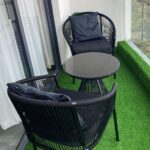
That same ownership question decides whether you are adding a zippered vent to a clear dome tent on a deck you control, or dividing a rental backyard into zones with nothing more than gravel and lawn that you can lift again when the lease ends.
[link-whisper-related-posts]1. Divide Your Space
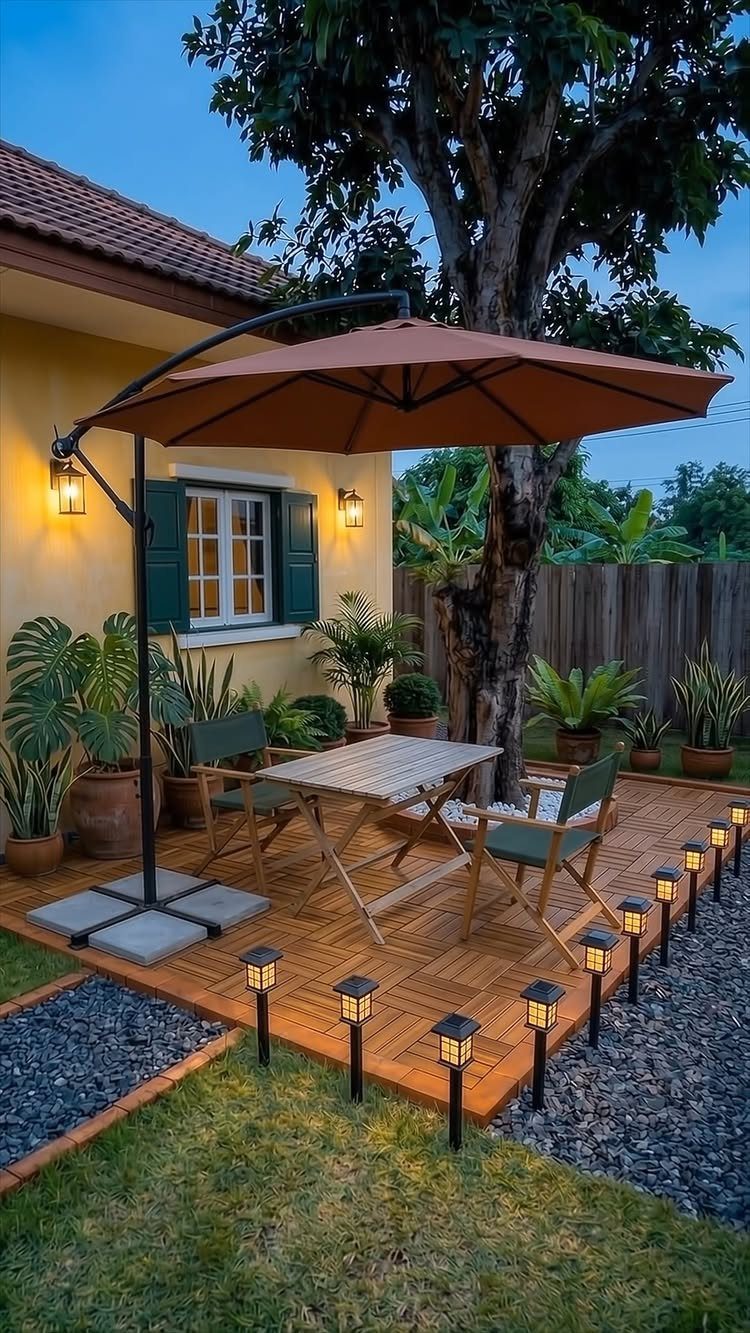
Splitting a backyard into zones lets you treat each area as its own room.
Wood tiles, gravel, and lawn divide the space without building walls. I like this approach because it works on any budget: you can start with one zone and add others when you have time.
Before you begin, check which spots get sun and which sit in shade for most of the day. That decides what goes where.

Wet-Area Ready, No Sealing Required: Pre-finished with cured linseed oil — a natural plant-based wood finish — these tiles install straight from the box — no sealant, no prep, no waiting. Raised base channels water underneath for patios, balconies, pool surrounds, and shower floors

Wet-Area Ready, No Sealing Required: Pre-finished with cured linseed oil — a natural plant-based wood finish — these tiles install straight from the box — no sealant, no prep, no waiting. Raised base channels water underneath for patios, balconies, pool surrounds, and shower floors

Generously Size:Measuring 8FT in length and 17 inches in width,these garden walkway provides a full 8' of length to let you cover more ground in an instant,brings sufficient area for you to walk through!This is the most convenient and cost-effective tool to create the elegant and exotic hardwood deck that you have always dreamed of!Design a multifunctional pathway,or charming landscape decor with our roll-out wood garden walk-way,add instant and rustic touch to your outdoor surroundings
2. String Lights
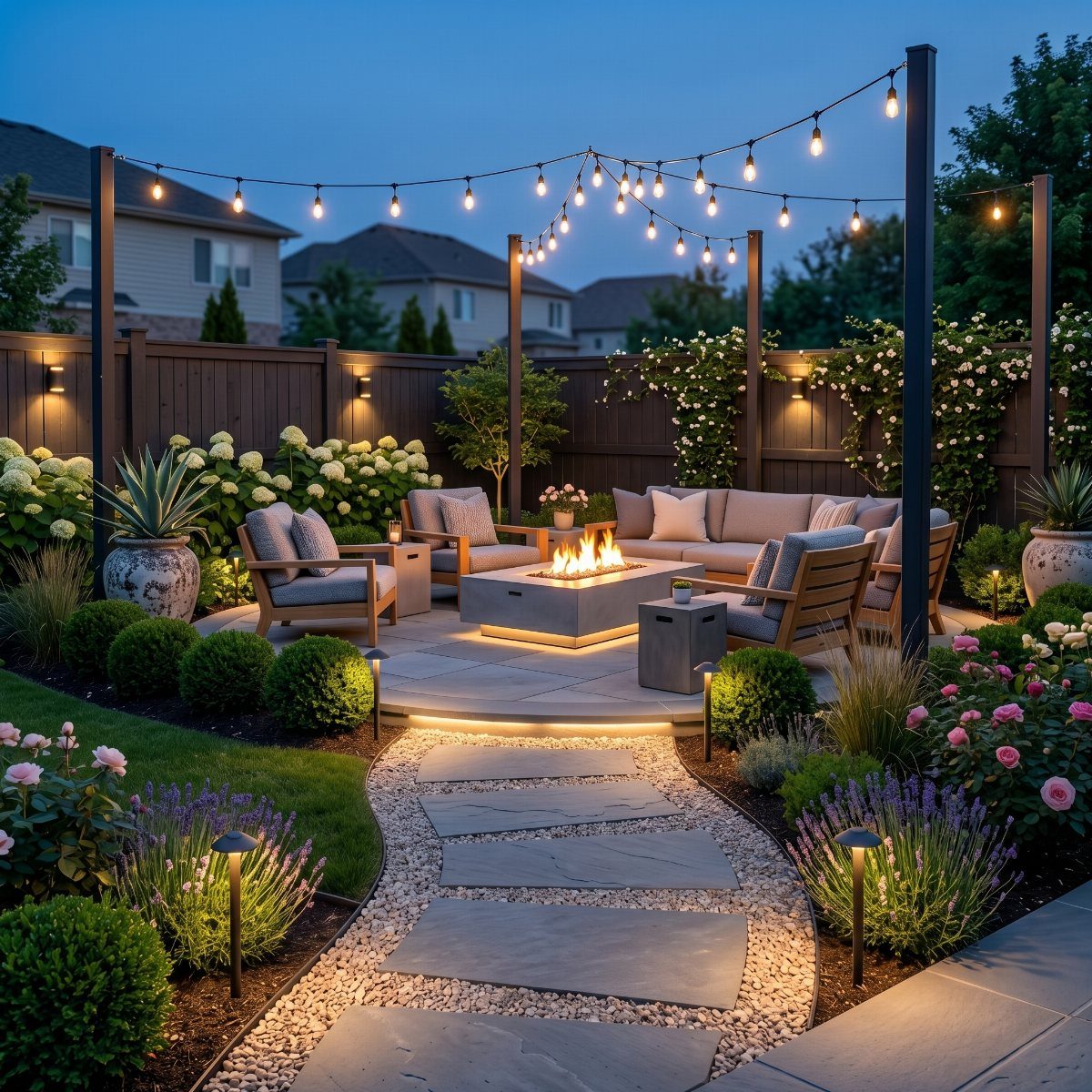
String lights stretch usable evening hours deep into dusk, and the price gap between short strands with basic bulbs and long runs with vintage LEDs is wide enough that I would set a budget before shopping.
Plan anchor points on fences, trees, or posts before you buy so the strands hang high enough to walk under.
LED bulbs last longer and draw less power than incandescent, though I think incandescent still wins on warmth. Check that your outdoor outlet or extension cord is rated for exterior use.

【 55ft LED Connectable String Lights 】- This outdoor light comes with 25+2 G40 LED bulbs. Each bulb is 2 feet apart for a total length of 55 feet. It supports an end-to-end connection of up to 14 strings, allowing you to customize the length you need. These lightweight and convenient patio lights are easy to carry and store

Purple and Orange Halloween Lights: 25 feet Outdoor string lights with 27 LED G40 light bulbs, end to end connectable. Globe string light bulbs have G40 candelabra (E12) socket base, UL listed. The cord is flexible and thicker than a traditional cord so that you can confidently leave these durable decoration string lights on the tree, tent and many other occasions or events, Halloween, party, etc

【Waterproof & Shatterproof Outdoor Lights】 -This outdoor string lights are ETL listed with fully sealed and IP45 waterproof design socket, adopted heavy-duty sting wire and shatterproof bulbs with hooks, held up in the terrible weather rain, snow, wind, storm. What’s more, we prepare 2 fuses for this string lights for outside, double safe for your family.
3. Native Plants
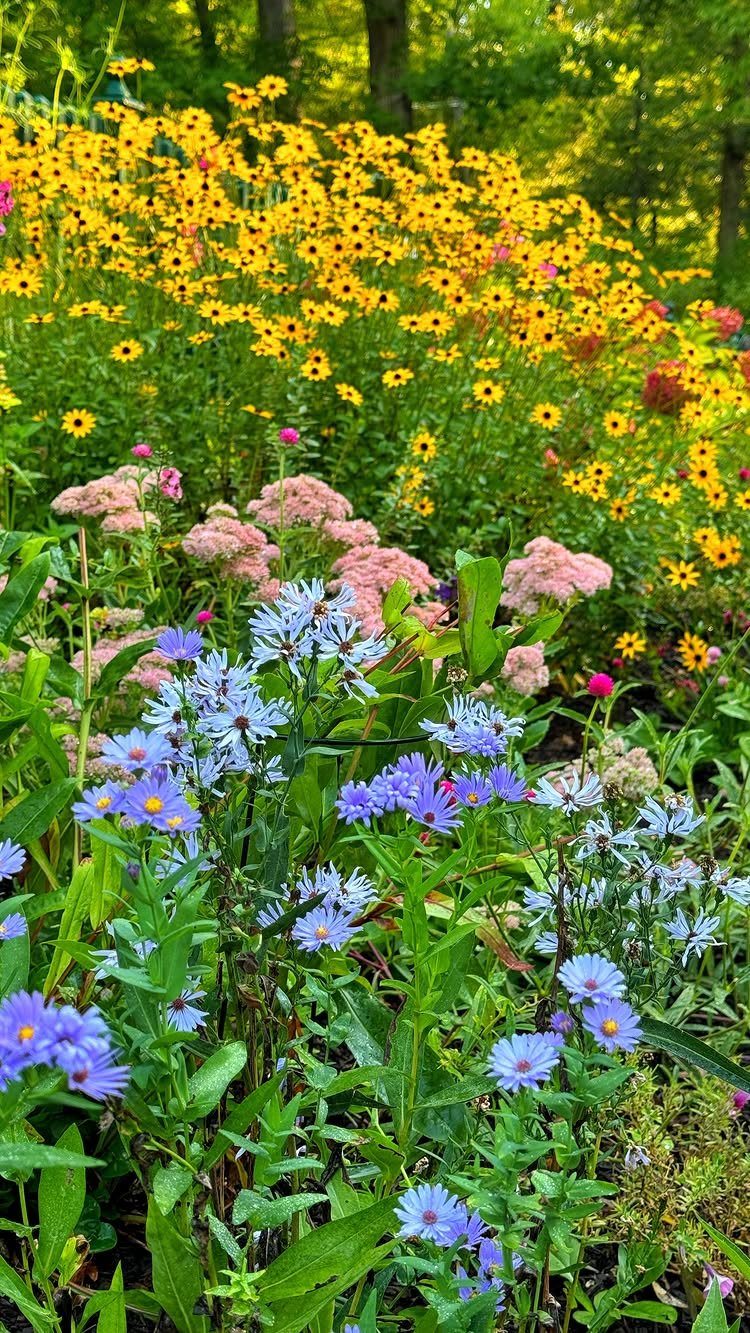
Native plants handle local rainfall and soil without begging for fertilizer, and they feed the insects your garden actually needs.
Check your zip code against your state’s native plant society list before you shop; big-box stores often stock cultivars bred for looks rather than pollen or nectar. I would skip the double-flowered versions entirely.


Retro Metal Tin Sign: This metal sign blends retro design with fun and art, featuring bright colors and eye-catching slogans, easily adapting to various decorating styles

4. Incorporate a Pergola
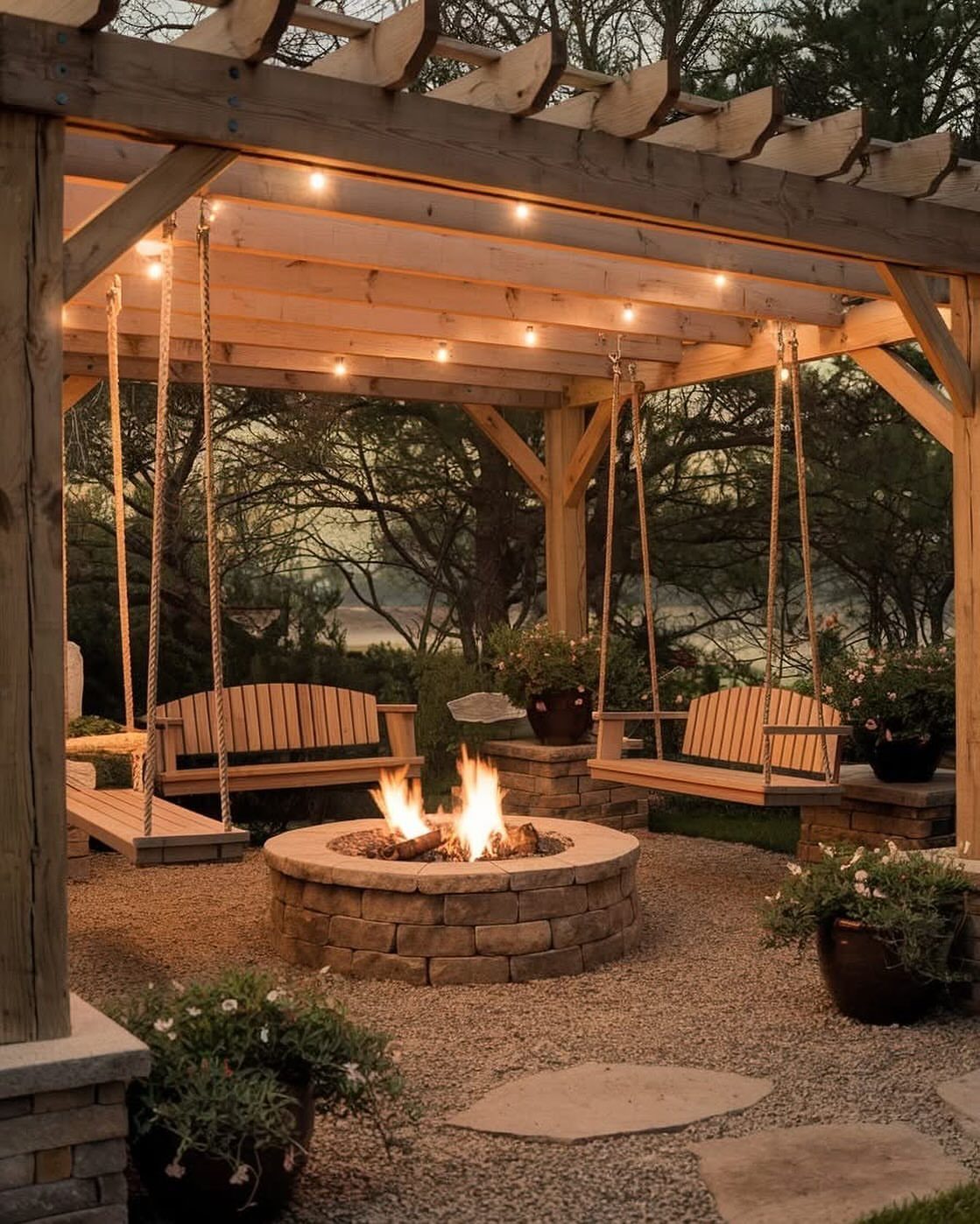
A pergola frames a space without fully enclosing it, which matters in smaller yards where a solid roof would feel heavy. A pergola over gravel with swings hung from the beams is a combination I would copy exactly.
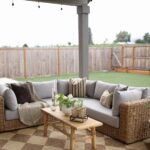
Pressure-treated pine is the budget entry point; cedar or redwood costs more but lasts longer with less maintenance. Check your local code: many places require permits for larger pergolas or any structure attached to the house.

1. Wider Opening for 4x4 Wood Posts: Designed with a 3.74 x 3.74 in (95 x 95 mm) inner opening, this 4x4 pergola bracket kit fits standard nominal 4x4 lumber. The extra clearance makes wood posts easier to insert and accommodates some slightly oversized lumber, providing greater flexibility for DIY pergola projects.
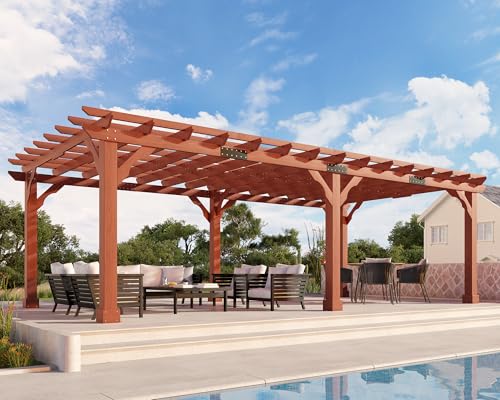
Premium Solid Cedar Wood Frame: Crafted from high-quality cedar wood with rich grain patterns, this pergola features a natural finish and is treated with a weatherproof stain for long-lasting durability, ensuring protection through all seasons

Upgrage 3-Way Right Corner Brackets: Our Grehitk pergola brackets are extended 3-Way right angle corner bracket. It has enhanced the stability of the pergola, even in inclement weather. The 4x4 pergola brackets post features weather-proof performance and a stable frame, so you do not have to worry about the attack and damage to storms and wind.
5. Retaining Wall
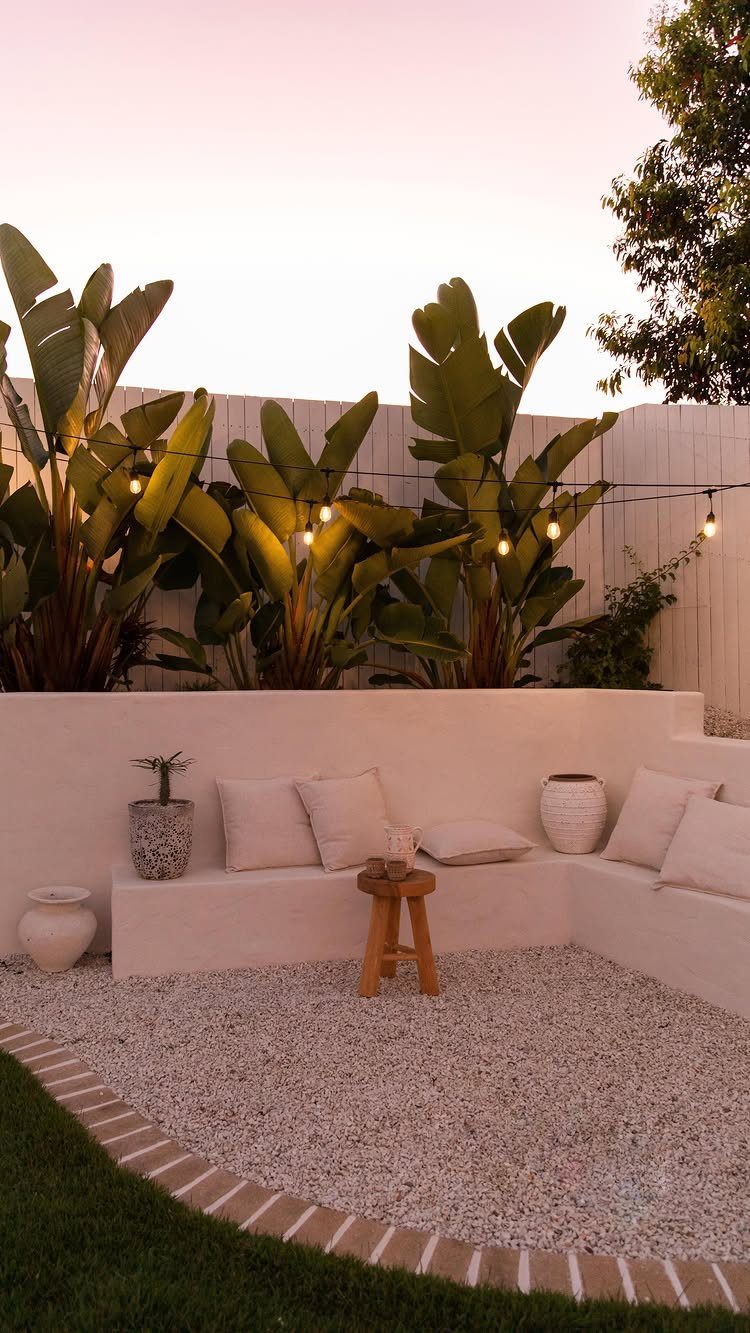
A retaining wall that doubles as seating gets you two functions from one build.
Stucco reads clean and modern on a retaining wall, though I would worry about cracks in freeze-thaw climates; concrete block or timber might suit some regions better.
Check drainage before you start: water trapped behind the wall will push it outward within a season or two. A French drain at the base is extra work and material cost but saves the wall from water pressure.
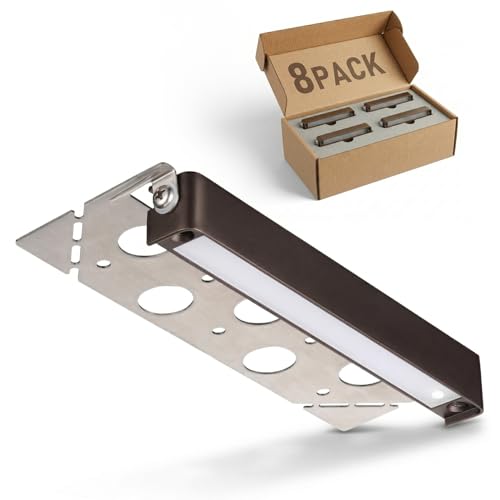
Widely Used: Powered by 12-24V AC/DC, this LED low voltage landscape light can be used to light barbecue fire pits, landscape steps, retaining walls, decks, rock brick column, outdoor kitchen, flowerbeds, and masonry walls. This hardscape paver light can be rotated to fits more applications

Widely Used: Powered by 12-24V AC/DC, this LED low voltage landscape light can be used to light barbecue fire pits, landscape steps, retaining walls, decks, rock brick column, outdoor kitchen, flowerbeds, and masonry walls. This hardscape paver light can be rotated to fits more applications
6. Patio Containers
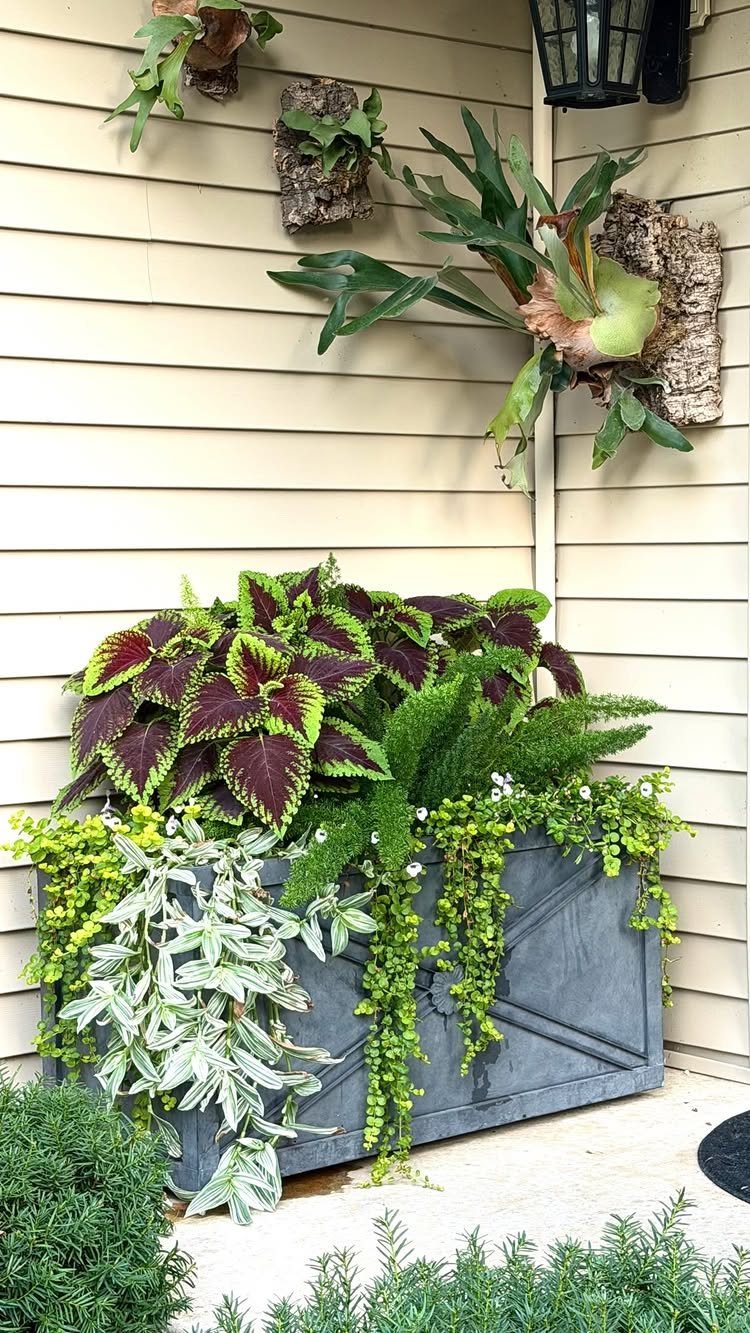
I would line the interior with landscape fabric to keep potting mix from washing through the drainage holes.
Check that the wall behind can handle moisture; wood siding needs a gap or a moisture barrier, or the planter goes on legs.


Wet-Area Ready, No Sealing Required: Pre-finished with cured linseed oil — a natural plant-based wood finish — these tiles install straight from the box — no sealant, no prep, no waiting. Raised base channels water underneath for patios, balconies, pool surrounds, and shower floors

𝐏𝐑𝐄𝐌𝐈𝐔𝐌 & 𝐃𝐔𝐑𝐀𝐁𝐋𝐄 𝐀𝐂𝐀𝐂𝐈𝐀 𝐖𝐎𝐎𝐃: Made from 100% natural acacia wood with a deep-oil finish, these interlocking decktiles are sturdy, water-resistant, and built for outdoor conditions. Sanded smooth for a premium wood grain look, a smooth-finished surface, and a noticeably smoother barefoot feel - comfortable for families and pets.
7. Seating Levels
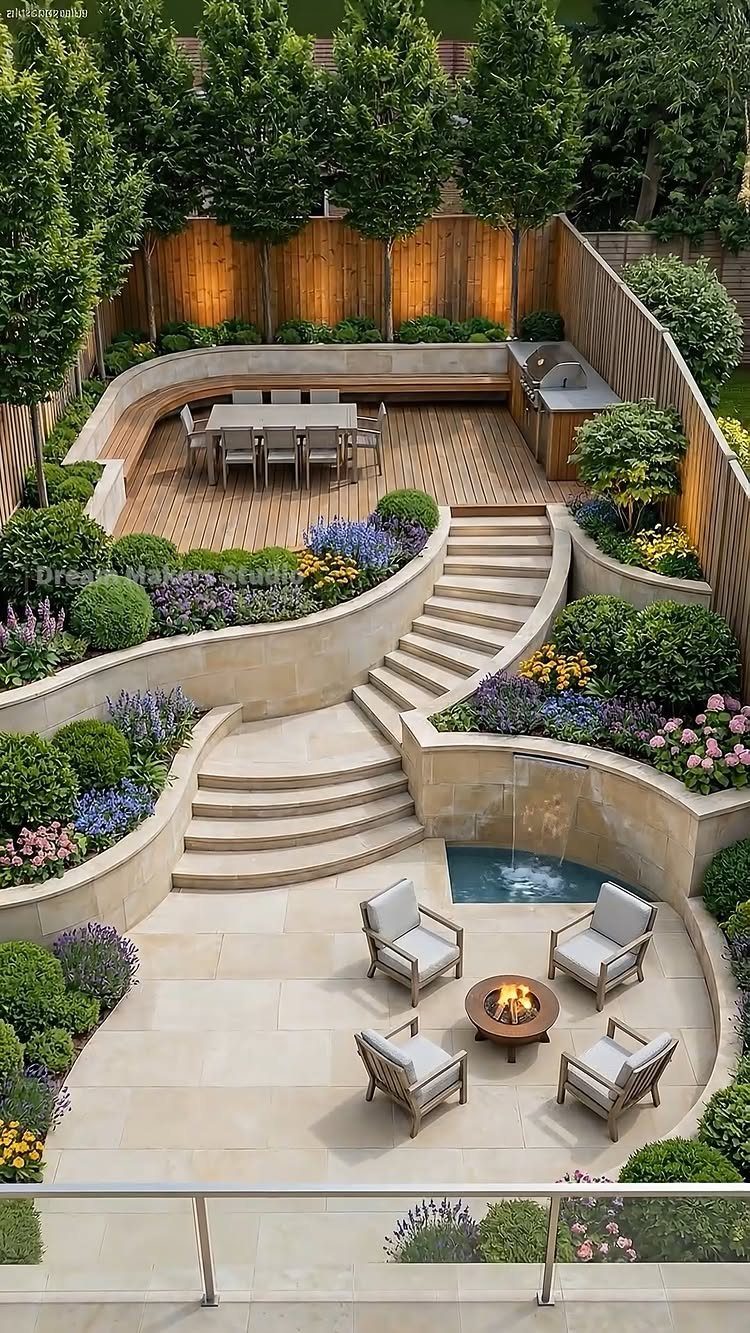
Stone walls and stairs can carve a flat yard into outdoor rooms without expanding your footprint. I like movable chairs around a fire pit because it lets you rearrange for headcount.
Built-in seating with a hinged lid buys back storage space for cushions or garden tools. That joinery adds cost and needs weatherproof hinges; I would check my rain exposure before deciding whether the extra expense is worth it.

Remote control with customizable lighting & timer: control your outdoor string lights via remote to adjust brightness from 25%, 50%, 75% to 100%. Choose from 3 lighting modes: breathing, steady, and flashing to tailor your desired ambiance. Plus, set the built-in timer for 6 or 8 hours to automatically turn off the lights, saving your energy and electricity bills.

100FT String Lights for Outside: BYGUQ 30 meter outdoor patios lights is perfect for covering expansive areas like patio, gazebos. The same model can be connected up to 200 feet, great for outdoor hanging lights, deck lights, and fence lighting.

Superior Brightness & Connectable - Unlike dim low-voltage string lights, our 120V outdoor lights provide 2X the brightness for full illumination. Built with pure copper wiring for improved conductivity and safety, they support end-to-end connection of up to 15 strands without voltage drop or dimness, ideal for large spaces. If you need powerful lighting for a grand setup, this is your good choice.
8. // Go Vertical
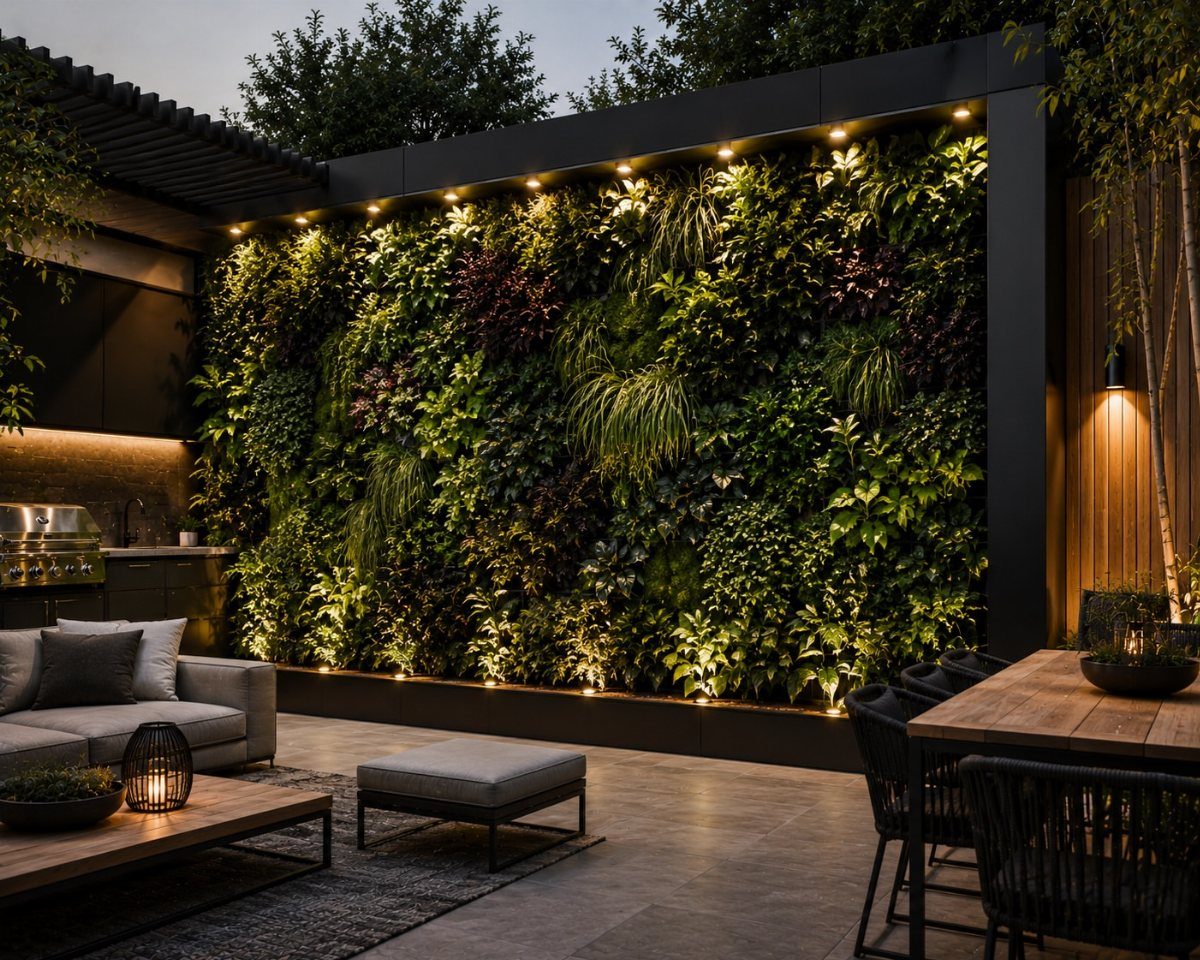
A living wall turns a blank fence or house side into planting area without taking ground space. A modular panel system works best backlit so the wall reads as architecture after dark.
These systems need irrigation built in; hand-watering a vertical garden is a short experiment.
Check that your wall can handle moisture and the panel weight, especially if you are mounting against siding rather than masonry. I would start with shade-tolerant ferns and pothos rather than sun-hungry species; they forgive uneven watering.


Conservation naturalists know our own backyard can become an ecological haven for pollinators, birds, toads, and more. Spread the message through this educational design showcasing the beauty of plants native to North America.

Retro Metal Tin Sign: This metal sign blends retro design with fun and art, featuring bright colors and eye-catching slogans, easily adapting to various decorating styles
9. Incorporate a Firepit
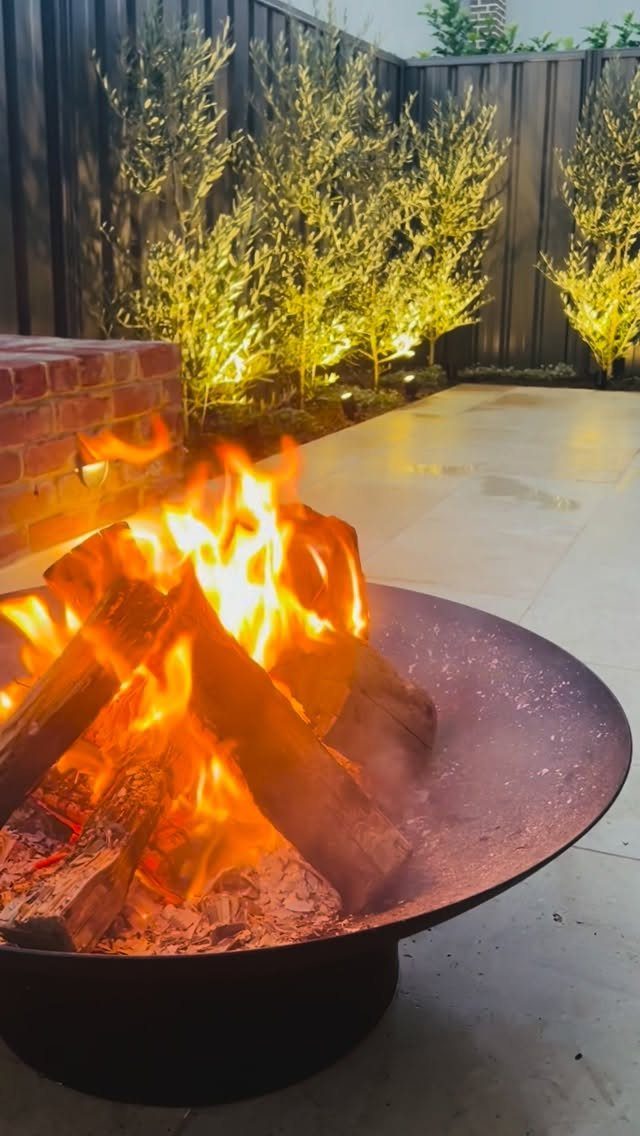
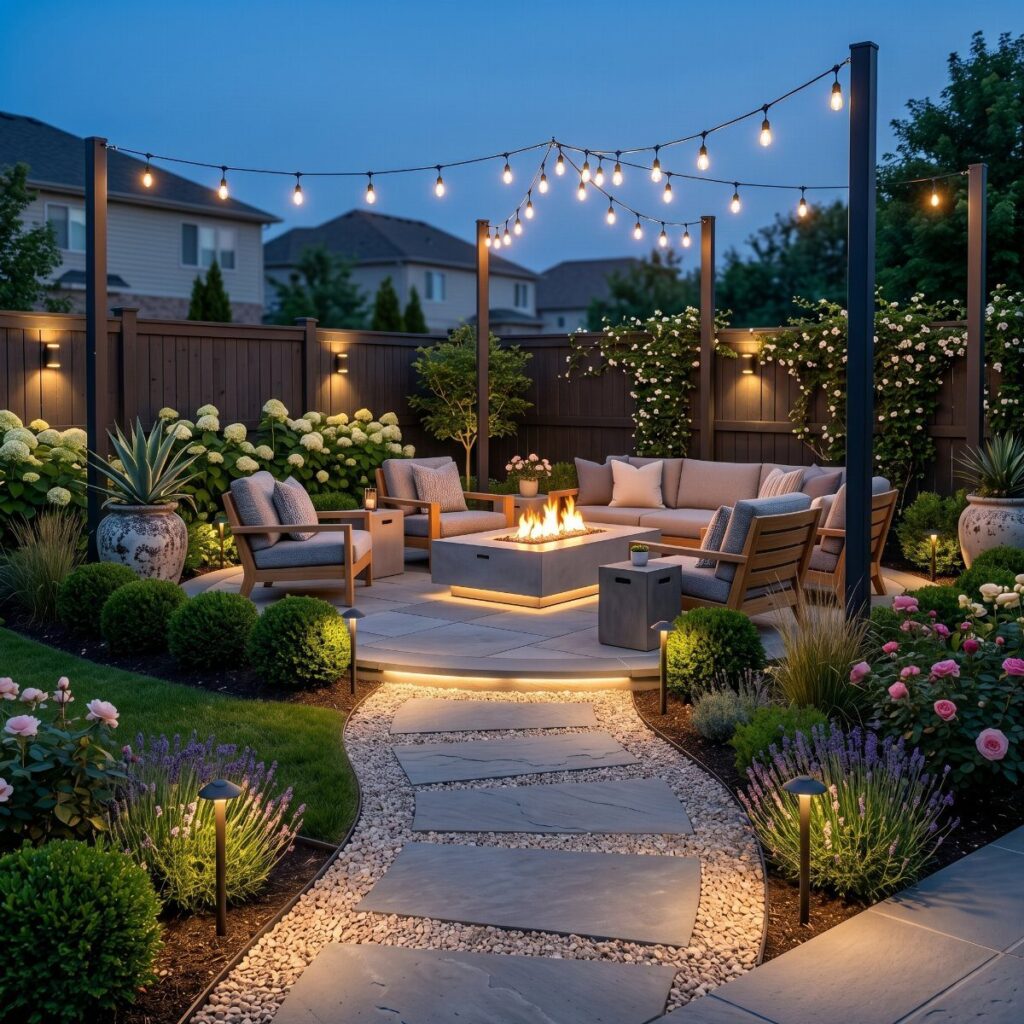
A metal bowl on a paved surface is the simplest entry point: no masonry, no gas line, no permit in most places. Wood burns hotter and cheaper than propane, though you are feeding it and cleaning ash.
A fire pit on pavers sits level and drains well, which matters more than looks alone.
Sparks on lawn or deck can void your insurance; I would not place a wood-burning pit on anything combustible. Check local burn restrictions before you buy; in drier regions, gas may be your only legal option.

Upgrage 3-Way Right Corner Brackets: Our Grehitk pergola brackets are extended 3-Way right angle corner bracket. It has enhanced the stability of the pergola, even in inclement weather. The 4x4 pergola brackets post features weather-proof performance and a stable frame, so you do not have to worry about the attack and damage to storms and wind.

【For 30°Slanted Roof Pergola】The slanted Pergola Bracket set is suitable for 4x4 wooden post, and a 30 degree Gazebo bracket can better block sunlight and rainwater, providing a more comfortable leisure environment for outdoor spaces, allowing you to enjoy outdoor life in hot summer or rainy weather.

Fits 3.5x3.5 Inch Wood Posts: This 4x4 pergola kit helps you easily build a double-sided flat-roof pergola and fits actual wood sizes of 3.5 x 3.5 inches (92 x 92 mm), suitable for both softwood and hardwood
10. Water Feature
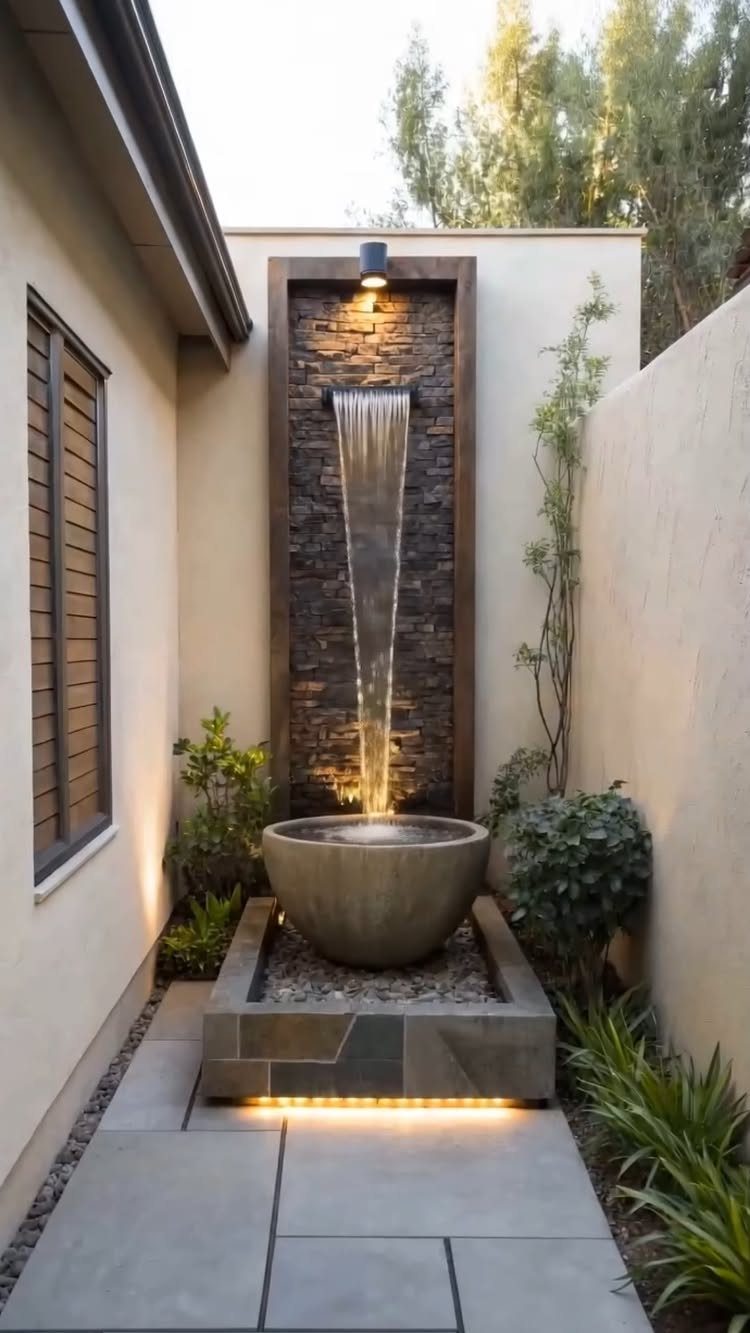
A wall fountain runs on a small recirculating pump and needs only a power outlet and level ground.
A stone cascade needs a basin wide enough to catch splash; I would make sure my basin diameter matches or exceeds the fall height.
Pumps pull enough wattage to cost only pennies a day to run, but they do clog with leaves.
I would place this where I can reach to clear debris and where the sound carries to seating, not to a bedroom window.

【Easy 1-Minute Replacement】 No more prying up heavy stones! Unlike traditional hardscape lights that require destroying masonry work to fix, our innovative modular design lets you swap the LED engine by simply removing 5 screws. The heavy-duty stainless steel plate and wiring stay permanently secured under the blocks. True hassle-free maintenance for your outdoor retaining walls and seating walls.

Standard Size: A standard 24x24 outdoor pillow covers (Pillow cover only, insert not included), which fits chaise pillow inserts. The size is designed with reserved space for easy stuffing and fitting, allowing the pillow core to fill the cover fully without bulging unevenly or looking loose. This outdoor pillow covers 24x24 inch presents a pleasant look after installation, ideal for outdoor floor loungers, big garden daybeds, covered patio sectionals and large indoor living room floor cushions

Wind Barrier: Interlocking dense grid structure blocks strong gusts and soil erosion, creating a stable boundary that shields flower beds and terrace borders from harsh outdoor weather.
11. Garden Art
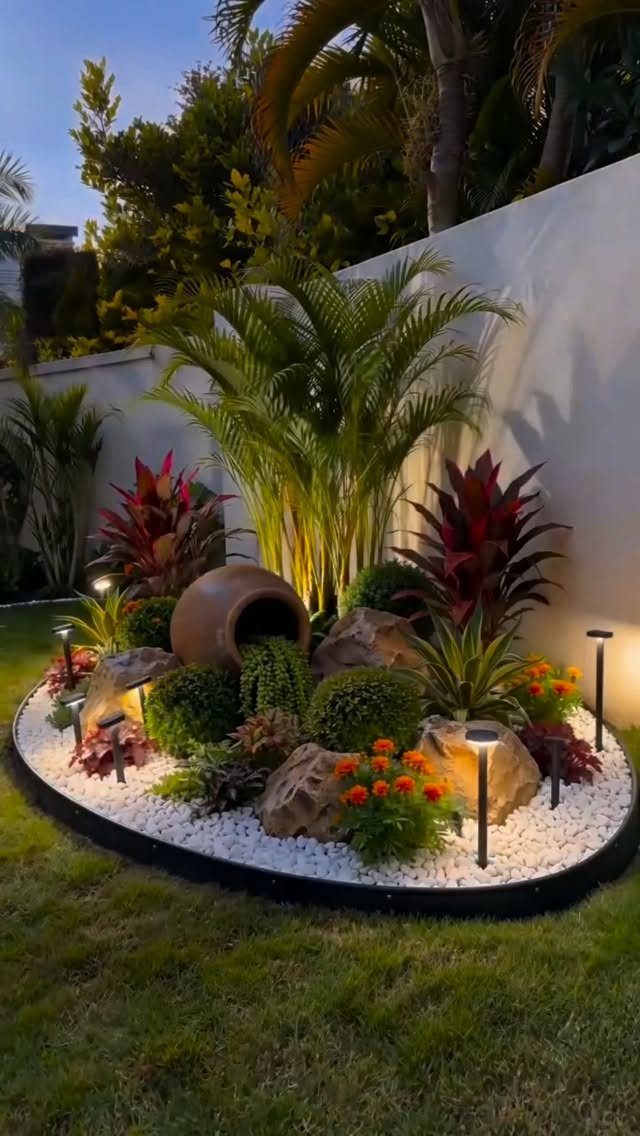
A single oversized terracotta pot in among tropical planting gives the eye somewhere to rest. Scale is what makes it work: too small and it disappears, too many pieces and the garden reads as clutter.
I would set one large piece rather than grouping small ones, and I would anchor it on its own footing or buried base so it does not tilt as the ground shifts.
Check your freeze-thaw cycle; unsealed terracotta absorbs water and cracks in hard winters.
12. Blue and Purple Plants
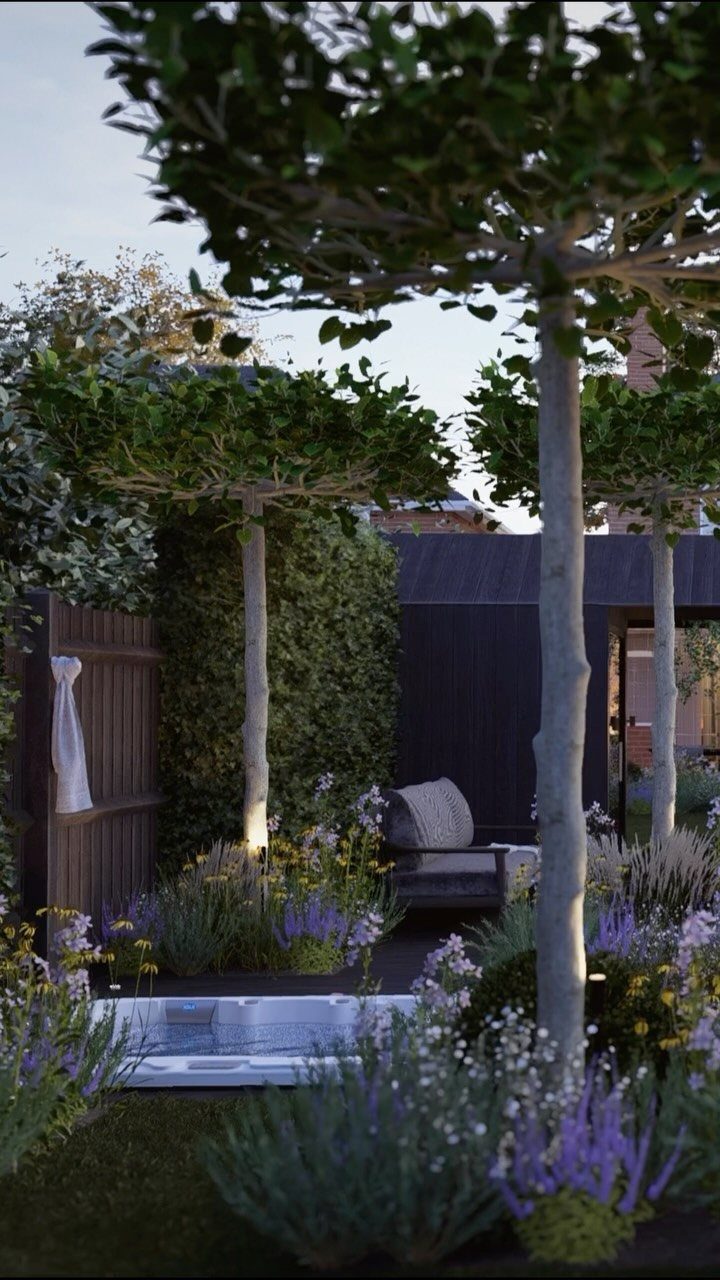
Blue and purple read cooler than hot colors, so they suit a space you want to calm down rather than energize.
The photo pairs them with yellow, which I would keep; without the contrast, the cool tones can look muddy in shade.
Most true blues want sun; the purples, like salvia or verbena, tolerate more variation.
Check your light before you shop. I would plant in drifts of one species rather than mixing singles; massing carries from a distance where a spotty mix reads as weeds.
13. Shady Corner with Ferns
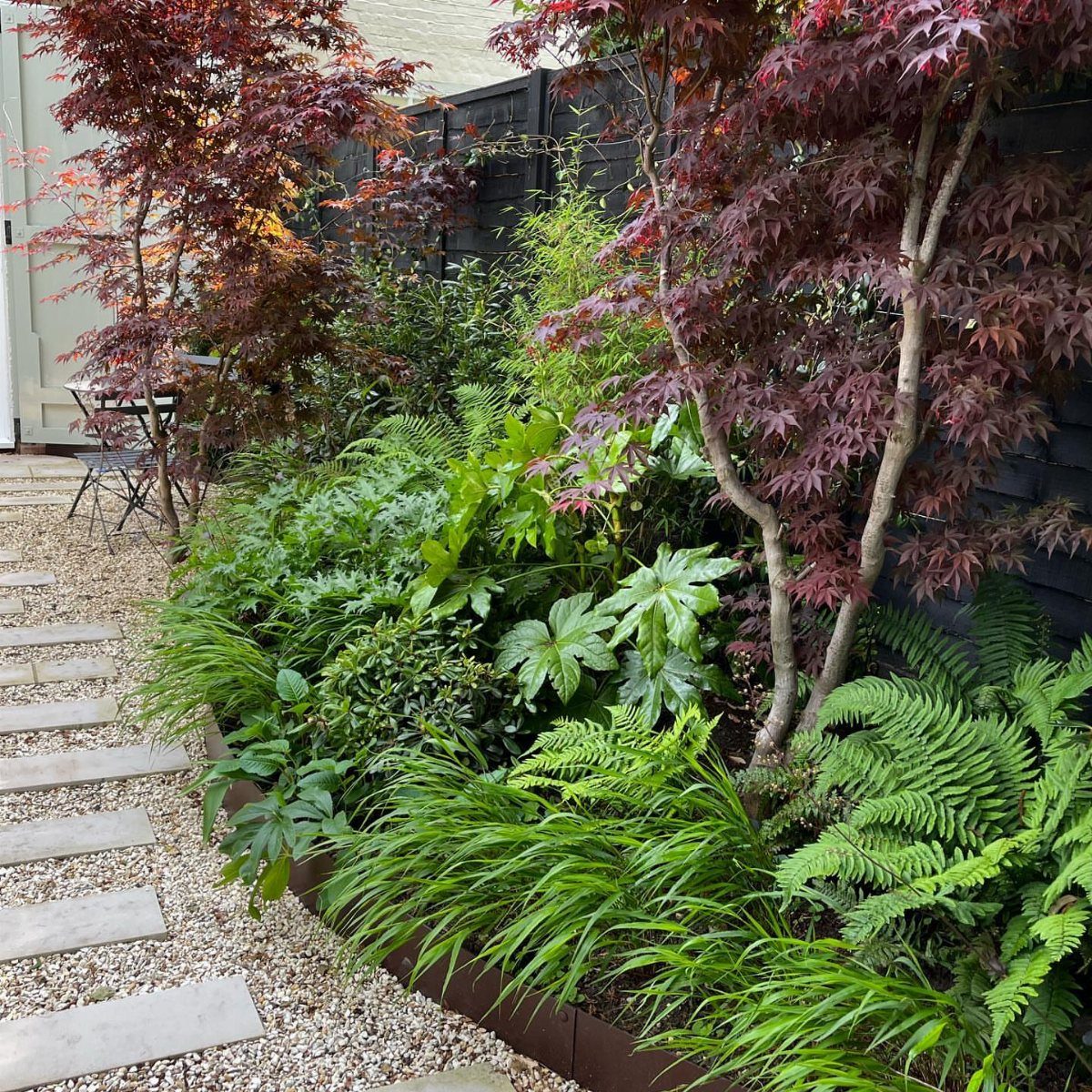
A north-facing fence line or the dark side of a garage is often wasted space that ferns turn into the coolest spot in the yard.
Japanese maple roots compete shallowly, so I would give each plant its own pocket of amended soil rather than digging one continuous bed.
Mulch with shredded bark to hold moisture; dry shade kills faster than deep shade. Check your soil pH before you buy; most ferns want slightly acidic ground.
14. Sunken Patio
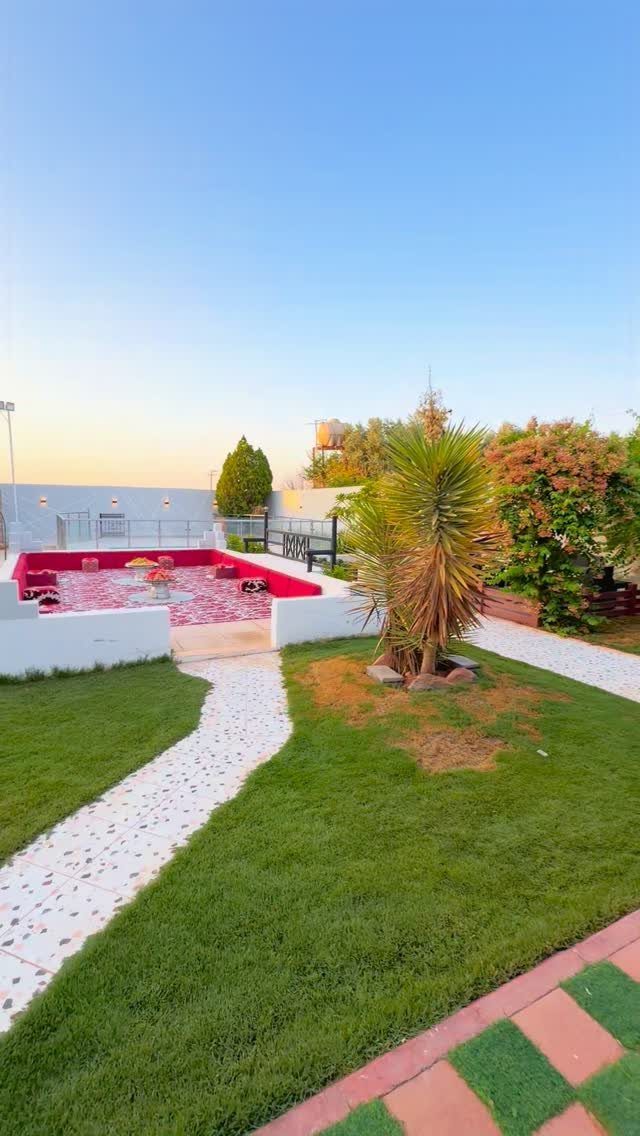
Digging a conversation pit into flat ground gives a backyard theater seating without blocking sight lines to the rest of the garden.
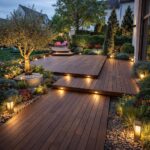
I would use permeable pavers underfoot in clay soil regions where water pools, since standard tile traps water and stains within a season.
Check your water table first; a sunken patio that fills like a bathtub after rain is a costly repair.
15. Create a Vegetable Garden
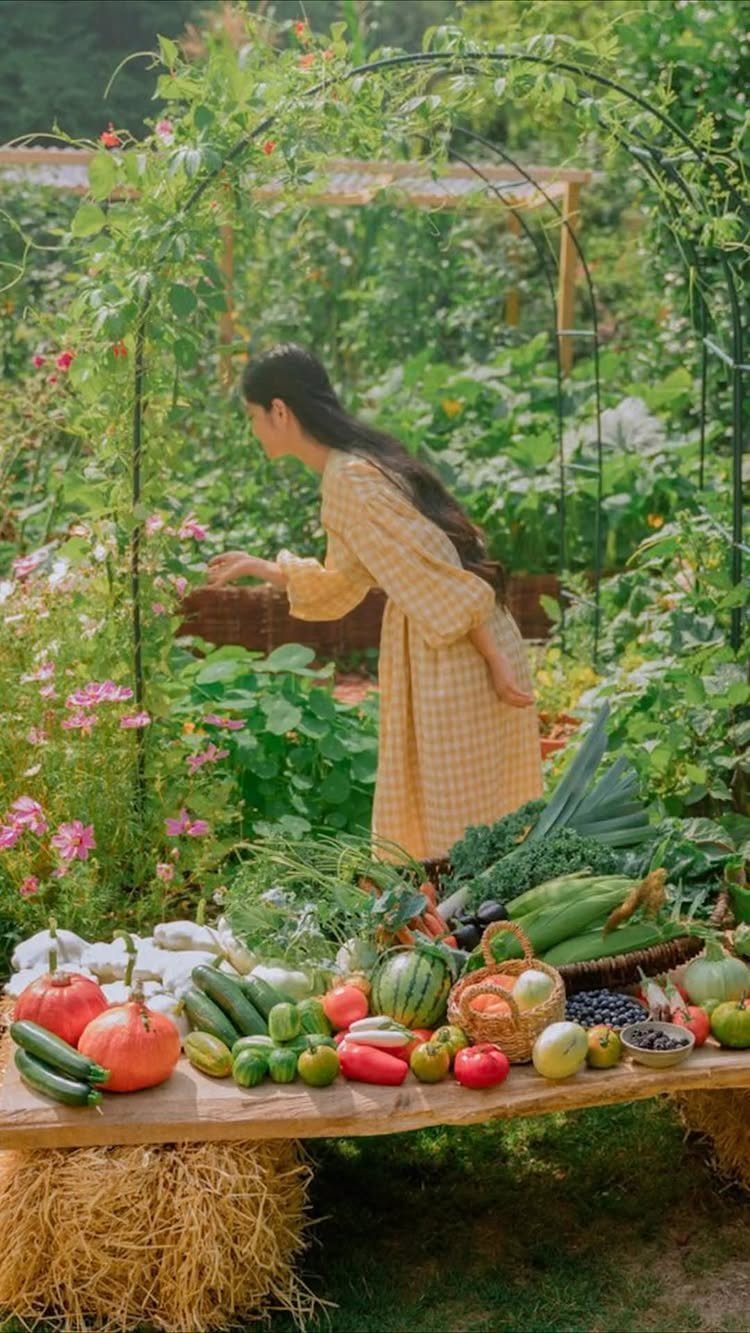
A harvest display on rough hay bales reads rustic, but the growing happens before the photo.
Raised beds warm faster in spring and drain through clay; a shallow bed works for most crops, but root vegetables need the full depth to develop straight.
Full sun means solid afternoon exposure; the west-side hours matter more than morning for tomatoes and peppers to set fruit. Check your municipal rules; some limit visible food gardens in front yards or near property lines.
16. Create a Focal Point
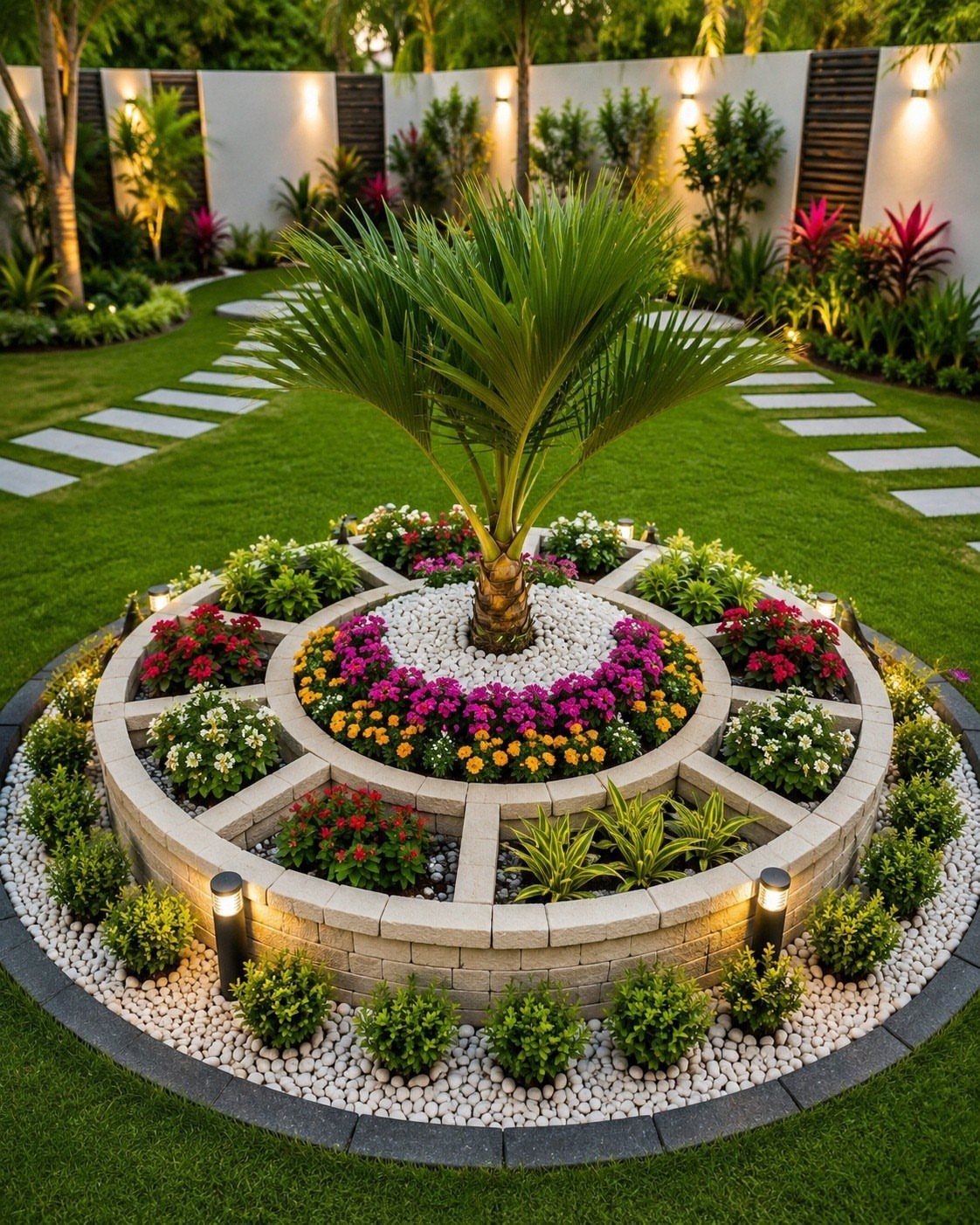
A single strong shape at the lawn’s center organizes everything around it. I would wire low-voltage lighting into the base during construction rather than adding solar stakes later; the integrated version costs more up front but lasts years longer.
Check your sight line from the back door; a focal point off-center often carries better than one dead middle.
17. Trained Fruit Trees
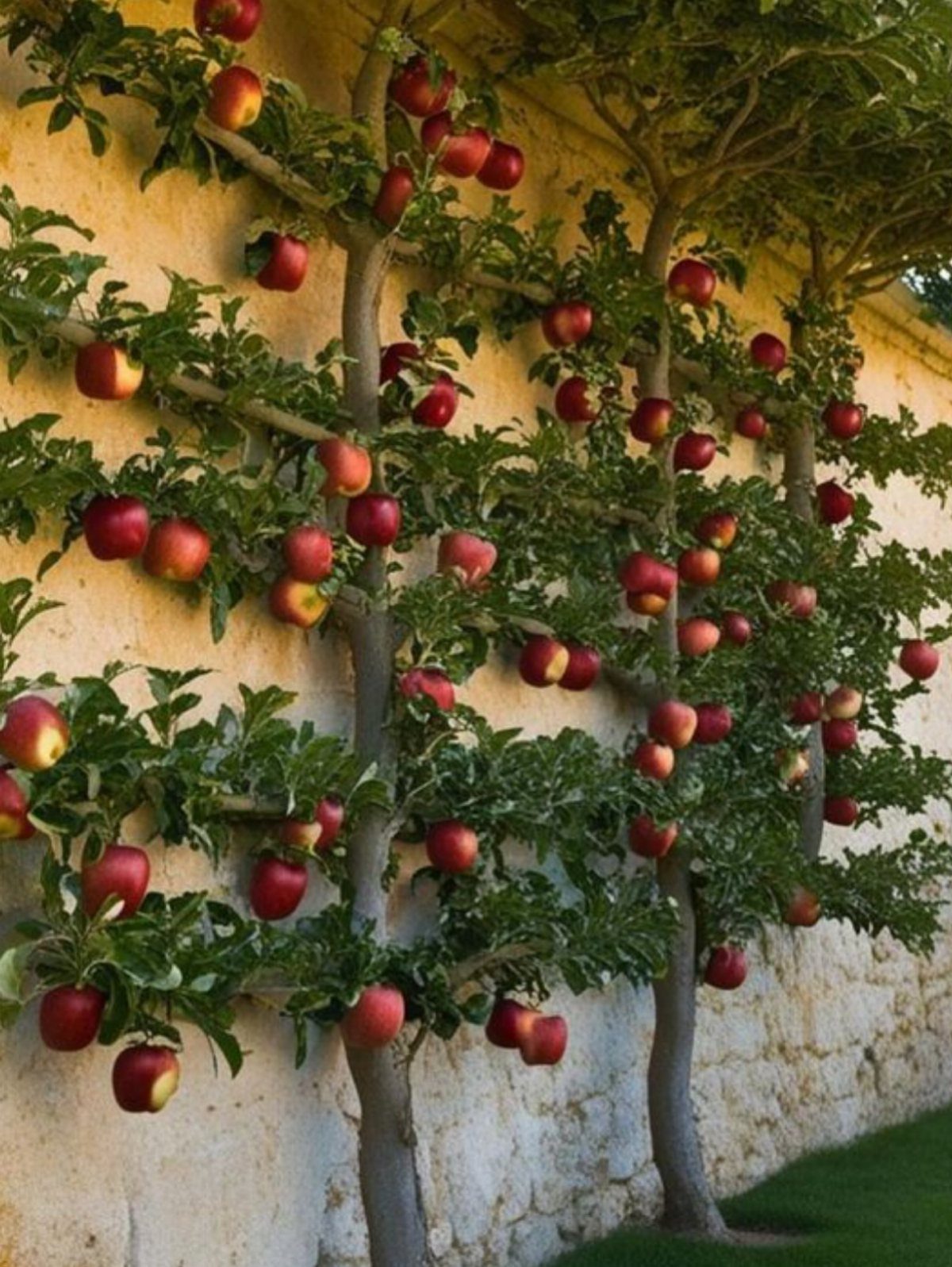
Espaliered apples against a wall give full harvest in the footprint of a shrub. Horizontal arms are tied to wires spaced close enough for support without crowding; young wood bends in spring, brittle winter branches snap.
I would start with a one-year whip and a simple horizontal cordon rather than the complex fan shapes; fruit sets faster on simpler forms.
Check your wall face; south-facing stone holds daytime heat that ripens fruit earlier, east-facing gives more even moisture.
18. Add a Hammock
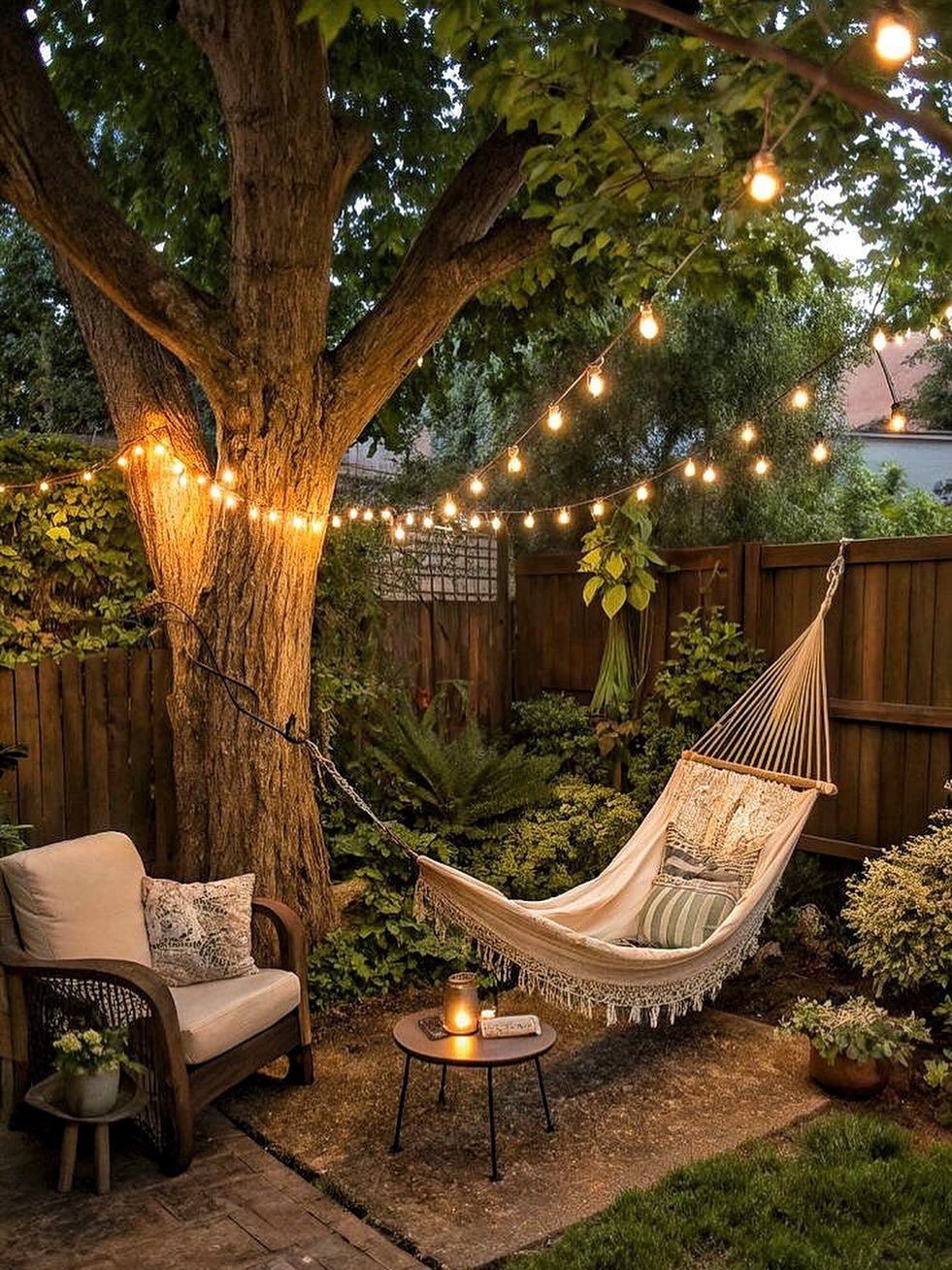
A hammock needs 2 anchor points rated for dynamic load, not just the static weight of a person sitting.
A fence post set deep may hold a hammock, one set in a shallow patio planter will lever out with body weight.
Tree straps at least 1 inch wide protect bark better than rope. Check the fall zone; the usual hang height is low enough to roll out of without injury, and whatever is underneath should be soft.
I would skip the spreader-bar style for sleeping; the gathered-end Brazilian gathers around the body and stays flatter.
19. Use Pathways for Interest
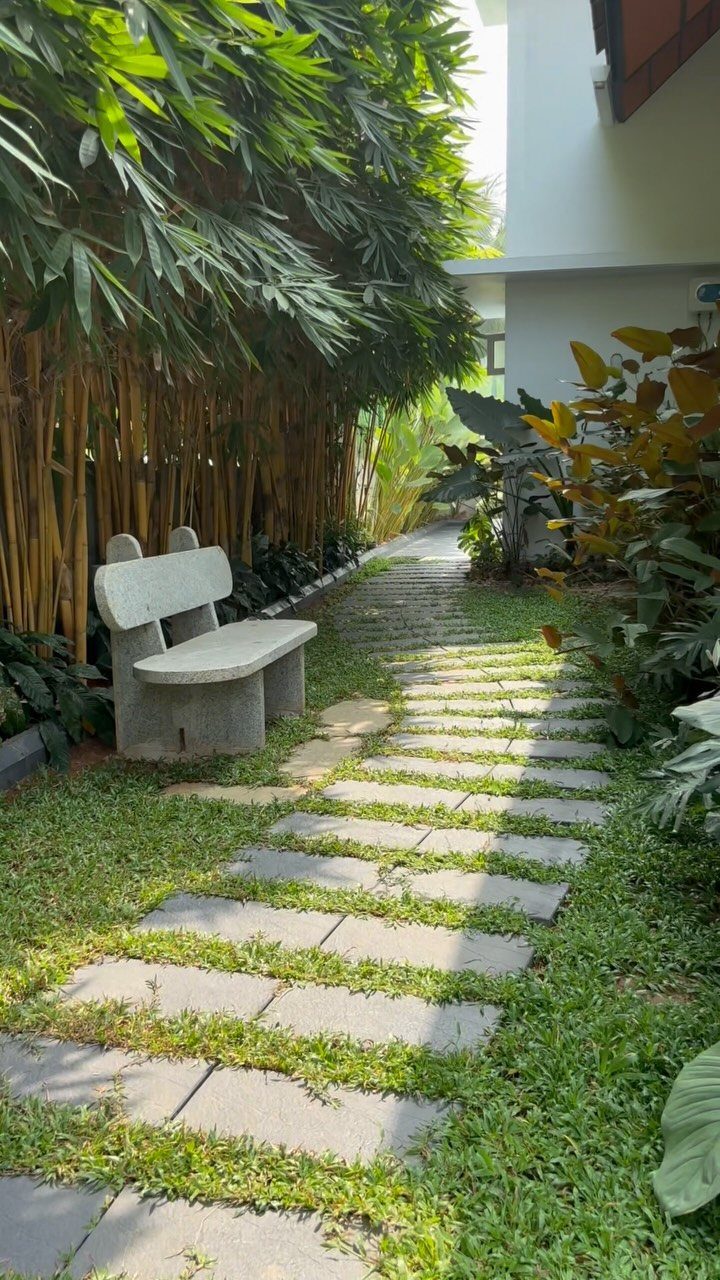
Curved paths slow the walk and hide what comes next, which makes a small yard feel larger than it is.
Concrete pavers set into lawn need a sand base and an edge restraint; without one, the grass creeps in and the line wanders within two seasons.
I would keep the gap between pavers narrow enough to mow across without scalping. Check your drainage pattern; a low spot on the path becomes a mud channel after rain.
20. Cozy Dining Nook
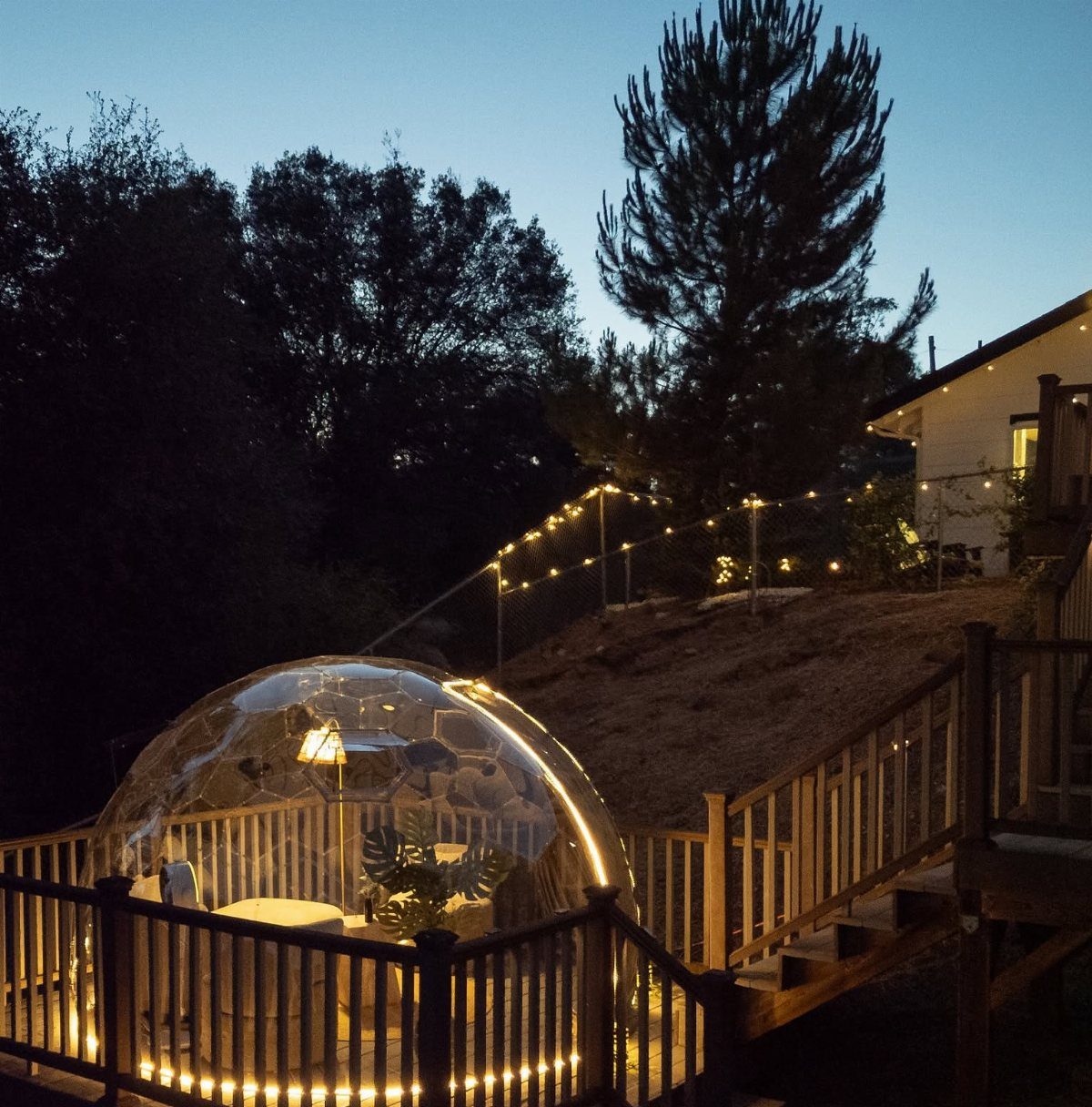
A clear dome tent on a deck turns any evening into an event without weather risk.
A geodesic frame with a transparent skin keeps the view but traps heat, so I would add a zippered vent at the peak or plan this for months when nights cool off.
LED string lights inside remove the need for a generator or outdoor circuit.
Check that your deck can handle the concentrated load of furniture plus guests in one spot; I would verify the joist span and add blocking underneath before setting up a full dining set.
21. Climbing Plants on Trellises
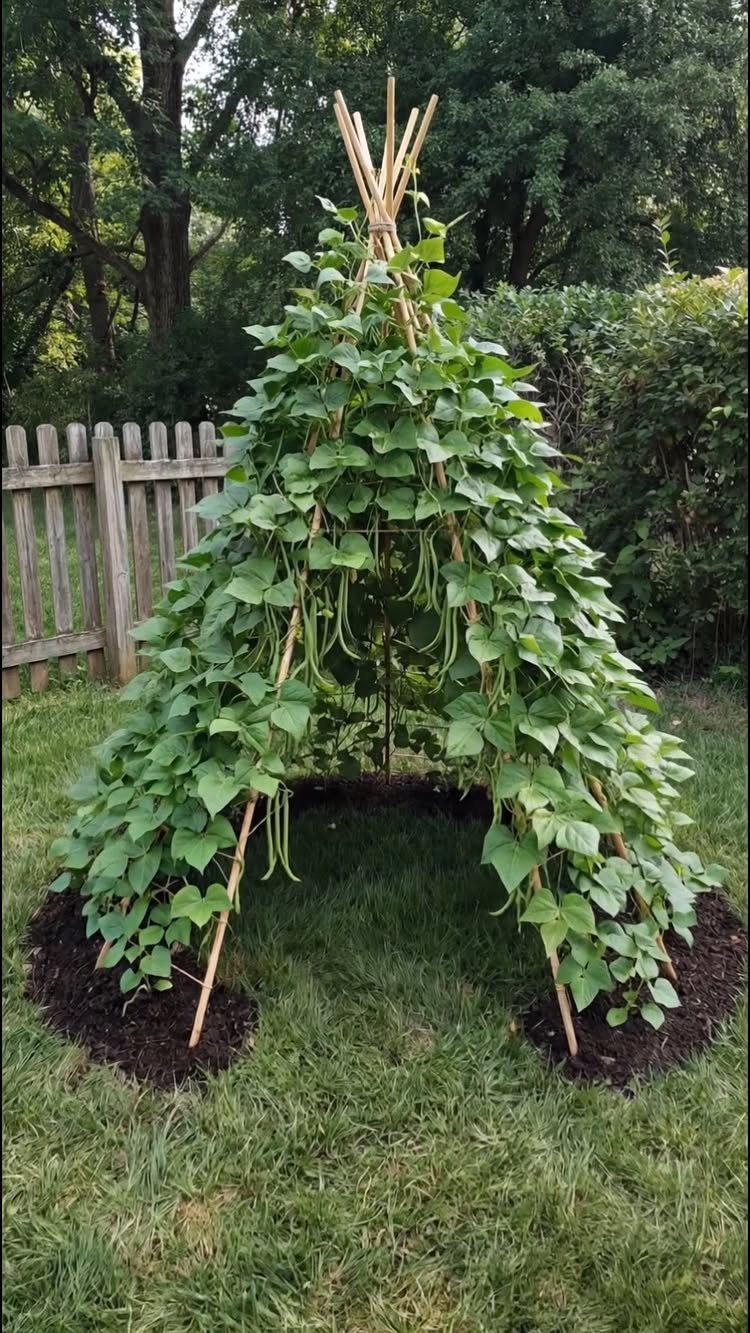
A teepee trellis of bamboo poles gives climbing beans something to grip and creates a harvestable green column in lawn that takes almost no bed space.
Pole beans twine counterclockwise; I would angle the poles to meet at a height I can still reach to pick.
The base needs to be sunk into soil or lashed to a ground ring, or the weight of mature plants fans the poles outward.
Check your bean variety; some stay relatively short, others need taller poles than standard trellis kits provide.
22. Incorporate a Swing
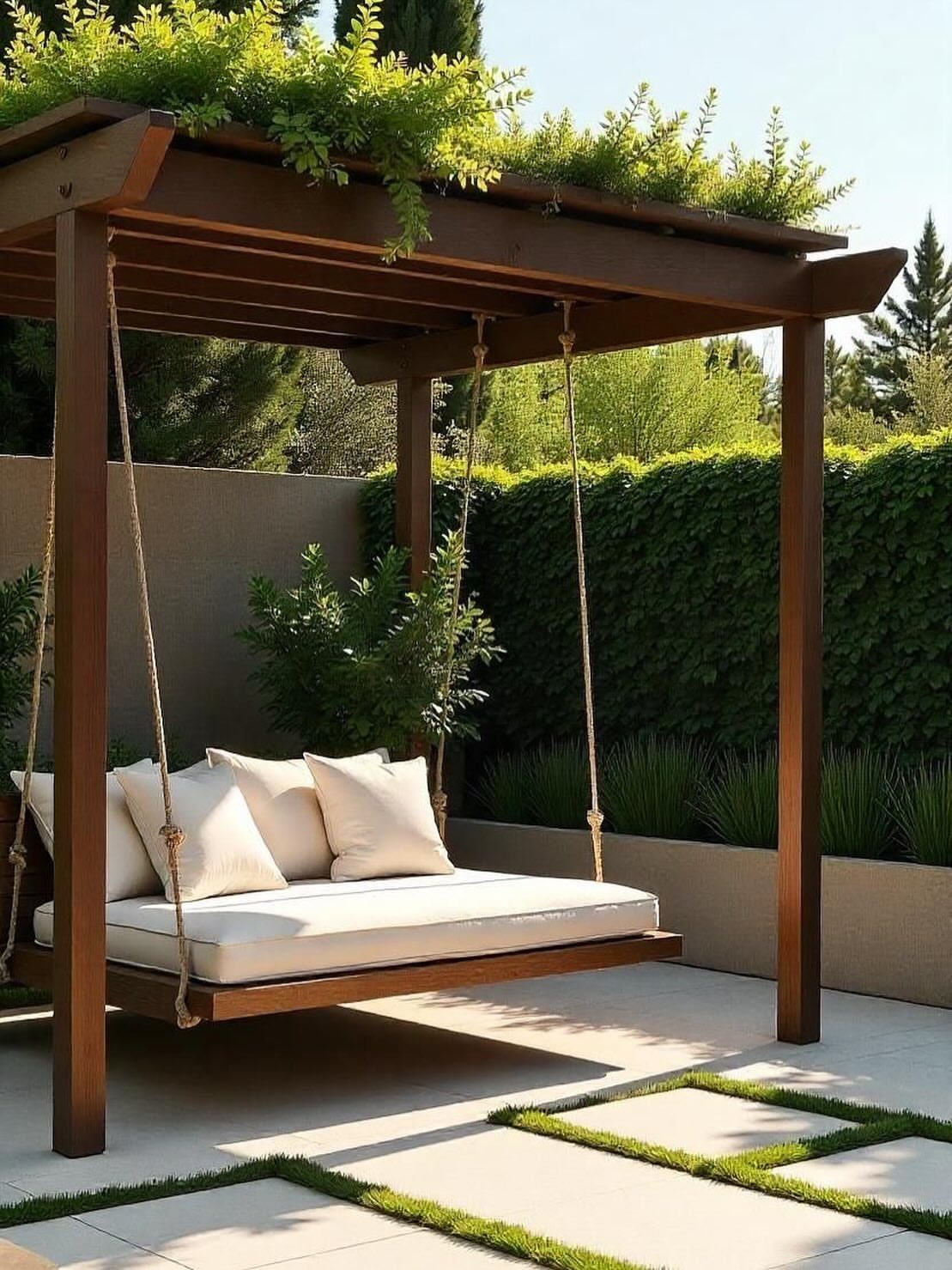
A daybed swing hung from a pergola beam is the kind of seat that pulls people outside.
The beam must be sized for dynamic load; decorative lumber will crack, while a true structural 6×6 or doubled 2-by bolted through the post carries the weight.
Rope stretches, so I would plan hardware well above the finished seat height to account for the drop over the first season.
Check the swing arc; a daybed needs more clearance front and back than a chair swing, and the pergola posts must sit outside that arc or you will kick them on every pass.
23. Cozy Reading Nook with a Bench
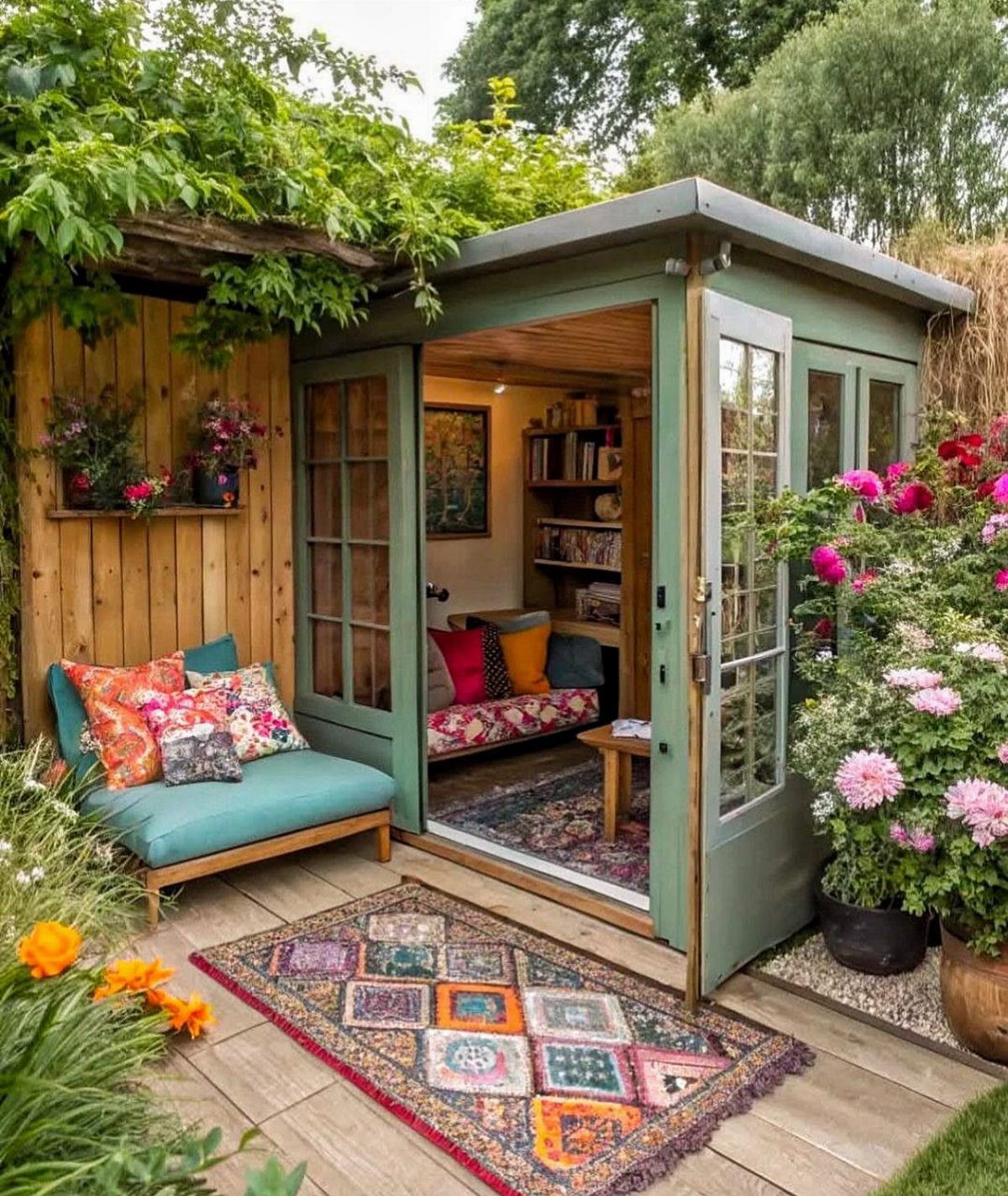
A shed opened to the garden with French doors turns storage into destination.
That level of fit-out needs the structure weatherproofed first, or books warp and cushions mildew. I would run a small dehumidifier or choose a shed with vented gables if I planned to leave anything fabric inside year-round.
Check your foundation; a shed on skids shifts and binds doors, while a concrete pier or slab keeps everything square.
Planning Your Backyard Layout
A landscape architect can draw the rough sketch you need before you spend anything on materials.
Tyler Banken, a plant specialist who works across indoor and outdoor spaces, sees the main waste come from homeowners who buy features before they know how the space moves.
Start with what is actually there.
Note where sun sits for a full 6 hours and where fence or house shadow drops that to nothing. Drainage, wind, and the view from your kitchen window matter more than any wishlist item.
Small backyards fail when they try to do everything. One main use drives the layout.
Everything else, storage to seating, arranges around that. A space that feels closed in needs layered planting and borrowed views, not more fences.
Thoughtful planning, resilient plants, and beautiful design can create a garden that’s both fire-wise and deeply restorative.
Choosing the Right Plants
Mature size, not nursery-pot charm, decides whether a shrub stays or swallows your path. Check the full spread and height before you buy.
Repetition reads as intention.
Match light to plant: full sun, partial shade, or full shade.
Match soil too, sandy or clay or loamy. I check bloom times on the tag and stagger them, then pad the gaps with foliage plants or something that berries after the flowers finish.
Budgeting for Your Garden
Spread renovation over seasons rather than charging it all at once.
One year might bring the gravel zone and string lights; the next, raised beds or a pergola frame. This also lets you learn how you actually use the space before you commit.
Skip the item you cannot fund properly and do the rest well.
A landscape architect’s early sketch pays for itself in avoided mistakes. Banken recommends an overall plan first because piecemeal buying without a map burns time and money on things that do not fit together.
Frequently Asked Questions
What is the 3-5-7 rule in landscaping?
The 3-5-7 rule is a loose guideline for plant grouping: three of one plant type, five of another, and seven of a third.
Odd numbers create more natural-looking arrangements than even pairs, and repeating plants across a bed ties separate areas together. I would treat it as a start rather than a requirement; the repetition matters more than the exact count.
What are some creative ideas for a backyard garden?
Dividing the yard into zones with different ground surfaces, running string lights for evening use, and adding vertical planting on fences or walls are three that work on a real budget.
I would start with whichever one matches how you actually want to spend time outside.
What are the golden rules for designing a garden?
Start with what is already there: sun patterns, drainage, wind, and the view from your windows. I would also check mature plant size before buying, repeat plants for intentionality, and stagger bloom times so something looks good in every season.