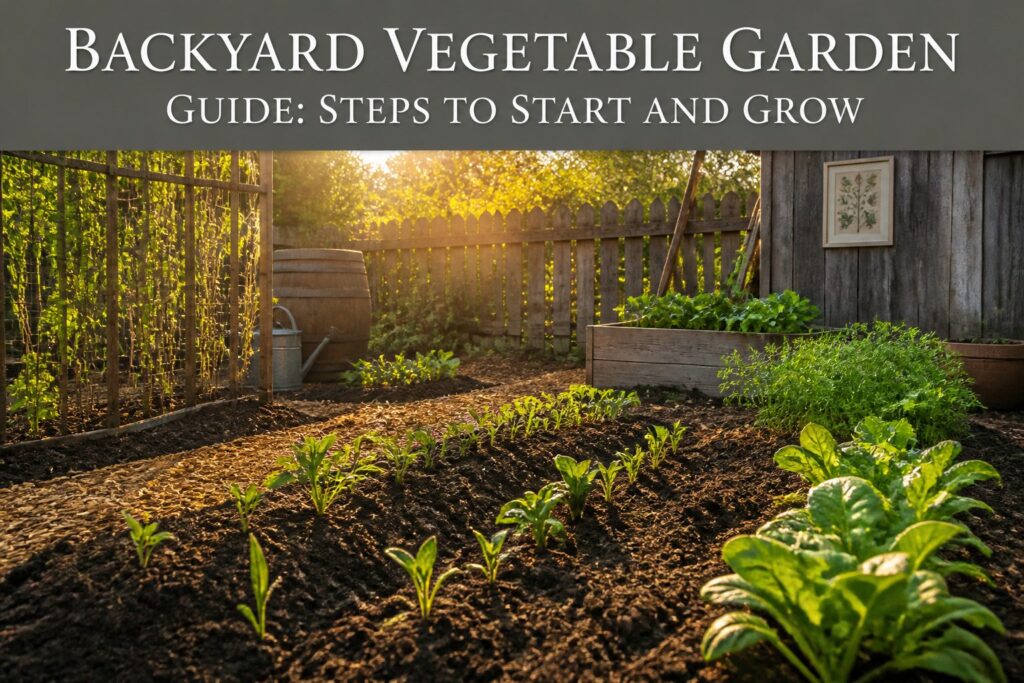
A backyard vegetable garden is a planted food-growing space on residential property that produces edible crops through seasonal cycles.
The difference between a thriving plot and a weedy disappointment comes down to light hours measured where the bed actually sits, not across the whole lawn; morning sun matters more than afternoon because it dries dew and cuts fungal pressure on tomatoes and squash.
Most beginners fail by guessing at sun exposure in March, before trees leaf out and steal three hours from what looked like a full-sun spot.
[link-whisper-related-posts]Choose a Location
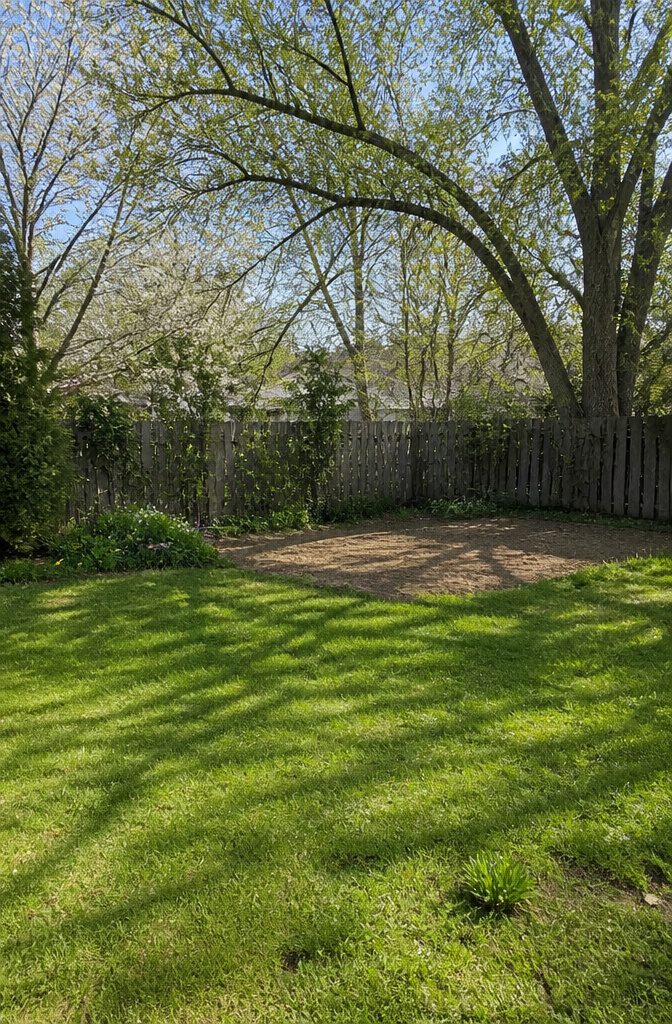
A flat spot in the yard will save hours of weekend work that sloped ground demands.
I look for 6 to 8 hours of direct sunlight as the minimum baseline, measured where the garden bed will actually sit, not across the whole lawn.
Morning sun counts more than afternoon in my estimation; it dries dew quickly and cuts the fungal pressure that plagues tomatoes and squash.
Shadow patterns shift with the seasons, so I watch a candidate spot through spring before deciding.
Trees that leaf out in May can steal three hours from a bed that looked sunny in March. Buildings cast the same variable shade, and I have learned to measure twice before digging once.
Well-drained soil matters as much as light. I skip low-lying areas where water pools after rain; saturated roots rot fast in summer heat.
Leafy greens like spinach and lettuce make do with six hours and even welcome some midday shade, but fruiting vegetables, corn included, want the full eight and suffer for less.
Without enough light, plants grow weak and draw pests and disease like a magnet. Container gardens placed in maximum sun work as the fallback when the yard itself falls short.

Complete Lettuce Garden Starter Kit Indoor – 5 heirloom salad and green seed packets, 8 biodegradable soil disks, 8 plant markers, and 8 starter pots. Romaine, Spinach, Arugula, Kale and Buttercrunch lettuce heirloom seeds are the star of the set!

✔ GROW YOUR OWN VEGETABLES – Kids can grow carrots, radishes, and spring onions from seed in this hands-on gardening kit! A fun and interactive way to learn about biology, botany, and agriculture.

USDA CERTIFIED ORGANIC AND NON-GMO: This organic microgreens kit 6-grow variety pack is not treated with pesticides and is safe for consumption
Prepare the Soil
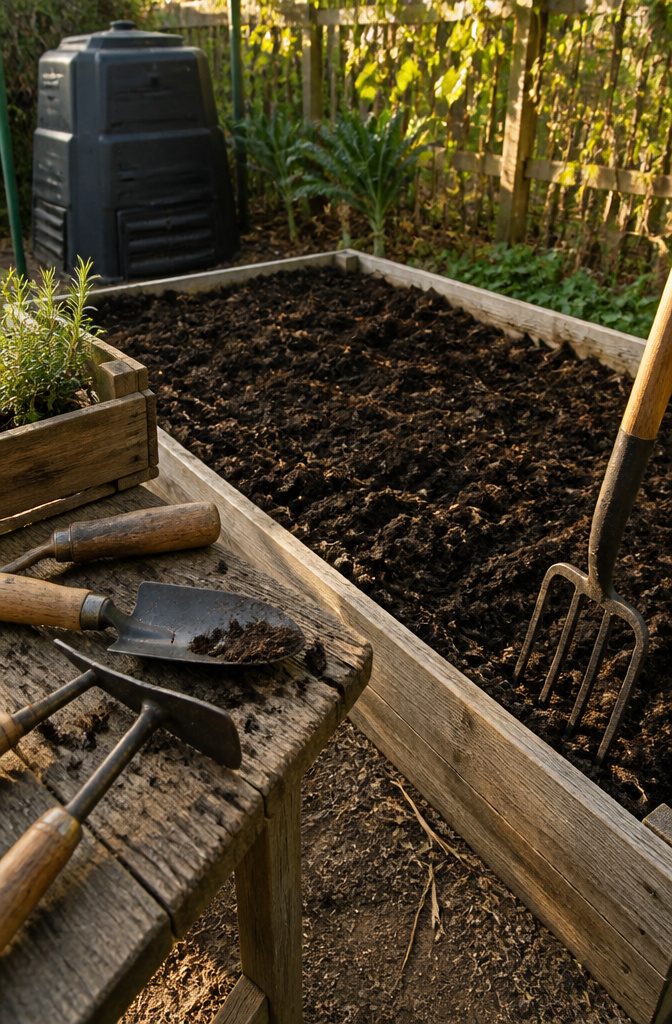
Weeds have to go first, roots and all, or they will compete with your vegetables for water and nutrients the entire season. I dig them out by hand rather than spray, since I will be eating what grows here.
Once the bed is clear, I loosen the soil to a depth of 6–10 inches with a garden fork or tiller; this gives vegetable roots the loose, aerated zone they need to spread and access water.
After that, the real work is amendment. Compost should make up roughly one-third of the final soil volume by the time you finish.
I work it in thoroughly, along with a nitrogen-heavy fertilizer, because vegetables burn through nitrogen quickly and it leaches out of soil faster than potassium or phosphorus do. You want soil that drains well and is rich in organic matter.
Heavy clay will stay soggy and compacted; too much sand and water runs straight through. Organic matter fixes both problems, loosening dense clay or building up starved sandy soil until it turns friable and dark.
If your native soil is already rich, you can ease back on the compost, but most backyard vegetable garden starts need that full third to perform.

Ready-to-Use Formula: No mixing or extra steps required. Simply pour and plant - perfect for gardeners of all experience levels.

ALL-NATURAL MIX: Burpee Organic Premium Potting Mix is formulated with plant food & coconut coir to promote seed & root growth and healthy flower, vegetable & herb plants. OMRI Listed for organic use.

Select Vegetables
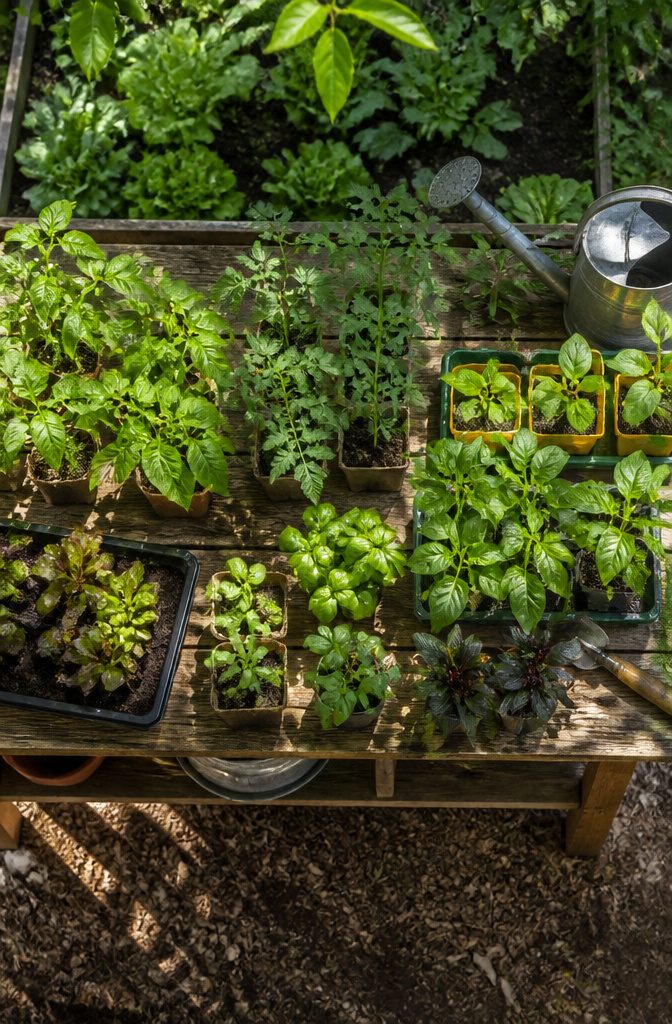
The vegetables that land in my cart every week are the ones worth planting first. If you roast beets regularly or make salads from scratch, those preferences translate directly into beds that feel worth tending.
Cool-season crops like beets, broccoli, and lettuce tolerate temperatures below 70°F and go in early spring, well before the last frost date passes in your county.
Warm-season crops, tomatoes, peppers, and cucumbers included, want soil that has warmed past that threshold and will sulk if cold snaps return. I start those only after nights stay reliably above 50°F.
For a small plot, pole beans, tomatoes, and leafy greens repay the effort better than sprawling crops that demand half the yard. Herbs fit almost anywhere; basil and parsley earn their keep if you cook with them twice a week.
The timing split matters more than most beginners expect.
Planting tomatoes in March because the garden center put them out sets you back six weeks of stunted growth. Likewise, lettuce seeding in July bolts to bitter flowers within days.
Check your local extension calendar for the frost dates that actually apply to your zip code and work backward from those dates, not from the weather you wish you had.
Ready-to-Use for All Planting Needs: This general-purpose potting soil is ready to use out of the bag, perfect for both indoor and outdoor planting without any extra prep

100% Natural Compost for Plants - Compost is a nutrient-rich, soil-like substance made from blending yard trimmings and plant residue, such as leaves and grass clippings. Together, they’re composted to make a growing medium that’s part fertilizer, part soil amendment. When mixed with garden soil, compost helps loosen soil, holds onto moisture, and provides essential nutrients for plants.

It's known for its dark-brown, complex soil texture that drains well.
Plant Seeds or Seedlings
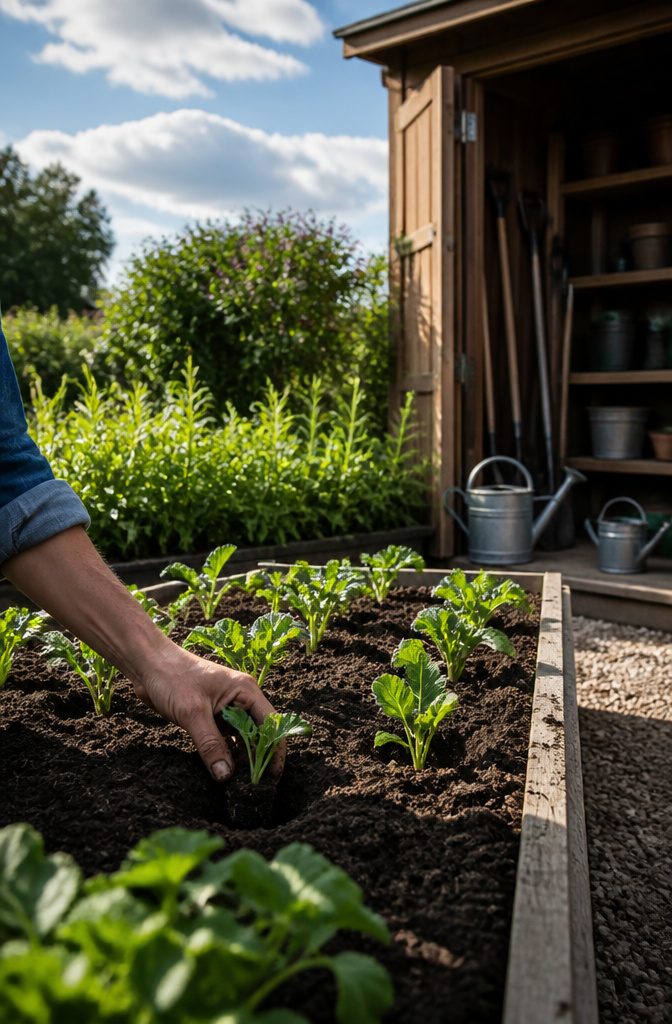
Seeds work for vegetables that sprout fast and grow straight to harvest, but seedlings are the safer play in a small backyard vegetable garden where every square foot counts.
One failed seed is an empty patch you will not fill again in time.
If you sow direct, the rule is simple: plant each seed only two to three times as deep as its widest diameter.
That shallow depth keeps the embryo within reach of surface moisture. Firm the soil lightly over it so the seed sits against soil rather than air pockets.
Keep the bed damp with gentle sprays at least once daily until germination, then keep those first true leaves from drying out for another week or two while roots extend into surrounding soil.
For seedlings started in peat pots or soil cubes, tear away whatever rises above the rootball before planting, or bury the whole pot completely.
Any exposed peat left above ground will wick moisture away from the roots instead of drawing it toward them.
I buy seedlings for tomatoes, peppers, and any crop where a two-week head start matters.
I sow seeds myself only for quick crops like lettuce or radishes that mature before the gamble shows. Vertical growers, cucumbers especially, repay that early start most: the sooner the vine climbs, the longer it fruits.

GARDENING ESSENTIAL: Heavy duty, ergonomic hand cultivator with sharp tines ideal for a variety of gardening tasks like digging in tough soil, aerating soil, removing weeds, and more to encourage overall plant health and appearance
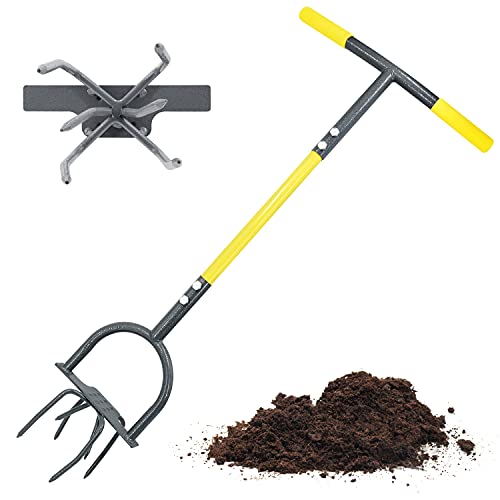
【Anti-Slip Foot Plate - Penetrate Soil with One Tread】- This manual hand tiller comes with anti-slip foot plate, maximize downward force of treading and penetrate into soil easily. The curved handle and long design reduce twisting effort and back strain, ideal for seniors or anyone with joint strain

Carbon steel blade and head for heavy duty use
Water Consistently
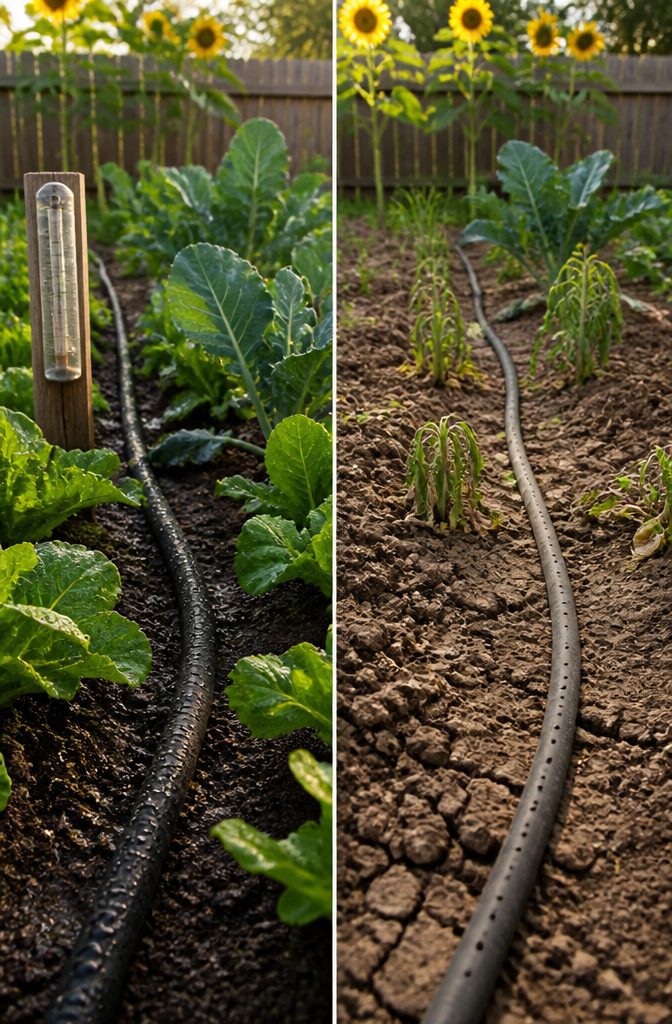
A backyard vegetable garden thrives on about 1 inch of water per week, with rain counted toward that total. Place the plot within easy reach of a hose, because hauling water by hand turns a weekend joy into a weekly slog.
Overhead watering with a sprinkler or watering can loses too much to evaporation and splashes moisture onto leaves where disease spreads. Drip irrigation, soaker hoses, or drip tape feed the root zone directly with minimal waste.
Most gardeners I would follow run drip tubing for 20 to 40 minutes, two to three times per week through summer, though sun, wind, soil type, and how large the plants have grown will shift that schedule.
If overhead watering is the only setup available, shape the soil into basins around each plant or furrows between rows to trap water where roots can drink it.
A programmable timer on a drip system handles the schedule while you are at work, and a 2-inch layer of organic mulch over the soil holds that moisture in place.


More suitable raised garden bed size and Volume:67"L x 20"W x10"H, 7 Cu. Ft. You can cultivate plants, like vegetables, flowers, herbs in your patio, yard, garden, and greenhouse.
Maintain Through the Season
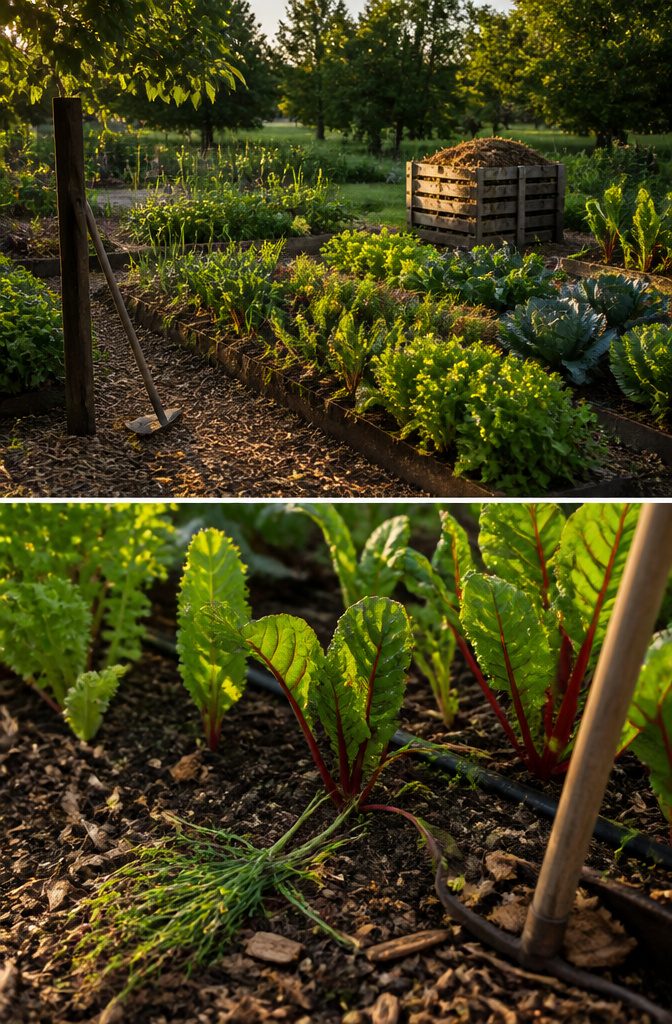
A three- to four-year crop rotation for each bed keeps soil from wearing out and pest populations from settling in.
I group brassicas, nightshades, legumes, and cucurbits into separate years and never let the same plant family occupy one spot twice in a row.
Without that shuffle, soil nutrients thin and the insects that know your tomatoes by heart come back stronger each season.
Weekly walks through the rows are what catch problems before they spread. I check leaf undersides for aphid clusters, scan stems for wilt or odd spots, and pull any weed before it seeds.
A hoe works for the surface stuff; for deeper roots, a hand tool and ten minutes of kneeling saves an afternoon later.
Organic mulch is the layer that buys you time.
Straw or coarse compost laid on top of the soil, not worked in, cuts evaporation and blocks weeds before they germinate. The chunkier the material, the thicker the layer needs to be to do its job.
Set mulch over drip tubing or soaker hose so water still reaches the roots; if you spray from overhead, run the water long enough to soak through.

Specially Crafted for Raised Beds: Formulated to provide the ideal growing environment for vegetables, herbs, flowers, planter boxes, and other container gardens.

FOR USE: Use when planting or transplanting to improve native soil.

FEEDS UP TO 6 MONTHS: Miracle-Gro Potting Mix is a gardening soil for outdoor containers that feeds all types of potted plants, including flowers, vegetables, shrubs, annuals, and perennials for up to 6 months
Harvest at Peak Ripeness
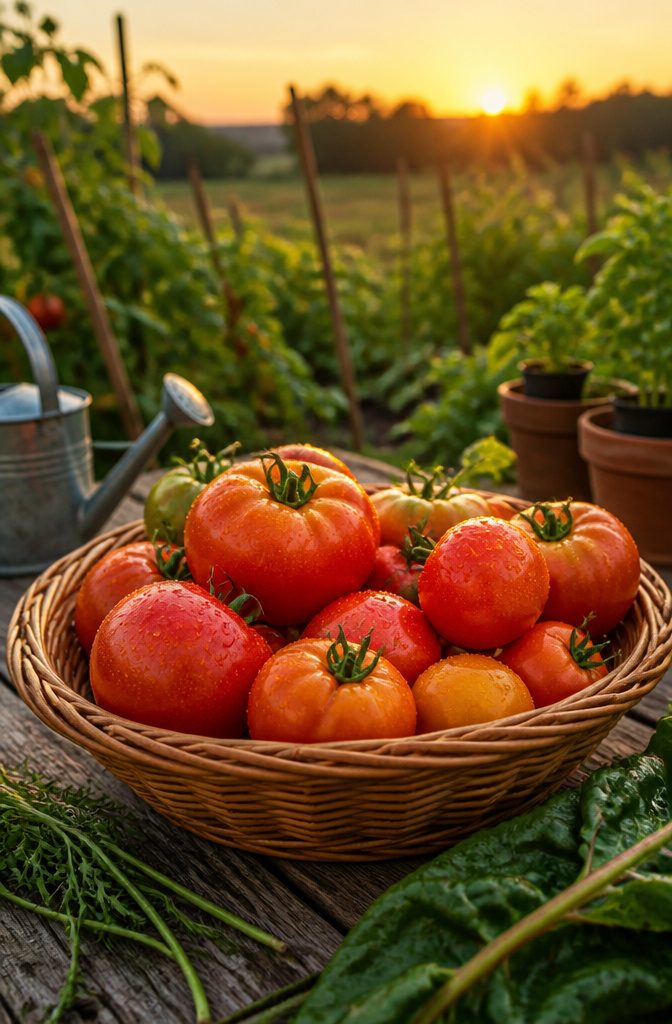
A tomato that ripens on the vine picks up sugars and acids no windowsill can replace.
The slight softness to a gentle thumb press is the signal: firm still, but giving. Color change is less reliable, especially on heirlooms that stay green-shouldered even at peak.
I harvest in the cool of morning, before the sun drives moisture and sugar back into the plant. Warm fruit bruises; dew-wet fruit rots in the basket.
Leaf greens tell you directly. Kale and chard harvested after a light frost turn sweeter, the plant converting starches to sugars as antifreeze.
I take outer leaves and let the center keep producing. Root vegetables are harder to judge from above ground.
A carrot ready to pull shows a shoulder that has filled out to about 3/4 inch across at the soil line; much fatter and the core goes woody. Beets size up in 50–60 days and turn mealy fast after that.
Beans and peas I pick every two or three days, once the pod has swelled but before the seed inside hardens to a sphere you can feel through the pod wall.
Summer squash is a discipline: 6–8 inches, before the seeds set and the skin turns to gourd. Zucchini the size of a baseball bat feeds nobody well.
The goal with a backyard vegetable garden is to eat from it, not to stockpile. I plant successions every two weeks so something is always coming ready rather than everything demanding harvest at once.

ALL-IN-ONE MULTIVITAMIN FOR YOUR SOIL - Soil Reviver is designed to help improve overall soil conditions by supporting a more active and balanced growing environment. It encourages better soil structure and biological activity, which can contribute to healthier plant development over time. Suitable for indoor and outdoor use, it is intended to assist in improving compacted or low-activity soil and support ongoing root and plant growth.

Gardening Mix: Get more out of your flowers, shrubs, and more by mixing the soil with this succulent soil mix to provide natural nutrients for all of your plants free of odor and chemicals

Fast, Effortless Composting: This outdoor compost bin features a 360° rotating design with built-in mixing bars—just spin the drum for thorough mixing, no manual turning needed. Adjustable air vents let you control airflow, moisture, and temperature to reduce odors and accelerate decomposition, making this compost bin both efficient and low-maintenance.
Leafy Greens and Root Vegetables
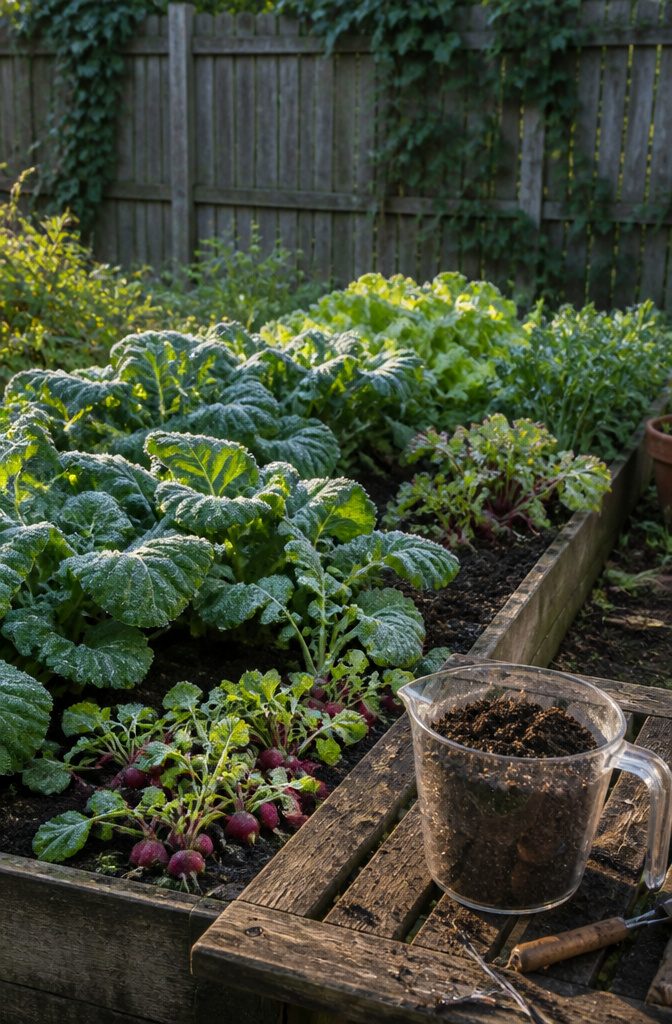
Leafy greens and root vegetables are where I would start any backyard vegetable garden for one reason: speed.
You can pull leaves or lift roots in weeks, not months, and neither group punishes you for a yard that isn’t textbook perfect.
- Lettuce and spinach tolerate as little as six hours of direct sun, which is two hours fewer than most vegetables demand. I have watched them produce usable leaves in dimmer spots where tomatoes would stretch and sulk. They also mature fast enough that I treat them as cut-and-come-again crops, sowing every two weeks for a rolling harvest instead of one big event.
- Carrots need loose soil to shape straight, but they ask little else. I would skip them in heavy clay unless you’re willing to build up a raised bed or mix in compost; forked roots from compacted ground are edible but irritating to clean and cut.
- Radishes are the honest beginner’s crop: seed to harvest in roughly four weeks, and they will size up even in six hours of sun. I use them as row markers between slower germinating seeds like carrots, since the foliage breaks ground fast and tells me where I have actually planted.
- The distinction worth knowing: plants grown for leaves or roots store energy below ground or in foliage, which is why they manage on less sun than fruiting crops. Tomatoes and peppers need that sun to build sugar in something they hang out in the air. If your yard is the six-hour kind, skip the tomatoes and plant more lettuce.

Garden Claw Professional: Walensee Twist Tiller is a hand tool for the soil and clay and easy to Cultivate, loosen, turn, till, aerate and weed your soil. It can be used on large empty areas or narrow spaces. Four sharp curve tines can be easily and smoothly penetrate into the soil, it makes easy turn and shift of the dirt. The tine is much wider and longer, digs will be deeper and wider to save your working time and energy.

Sturdy Spring Steel Blades: Crafted from tempered spring steel, the rotary blades offer outstanding strength and flexibility—resisting bending, breaking, and deformation even under heavy pressure. Ideal for breaking soil and uprooting weeds season after season

Garden Hoe with Cultivator: This is a helpful 2-in-1 gardening tool, 2 essential garden tools have been combined into one, allowing you to loosen soil, uproot plants with simple flip of the handle. Not for hard and dry soil
Fruiting Vegetables and Legumes
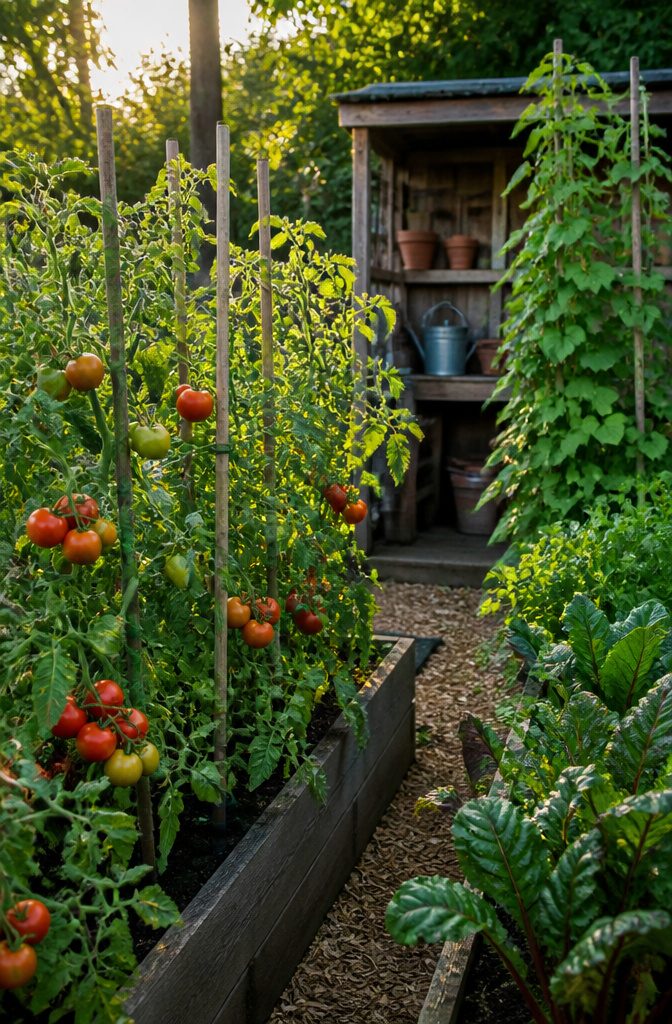
Tomatoes and peppers are the backbone of a productive backyard vegetable garden, and both need a full 6 to 8 hours of direct sun each day to set fruit reliably.
Anything less and you will get lanky plants with more pests than produce. I plant determinates if I want a single heavy harvest for canning, but for most households, indeterminates keep the kitchen supplied longer.
Legumes are the quiet workhorses of the rotation. Bush beans need no support and fit even a 12-inch container; pole beans climb trellises in raised beds and keep producing for weeks.
Peas prefer the cooler ends of the season and fix nitrogen back into the soil as they finish, which I count as free fertilizer for the bed that follows.
- Tomatoes and peppers must have full sun; shade from trees or buildings that shifts with the seasons can mean failure by August heat
- Beans and peas grow in containers as small as 12-inch pots but yield more in raised beds where roots run deep
- Pole beans on trellises exploit vertical space in a 4-foot by 8-foot raised bed; bush beans work better when you have width, not height
- Legumes add nitrogen to soil, so I always follow a bean or pea bed with heavy feeders like tomatoes the next year
A drip line on a timer keeps containers from drying out in July; beans especially turn bitter fast if they drought-stress even once.

USDA CERTIFIED ORGANIC & NON-GMO: Grow your own fresh culinary herbs with peace of mind. Our open pollinated, heirloom variety pack is 100% clean, natural, rigorously tested for germination, and proudly certified organic by Oregon Tilth.

Grow Your Own Tomato, Marigold from Seed: This complete Buzzy Seeds grow kit gives you everything to raise cheerful tomato and marigold right at home in a metal planter, a thoughtful, hands-on project for indoor spaces.
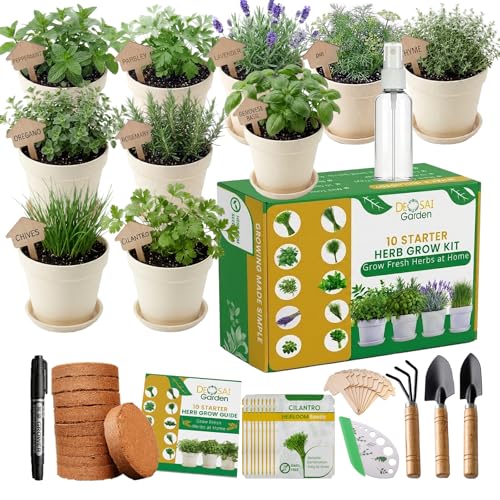
𝐂𝐎𝐌𝐏𝐋𝐄𝐓𝐄 𝟏𝟎 𝐇𝐄𝐑𝐁 𝐒𝐓𝐀𝐑𝐓𝐄𝐑 𝐊𝐈𝐓 DESAI Garden herb growing kit includes chives, oregano, Genovese basil, cilantro, thyme, rosemary, peppermint, parsley, lavender, and dill seeds. This premium herb seeds variety pack allows every home chef to harvest fresh ingredients directly from their own thriving indoor garden.
Herbs for Small Spaces
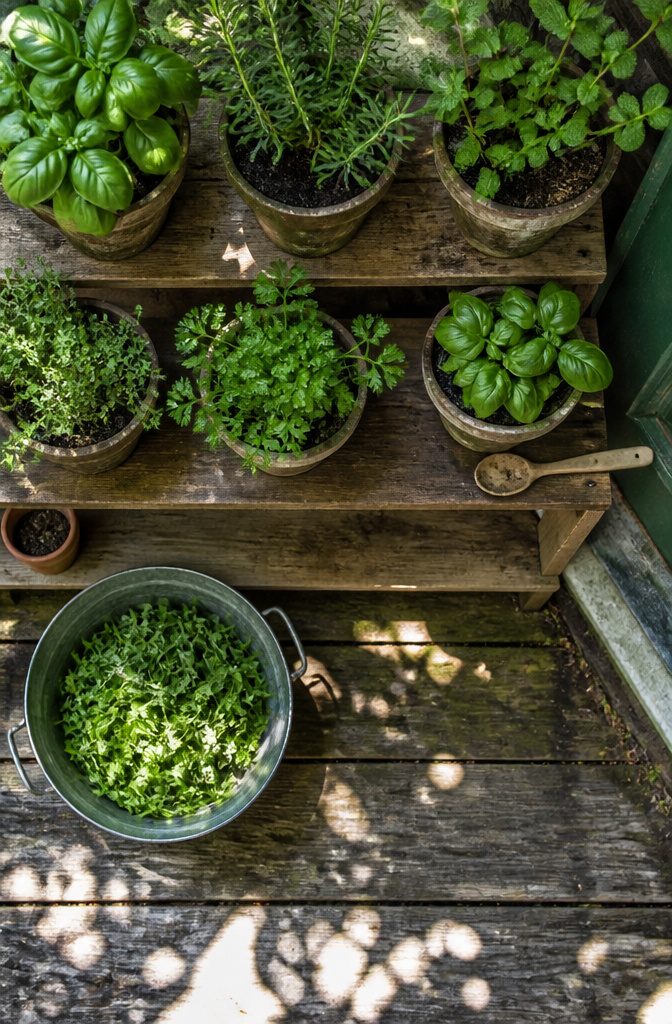
Herbs repay the least effort with the most flavor. Plant them where you brush past them; the oils release on contact, and you will reach for them more often if they sit beside the grill or the kitchen door.
- Basil wants warmth and drains fast. I keep it in its own pot because it sulks if parsley’s damp feet linger nearby. One plant in a 10-inch container feeds two people through summer if you pinch the top growth weekly.
- Parsley takes longer to germinate from seed, so I buy seedlings when I see them. It handles partial shade that would turn basil leggy, which makes it the herb for that one corner that never gets full sun.
- A single pot of each, set on a step or a narrow railing, gives you fresh cutting material without claiming a bed. I have grown both in 8-inch planters from the hardware store, nothing custom.
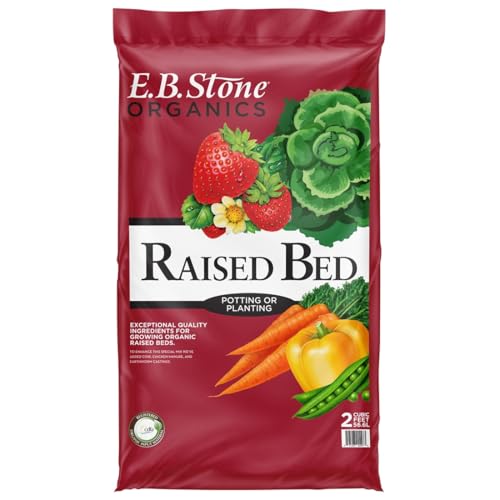
BUILT FOR RAISED BEDS - A rich, organic, ready-to-use garden soil blended specifically for raised beds, large containers, and vegetable gardens, no mixing required.

Ready to Use, Right from the Bag: No prep required. This raised bed garden soil is packed with organic compost and nutrients, ready to use for quick and easy planting

FOR USE: Use when planting or transplanting to improve native soil.
Sunlight and Soil Types
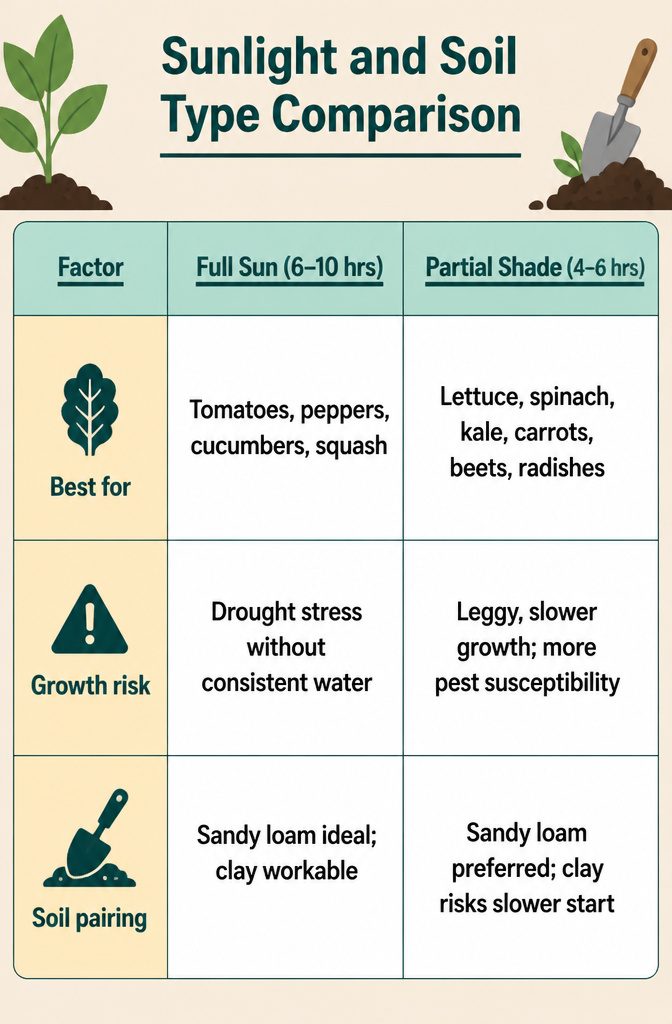
Most vegetables need at least six to eight hours of direct sun daily to grow well and resist pests and disease.
Leafy greens like lettuce, spinach, and kale, along with root crops such as carrots, beets, and turnips, can manage with six hours and will even appreciate some midday shade.
Tomatoes, peppers, squash, and cucumbers need eight to ten hours, so I would not bother planting those in a partially shaded spot.
Soil type matters just as much as light. Sandy loam drains well and warms up fast in spring, which makes it the easier choice for beginners.
Clay holds nutrients but compacts easily and can drown roots in low-lying areas. If you are working with heavy clay, I would build raised beds or at least amend generously with compost to reach about 10% organic matter.
| Factor | Full Sun (6–10 hrs) | Partial Shade (4–6 hrs) |
|---|---|---|
| Best for | Tomatoes, peppers, cucumbers, squash | Lettuce, spinach, kale, carrots, beets, radishes |
| Growth risk | Drought stress without consistent water | Leggy, slower growth; more pest susceptibility |
| Soil pairing | Sandy loam ideal; clay workable with drainage | Sandy loam preferred; clay risks even slower start |
If your yard is too shady, containers let you chase the sun across a patio or deck. I would start there rather than fight a bad location.
Raised Bed Dimensions
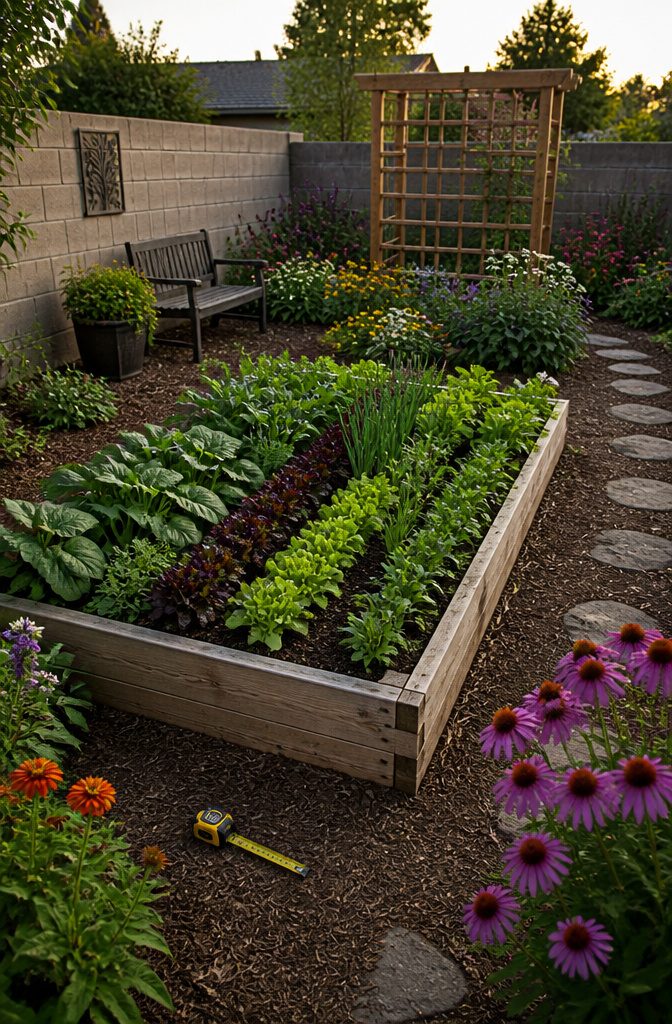
A 4 feet by 8 feet raised bed is the standard size most builders settle on, and for good reason. That length gives you room to grow a handful of different vegetables without turning your backyard into a maintenance burden.
Width matters more than length, though. Keep the bed no more than 3 to 4 feet across, measured inside the frame, so you can reach the center from either side without stepping in and compacting the soil.
Anything wider, and you are leaning and stretching for every weed and harvest.
I would start with two or three of these beds rather than one giant footprint. A single 4 by 8 bed is manageable on a Saturday morning; a 20 by 20 plot is a part-time job you may not have signed up for.
If space is tight, you can go as narrow as 12 inches, though your plant selection shrinks with it.
The 3 to 4 foot width is the detail that keeps a raised bed practical year after year, and it is the rule I would not bend.
Frequently Asked Questions
What vegetables should I grow in my backyard vegetable garden?
Grow what you already eat and cook with regularly. For small plots, pole beans, tomatoes, root crops, and leafy greens give the most return for the effort.
Cool-season crops like beets, broccoli, and lettuce go in early spring; warm-season crops like tomatoes, peppers, and cucumbers wait until nights stay reliably above 50°F.
How do I prepare my soil for a backyard vegetable garden?
Remove all weeds by hand first, then loosen the soil 6–10 inches deep with a fork or tiller.
Work in compost until it makes up roughly one-third of the total soil volume, and add a nitrogen-heavy fertilizer since vegetables burn through nitrogen quickly. Aim for loose, dark, friable soil that drains well.
How often should I water my backyard vegetable garden?
Vegetables need about 1 inch of water per week, counting rainfall.
Drip irrigation or soaker hoses run for 20–40 minutes two to three times weekly through summer, adjusted for sun, wind, and soil type. A 2-inch layer of organic mulch over the soil holds that moisture in place and cuts evaporation.
What is the best way to manage pests in a backyard vegetable garden?
Walk through the rows weekly to catch problems before they spread. Check leaf undersides for aphids, scan stems for wilt or odd spots, and pull weeds before they seed.
A three- to four-year crop rotation keeps pest populations from settling in; never let the same plant family occupy one spot twice in a row.
When should I plant my backyard vegetable garden?
Plant cool-season crops like beets, broccoli, and lettuce in early spring, well before your last frost date.
Plant warm-season crops like tomatoes, peppers, and cucumbers only after nights stay reliably above 50°F and soil has warmed past 70°F. Check your local extension calendar for frost dates that apply to your zip code and work backward from those.
Which vegetables need little sunlight?
Leafy greens and root vegetables manage with as little as 6 hours of direct sun and even welcome some midday shade.
Lettuce, spinach, kale, carrots, beets, and radishes fit this group. Skip tomatoes, peppers, cucumbers, and squash unless you have 8–10 hours of full sun; they need that light to build sugar in their fruit.
What vegetables like to be planted by each other?
Legumes like beans and peas fix nitrogen into the soil, so following them with heavy feeders like tomatoes next season uses that free fertilizer.
What veggies can you grow in your house?
Herbs like basil and parsley fit small pots on steps or railings; a 10-inch container of basil feeds two people through summer if you pinch growth weekly.
When should you start a vegetable garden?
Start planning in spring by watching your chosen spot through the season, since shadow patterns shift as trees leaf out and buildings cast different shade.
Begin soil prep once you have measured actual sunlight at the bed location, not across the whole lawn. The first plants go in when the season matches their temperature needs: cool-season crops early, warm-season crops after frost danger passes.