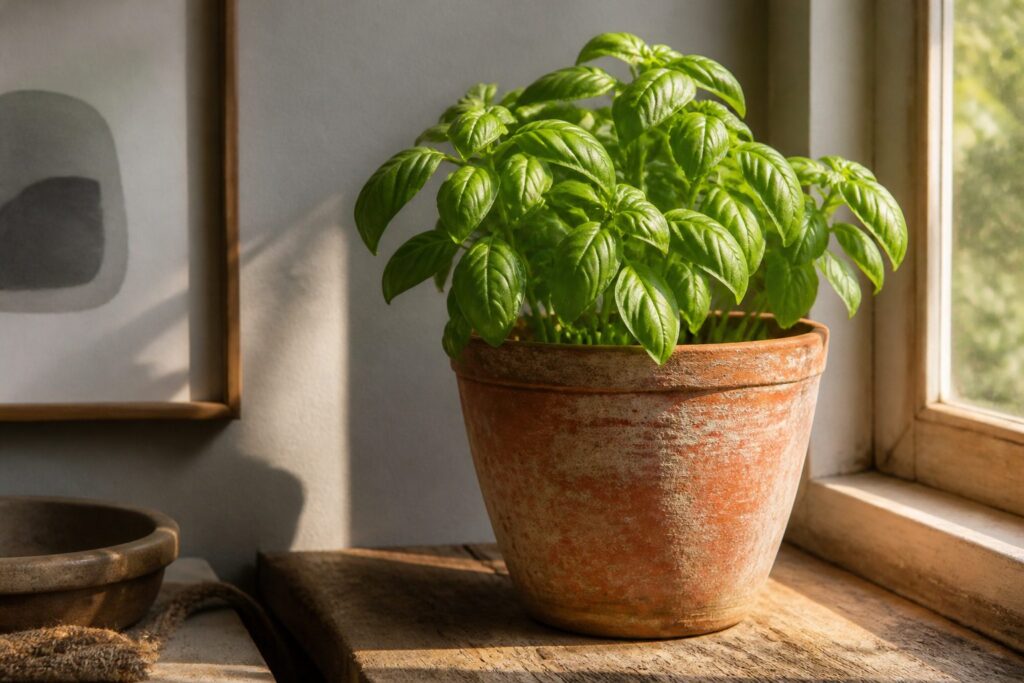
Basil is a tender annual herb grown for its aromatic leaves, used fresh in cooking and preserved in pesto.
It needs warm soil above 50°F, six to eight hours of direct sun, and consistent moisture without wet foliage to avoid mildew.
A quarter inch deep in sterile mix, started indoors four to six weeks before the last frost, is where most home harvests begin.
[link-whisper-related-posts]Starting Seeds Indoors
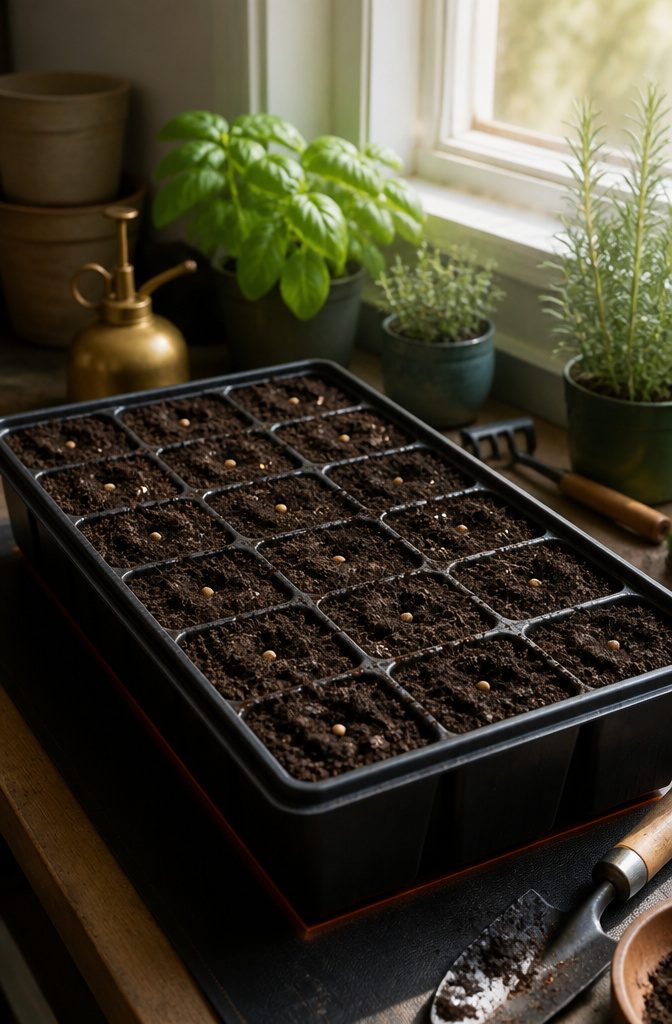
Basil seeds need a four- to six-week head start indoors before the last frost date in your area.
I start them in sterile potting mix, pushed down about a quarter inch, which is deeper than some gardeners go. One camp presses seeds to the surface and leaves them exposed, since basil needs light to germinate.
The other covers them lightly. I bury mine that quarter inch and have never had trouble, but if you want to surface-sow, keep the mix damp without washing the seeds away.
Soil temperature matters more than air temperature. You want 70–85°F at seed level, not just the room.
A heat mat is worth the small cost here. Seeds typically break ground in 5–10 days, though I have seen them up closer to a week when the mix stays consistently warm.
Once those first true leaves appear, move the seedlings into 4-inch pots so they do not get leggy. Weak light produces thin stems that transplant poorly, so a sunny window or basic grow light keeps them stocky until hardening-off time.

EASIER SEED STARTING: Our Burpee SuperSeed tray with 36 flexible pop-out cells is designed to simplify indoor seed starting for all your favorite vegetables, flowers and herbs. Just add seed starting mix, seeds, water and light to get growing! Rows are labeled alphanumerically for seedling identification with included Plant-o-Gram diagram. Tray dimensions: 11.5" x 10-3/8" x 2-1/4"

EASIER SEED STARTING: Our Burpee SuperSeed tray with 16 extra-large flexible pop-out cells is designed to simplify indoor seed starting. Just add seed starting mix, seeds, water and light to get growing! Rows are labeled alphanumerically for seedling identification with included Plant-o-Gram diagram.

EASIER SEED STARTING: Our Burpee SuperSeed tray with 8 extra-large flexible pop-out cells is designed to simplify indoor seed starting. Just add seed starting mix, seeds, water and light to get growing! Perfectly sized for starting seeds in the windowsill: 11.5" x 5-3/16" x 2-1/4". Rows are labeled alphanumerically for seedling identification with included Plant-o-Gram diagram.
Transplanting Outdoors
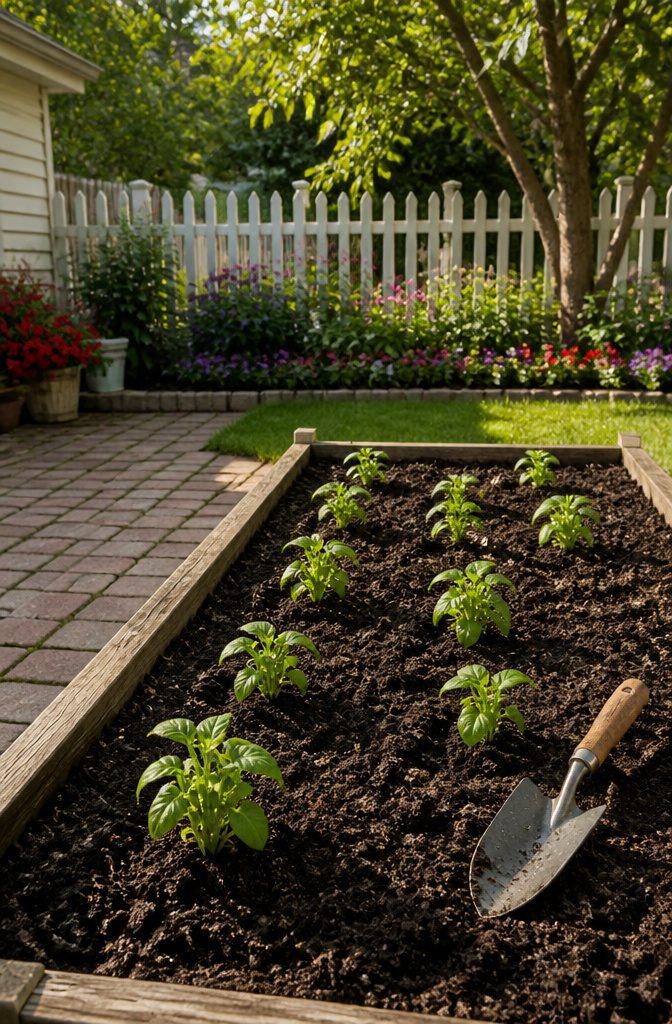
Two weeks after the last frost is the window I watch for, not the day itself.
Soil that still holds the chill of winter will stall a basil seedling that was thriving on a kitchen counter, so I wait for the ground to feel workable and the nights to stay reliably above 50°F.
Space seedlings 12 to 18 inches apart in whichever spot drains best: raised bed, container, or open ground. That spread looks generous when the plants are small, but basil bushes out fast, and crowded plants stay damp inside and invite trouble.
I dig in several inches of aged compost wherever I plant, whether I am working native soil or filling a pot with bagged mix.
A pH between 6.0 and 7.0 suits basil comfortably; compost tends to land in that range, so I rarely test unless the bed has problems.
If your spring runs cool where you are, keep a sheet or cloche handy for late cold snaps.
Basil has no tolerance for frost, and a single night below freezing will turn promising seedlings to blackened stems. Once they are settled and growing, the real season begins.
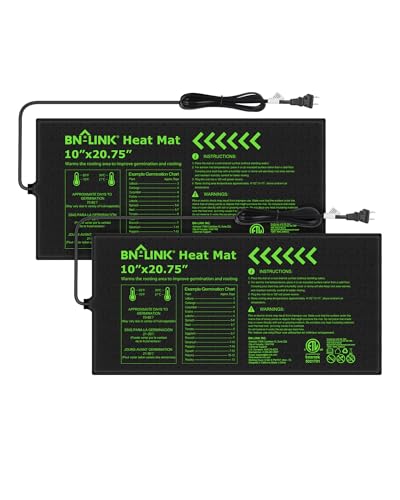
IDEAL GERMINATION TEMPERATURE: The BN-LINK seedling heat mats for seed starting helps maintain temperatures around 70°F to 85°F, the optimal range for seed germination, cutting propagation, and healthy seedling growth. Achieve faster germination and higher growth rates with seed heating mat.

IDEAL GERMINATION TEMPERATURE: The BN-LINK seedling heat mats for seed starting helps maintain temperatures around 70°F to 85°F, the optimal range for seed germination, cutting propagation, and healthy seedling growth. Achieve faster germination and higher growth rates with seed heating mat.

Reliable Results: The VIVOSUN professional heat mat maintains optimal temperatures around 68-86℉ (20-30℃), perfect for Seedling start and cutting propagation; Made from durable PVC material, it's designed to last
Watering
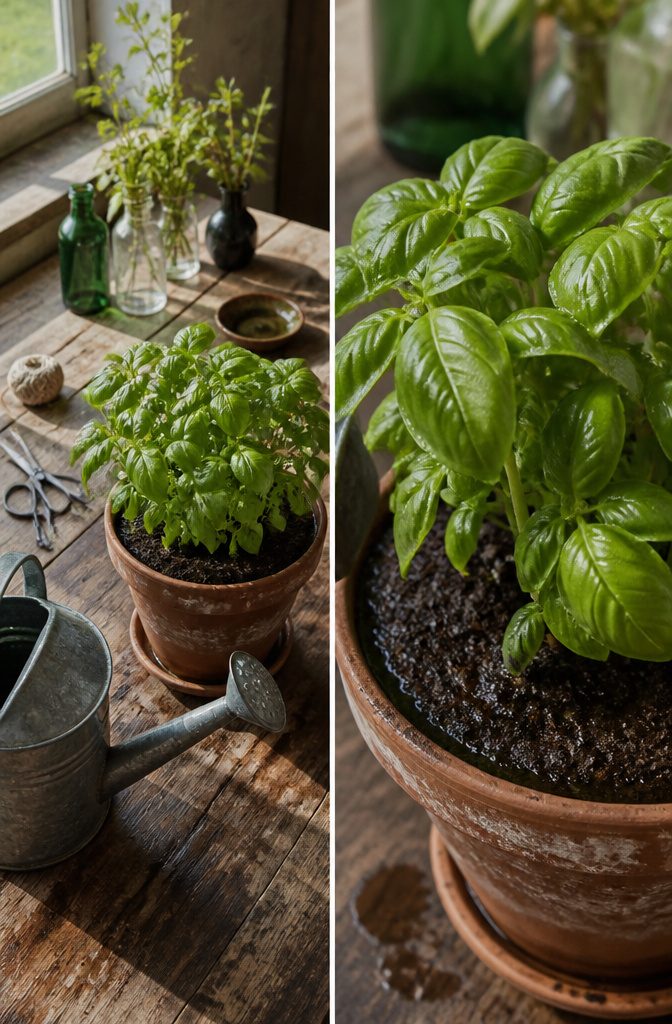
Basil wants steady moisture, not wet feet. The finger test is the tool I reach for: push into the soil to the first knuckle, and when that top inch feels dry, water deeply until the root zone is soaked.
Out in the garden, 1 to 1½ inches per week keeps plants vigorous, though clay soil holds that longer than sandy ground and a week over ninety degrees pulls it faster.
Either way, the stream belongs at the base of the stem, not overhead; dry foliage is what prevents the fungal spots and mildew this herb is prone to.
Irrigate with 1½ inches of water per week. Irrigation prevents wilting that slows growth, damages roots, and stunts plants.
That figure from the extension is the one I anchor to, then adjust by touch and weather.
In a pot, the arithmetic falls apart. Container soil can go from moist to bone-dry in a single hot afternoon, and I have watched potted basil wilt through a July evening that started out looking fine.
Daily checks are not overcautious then; they are the minimum. Bottom watering through a saucer works well for containers, giving the roots ten minutes to draw what they need without ever splashing the leaves.

6500K Full SPECTRUM LAMP: The grow light with 74 White LEDs + 10 Red LEDs, it's similar to the natural daylight at noon, professionally designed for indoor plants, flowers, herbs and so on. Moreover, the light is soft and flicker-free, which is very suitable for reading lamp.

Upgrade Timer 6/12/18 Hrs: Our LPMZMBL LED Grow Lights has been upgraded to 6/12/18H Auto Turn On / Off Timer to ensure the plants have enough time to do photosynthesis. This plant lamp can work automatically without manual adjustments. Whether you're at work or on vacation, the timer system will make the lights turn on and turn off everyday.

6000K White Light - equipped with 10 Red + 74 White LEDs, this growing Lamp is similar to the full-spectrum sunlight at noon,that is professionally designed for indoor garden plants.Moreover, its color rendering index is as high as 95, the light is soft and flicker-free, which is very suitable for reading lamp
Fertilizing
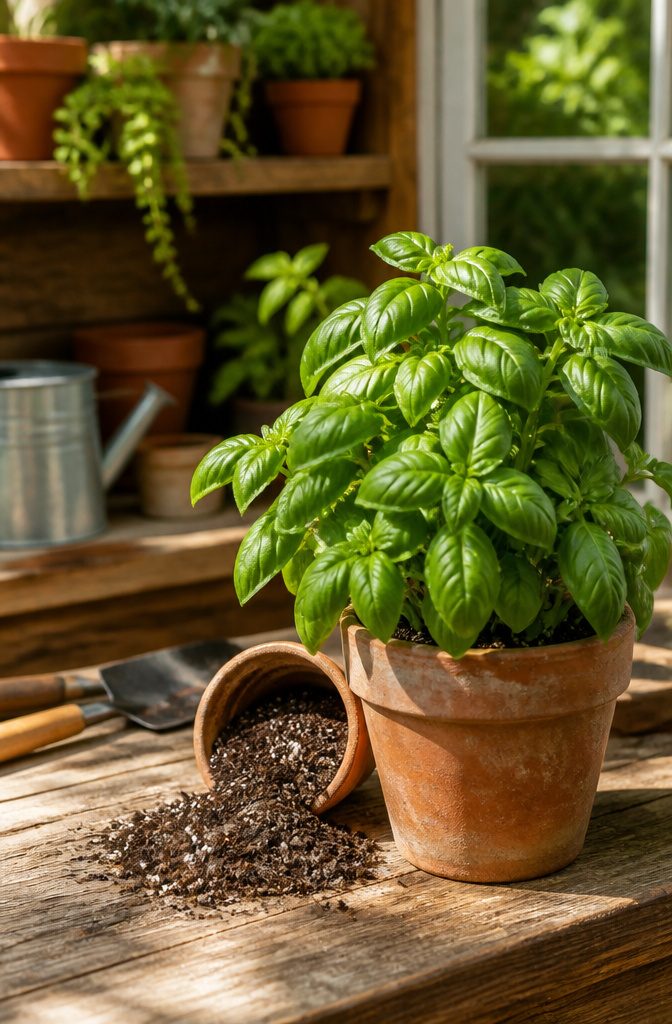
A balanced 10-10-10 fertilizer applied every 2–4 weeks during the growing season is the standard that keeps basil productive without pushing it into flavorless overgrowth.
I would not feed more often than that; the leaves turn lush but bland when nitrogen runs too high.
Organic options like compost tea or diluted fish emulsion release nutrients slowly and make it harder to overdo it, which matters if you’re harvesting regularly for the kitchen.
Synthetic water-soluble fertilizers act faster and cost less per season, but they also burn more easily if you miss the dilution.
Potted basil needs feeding every 2–4 weeks, while in-ground plants in decent soil can go monthly, so the organic route saves some arithmetic on scheduling.
I skip fertilizer entirely on basil I plant in compost-rich soil unless the leaves pale to yellow, which flags a real deficit.
Even then, I reach for the fish emulsion at half strength rather than a high-nitrogen synthetic. Organic feeds work over days, not overnight, but the flavor stays intact.

High transparency & excellent freeze protection:Made of transparent PVC; insulates plants like a warm coat in winter; blocks snow, ice, and frost; creates a warm micro-environment; lets sunlight in for photosynthesis and easy monitoring; ensures freeze protection
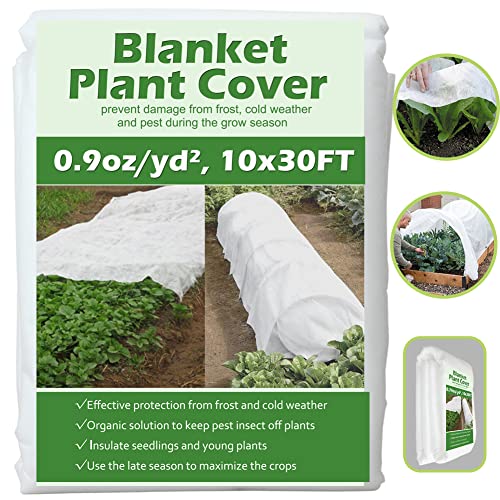
※Big Size to cover large area : The size of our plant cover is 10x30ft, the size can cover large areas. You can cut the plant covers freeze protection into different sizes for different use. You can cover it over the plant such as shrub tomato, pepper, pumpkin, and so on.

PACKAGE: The package includes 4Pcs plant covers,will meet your daily use or replacement. Measuring 31.5" x 47.3", the plant protector is waterproof, windproof.
Pruning for Bushier Growth
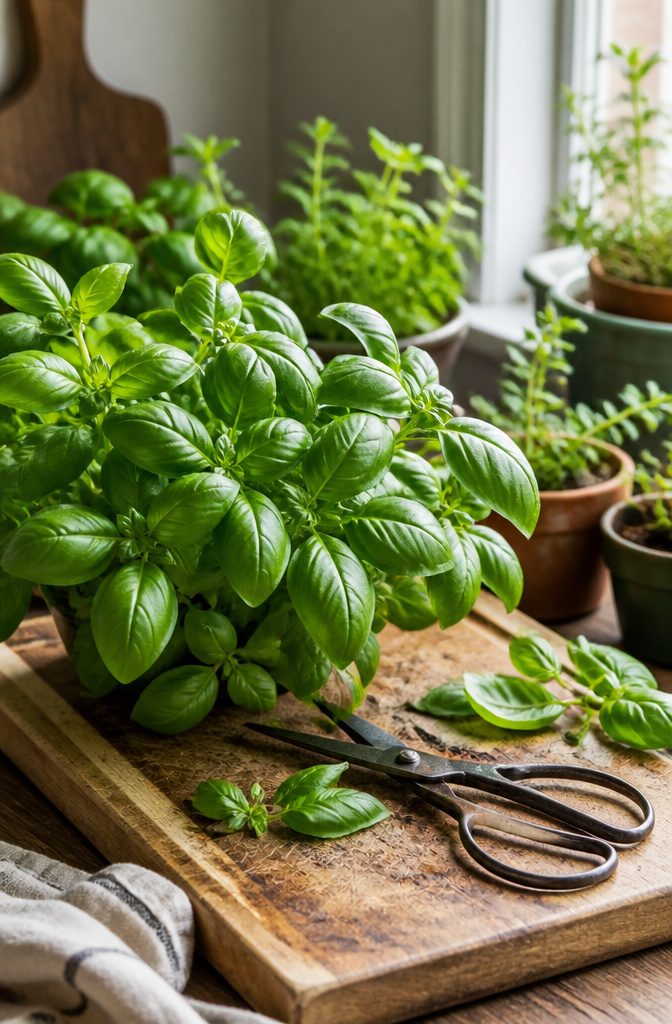
A basil plant usually tells you when it is ready: six to eight sets of true leaves on a stem tall enough to cut.
That is the moment to pinch off the top growth just above a pair of leaves. I would snip the whole shoot tip with clean, sharp scissors rather than plucking individual leaves, which tends to stunt the stem.
New branches emerge from the nodes below the cut, so the plant fills out sideways instead of stretching upward. The tighter habit works better on a small balcony or in a pot crowded among other herbs.
I check mine every few days for flower buds and pinch them the instant they appear.
Once basil shifts to flowering, leaf flavor turns bitter, the stem toughens, and the plant begins to decline. Some growers cut shoots down to 5 centimeters, but I would reserve that hard prune for stems that have already gone leggy.
For a productive plant through the season, regular light harvests and immediate deadheading keep the energy pointed toward tender leaves, not seeds.
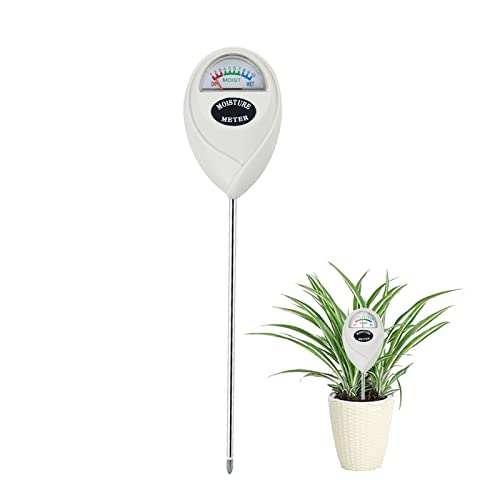
【SAVE YOUR PLANTS】: Over watering can cause problems with your plants or even kill them. This soil moisture meter helps you know the soil is dry, moist or wet.No more over watering!

Accurate Soil Moisture Detection: The XLUX Soil Moisture Meter can tell you if the soil deep inside your pot or garden is dry, moist or wet; whereas your eyes and fingers can only determine the moisture level of the soil surface. The probe is 5.5 inches (14 cm) longer than regular styles, allowing it to measure the soil moisture at the bottom of larger and deeper flower pots.
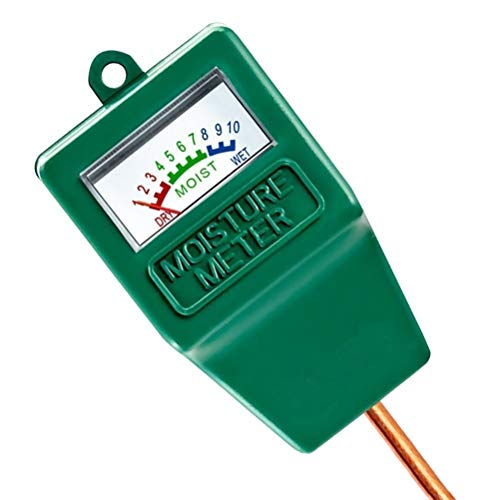
Soil Moisture Meter: This single probe soil moisture meter is specially designed for testing the moisture level in the soil, helps you decide whether the plants need water or not, helps to keep plants alive.
Harvesting
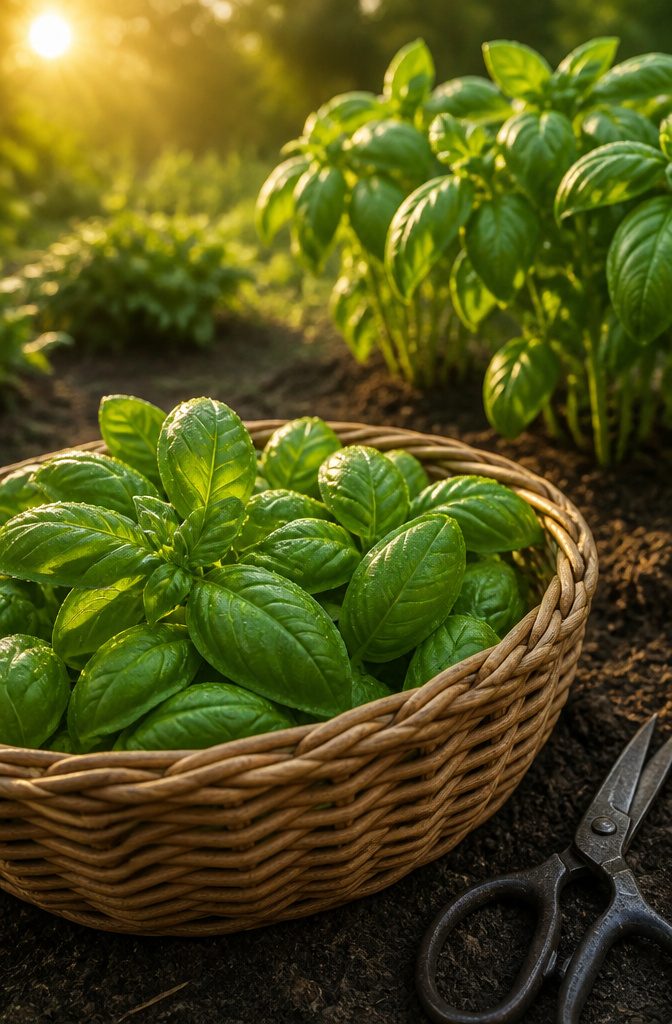
Start picking once the plant hits 6 to 8 inches tall with four sets of true leaves. That first harvest sets the tone for the whole season.
Where you cut matters more than most people realize. Snip the stem just above a leaf node, the point where two leaves join the stalk.
That single cut reroutes the plant’s energy into two new shoots instead of one upward stem, so the bush fans out rather than stretches up. Clean, sharp scissors matter here; a ragged tear invites trouble and slows the wound’s closing.
I harvest in early morning, roughly between seven and nine, when the oils that give basil its flavor sit tight in the tissue instead of evaporating off in sun and heat.
The leaves taste fuller, and the plant bleeds less sap.
Flowering is the phase shift you want to delay.
Pinch off buds the day you spot them. Once basil commits to seed, leaf production falls off and the texture turns leathery.
Frequent cutting, even light ones, keeps the plant in its vegetative phase longer. I never take more than a third of the plant at once; it needs enough surface to keep photosynthesizing and rebound fast.

Mr. Pen seed starter tray kits come in a pack of 10, each featuring a 12-cell tray to help you grow healthy seedlings for your garden or home planting projects.

Upgraded Flexible Cells: Upgraded Silicone Seed Starter Tray with 12 flexible pop-out cells per tray. The soft silicone cells keep seedlings well protected and can be gently bent and popped out when it's time to transplant to your outdoor garden! Our seed starting trays are specifically designed to reduce stress on seedlings, so you won't damage their roots when transplanting
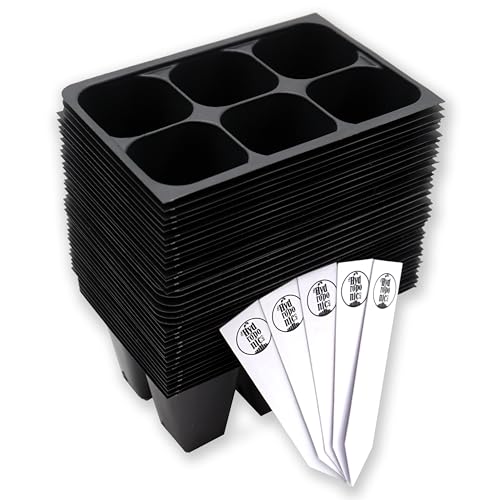
Promotes Healthy Root Development: Each cell measures 1.5" square by 2.25" deep, designed to promote healthy root development and ensuring your seedlings get a strong start for robust growth.
Basil Varieties
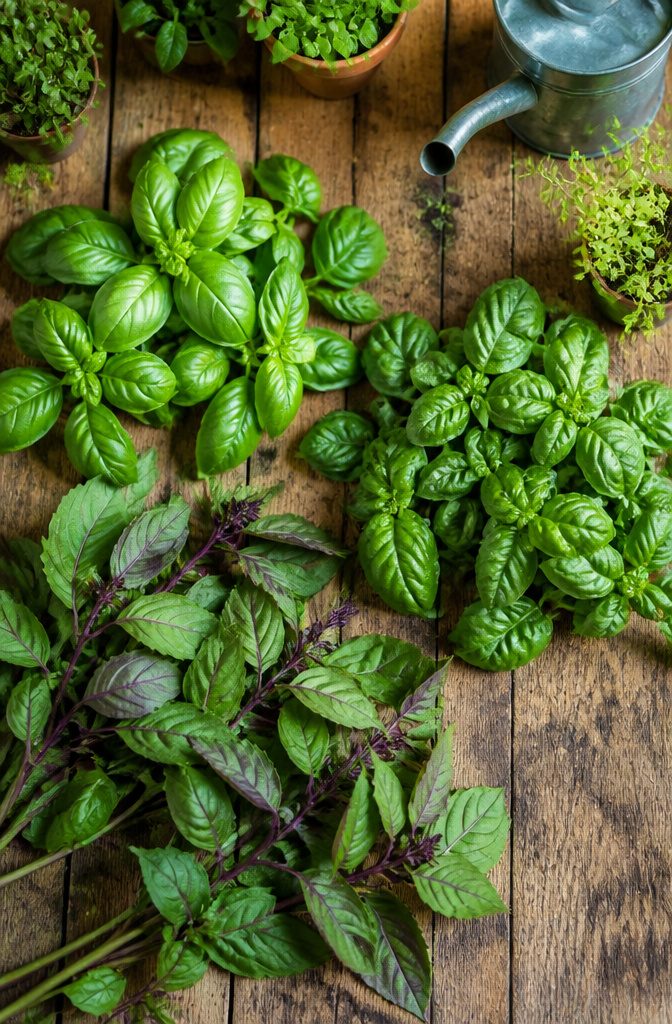
Sweet basil is the workhorse most people picture first, with smooth, glossy green leaves and that familiar flavor somewhere between sweet and savory, subtly minty and pepperish. It grows 18–24 inches tall and handles salads, pasta, and everyday pesto without complaint.
If I had to pick one basil for the sauce, though, I’d go Genovese.
The leaves are slightly crinkled, the aroma carries notes of jasmine, lemon, and licorice, and at 24–36 inches it stays productive longer into the season. Genovese is the pesto basil, full stop.
The rest of the lineup fills specific gaps:
- Thai Basil – Pointed green leaves with purplish veins, purple flower spikes, and a savory, anise-like heat that survives high-heat cooking. Grows 12–18 inches and belongs in stir-fries and curries.
- Lemon Basil – Narrow, matte green leaves with a lemon-anise flavor. Reaches about 24 inches and works best with seafood, lemonade, or infused butter.
- Purple Basil – Deep-purple leaves, small lilac flowers, sweet and earthy with clove and ginger notes. Grows to 18 inches and doubles as ornamental.
- Lettuce Leaf Basil – Large, ruffled, mild leaves at 18–24 inches. Slower grower, but the leaf size makes it practical as a salad base or wrap.
- Cinnamon Basil – Slender leaves, warm cinnamon aroma, 24–36 inches tall. I reach for it in teas and Asian-inspired marinades where the aroma carries.
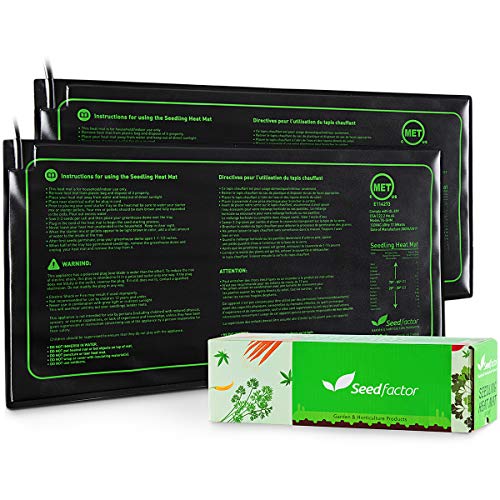
MET safety certified;Comply with UL 499;CSA C22.2 No.64
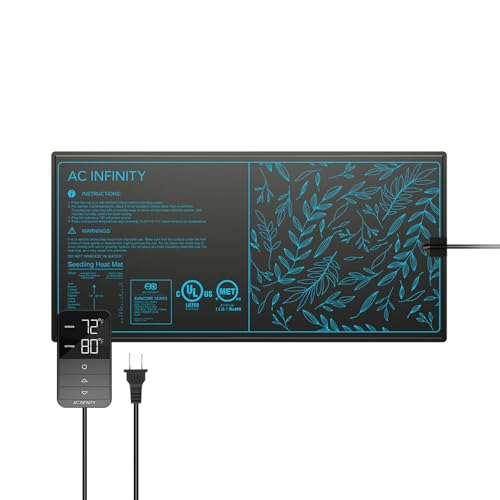
10” x 20.75” heating mat to accelerate and improve the success of seed starting and germination.

A heating mat designed to accelerate and improve the success of seed starting and germination.
Soil and Light Needs
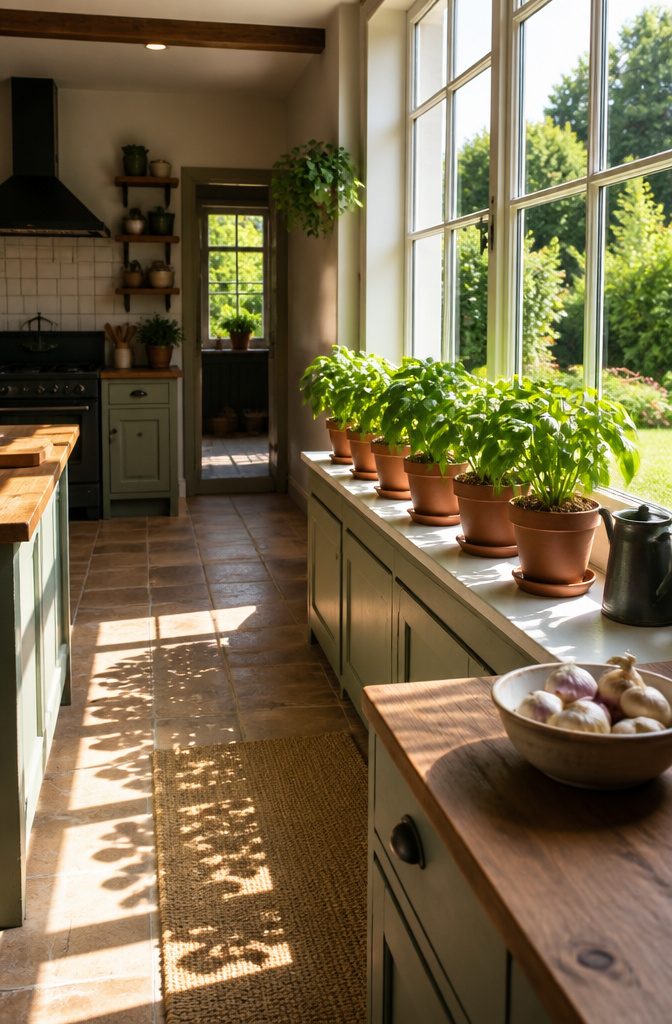
Basil rewards you quickly when the soil and light are right from the start. The plants need 6 to 8 hours of direct sun daily to develop the oils that give leaves their flavor; anything less produces leggy growth that tastes flat.
In the South and Southwest, I would prioritize afternoon shade to prevent leaf scorch, since basil is tender and will drop its flavor along with its burnt tissue.
The soil should read between 6.0 and 7.5 on the pH scale, leaning slightly acidic but forgiving.
What matters more than the exact number is drainage paired with nutrients: roots rot in clay that holds water, yet the plant is a hungry annual that strips fertility fast.
I would work several inches of aged compost into the top layer of native soil before planting, or fill containers with a premium potting mix that already contains it.
The compost improves both aeration and moisture retention without the waterlogging risk.
For timing, the beds or pots need to wait until two weeks after the last spring frost. I would still watch the forecast; a late cold snap kills seedlings that would otherwise thrive in warm soil.
If I were planting in a pot, I would choose a large one. Small containers dry out fast in August sun, and stressed basil turns bitter before you ever harvest it.
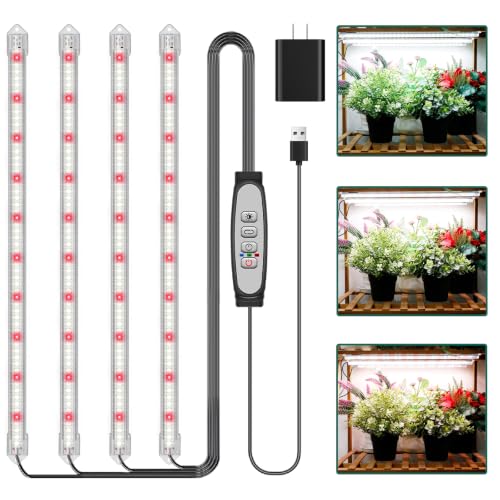
Upgrade Timer 6/12/18 Hrs: Our LPMZMBL LED Grow Lights has been upgraded to 6/12/18H Auto Turn On / Off Timer to ensure the plants have enough time to do photosynthesis. This plant lamp can work automatically without manual adjustments. Whether you're at work or on vacation, the timer system will make the lights turn on and turn off everyday.

【6500K FULL SPECTRUM & 88X2 LEDS】 Embedded with 176 premium LED beads (88pcs x 2), this grow lamp emits a bright 6500K white light that closely mimics natural sunlight. Suitable for all stages of plant growth—from seed starting and seedling propagation to vegetative growth and flowering—ensuring your indoor plants thrive year-round.

6000K Daylight Full Spectrum- Packed with 40 white and 8 red LEDs, this growth light throws a crisp 6000K beam that reads like real sunshine indoors. Built for flowers, herbs, peppermint, succulents, and seed starting, and flexible enough for hanging baskets, trellises, floor pots, and bonsai alike.
Pests and Diseases
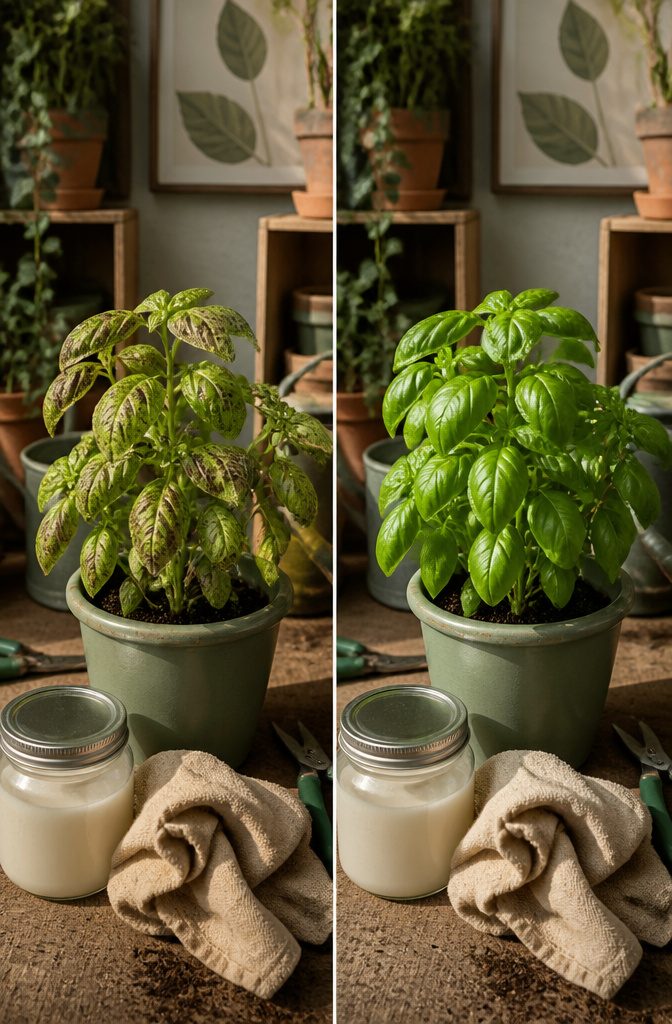
Aphids announce themselves with sticky honeydew and leaves that curl or yellow. A strong stream of water knocks them off before they settle in, and insecticidal soap handles the stubborn clusters.
Japanese beetles chew the lacy, irregular holes you notice in morning light; I pick them off by hand at dawn when they move slow, and neem oil covers what I miss.
Slugs leave similar ragged damage, but after dark. Diatomaceous earth or crushed eggshells around the base cuts their path, or I set traps and check them at night.
Downy mildew and bacterial leaf spot are the diseases that actually kill basil in my experience, not just slow it.
Yellowing between the veins with gray fuzz on the leaf underside means downy mildew, and that plant needs bagging and removing immediately. The pathogen spreads through splashed water and survives in old debris for years.
Bacterial leaf spot shows as dark, sunken spots. Both diseases thrive where air cannot move and soil stays wet, so spacing plants for airflow and watering at soil level, never overhead, is the prevention that actually works.
Overwatering does not just yellow leaves; it creates the conditions where these problems take hold and do not let go.

25 Pack Garden Cloches with Stakes: Each set includes 25 reusable plant bell covers (7.9" H x 6.7" D) and 50 metal ground stakes to secure them in the soil. Provides protection for your small plants or seedling
High transparency & excellent freeze protection:Made of transparent PVC; insulates plants like a warm coat in winter; blocks snow, ice, and frost; creates a warm micro-environment; lets sunlight in for photosynthesis and easy monitoring; ensures freeze protection

🌱【Plant Protections】: The garden cloche more effective protection against big snails, birds, poultry, squirrel, hail, sun and frost. Plant protectors from animals without the use of chemistry!To provide you with healthy vegetable plants.
Growing Basil Indoors
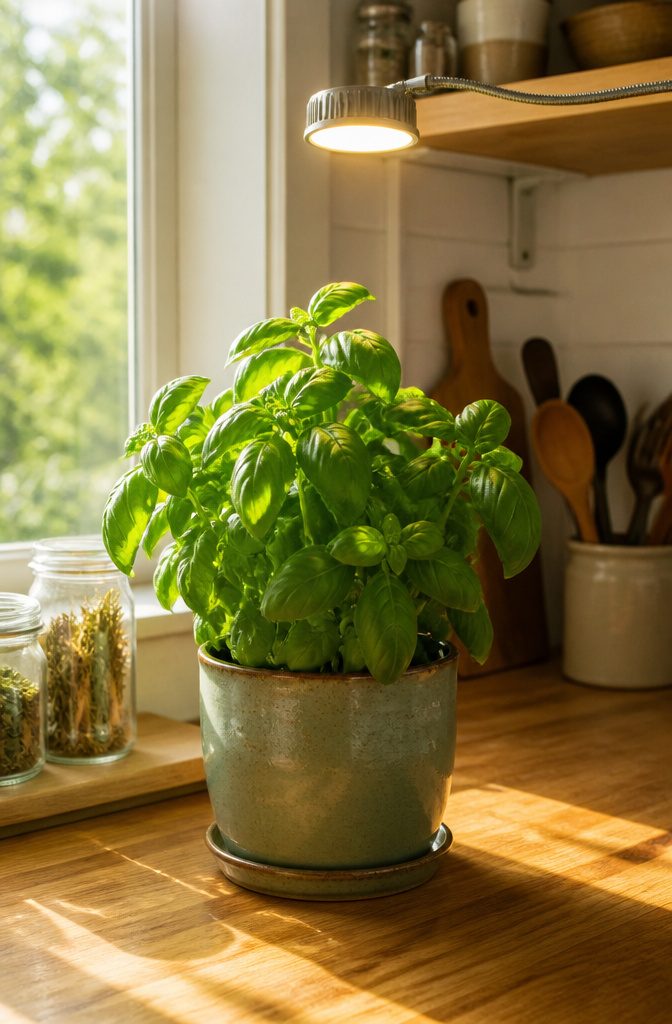
Indoor basil needs 6–8 hours of light daily, and a south-facing window is your best free option. If your brightest spot still looks dim, LED grow lights fill the gap.
Run them 14 hours a day, keeping the fixture 2–4 inches above the leaves and raising it as the plant stretches. Too close and the leaves burn; too far and the stems go leggy reaching for the source.
Drainage matters more indoors than out. Garden soil is too dense for pots, so use an outdoor potting mix instead.
Pick a container 8–12 inches across with holes in the bottom, and plant one seedling per pot. Healthy basil spreads past a foot in every direction, and crowding two into the same space just means neither thrives.
Water when the top two inches of soil dry out, aiming at the soil surface and keeping the leaves dry. Wet foliage indoors invites fungal problems that outdoor breezes would otherwise clear.
For the same reason, pest control shifts inside. Without natural predators around, a small aphid cluster can explode fast, so check leaf undersides weekly and catch issues early rather than relying on the garden’s self-regulating balance.

Dimensions: 7.09 x 0.39 x 0.31 inches (medium) - Intended for pot sizes of 3.5, 4, 5, and 6

Accurate Soil Moisture Detection: The XLUX Soil Moisture Meter detects deep soil moisture in pots or gardens (dry/moist/wet), unlike eyes or fingers that only sense surface soil.

Kindly NOTE: This soil tester can not be applied to test pH value of any other liquid. If the soil is too dry the indicator will not move, and water it before testing.
Companion Planting and Propagation
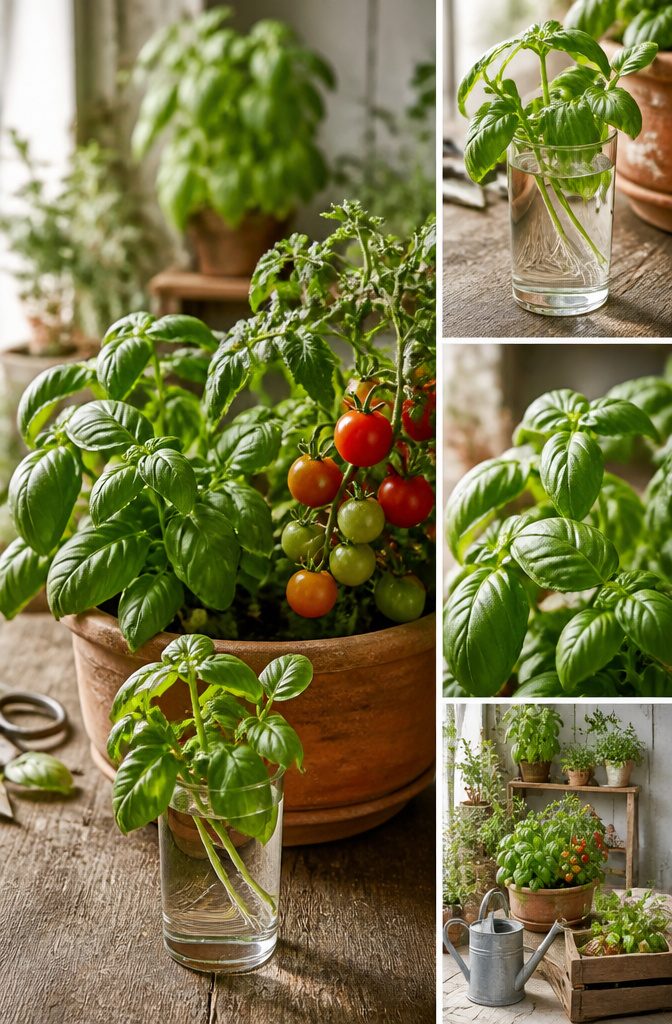
Basil planted within 18 inches of tomatoes or peppers shares root space that seems to improve both crops, a pairing I always recommend over spacing them apart.
The same goes for asparagus, lettuce, beets, eggplant, and parsley as neighbors. Marigolds and oregano nearby can help, though I would keep rue and sage at a distance since they tend to struggle alongside basil.
For propagation, a 4-inch cutting from soft new growth roots cleanly in plain water. Strip the lower leaves, set the stem in a glass on a windowsill, and roots appear in 7–10 days at warm room temperature.
Once they reach 2 inches, pot in standard mix and treat as a mature plant. I skip rooting hormone entirely; basil roots so readily that the extra step wastes money.
Water propagation also lets you verify root health before committing soil and pot space, which matters if you are working with limited room on a balcony or small patio.
Frequently Asked Questions
How do I grow basil indoors?
Place basil in a south-facing window for 6–8 hours of light daily, or run LED grow lights 14 hours a day kept 2–4 inches above the leaves.
Use an 8–12 inch pot with drainage holes and outdoor potting mix, not garden soil, and water when the top two inches dry out. Check leaf undersides weekly for aphids, since indoor plants lack natural predators.
When should I harvest basil?
Start harvesting once the plant reaches 6 to 8 inches tall with four sets of true leaves.
Cut just above a leaf node with clean, sharp scissors in early morning when the oils are most concentrated. Never remove more than a third of the plant at once so it can keep photosynthesizing and rebound quickly.
How do I prevent my basil from flowering?
Pinch off flower buds the instant you spot them to keep the plant in its vegetative phase.
Once basil shifts to flowering, leaf flavor turns bitter, stems toughen, and leaf production drops off. Frequent light harvesting and immediate deadheading direct energy back into tender leaves instead of seeds.
Does basil need full sun or shade?
Basil needs 6 to 8 hours of direct sun daily to develop the oils that give leaves their flavor.
In scorching climates like the South and Southwest, provide light afternoon shade to prevent leaf burn and flavor loss from damaged tissue. Less sun produces leggy, flat-tasting plants.
What are common basil growing mistakes?
Overwatering or wet foliage invites downy mildew and bacterial leaf spot, which actually kill basil rather than just slow it.
Crowding plants too close blocks airflow and keeps them damp inside, while weak light indoors or out produces thin stems that transplant and harvest poorly. Skipping flower bud removal lets the plant turn bitter and decline fast.
How do you care for a potted basil plant?
Check soil daily in hot weather since container mix can go from moist to bone-dry in one afternoon, and bottom-water through a saucer for ten minutes to avoid splashing leaves.
Feed every 2–4 weeks with a balanced fertilizer or compost tea, and thin supermarket-bought plants by dividing the root clump so individual plants have enough space and light.
How to pick your basil so it keeps growing?
Snip the stem just above a leaf node so the plant reroutes energy into two new shoots instead of one upward stem.
Take a few leaves from each stem rather than stripping one bare, and always leave the bottom leaves intact since they handle photosynthesis and overall growth. Regular light cuts keep the plant productive longer than occasional heavy harvests.