These bonfire pit designs run from a beach ring you press into sand to a mortared stone build that can swallow serious money and 2 weekends of concrete work.
What picks one over another is whether you can dig your yard: renters and shallow patios need portable bowls and tripod hangers, while permanent grades open up poured walls and built-in seating.
[link-whisper-related-posts]1. Corten Steel Fire Pit
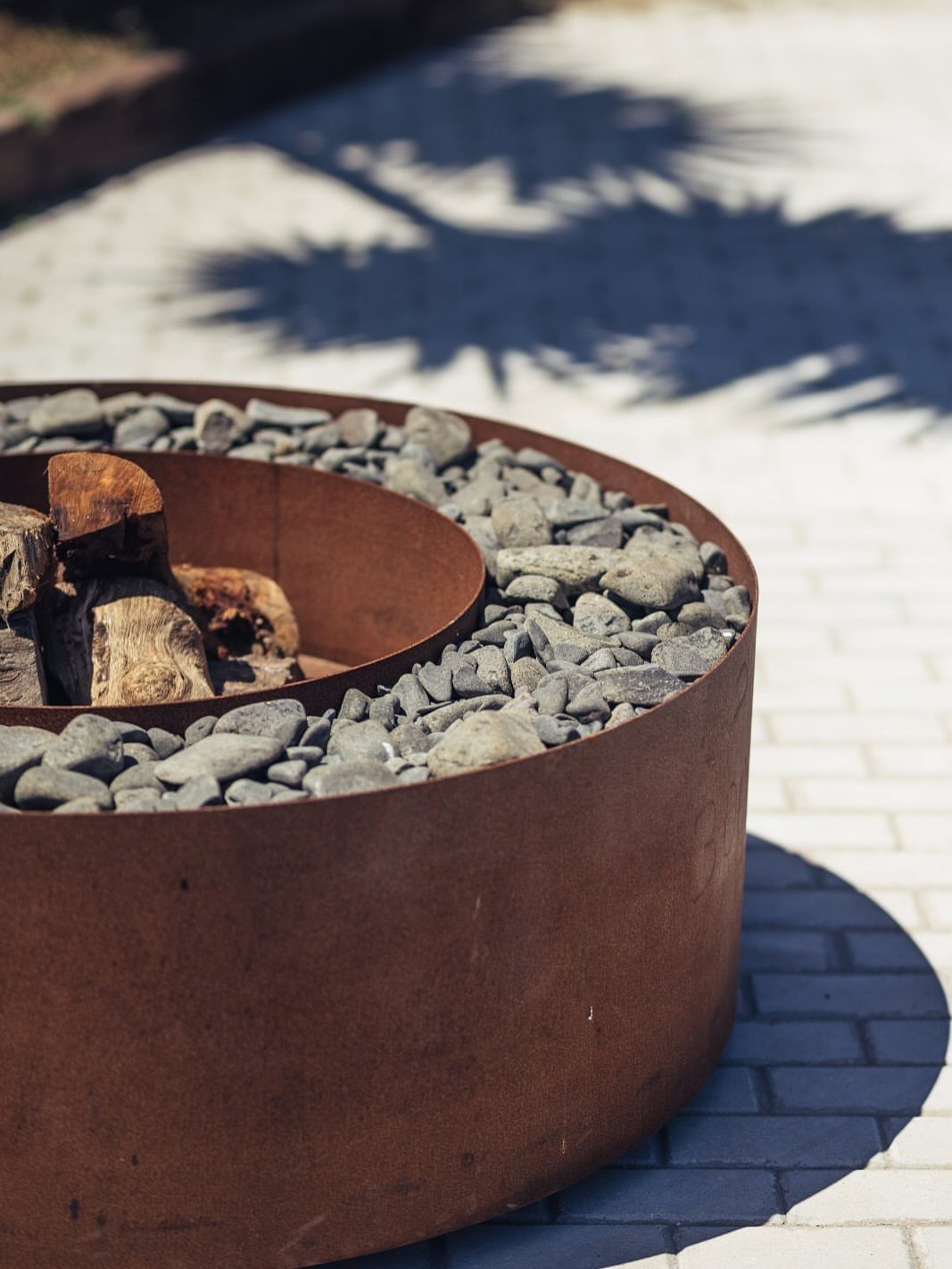
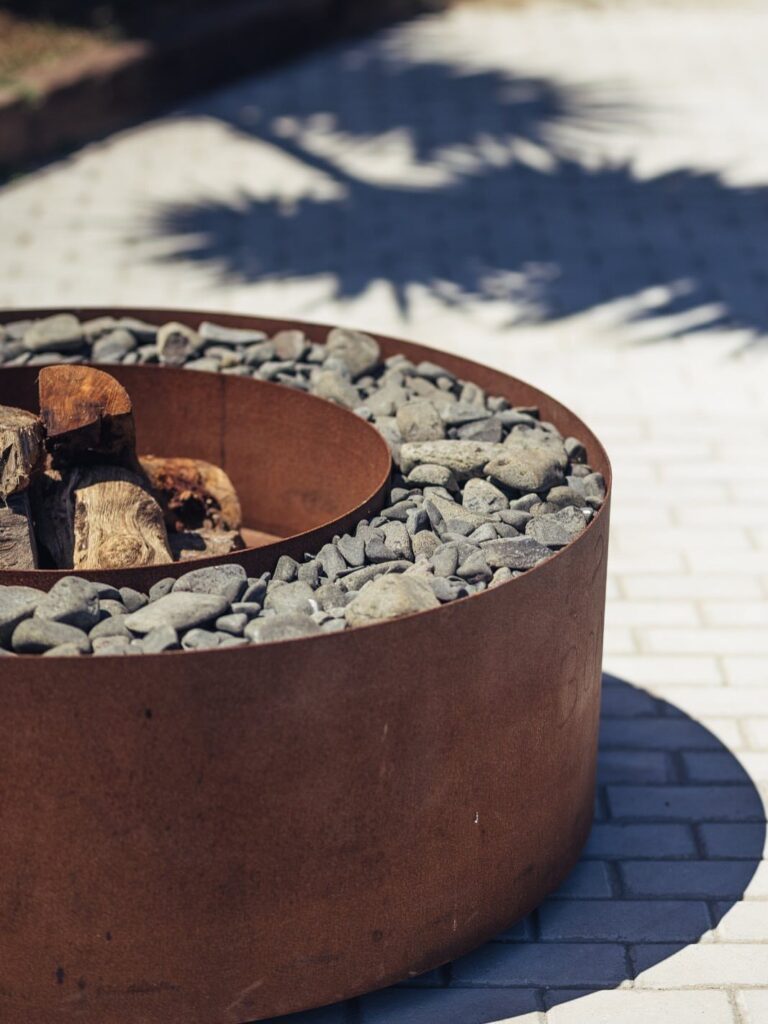
Corten steel develops a stable rust patina that protects the metal underneath, so this finish keeps looking intentional instead of neglected.
I would check whether the orange-brown tone reads warm against your siding or clashes with it; it pairs cleanly with gray and black, fights with red brick.
A river rock surround does 2 jobs: drainage and a visual buffer that keeps embers off the patio.
The pit ring itself takes a generous footprint, with a noncombustible surround beyond that you will need to account for in the layout.
Corten costs more than plain steel but less than stone masonry, and the price gap is wide enough that it usually decides the material for me.

✓ PERFECT NO MESS CAMPFIRE: Say goodbye to dirty ash, expensive firewood, and bothersome smoke and enjoy a clean realistic propane campfire. The perfect outdoor centerpiece for camping trips, RV travels, tailgating get-togethers, beach parties, and family evenings on the backyard patio.

Perfect no mess campfire: with our fire pit say goodbye to dirty ash, expensive firewood, and bothersome smoke and enjoy a clean realistic propane fire pits for outside. The perfect outdoor fireplace for camping trips, RV travels, tailgating get-togethers, beach parties, and family evenings on the backyard patio.

Seamless One-Piece Design: Sleek one-piece construction with no welds offers a modern, futuristic look while ensuring durability, making it a stylish and functional addition to patios, campsites, and outdoor gatherings.
2. Stone Fire Pit
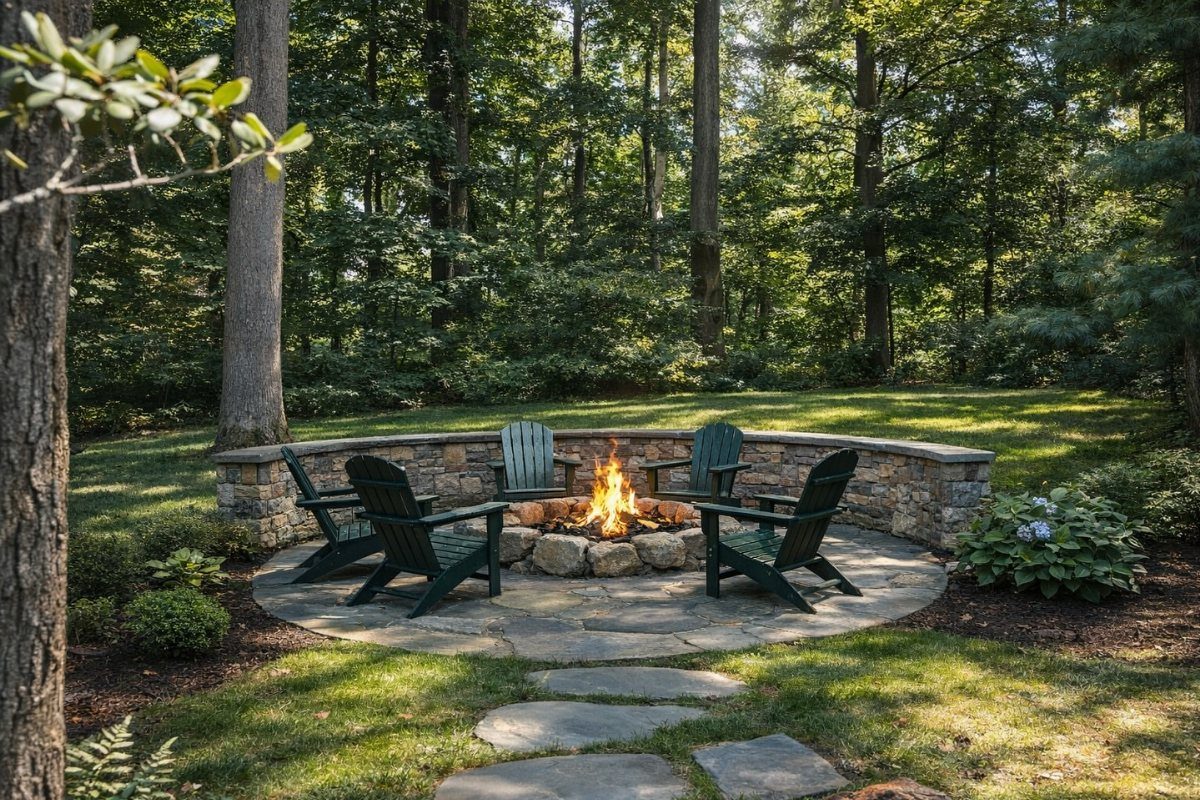
A mortared stone ring looks settled into a yard in a way metal never quite manages, and it ages better than concrete block with a veneer.
A flagstone patio and curved retaining wall do the heavy lifting: the pit reads as one piece of a larger hardscape, not a standalone purchase.
That integration is what drives cost. Dry-stacked fieldstone you gather and set yourself runs low, but a mortared ring on a poured footing with matching patio stone adds up fast.
I would decide first whether the pit is the starting point or the finishing touch; stone rewards the latter more.

Transform Your Outdoor Space - Elevate your backyard gatherings with the Iron Forge Tools fire ring for outside fire pit use. This 36-inch heavy-duty firepit ring creates the perfect centerpiece for cozy evenings, offering mesmerizing, smokeless flames that bring warmth and ambiance to every outdoor event. [Utility Patent Pending]

⛺️[ DESIGN ] : NOTE: FIRE PIT RING HAS NO BOTTOM!Fire Pit Ring is designed as a bottomless circle, which is easy to store when disassembled and does not take up too much space; After assembly, it can be inserted into the ground to control the burning of the fire. No need to worry about the fire getting out of control in any environment

❗️Note: Product ships in raw corten steel(darkgray). Natural rust patina will form over time outdoors
3. Fire Pit with Fire Rocks and Glass
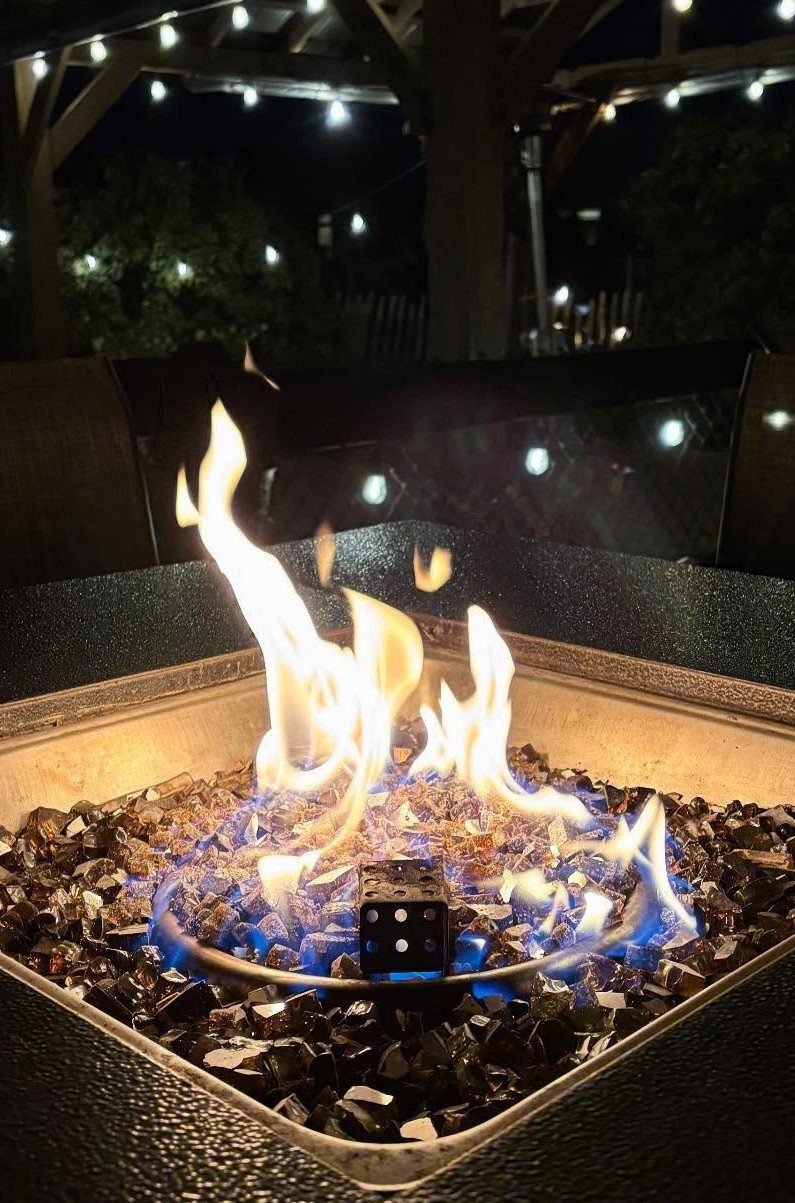
Crushed fire glass sits over a propane burner and throws light upward instead of hiding the flame like lava rock does.
The glass itself is tempered, so it does not melt or blacken, but it will collect soot on top and need rinsing. Propane tank storage is the practical detail: built-in cabinet, or a matching side table that hides the line.
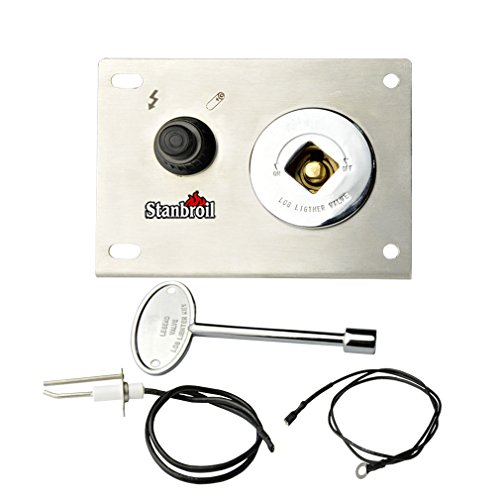
Dimensions of the Face Plate: 7.02" L × 3.86" W × 3.83" H; Ground Wire: 48"; Lead Wires: 48"; Probe: 2.44".

Upgraded Tempered Fireglass: Heat-treated for up to 2000°F. Resists melting, cracking & deformation. Clean-burning – no smoke, soot, or odor. Upgraded tempering enhances crack resistance for durability. Smooth, rounded edges – no cutting risk

Modern Style, Durable Construction - The propane fire pit table features a durable powder-coated steel frame and a modern design that will elevate your patio. It comes in a Flint Gray textured finish for added style and durability.
4. Wood-Burning Fire Pit with Concrete Seating Wall
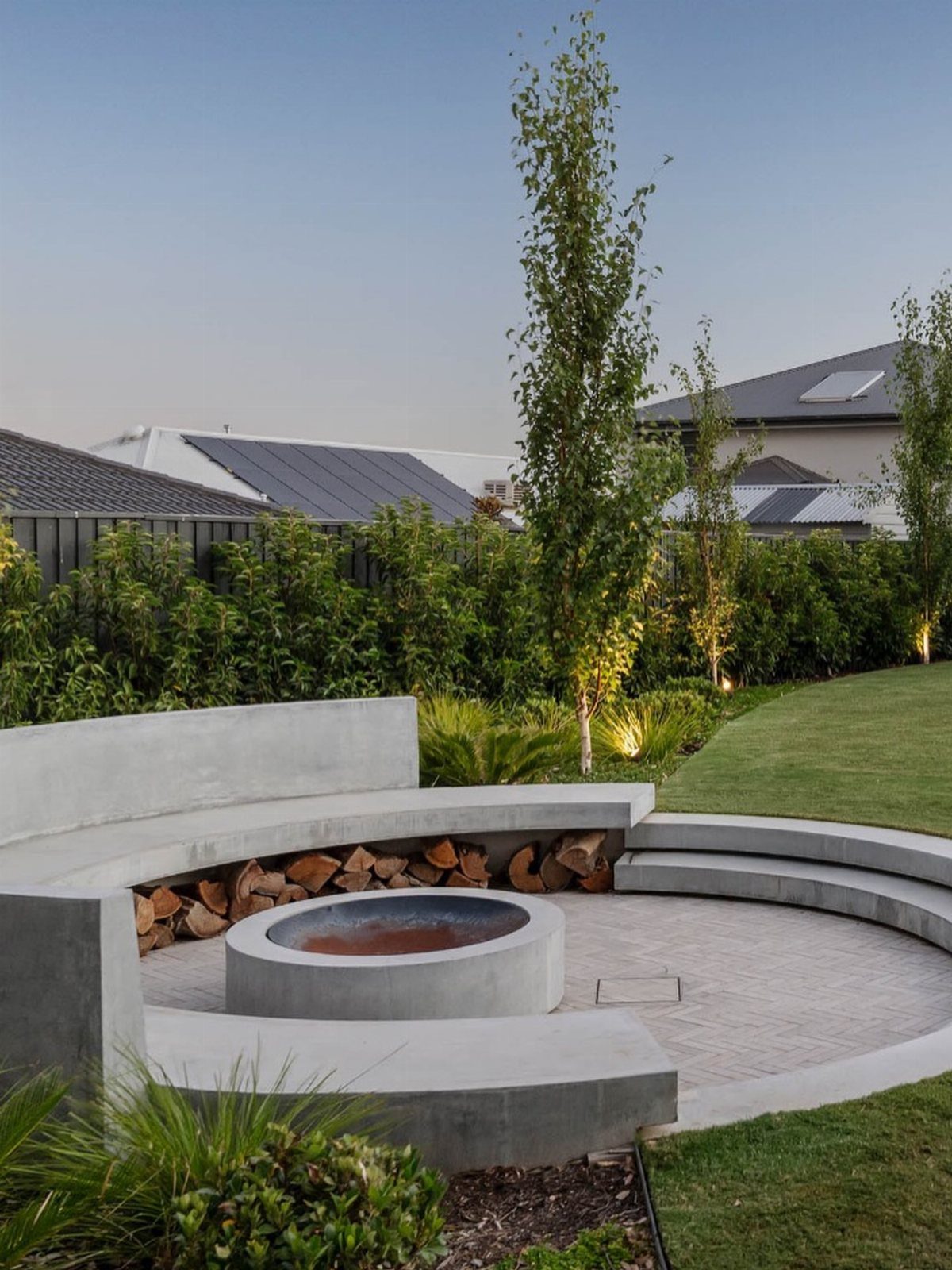
A poured concrete wall curved around the pit gives you back support, firewood storage below, and a surface that does not need cushions.
A sunken patio drops the whole gathering area below lawn grade, which is a major grade change; if your yard is flat, the wall still works at grade level but reads more as furniture than architecture.
I would pour a thick wall on a deep footing, with gaps left as firewood slots.
Rebar at close spacing keeps the curve from cracking. Expect a weekend of forming and a second weekend of pour and strip, or a hired price that makes the DIY route tempting.

RELIABLE QUALITY All fire resistant glass is made of a unique tempering and filtering process to ensure reliable quality

RELIABLE QUALITY All fire resistant glass is made of a unique tempering and filtering process to ensure reliable quality

5. Semi-Circle Fire Pit
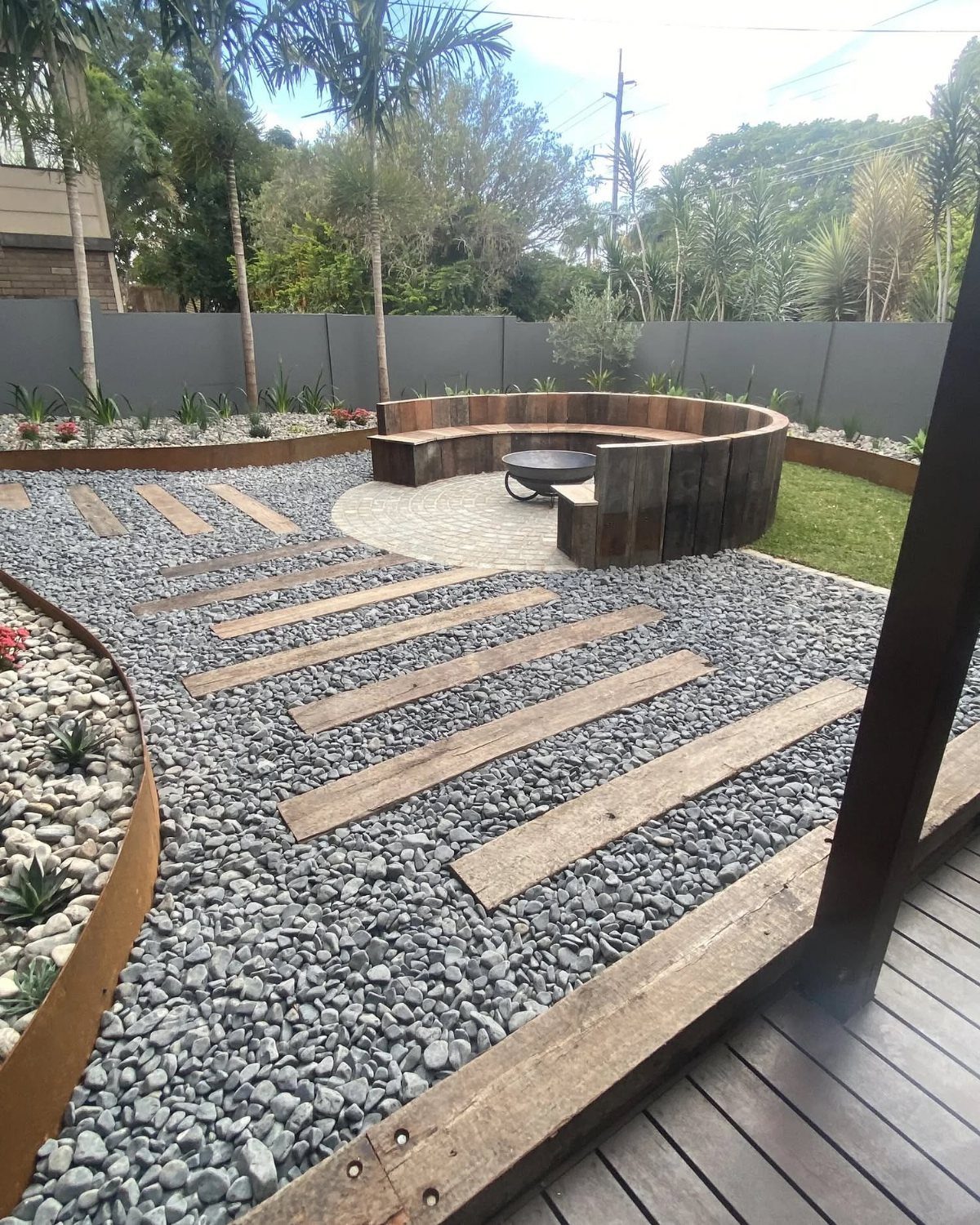
A bench that wraps halfway instead of a full circle keeps the fire side open to whatever view you have: lawn, water, or just the rest of the yard.
I would build the bench in 2 straight wings meeting at an obtuse angle rather than trying to bend boards; simpler joints, stronger result.
The metal bowl sits on a paved pad, not gravel directly, or you will be raking embers out of stone every season. A bench wing needs multiple joists on sturdy posts set deep enough to stay put through freeze cycles.

You will need TWO. The Original stack stone insert made to be used in pairs in a 3 foot Sonotube to make a very realistic stone faced surface. Measuring about 13 inches tall it leaves plenty of room to construct a nice decorative coping ledge or the finishing touch.


Agressively textured boulder style insert made to used in pairs in a 4 foot Sonotube to make the most realistic stone faced surface you can find. Measuring about 14 inches tall it leaves plenty of room to construct a nice decorative coping ledge or the finishing touch.
6. Fire Bowl
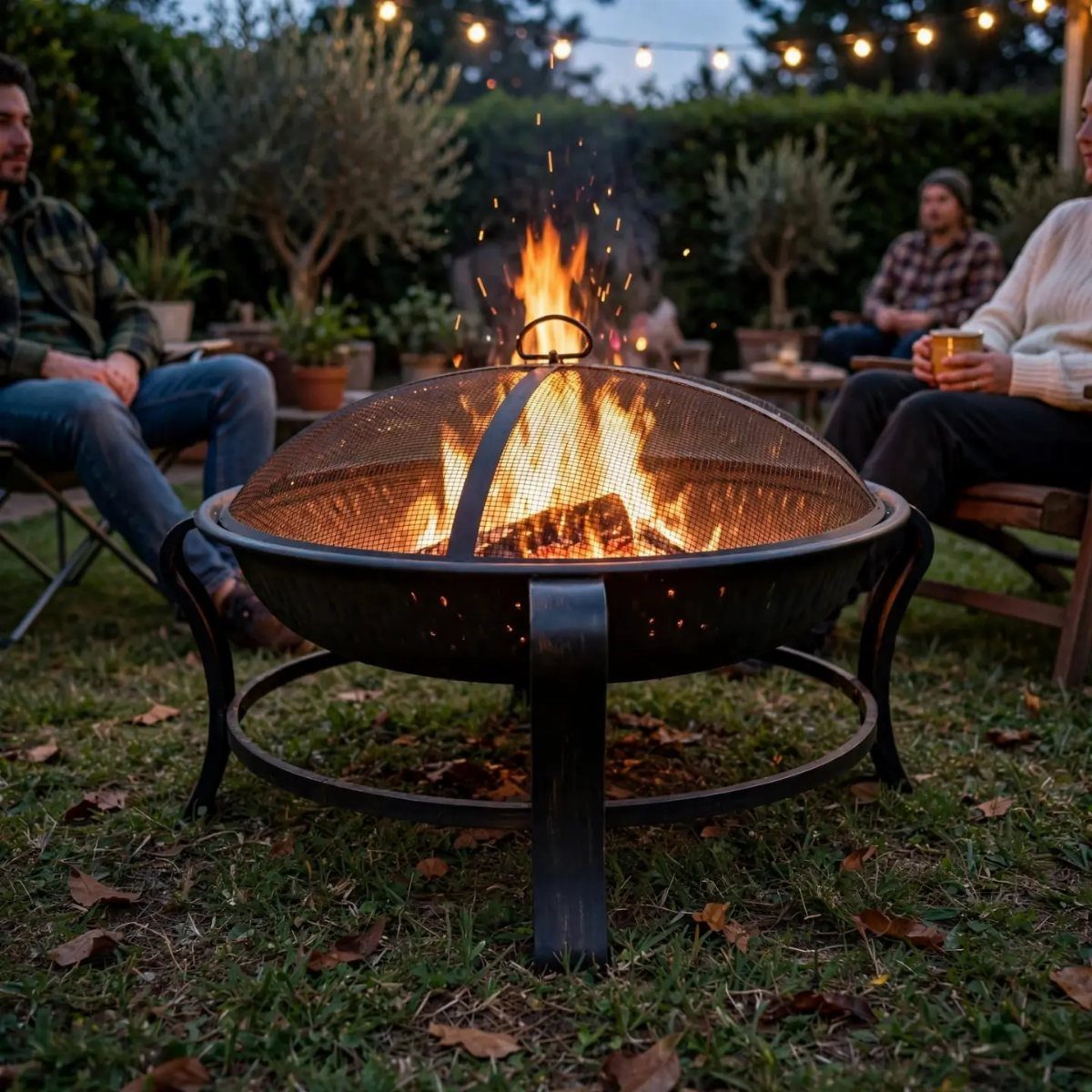
A portable steel bowl with a mesh screen is the fastest way to add fire to a yard you do not want to dig up.
The screen is the detail that matters: it stops popping embers on grass that will scorch, and it lets you walk away without drowning the coals.
I would still keep a 5-gallon bucket of water or sand within reach; mesh contains, it does not extinguish.
The one tradeoff is heat direction: a bowl radiates up and out evenly, so you sit closer than you would to a stone-walled pit that reflects sideways. Moveable means you chase the wind, not fight it.

Perfect No-Mess Campfire: With our fire pit, say goodbye to dirty ash, expensive firewood, and bothersome smoke and enjoy a clean, realistic propane fire pit for outside. The perfect outdoor fireplace for camping trips, RV travels, tailgating get-togethers, beach parties, and family evenings on the backyard patio.

WHAT'S INCLUDED: Mini Fire Pit, Butane Adapter, Metal Mesh Screen, Lava Stones

[Perfect Smokeless Campfire]: Say goodbye to dirty ash, expensive firewood , bothersome smoke and enjoy a clean propane campfire with EcoNook portable gas fire pits. The propane fire pit is perfect for outdoor centerpiece for camping, RV travels, tailgating get-togethers, beach parties and family evenings on the backyard patio.
7. Modern Concrete Fire Pit
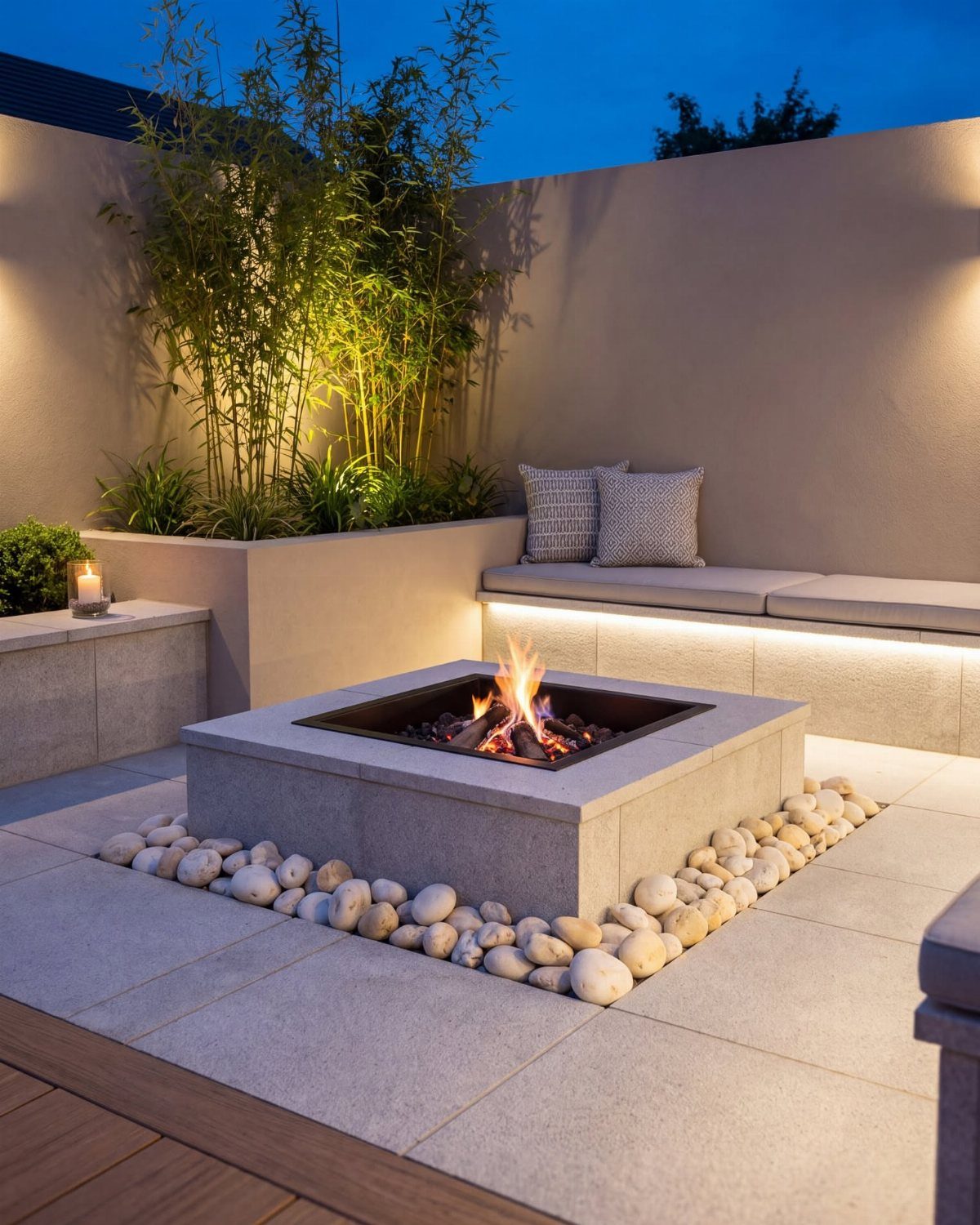
Square edges and a poured concrete shell give this fire pit the clean geometry that reads modern rather than rustic.
I would check the weight before you commit; a concrete shell this size needs machinery or several hands to place, and once it sits, it stays.
The gas line runs through the base, so plan that trench before the patio goes down.
River rock fills the gap around the burner, same asEntry 3, but here the stones stay pale and uniform rather than mixed in color. Built-in bench seating with under-lighting strips the cost and means an electrician, not a Saturday project.
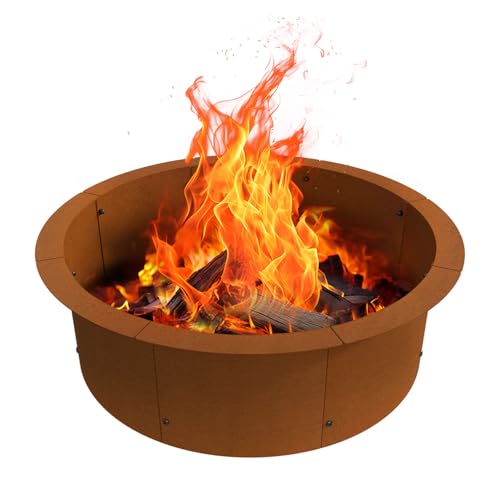
⛺️[ DESIGN ] : NOTE: FIRE PIT RING HAS NO BOTTOM! Fire Pit Ring is designed as a bottomless circle, which is easy to store when disassembled and does not take up too much space; After assembly, it can be inserted into the ground to control the burning of the fire. No need to worry about the fire getting out of control in any environment
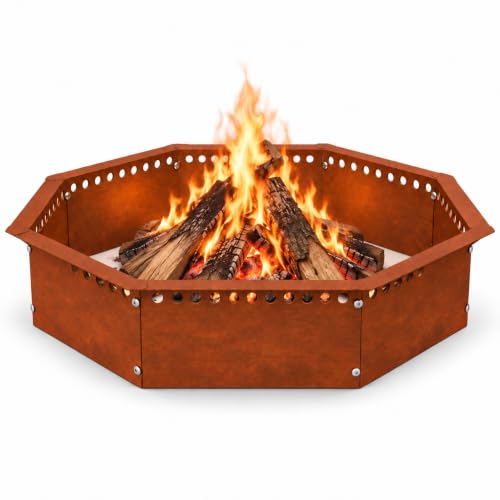
❗️Note: Product ships in raw corten steel(darkgray). Natural rust patina will form over time outdoors

Rust-Proof Steel Fire Ring You Can Rely On – Crafted from heavy-gauge steel with a high-temperature powder coating, this metal fire pit ring resists rust and chipping – even after repeated rain and high heat. A durable firepit ring that lasts season after season
8. Fire Pit with Custom Cedar Bench Seating
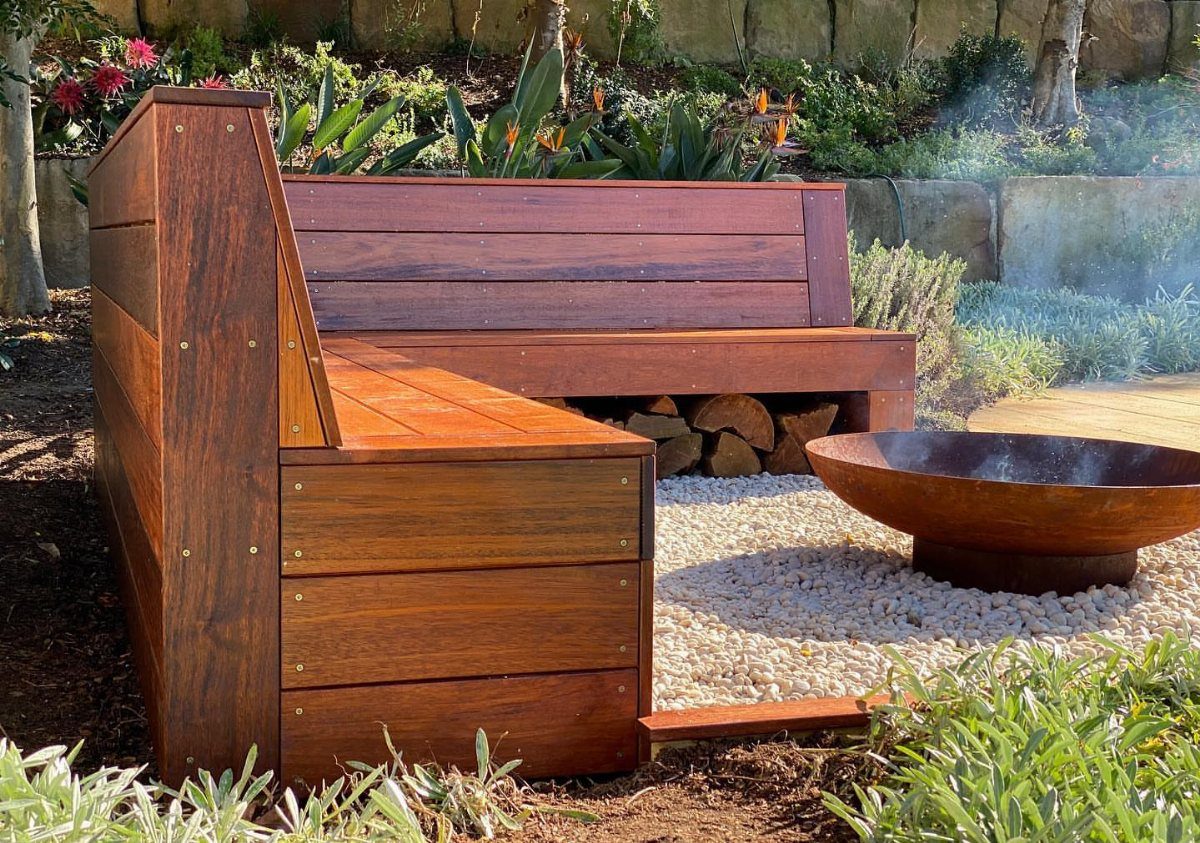
An L-shaped bench with firewood storage beneath turns the seating into the structure.
Cedar weathers to silver-gray in 2 seasons unless you seal it yearly; I would accept that change or budget for maintenance, because painted cedar peels and stained cedar needs re-staining.
The bench sits on white pebbles, not a poured pad, which means leveling and compacting the base yourself or watching it settle unevenly.
Metal brackets at the joints matter more than the wood species; those corners carry the load. I would build the storage bays deeper than they look, firewood is longer than forearms.

Size: Lightweight natural volcanic rocks ranging in size from 1"-2" with porous surface. (Stones are naturally occurring and may vary in size)

12 pcs Accessory Set: Our fire pit pan burner kit comes with a 4ft extended connection hose and a 4.4ft propane regulator hose, igniter, and valve, all certified by CSA for safety. No need for additional purchases, this comprehensive set is ready to use right out of the box.
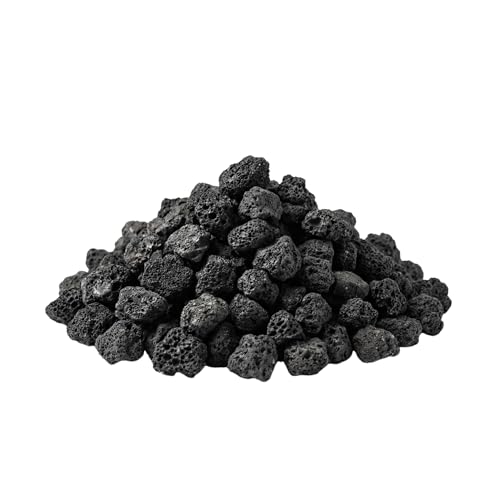
Natural: Formed volcanic rock that has been crushed and screened. The surface of the granules is covered with fine pores, resulting in a deep gray black color that showcases the rough texture of the earth and the unique texture of mineral crystals. It can inject a natural and peaceful wilderness atmosphere into any space.
9. Fire Pit with String Lights
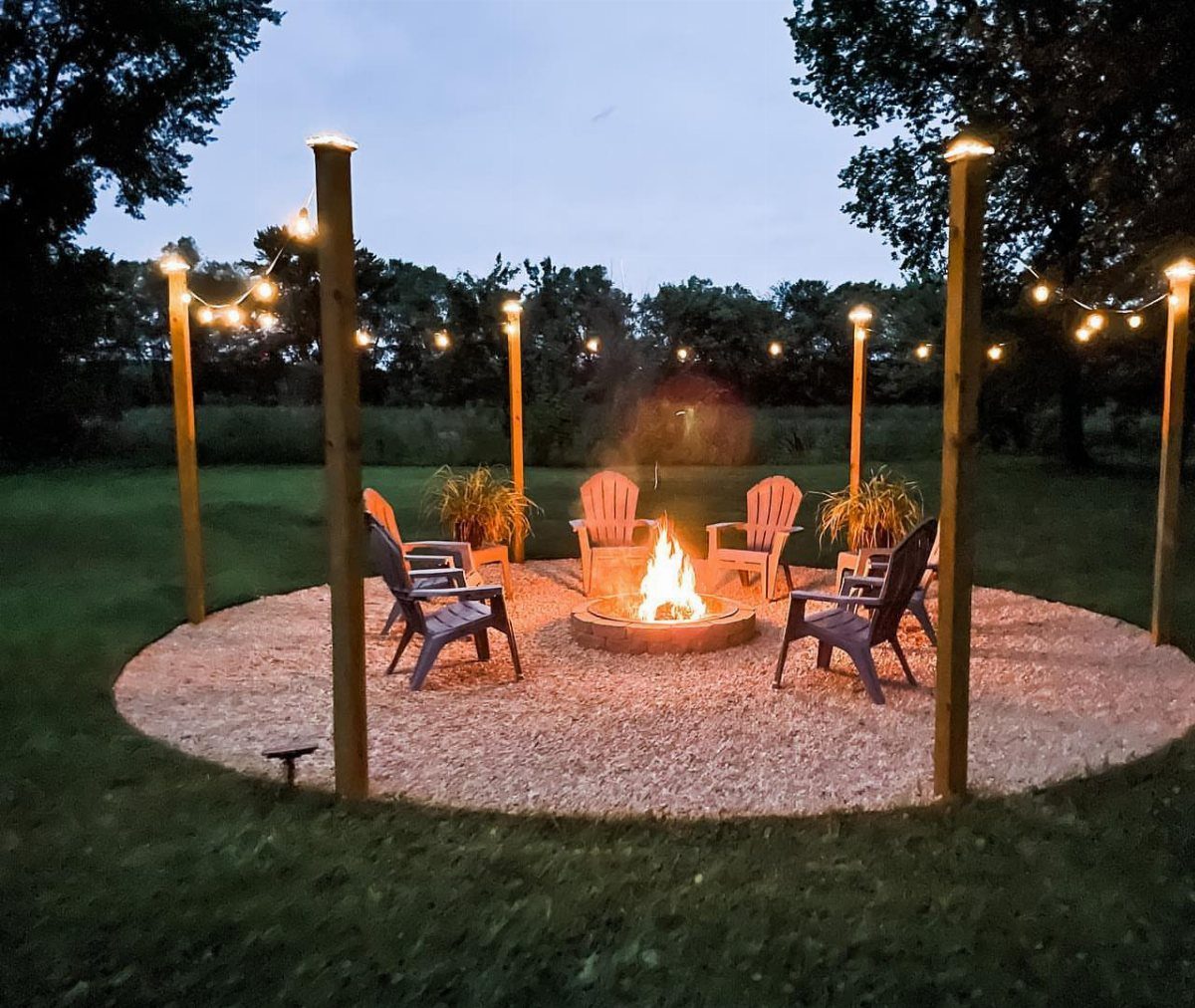
Wooden posts set in the ground around the fire area carry the lights overhead, and that height is what makes this work; draped too low, the heat sings the bulbs and the glare ruins the firelight.
I would use LED bulbs rated for outdoor use, not glass incandescents that shatter in a storm. The posts need concrete footings below frost depth or they lean by spring.
The posts are spaced wide enough that the wire sags slightly between them, which is the look, not a mistake. Cost stays low if you already own the drill and level.

【Perfect Upgrade】 Awesome alternative of the normal lava rock, giving off more heat adding unique look to your fire pit

【Unmatched Brilliance & Color Variety】- Transform your fire pit into a stunning centerpiece with our high-luster, reflective glass. Choose from a wide spectrum of single colors like Plutinum, Onyx Black, Cobalt Blue, or our exclusive pre-mixed designer blends (e.g., Aqua Blue, Cobalt Blue & Platinum). Unlike standard lava rocks, these glass rocks sparkle brilliantly under sunlight and create a mesmerizing, jewel-like dance of light when reflecting the evening flames.

Increase Heat: Adding Fire glass in fire pit can increase heat radiation up to 4 times. Keep your backyard welcoming and warm on chilly evenings by a fire glass pit. Luminescent glow of the fire glass is both enchanting and inviting.
10. Geometric Metal Fire Pit
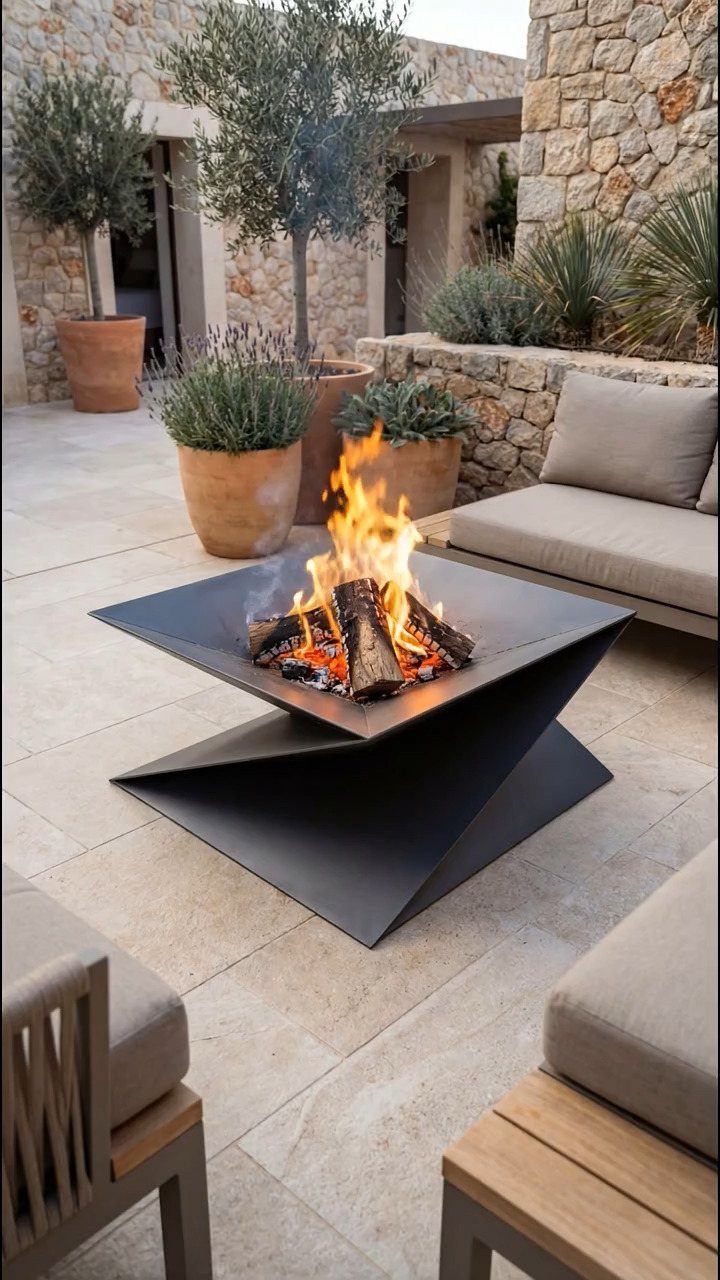
Faceted steel plates bolted together catch firelight on their angled faces the way a flat cylinder never would.
The dark finish absorbs daylight and throws back flame at night, a trick that works best against lighter stone paving like what sits beneath it.
Wood logs burn inside, not gas, so the spark screen that ships with most versions is worth using.
I would set this on a stone or concrete patio; embers fall through the gaps between facets, and grass or wood decking underneath is a scorch mark waiting.
The sculptural presence carries the space, so keep the surrounding furniture low and simple.
Agressively textured boulder style insert. Hand cut boulder faces showing great detail and wear

LIGHTWEIGHT CONCRETE: This fire pit is constructed with lightweight concrete that offers a stone look. The shape allows easy seating arrangement for you and your guests, providing light and warmth all around during those chilly evenings.

Durable and long-lasting construction: The base is heat-resistant and the iron fire bowl can withstand high fire, preventing cracking and ensuring years of reliable use
11. Tripod Hanging Fire Pit
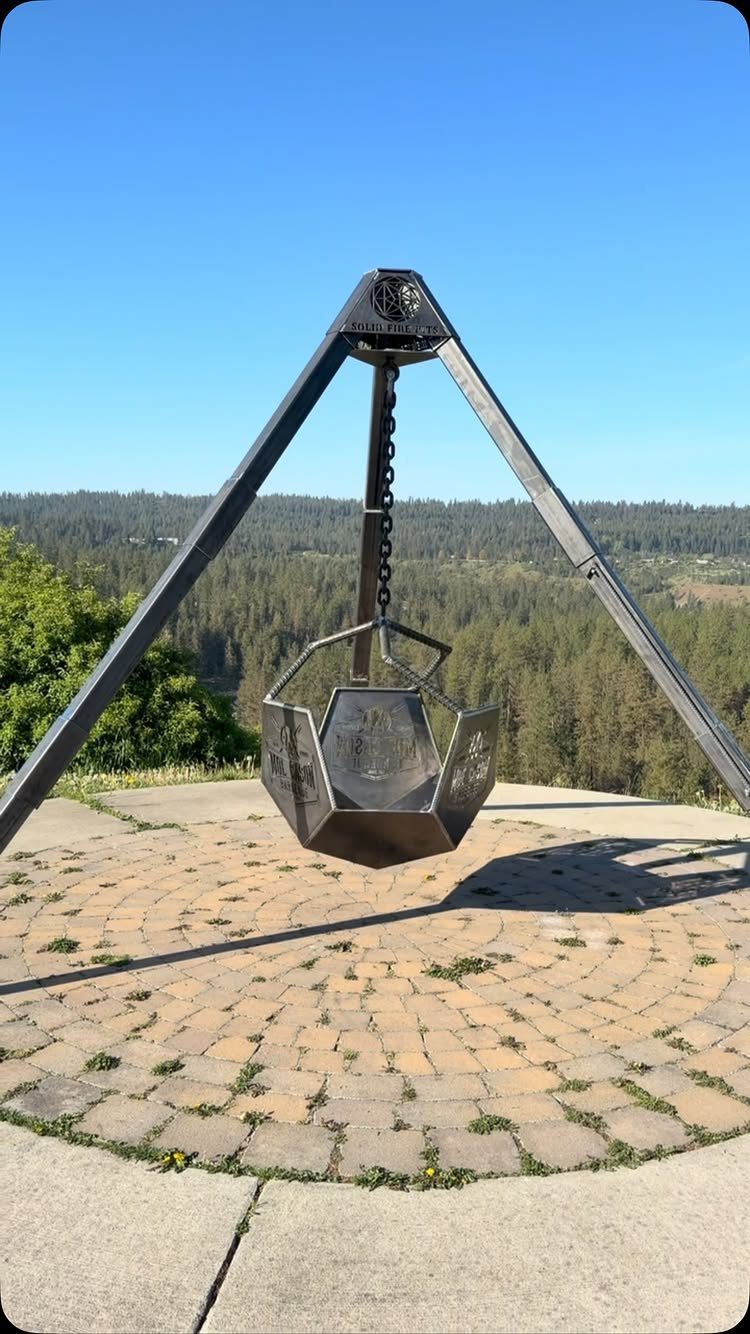
A bowl on chains from a tripod frame is the one fire pit that needs no hole, no pad, no permanent mark on the ground.
The chain length sets the heat height; too low and you cook knees, too high and the heat rises past you.
I would check the tripod footprint against the patio diameter before ordering; the legs flare wide for stability and overhang small stone circles.
The bowl sways in wind, so this suits sheltered yards more than open ones. A scenic overlook is what the photo sells, but the practical value is rental yards and any patio you cannot dig.
12. Teardrop Slatted Fire Pit
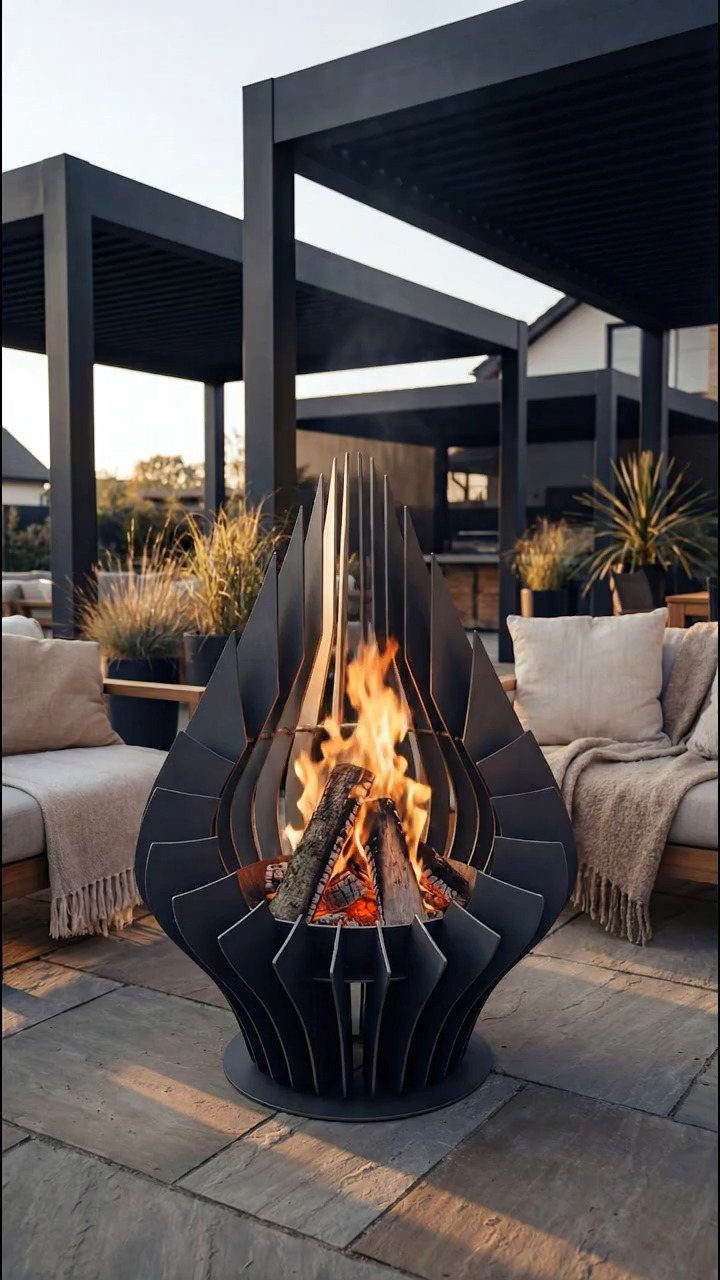
Vertical slats in a teardrop shell let air feed the fire from below and all sides, which burns wood hotter and faster than a solid wall does.
The gaps also drop sparks, so the stone patio beneath is functional, not decorative. I would keep a mesh screen handy for nights when the wind picks up; the slats do not contain embers the way a solid bowl does.
The black finish and modern shape suit a pergola setting where architecture already carries the contemporary note. Assembly is several panels bolted together; plan for a level surface and an extra set of hands.
13. Fire Pit Table
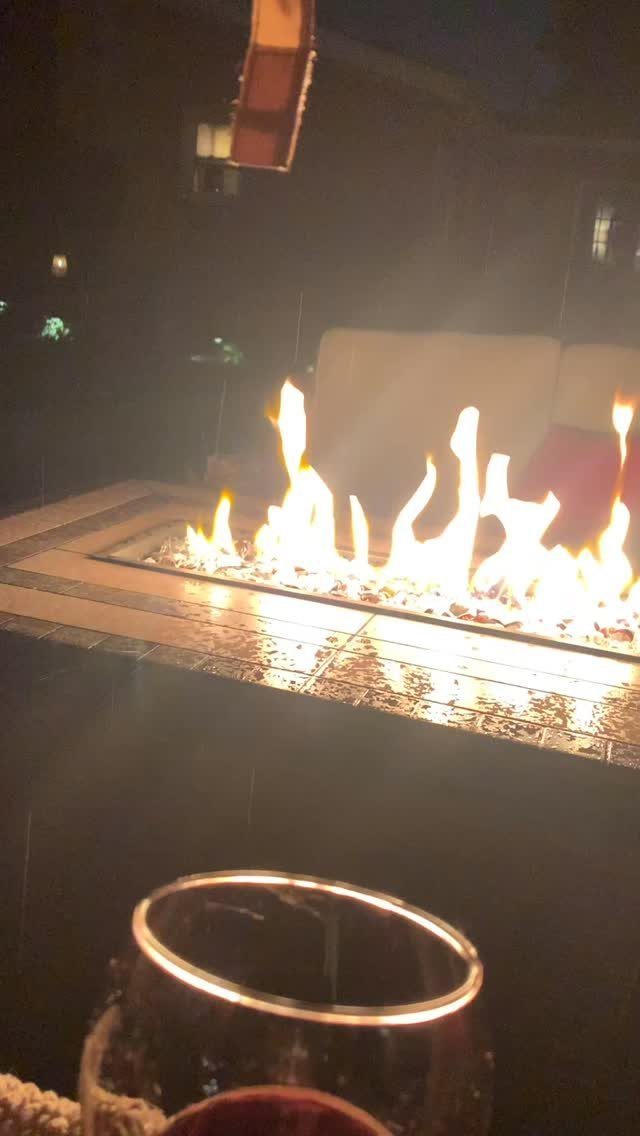
A gas burner set into the center of a dining-height table gives you flames at elbow level while plates and glasses stay at the rim.
I would check the table depth: a narrow burner channel leaves no room for serving dishes, so this works better as a lounge table with low seating than as a dinner table.
The propane tank hides below or sits in a side cabinet; either way, plan access for swaps without lifting the tabletop.
Heat output is lower than a dedicated pit, enough for atmosphere on a mild evening, not enough to replace a coat once the temperature really drops.
I would pick this for a patio that already sees regular meals, not for a yard that needs a fire feature to draw people out.
14. Rustic Beam Bench Fire Pit
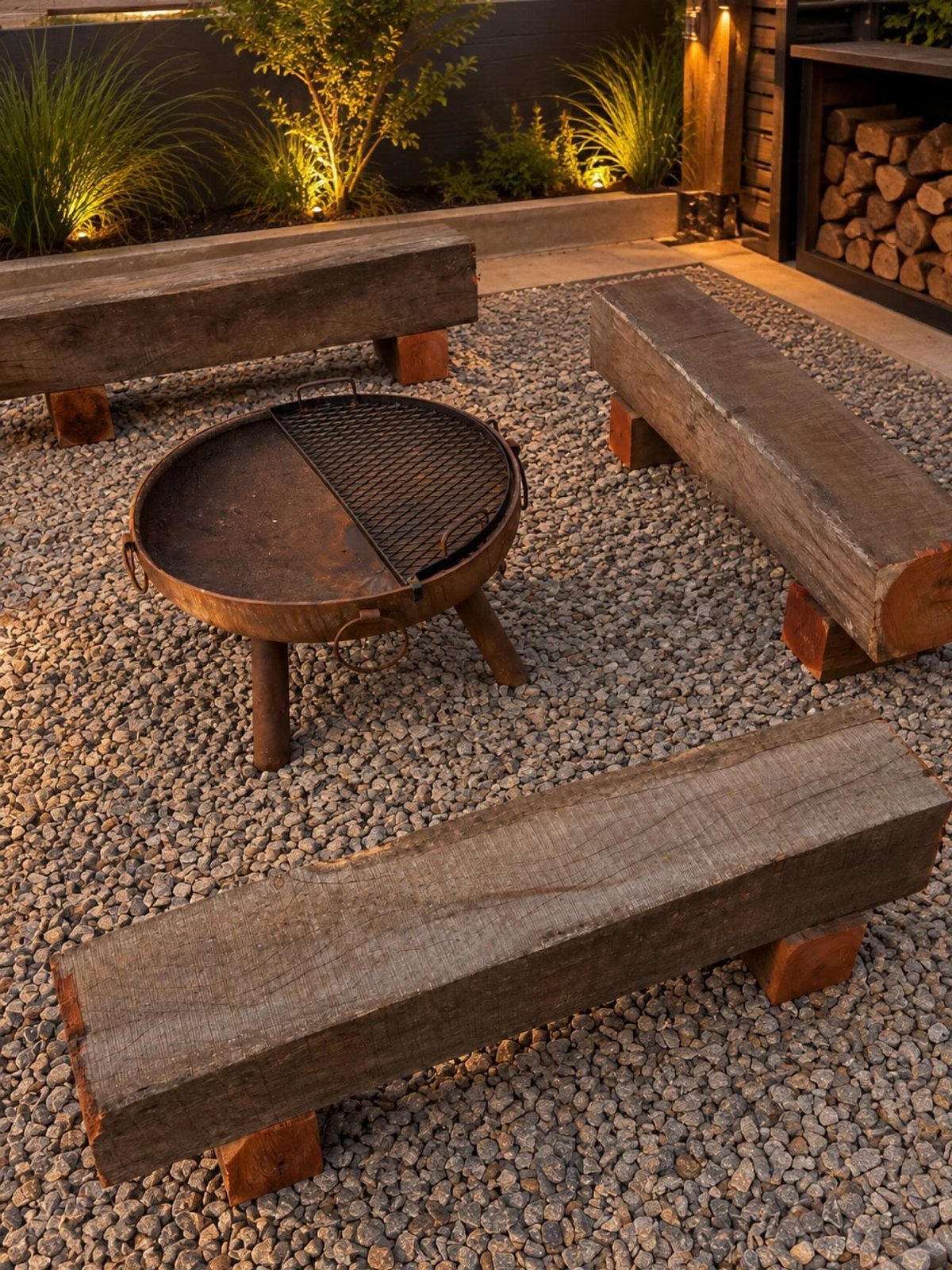
Thick timber beams laid on gravel as backless benches circle a bowl-style pit with a grill grate.
The gravel base drains and stays level longer than bare dirt, though it migrates; a steel or plastic edging ring keeps it from spreading into the lawn.
I would seal the beams or let them gray; paint on timber this rough flakes fast. The grill grate is functional, not decorative, and turns the pit into a cooking surface for skewers or a grate-top pot.
Beam length sets the circle diameter; shorter benches make an intimate ring, longer ones spread the group. I would check local burn regulations before laying gravel; some counties ban open wood fires regardless of the ring style.
15. Beach Bonfire Ring
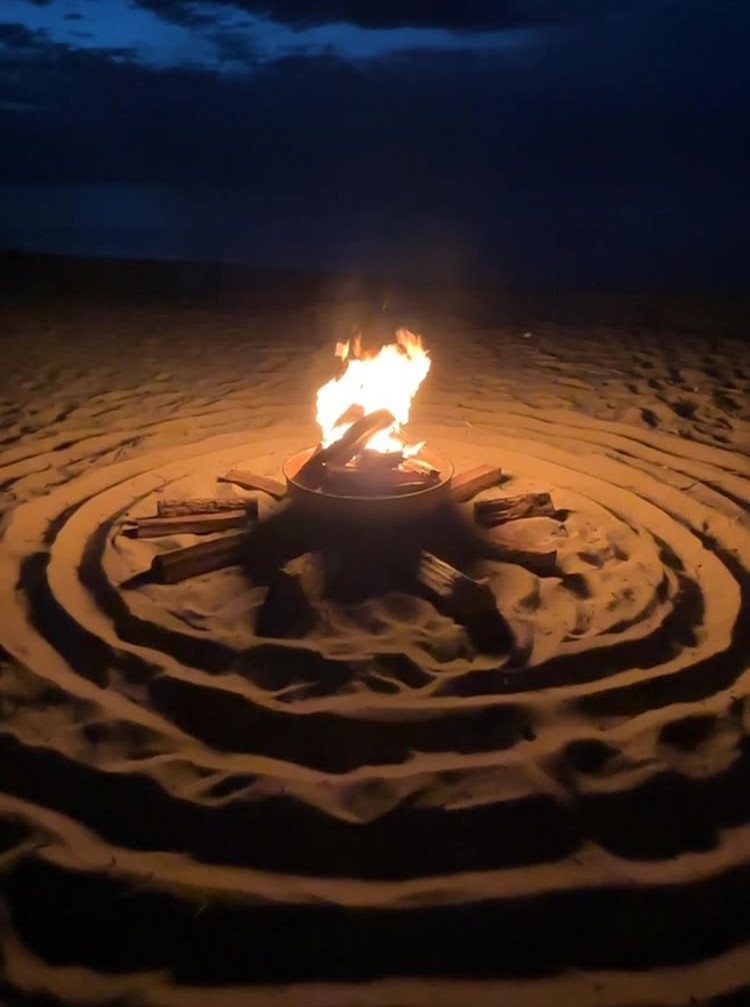
A shallow metal ring pressed into sand contains the coals and marks the fire boundary without the structure of a backyard pit.
Sand is the surface, so drainage and level footing are given; what you add is the trench ring around the fire for cooling dropped sparks.
I would dig that ring deeper than it looks in photos, well below the surface, or a gust skims embers across dry sand.
Wind direction sets where you sit; smoke follows the steady breeze, so position the ring downwind of your group. This is the one design that packs flat and travels: the ring, a shovel, and firewood are the whole kit.
I would check tide tables and local beach fire permits; most jurisdictions require the ring sit above the high-tide line and extinguish before late evening.
16. Spherical Metal Fire Pit
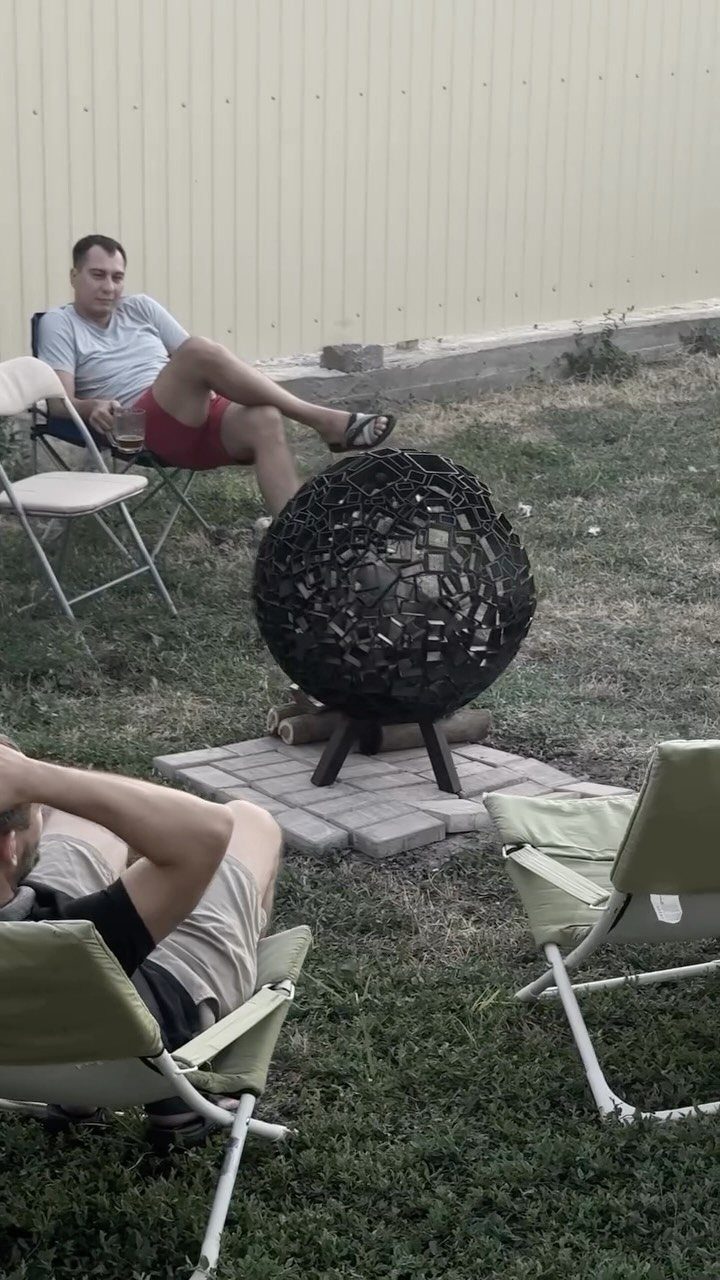
A black steel sphere split at the equator sits on a tripod frame, with the fire visible through a horizontal gap.
The sphere shape radiates heat in a full circle, more even than a flat-sided bowl but less directional than a wall you can lean against.
I would set it on pavers, not grass directly; the tripod feet concentrate weight and sink into soft ground. The sphere arrives in halves; assembly is bolting the equator seam and attaching the chain or bracket to the tripod head.
I would check the sphere diameter against the tripod height; a small sphere on a tall tripod puts flames at seated eye level, which is atmospheric until someone stands.
The clean silhouette suits modern yards where a rustic stone ring would look dropped in from another house.
DIY Fire Pit Kits
A kit gives you the block or ring and the instructions, but the shape is where the decision sits.
Linear and square kits need a patio planned around them; a square pit in a round seating arrangement leaves awkward gaps at the corners, and a linear pit wants a long, narrow space to make sense.
I would lay out the footprint with hose or spray paint before ordering, because the kit dimensions are fixed and returns on pallet freight are expensive.
Stone veneer kits look like mortared stone from a few feet back, but the block underneath is concrete, not structural stone.
That difference matters if you are matching an existing stone wall; the texture reads close but not identical. Circular kits are more forgiving on patio layout, and the seating naturally wraps without corner gaps.
I would still budget for a gravel base and drainage layer beyond the kit price; most instructions assume level ground that few yards actually have.
Fire Pit Accessories
A cover is the accessory I would buy first, even before the first fire. Rain on a gas burner clogs the orifices, and ash left wet in a wood pit turns to paste that blocks airflow.
I would measure the widest point, including any protruding spark screen or handle, and buy the next size up rather than stretch a tight cover over hardware.
Fire glass and lava rock do different jobs in the same space. I would not mix them in the same pit; the glass sinks through lava rock and the look turns messy.
Wind guards are tempered glass panels that ring a gas flame; they keep the flame vertical in a breeze and stop napkins from igniting on a gusty night.
They also block some radiant heat, so I would skip them on a cold evening when warmth matters more than flame shape.