Rock landscaping can run from a simple gravel strip beside your sidewalk to a gabion wall job that needs delivery, a rented compactor, and a weekend of heavy lifting.
What picks your idea is slope: flat yards call for rock gardens and Zen beds, but any yard that drops even a few feet forces the decision toward terracing, dry creek beds, or stone steps that handle water instead of fighting it.
The boulder with a channel cut for 12V LED wiring is proof that some of these projects need planning before the stone arrives, not after.
[link-whisper-related-posts]1. Dry Creek Bed
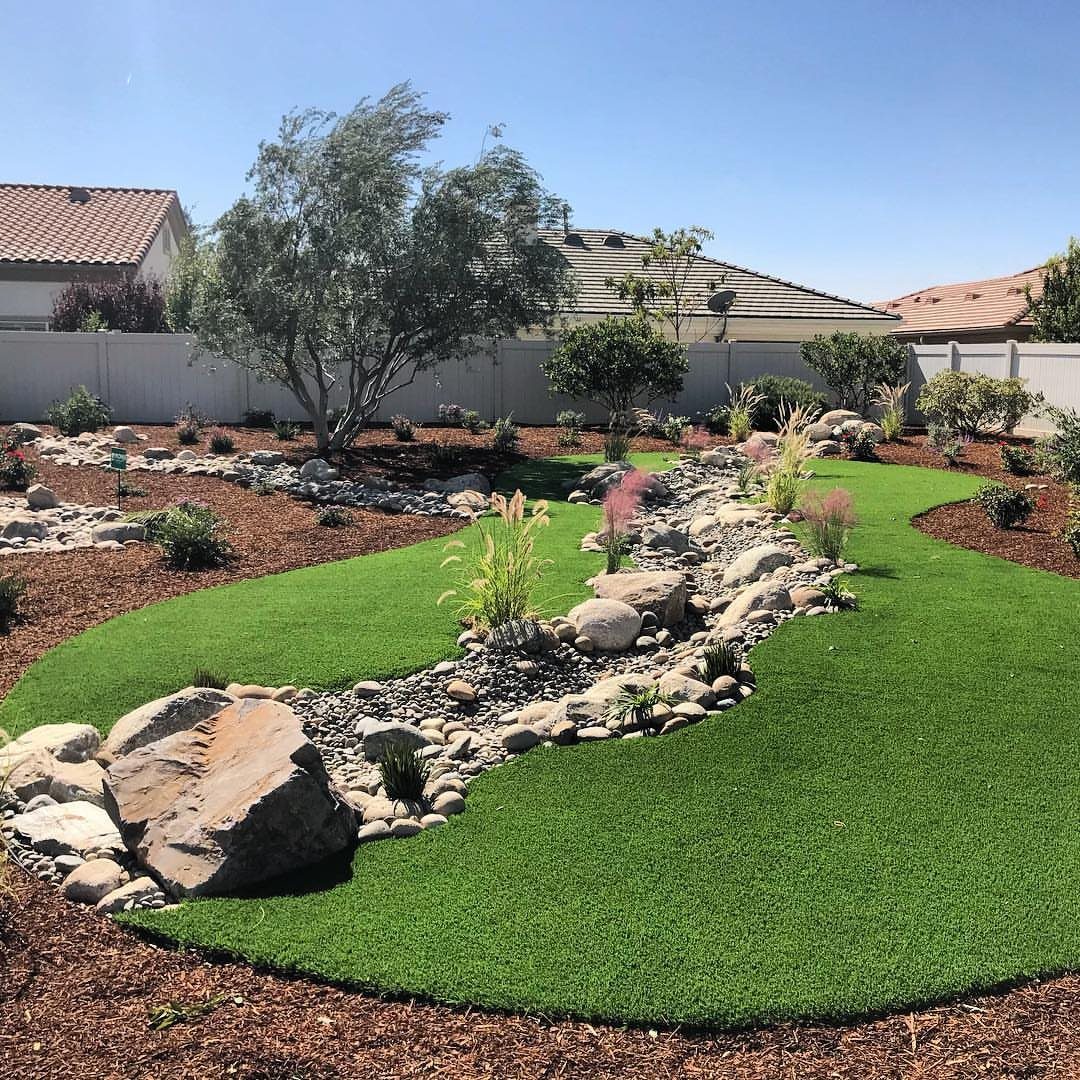
A dry creek bed is a shallow, winding trench filled with river rock that imitates a natural stream without the water. It handles runoff after heavy rain and gives flat yards a sense of movement.
Check your slope before digging; water still needs somewhere to go, and a creek bed that pools is a maintenance headache.
I would line the channel with landscape fabric to slow weeds, then layer larger stones along the edges with smaller pebbles in the center, the way a real stream sorts itself.

LARGE 2–3" ALABAMA SUNSET – Naturally rounded river stones approximately 2–3 inches in size featuring a beautiful blend of cream, tan, gold, brown, gray and other natural color variations.

RUBBER SOLE WATER SHOES: These shoes deliver steady footing when your child needs it. Whether they're navigating riverbeds or rocky beaches, the shoes have a gripping sole and a stretchy, breathable fit.

EXTRA LARGE 6–12 INCH RIVER ROCK – Natural Pigeon River stones approximately 6–12 inches with rounded and irregular shapes and attractive tan, cream, brown and gray earth tones.
2. Raised Rock Beds
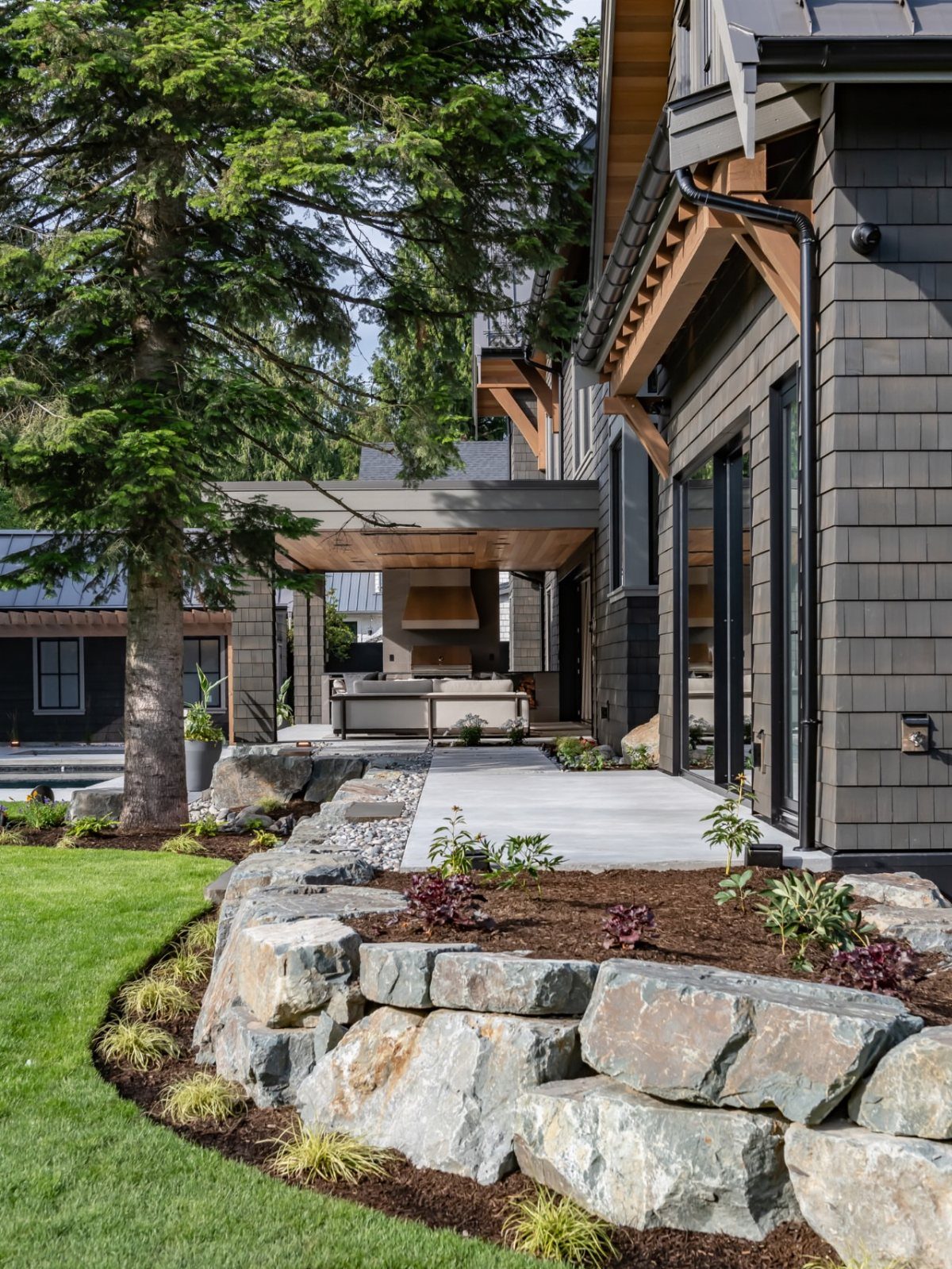
Raised beds built from stacked boulders warm the soil faster in spring and drain better than ground-level plantings, which matters for anyone with heavy clay. The thermal mass of stone also steadies soil temperature through sudden cold snaps.
These beds need a solid base; a boulder wall that shifts after the first freeze wastes the effort.
I would check that each course locks slightly backward into the slope, and I would budget for delivery, since stone this size is not a trunk-load project.
Dark mulch against grey rock reads as intentional rather than unfinished; it is a pairing I would repeat.

Landscaping rock and stone is the perfect addition to any landscape, garden, potted plants, and more! Improve the overall look of your project with natural stone - Safe to...
3. Waterfalls with Rocks
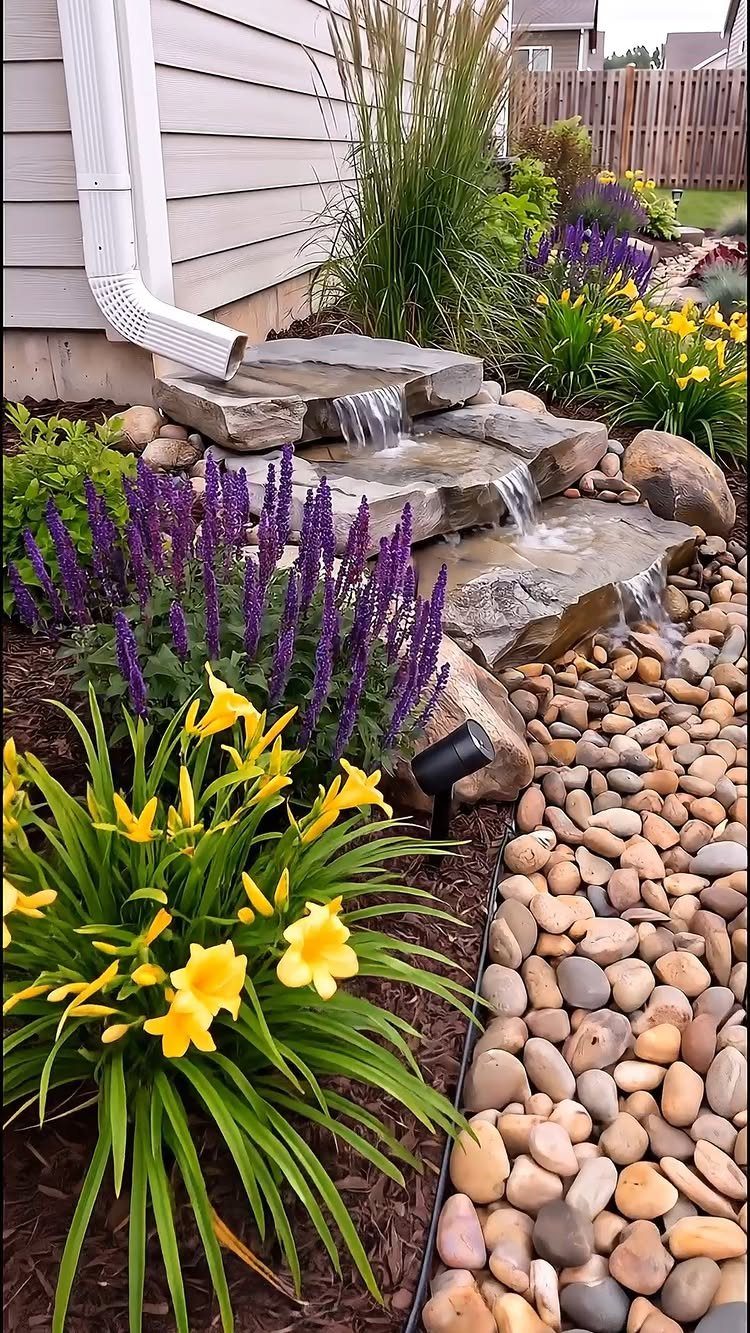
A rock waterfall turns a functional downspout into something worth looking at, with water sheeting over flat stone slabs before disappearing into a bed of river rock instead of eroding your foundation.
The critical detail is the pump or, in this case, the downspout feed; either way, the water must exit somewhere.
I would make sure the basin or drainage zone is sized for your heaviest rain, or the overflow will carve a new creek you did not plan.
Daylilies handle wet feet better than most perennials if the splash zone stays damp, though I would keep salvia higher on the bank where the soil drains faster.

Professional Grade Weed Barrier: LAVEVE weed barrier fabric is made of woven polypropylene material. Its high-density and permeable characteristics effectively stop weed growth and protect soil health so your plants can grow well.

【Exceptional Durability】: Winisok Weed Barrier Landscape Fabric is built to last. Constructed from tightly woven polypropylene, it boasts tear-resistant properties, ensuring more than 5 years of effective weed control for your garden.
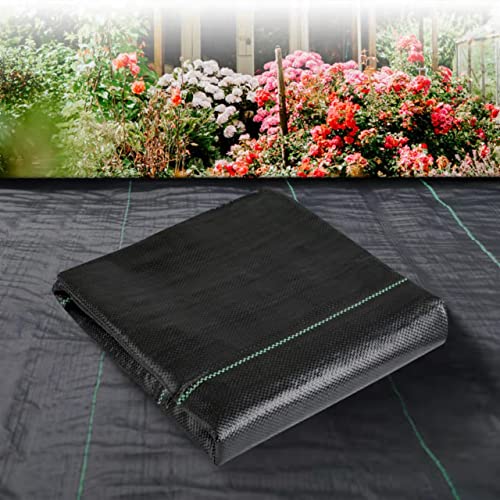
Premium Weed Barrier Fabric:Weed barrier landscape fabric is a type of geotextile fabric that is commonly used in landscaping and construction.With excellent weed control properties, providing a clean and tidy landscape.Very strong and durable,Pro landscape weed barrier will provide you with premium weed protection for a very long time.
4. Pebble Pathways
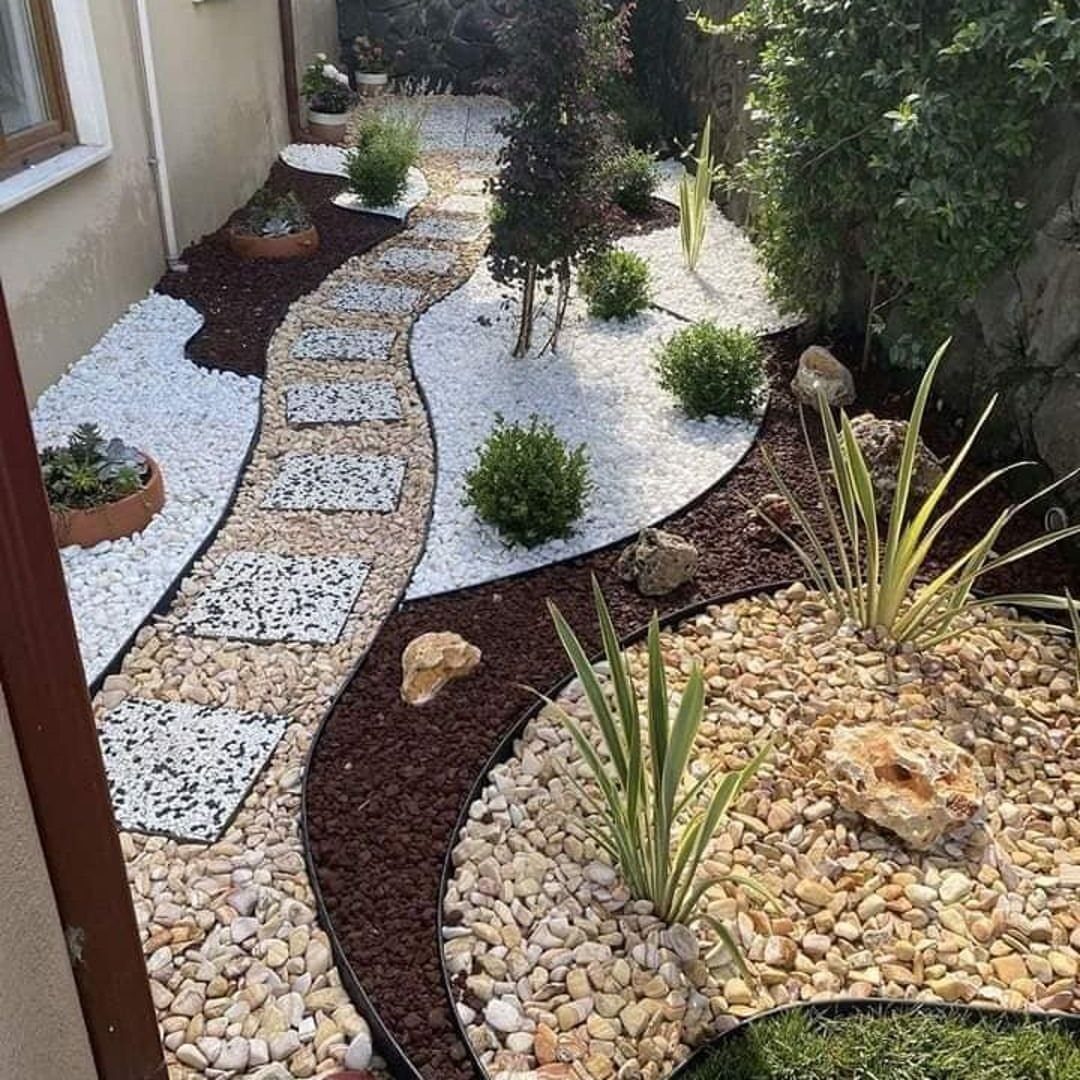
Pebble pathways give a softer line than poured concrete and drain immediately, which matters in shaded yards where pavers stay slick with moss. Pavers set as stepping stones with pebbles between cut the gravel cost and stabilize the walk.
I would edge with steel or stone to keep the pebbles from migrating into the beds; without a border, you will rake them back twice a season.
The white pebbles against dark mulch read as garden design rather than leftover material, though I would swap the white for tan in a yard with pine trees, since needles show fast on pale stone.
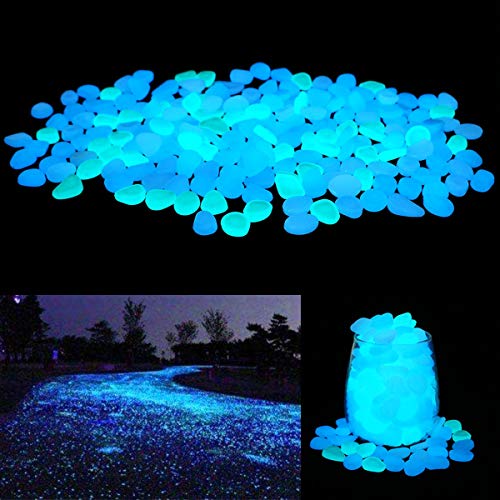
★Material★ - Photoluminescent pigment + resin. About 18×25×11mm each. 200PCS pack.

RUBBER STEPPING STONES: Elevate your outdoor space with these lightweight simulated flagstone rubber pavers that offer the timeless beauty of real stone without the heavy lifting.

GLOW IN THE DARK PEBBLES: These glowing rocks absorb and store energy from sunlight and other light sources,light up in dark environments. These glowing pebbles can glow for up to 1 to 2 hours in darkness after a full day in the sun.These glow stones are green in the day, but they are going to be Blue glow pebble rocks at night! Please radiate them with light again if they are not bright enough.
5. DIY Gravel Garden
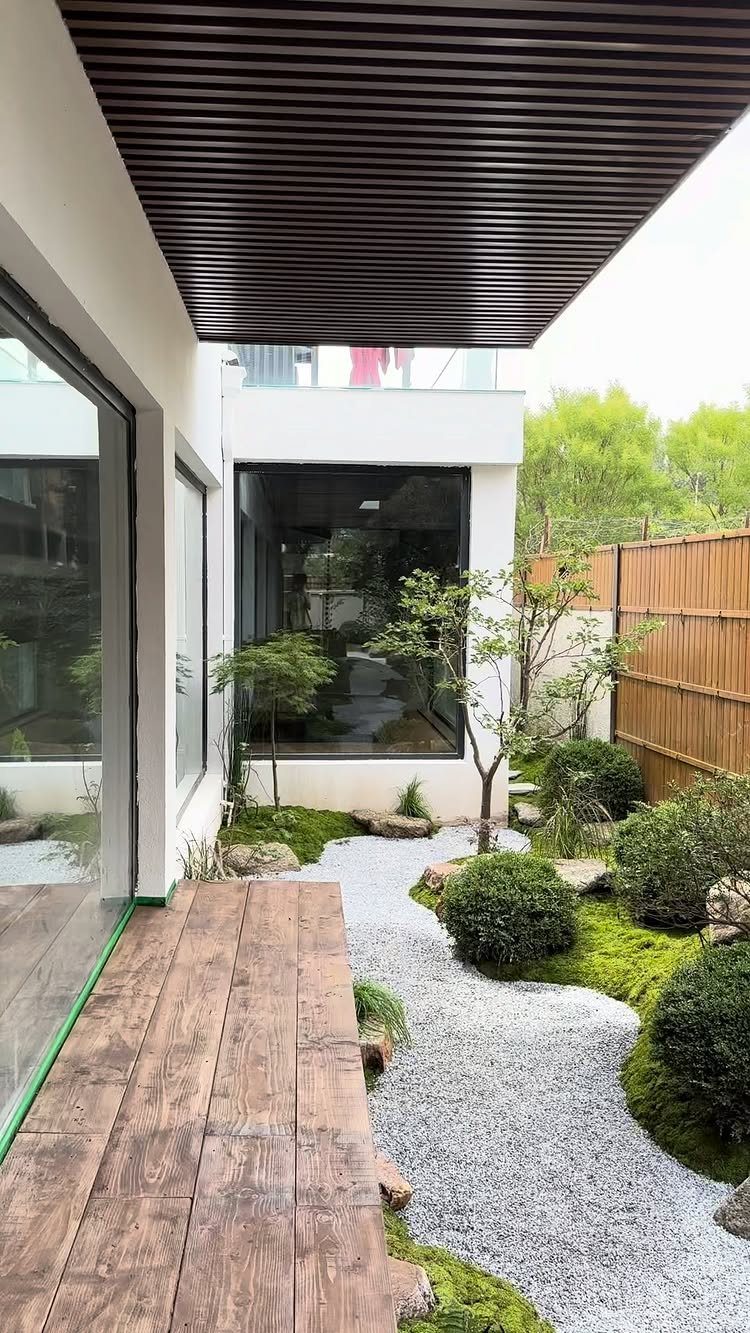
A gravel garden replaces lawn with compacted, free-draining ground cover, usually over a membrane that blocks weeds. Pale gravel brightens a narrow courtyard walled on both sides.
The raking and weeding do not disappear; they just change shape. I would budget an hour every few weeks to skim debris and turn the surface, or it packs and looks tired.
Moss mounds need shade and some moisture, so this exact look is limited to yards that are not baking all afternoon. In full sun, I would swap the moss for low sedum and keep the same layout.

NATURAL 2–4 INCH RIVER ROCK – Smokey Mountain river stones approximately 2–4 inches with rounded and irregular shapes and warm tan, brown, cream and varied earth tones.

RUBBER SOLE WATER SHOES: These shoes deliver steady footing when your child needs it. Whether they're navigating riverbeds or rocky beaches, the shoes have a gripping sole and a stretchy, breathable fit.

LARGE 2–3 INCH RIVER ROCK – Naturally rounded stones approximately 2–3 inches in size featuring an attractive blend of brown, tan, cream, gray and other natural earth-tone variations.
6. Zen Garden
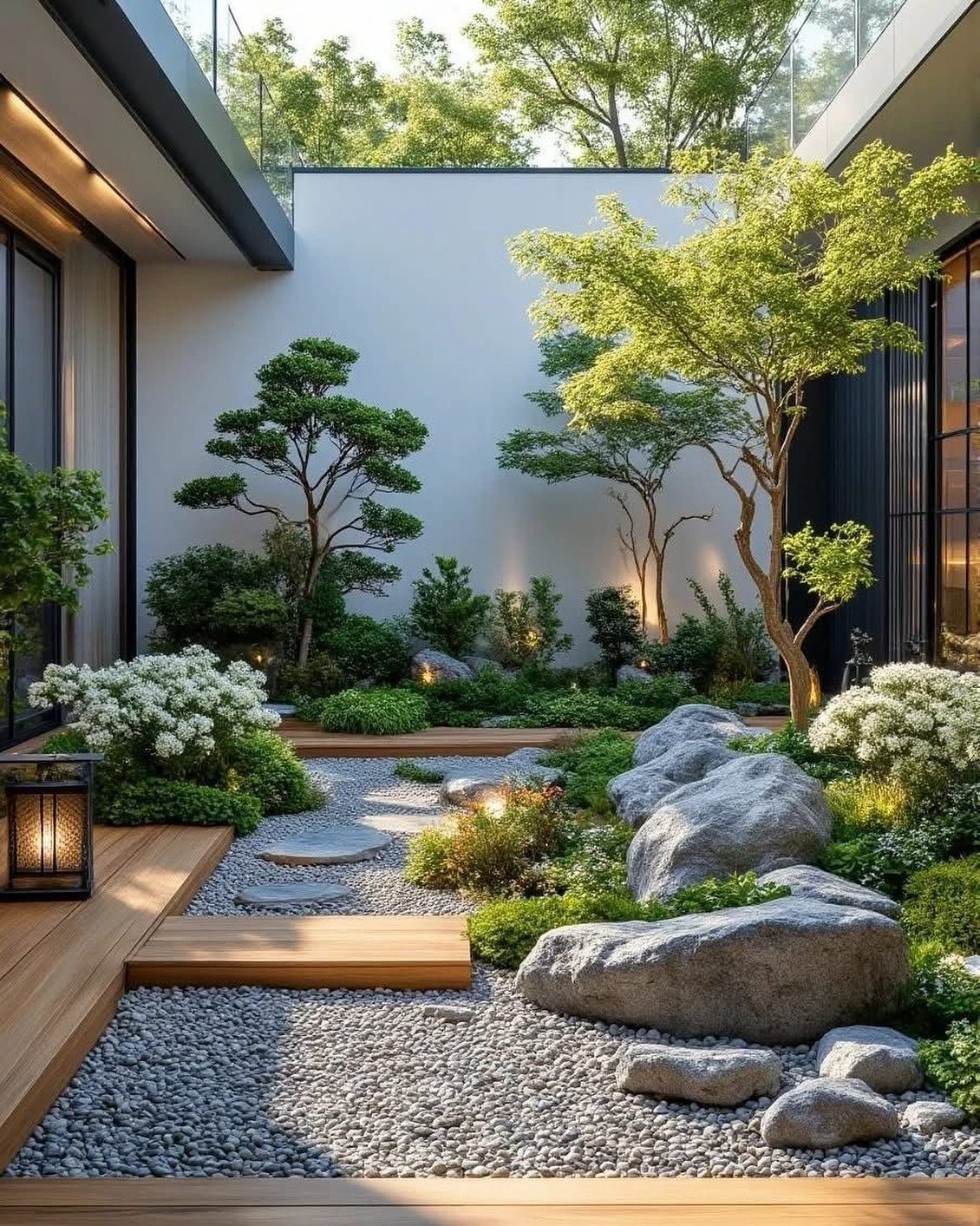
A Zen garden strips planting down to gravel, stone, and clipped structure, with raked patterns standing in for water. Large boulders as fixed points with gravel as the surrounding plane read as calm because nothing competes.
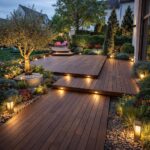
The raking is real maintenance, not performance; expect to refresh the pattern after wind or rain. Wooden decking at the edge gives a place to stand and look without walking the pattern flat.
7. Terraced Slope
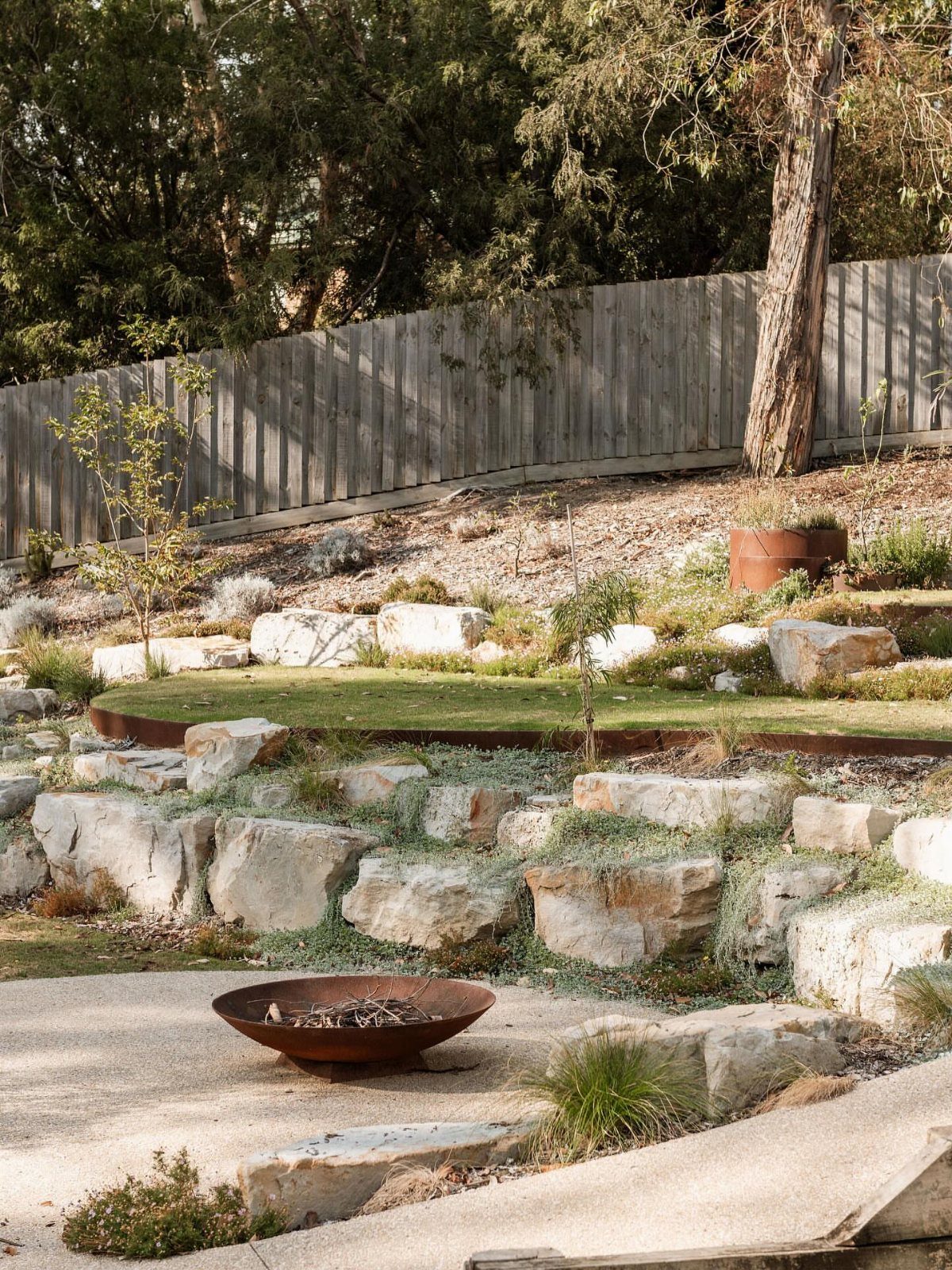
A terraced slope turns a steep yard into flat, usable levels held back by stone retaining walls.
Each tier gains enough depth for planting or a landing, and the stone warms and drains soil the way it does in raised beds.
Steel edging on the grass tier keeps the lawn from creeping into the stone, a detail I would not skip.
Drainage behind each wall matters more than the face stone you choose; without it, hydrostatic pressure pushes the wall outward over a winter or two.

【Professional High-Quality Weed Barrier Fabric】 Our weed barrier fabric is meticulously crafted from 3.2oz heavy-duty professional polypropylene, boasting exceptional tensile strength and tear resistance. It can handle extreme weather conditions such as scorching heat and freezing cold with ease, as well as withstand wear and tear in various complex scenarios, maintaining a stable performance over an extended period.

HEAVY DUTY WEED BARRIER FABRIC: True 5 oz dual layer landscape fabric; a woven polypropylene layer for strength plus a needle punched layer to help filter and retain water

Heavy Duty Weed Barrier Fabric: Crafted from 3.2OZ high-density, tear and corrosion resistant polypropylene, VEVOR 6 x 100FT woven weed barrier landscape fabric is the preferred choice for agriculture and industry. It ensures superior weed prevention and promotes soil health, keeping your landscaping remain weed-free for an extended period.
8. LED Lights Among Rocks
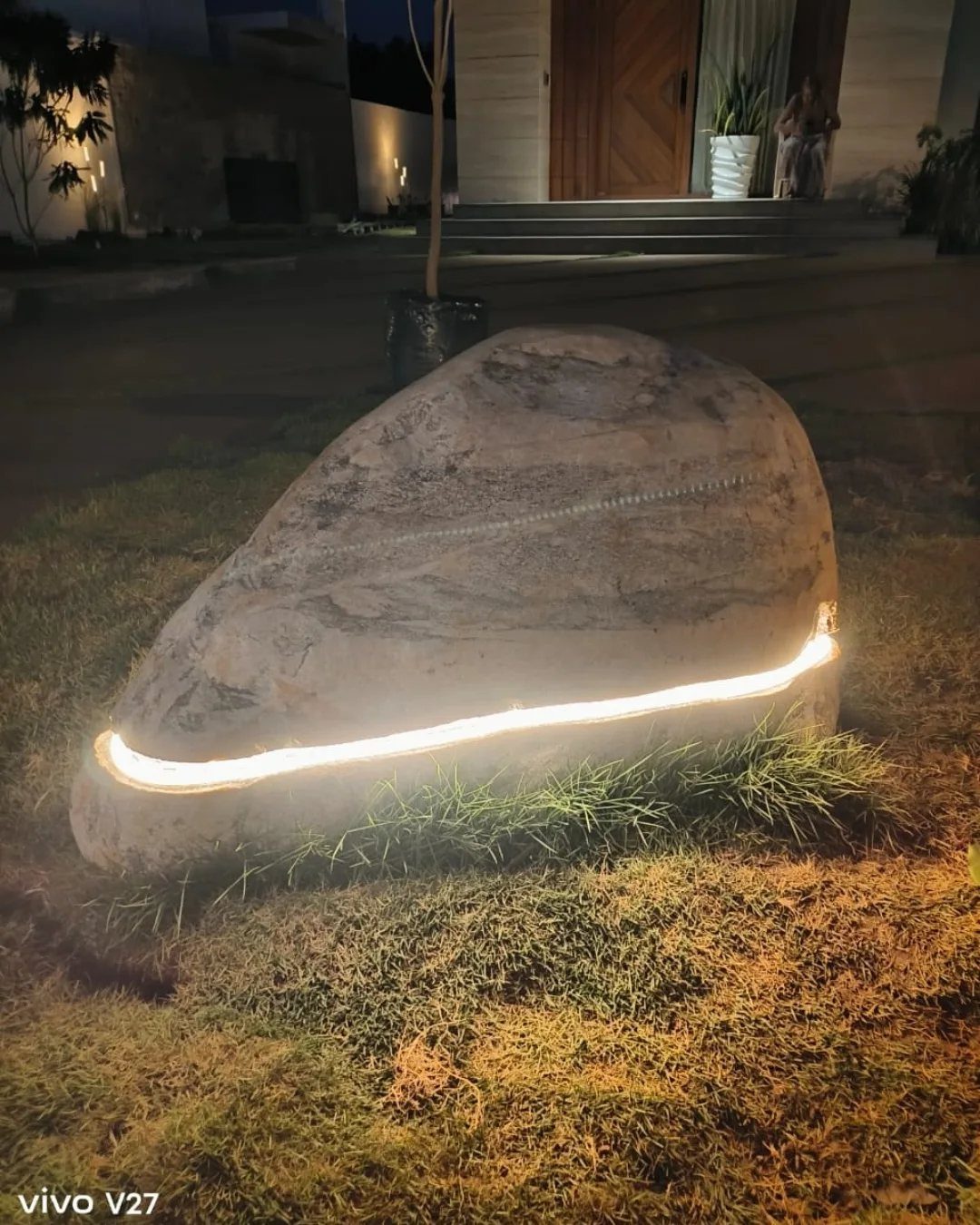
LED lights set into rock turn a daylight feature into something that holds attention after dark. The strip sits in a channel cut horizontally through the boulder, so the stone itself glows rather than the ground around it.
This needs planning before the boulder is placed, since cutting and wiring a 2-ton stone in place is not practical.
I would spec low-voltage LED, 12V, and a transformer rated for outdoor load; the wiring runs in conduit buried below frost line.
The glow is subtle, not floodlighting, so position it where someone approaches rather than where they sit, or the light competes with conversation.

【Natural River Stone】Our stepping stones, made from river rocks, are naturally stunning. Each stone, crafted from genuine river stones, retains its natural texture to highlight its intrinsic beauty. With their unique natural colors, they can create an eye-catching garden path for your patio.
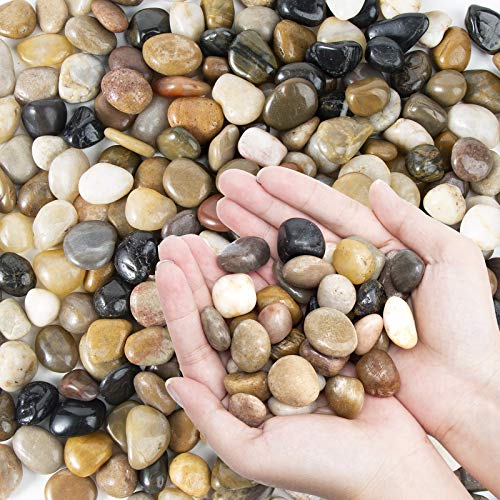
Natural Stones: This river rocks are natural lightly polished for smooth effect, comes in a variety of natural colors, Resists fading for long-lasting beauty. The color of this river rock is natural so it may include a variety of different shades of browns, whites and black rocks. (rocks are natural and as a result some may be broken or out of shape, oval or round, thick or thin.

Colorful Glow-in-the-Dark Garden Stones: Includes luminous large and small. Use as glowing garden stones, stepping stone fillers, rock gardens, or decorative gravel. Perfect for creating magical pathways, garden borders, and enhancing nighttime safety and beauty
9. Natural Stone Steps
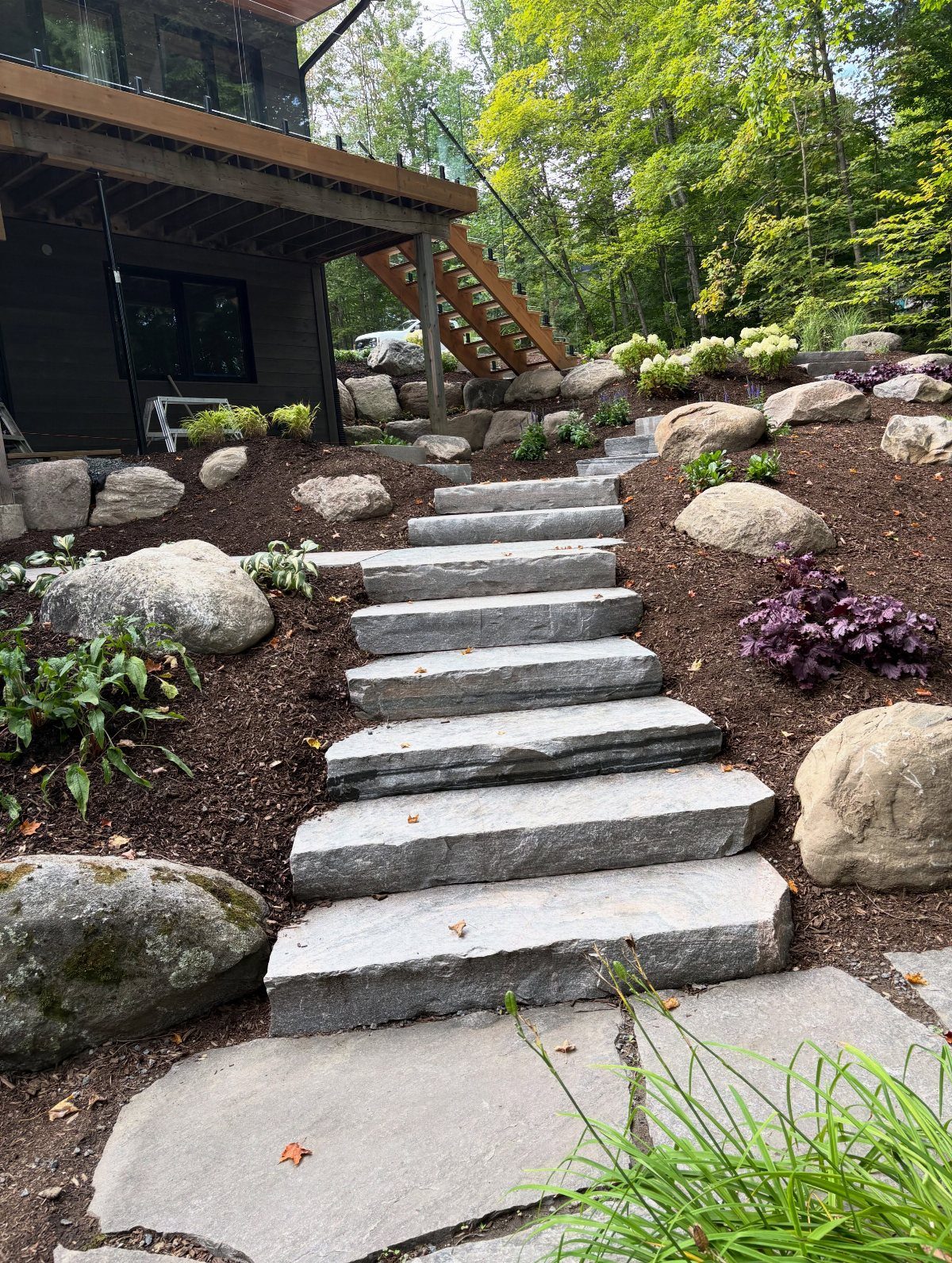
Natural stone steps are thick slabs set into a slope, each one a landing and a tread together. They read as found rather than built, which suits yards that slope up to a deck or a second entrance.
The slabs need to sit on compacted gravel, not soil, or they shift and wobble within a season.
Dark mulch against grey stone is the pairing I would keep from raised beds; it unifies the planting zone with the stair zone.
LARGE 2–3 INCH RIVER ROCK – Naturally rounded stones approximately 2–3 inches in size featuring an attractive blend of brown, tan, cream, gray and other natural earth-tone variations.

1.5 INCH RIVER ROCK – Natural South Fork river stones approximately 1.5 inches with rounded and irregular shapes and an attractive blend of brown, tan, gray and natural earth tones.
LARGE 2–3 INCH RIVER ROCK – Naturally rounded stones approximately 2–3 inches in size featuring an attractive blend of brown, tan, cream, gray and other natural earth-tone variations.
10. Rocks Next to Your Sidewalk
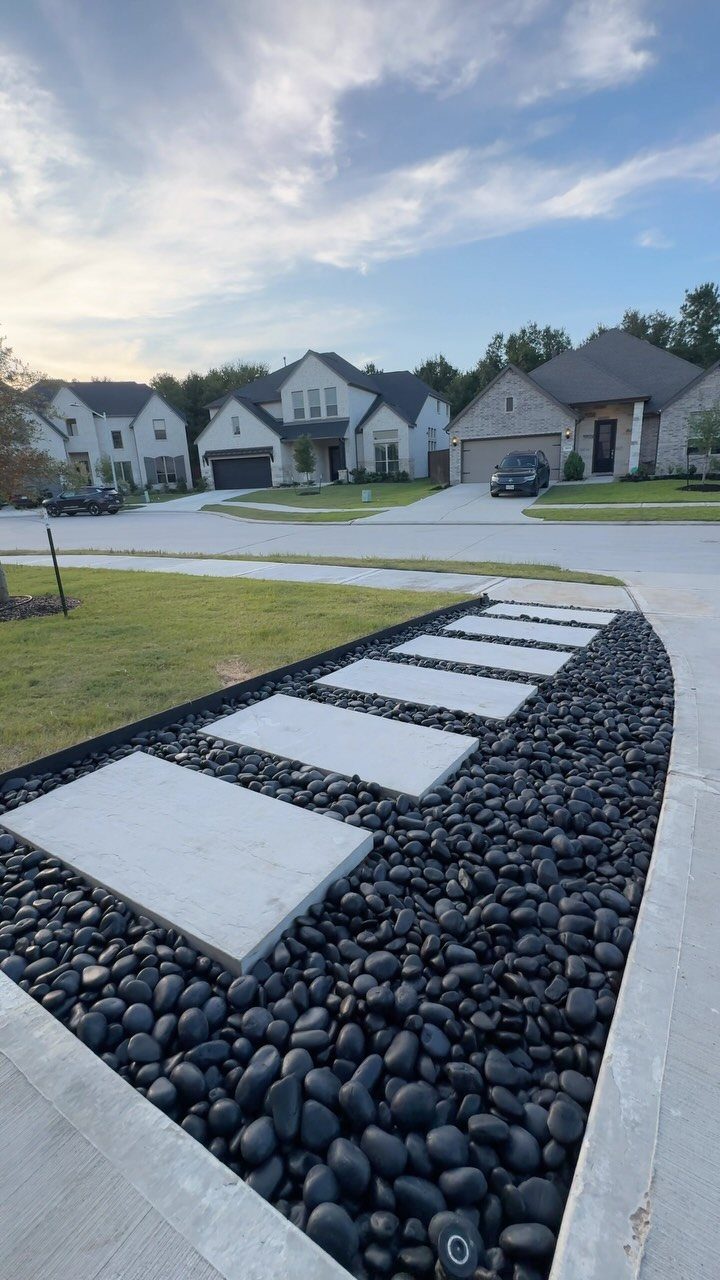
Rock beside a sidewalk replaces a thin, struggling grass strip with something that never needs mowing.
Black river rock against pale concrete gives clean geometry that reads as deliberate from the street, exactly the curb appeal this awkward zone usually lacks.
I would lay landscape fabric underneath, pinned at edges, or dandelions root in the gravel within a year.
The rock depth should stay below the sidewalk lip so it does not spill onto concrete; enough to read full without becoming a trip hazard. In fall, a leaf blower clears debris faster than raking would from grass.
11. Clean Border Contrast
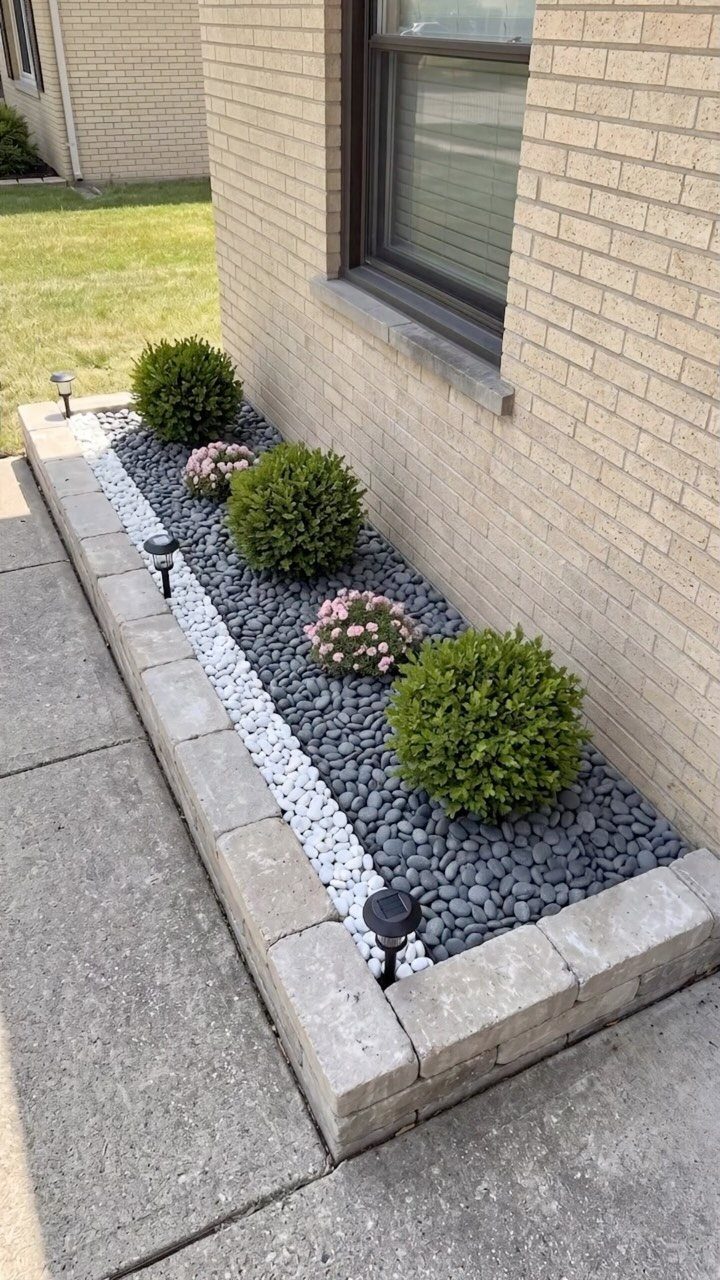
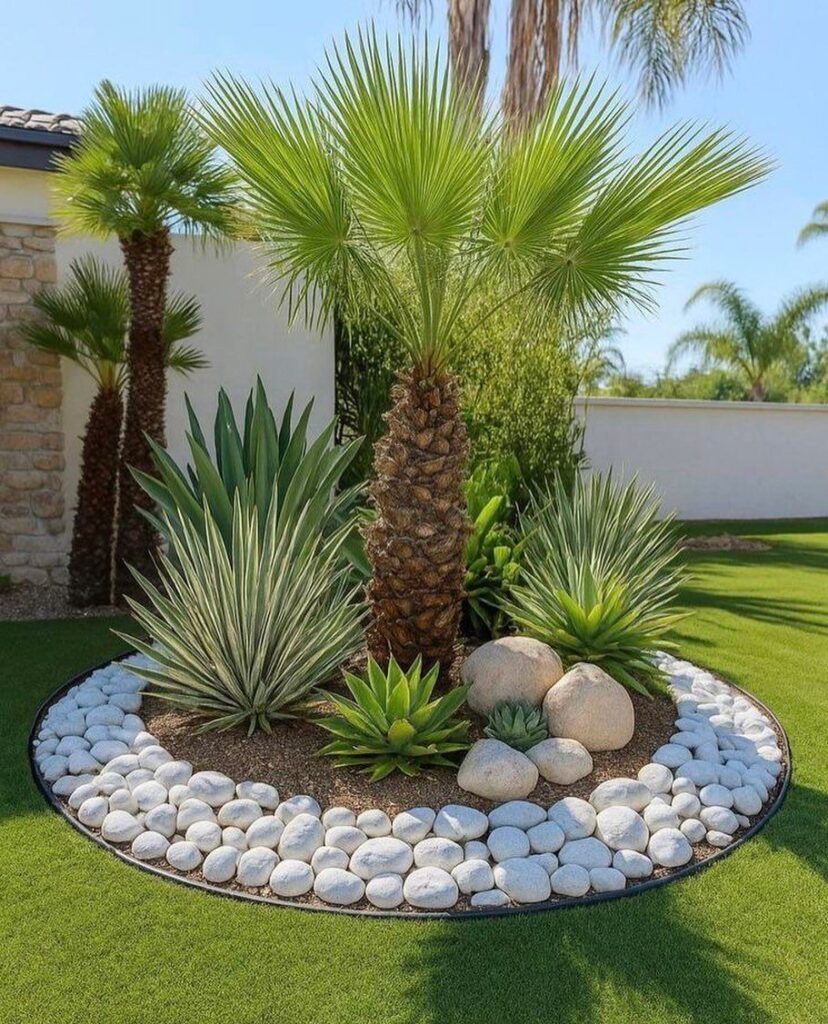
A clean border contrast uses two tones of pebble, one dark and one light, to mark where bed meets plant or where paths divide.
The white stone rings each shrub like a drawn line, making the bed readable from across the yard.
This needs replenishing; pale stone fades and both tones sink into soil over a season. I would refresh the top half-inch annually, not wait until the contrast is lost.
Solar lights sit better in pale stone, since dark gravel swallows their output; the placement here gets that right. Brick as the outer wall gives a warm counter to the cool grey, a pairing I would repeat.
12. Meadow-Style Rock Flow
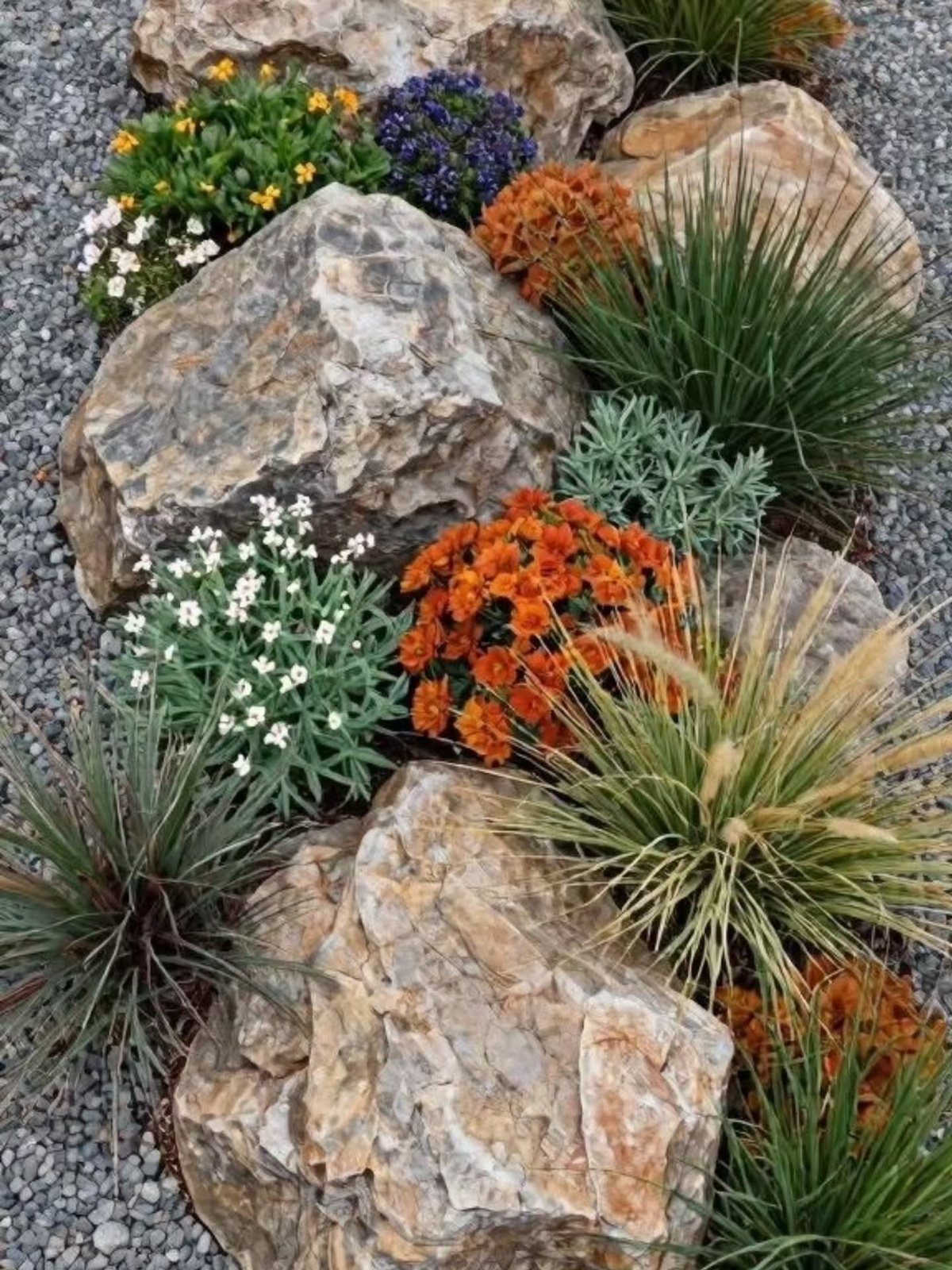
Meadow-style rock flow scatters boulders through gravel as if a glacier left them, with plants seeded between in drifts of color and grass. The look is high-altitude and loose, not arranged, which suits anyone tired of manicured beds.
The gravel must be compacted hard enough to walk on but open enough for roots; crushed stone with angular edges, not rounded pea gravel, is what I would order.
Plants need to self-seed or spread, since individual specimens look spotty at this scale.
I would start with plugs, not seeds, in a few big sweeps, and let them fill the gaps over 2 seasons rather than planting every inch at once.
13. Rock Garden
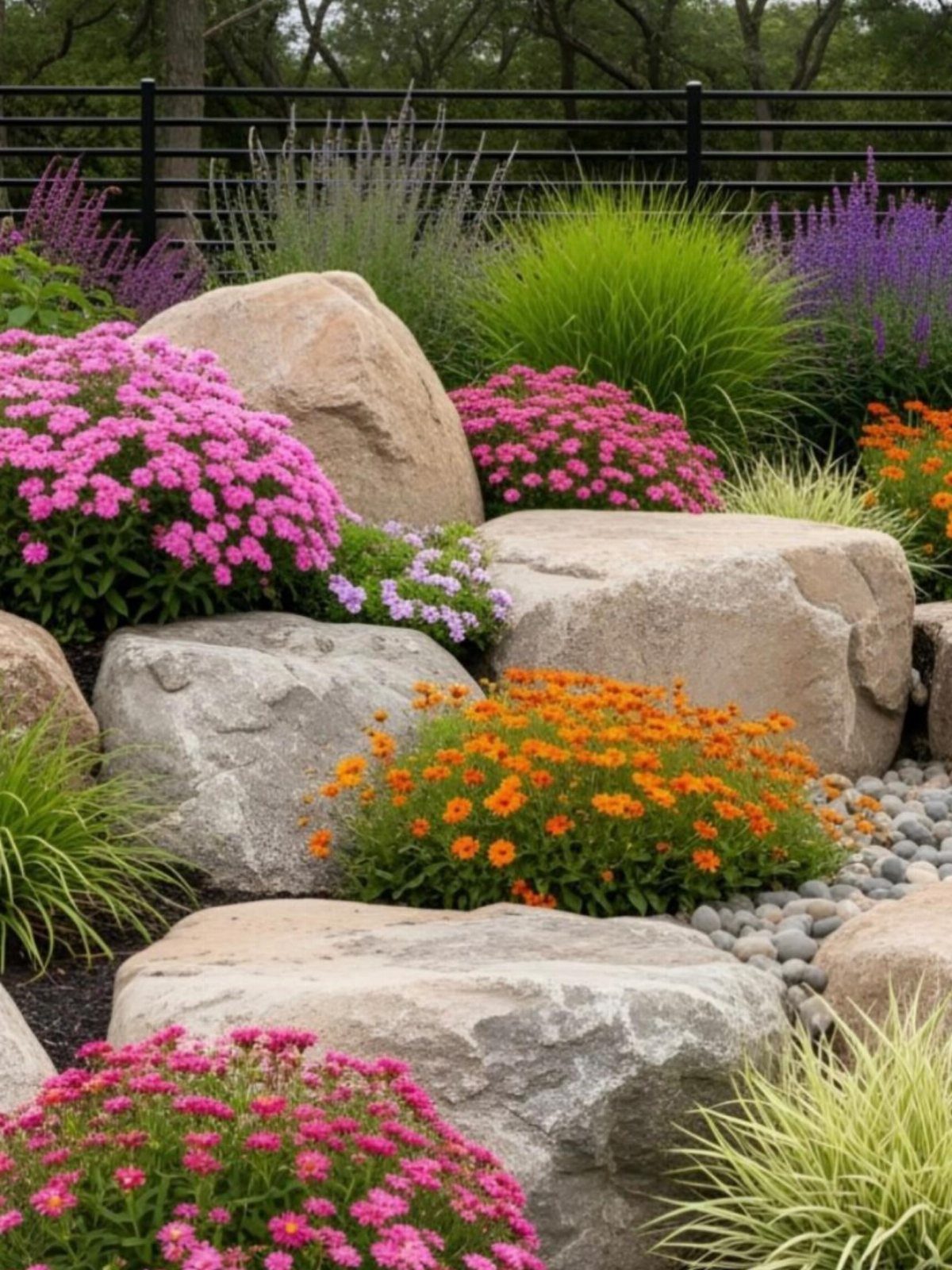
A rock garden layers stone tiers so boulders sit among flowering perennials and grasses as the structure itself. Water drains fast between stones, which suits anyone fighting boggy clay or wanting beds that demand less than annual replanting.
I would set the largest boulder first and build soil levels around it, not try to muscle it into finished grade.
The black fence behind this one makes the colors read; a pale house would need darker stone to keep the same contrast. River pebbles at the base catch runoff before it carries soil onto a patio.
14. Colorful Pebbles and Succulents
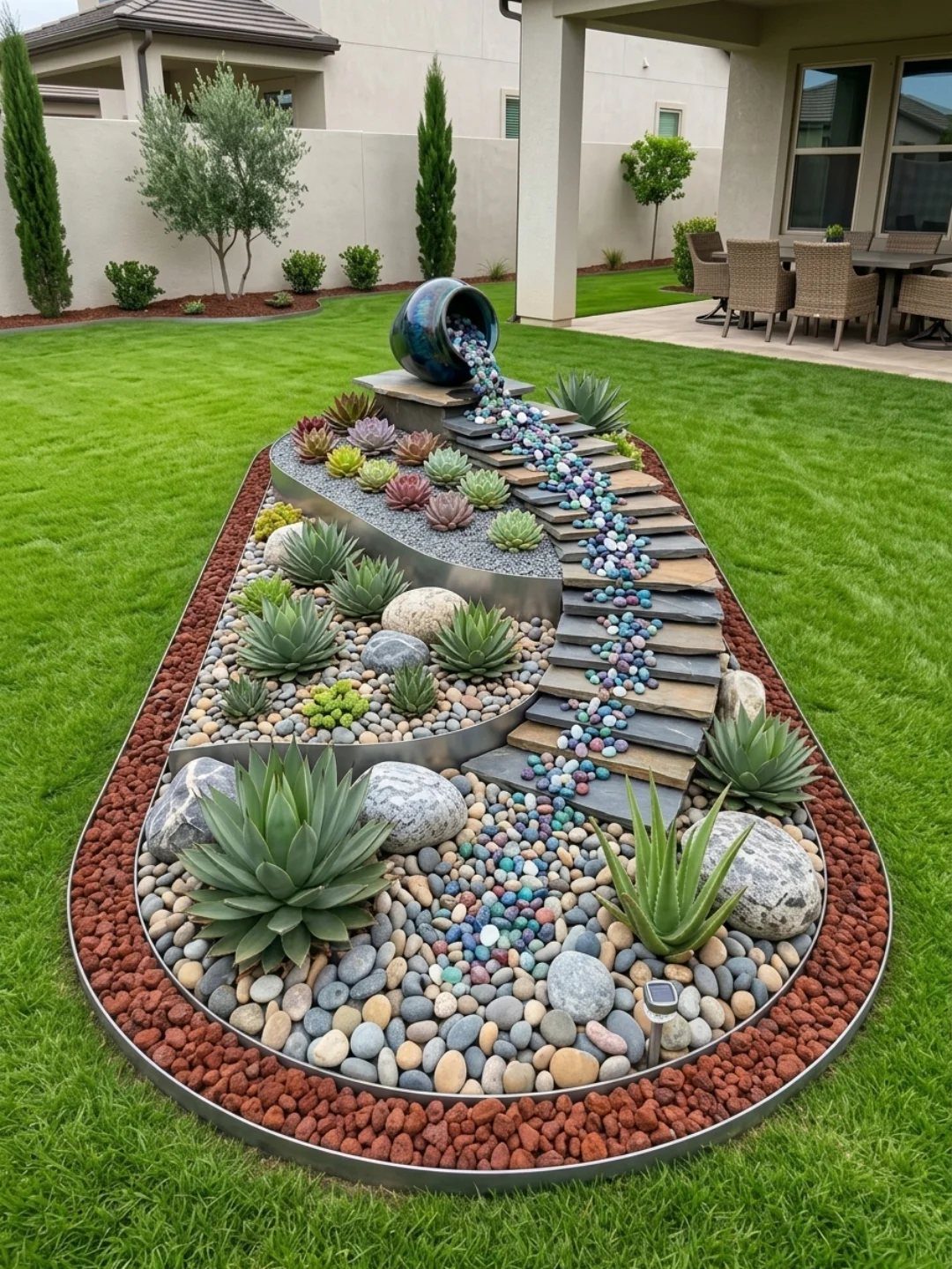
Colorful pebbles and succulents turn a raised bed into something that reads as dry creek or desert wash, with smooth stone in streams between fleshy plants that need almost no water.
The ceramic jug tipped to pour pebbles is theatrical in the right way; it gives the eye a place to rest.
Red lava rock as the outer border is smart: it costs less than dyed pebble, weighs enough to stay put, and the rough texture against smooth ceramic works.
I would not plant succulents straight into clay; a 50/50 grit and soil mix is non-negotiable or they rot in the first wet month.
Stone steps let you work the bed without compacting the root zone, a detail worth copying even on flat ground.
15. Gabion Walls
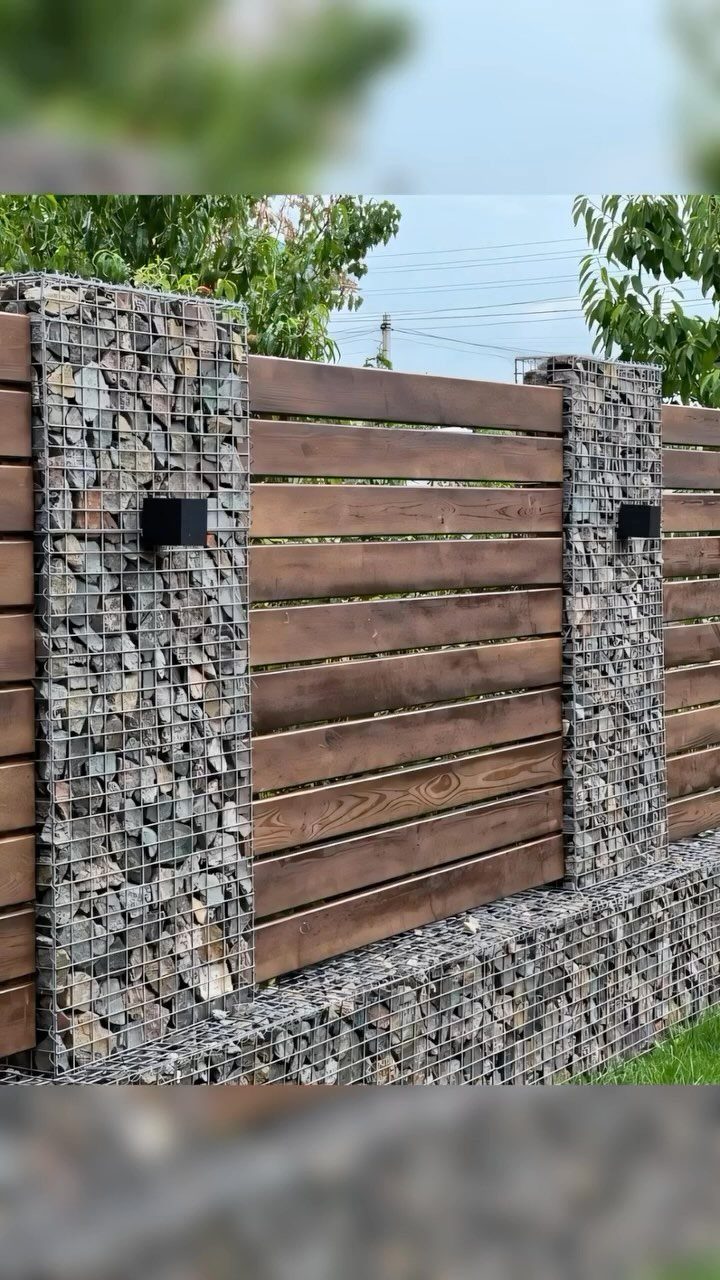
Gabion walls fill welded wire cages with loose stone to make retaining walls, fence pillars, or low bases that drain perfectly and settle without cracking.
The wire takes the structural load, so the stone inside can be local, irregular, and cheap.
I would set each cage level and fill in lifts, not dump; the stone locks better and the face stays flat.
The dark wood slats between cages warm the industrial mesh, though I would stain or seal the wood since wet stone splashes accelerate rot.
Exterior lights mounted on the cages need stainless hardware; standard screws rust where the wire meets the stone.
Benefits of Rock Landscaping
Rock landscaping earns its place in a yard by solving problems that grass and mulch keep creating.
Once the fabric is in and the stone is down, the maintenance shifts from mowing, fertilizing, and fighting root rot to occasional raking and skimming leaves.
That difference matters most on slopes where grass struggles to hold soil against runoff, or in narrow strips beside a sidewalk where a mower will not fit.
The water savings come from what you stop planting, not from the rock itself: replace lawn with gravel or succulents and you cut the irrigation that turf demands in a dry summer.
The erosion control is direct; anchored stone interrupts water velocity across a slope and gives sediment a place to settle before it reaches the street.
Perfect for any climate or environment, using rocks in your front yard’s landscaping can help add structure to the scene. In areas prone to flooding or puddles, rocks act as a protective retaining wall, protecting your home and its foundation.
Choosing the Right Rocks
Start with scale and let the largest pieces decide the rest. Sketch before you lift anything; a pencil line costs nothing and a 2-ton stone moved twice costs plenty.
Sun matters because rock absorbs and radiates heat.
Full-sun beds need plants that handle that extra warmth, sedums and grasses rather than hostas. In shade you have more choice, but the stone still needs to suit what grows there.
Pair textures deliberately. I like pairing a smooth river rock against a rough, angular boulder; the contrast makes each texture readable.
Fine pea gravel next to chunky lava rock does the same at smaller scale. The piece that fails is the one that ignores what is already built.
Installation Tips
Landscape fabric underneath any rock layer is not optional in my view.
Without it, dandelions and grasses root in the gravel within a year, and pulling them disturbs the whole bed. Pin the fabric at the edges and overlap the seams so nothing sneaks through.
Layer sizes for stability, not just looks. Larger stone at the base or edge locks against shifting; smaller pebbles in the center or on top settle without leaving voids that trip a foot.
Any weeds that still break through, I pull by hand after rain when the soil gives and the root slides out clean.
Dense ground cover like creeping phlox or sedum crowds out what you miss. Refresh the top half-inch of gravel annually in early spring; faded or sunken stone looks tired faster than it actually is.
Frequently Asked Questions
How to make a rock garden look nice?
One oversized boulder set deep into the slope gives the eye somewhere to land first; everything else arranges itself outward from there.
I like pairing a water-worn river stone against something sharp and quarried, so each texture reads clearly without either one disappearing.
Plant drought-tolerant perennials such as sedums and ornamental grasses, spacing them so they can spread and fill gaps over a season or two rather than looking spotty.
What is the cheapest rock to buy for landscaping?
Pea gravel is the most economical choice for covering large areas, with river rock sitting at medium cost for paths and ground cover.
Lava rock also runs medium cost but weighs less than traditional stone, which saves on delivery and handling. Boulders carry the highest price tag, though their visual impact often justifies the expense for focal points.
How do you keep landscaping rocks in place?
Edge every rock bed with steel or stone to stop pebbles from migrating into planting areas or onto lawn.
Landscape fabric pinned tight at the edges and lapped 6 inches at every seam stops weeds from pushing up between the stones.
What plants can grow on rocks without soil?
Succulents and alpine plants are the standard choices, though even these need some growing medium to establish. Succulents in a raised bed need at least half grit in the mix; straight clay holds water until the roots turn to mush.
After a season of settling in, sedums and hens-and-chicks draw on their own stored water and barely need a hose except in drought.
What is a rock garden?
A rock garden is a landscape built around stone as the structure itself, with boulders set among drought-tolerant perennials and grasses that handle fast drainage.
Stacked stone builds layers that read as depth from the street, and once it is in, you are not out there mulching every April.