These ideas run from free stump tables and upcycled pallets to pavers and solar stakes, and the one that fits your space depends on whether you need a level surface for dining or just a place to sit outside.
Slope, sun exposure, and drainage matter before picking any of them; those 3 factors rule out moss between flagstones in full sun just as clearly as they rule out artificial turf under a grill.
[link-whisper-related-posts]1. Wall-Mounted Planters
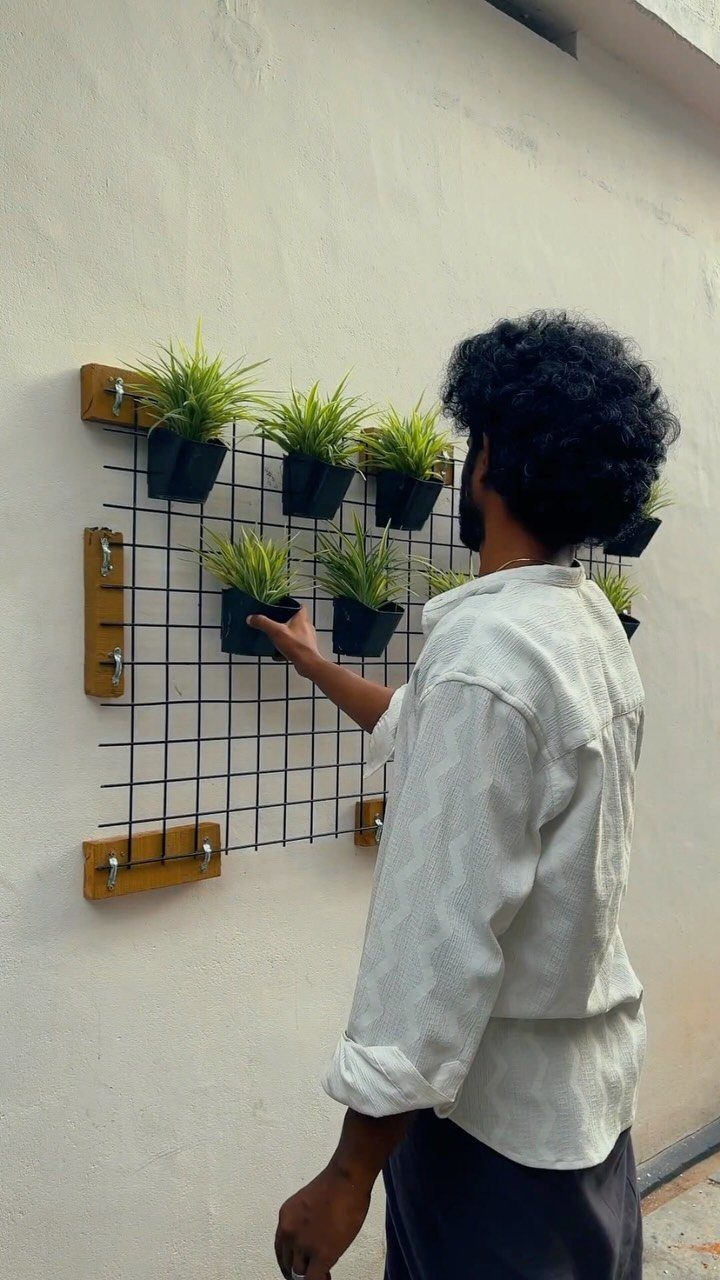
A wire grid mounted on wooden blocks turns any fence or wall into vertical growing space without eating into your floor plan.
I would check the bracket spacing against your pot sizes before buying anything; tight spacing leaves no room for roots to fill out, and a grid built for small pots will not hold larger ones without reworking.
Black wire and black pots read as one unit, which I prefer to mixed colors that fight each other.

VERSATILE PLANT DISPLAY: Elevate your living space with this adaptable wall-mounted pot organizer, ideal for showcasing small wall planters for indoor plants or outdoor flowers. Arrange the 6 individual pots and hooks to suit your decor and plant needs, creating a dynamic and personalized display.

Pack of 2 semi circular wall hanging planters. Rustic Indoor and outdoor decoration.
2. DIY Brick Paver Patio
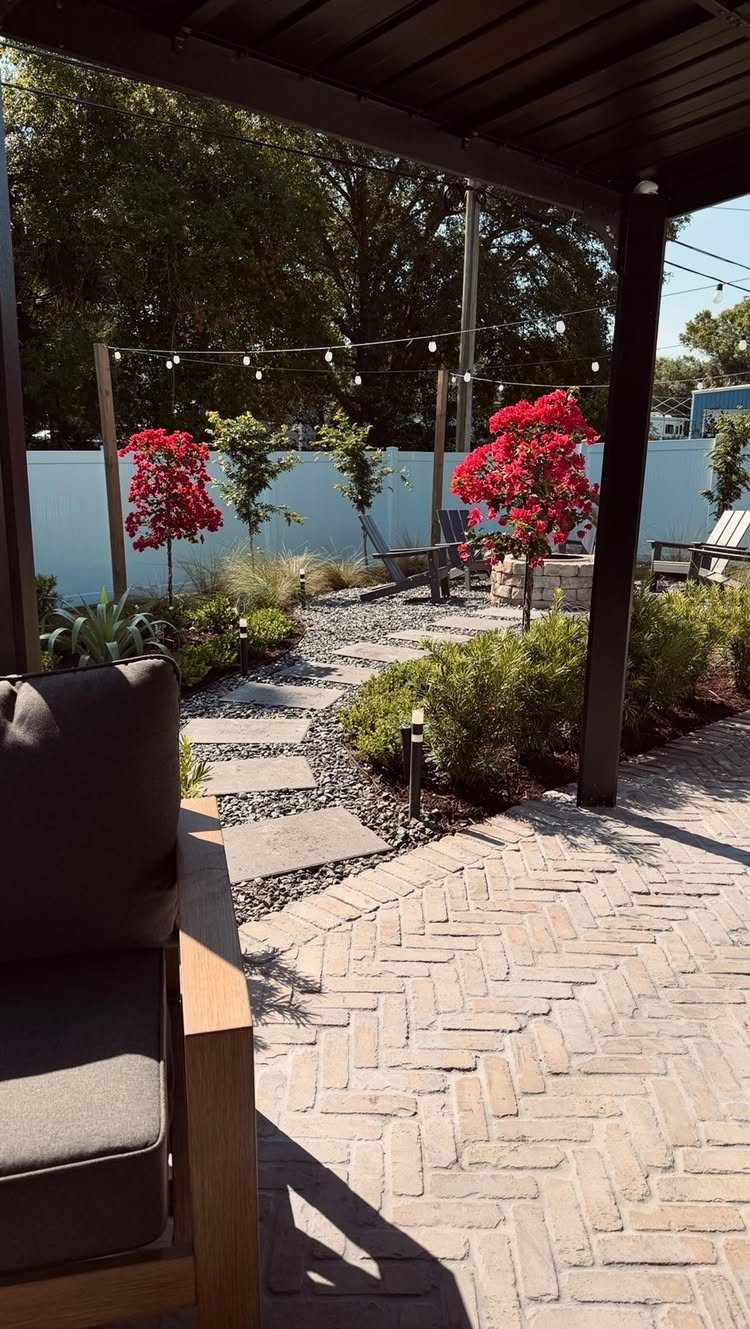
Herringbone brick gives a patio the look of old courtyards at the cost of standard running bond pavers, since the material is the same and only the labor changes.
The pattern needs a solid sand base and edge restraints; without them, those diagonal joints walk apart in 2 seasons.
I would lay this only where I had time to cut half-bricks clean along the borders, because a sloppy perimeter ruins the whole effect.
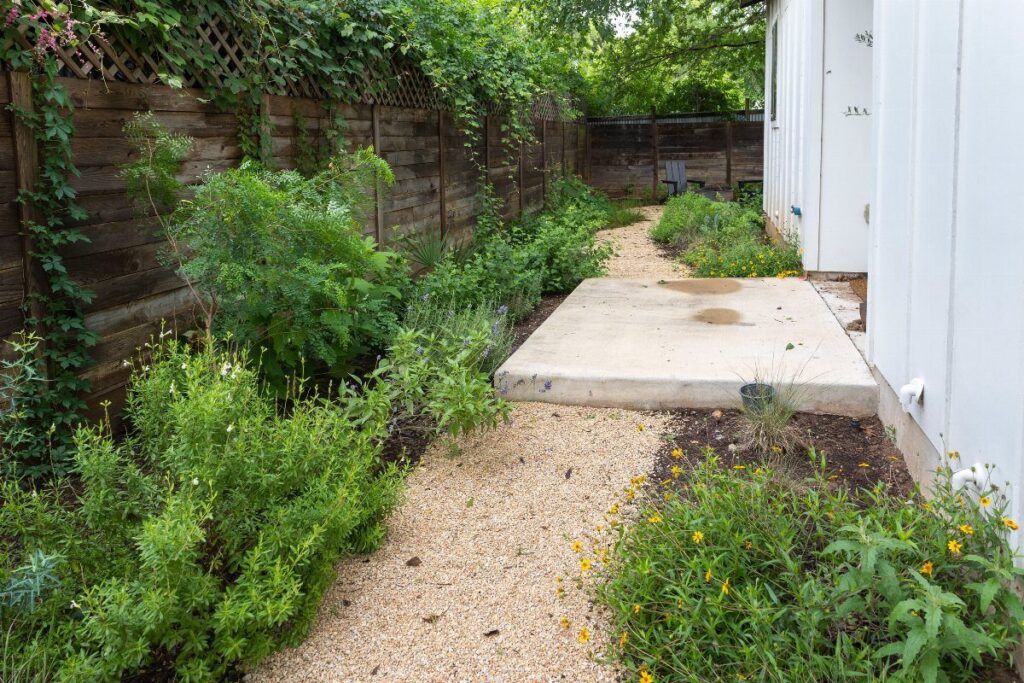
A gravel path alongside handles drainage and saves you from pouring more brick than your budget allows.

CONCENTRATED FORMULA: BrickTastic Is Shipped As A Powerful Concentrate. Use Straight For Heavy-Duty Cleaning Or Oil Stain Removal. Dilute With Water For Routine Cleaning. One Gallon Makes Up To 20 Gallons Of Cleaning Solution.
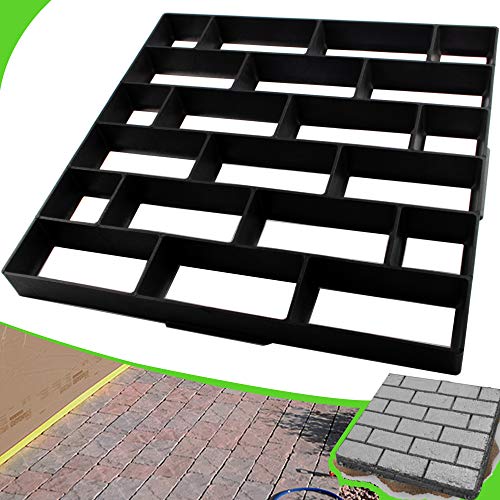
🌴【Oversized Paver】19.7"x19.7"x1.7" in size, The concrete mold can make staggered brick paths,patio ,Yard and Lawn.

3. Gravel Sitting Areas
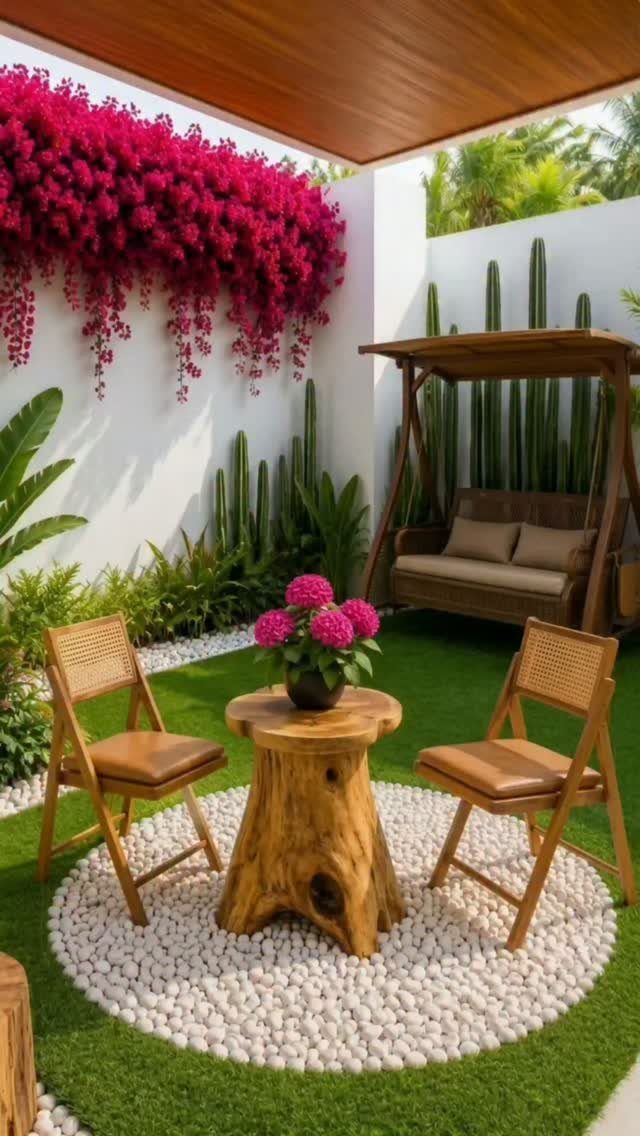
White river stone around a stump table and 2 chairs carves out a sitting spot without pouring concrete or laying pavers.
The gravel needs edging to stay put; I would use steel strip or a buried row of brick, nothing fancy, just enough to keep the stones from scattering into the lawn.
A tree-stump table costs nothing if you have a fallen trunk and a chainsaw, or next to nothing at most farm stands.
I like this best for areas where you want to sit but do not need a level surface for a dining table.

【Natural Decorative Stones】 VIREKM Outdoor/indoor Decorative Stones are natural lightly polished for smooth effect, comes in a variety of natural colors,Resists fading for long-lasting beauty. The color of this Outdoor/indoor Decorative Stones is natural so it may include a variety of different shades of browns, whites and black rocks.

🌑【SIZE & PARAMETERS】Weight:7pounds. Rocks range in length approx from0.5" to 0.7", Quantity: 980pcs, Laying Area: 1.5-2.2square feet, Volume: 0.6 gallons.(Quantity, area and volume are all Reference Data)

【Note】This stone is natural and has not been waxed. The surface of the stone has its own white powder. After receiving it, please clean it with water. The white powder will decrease but will not completely disappear
4. Hang String Lights
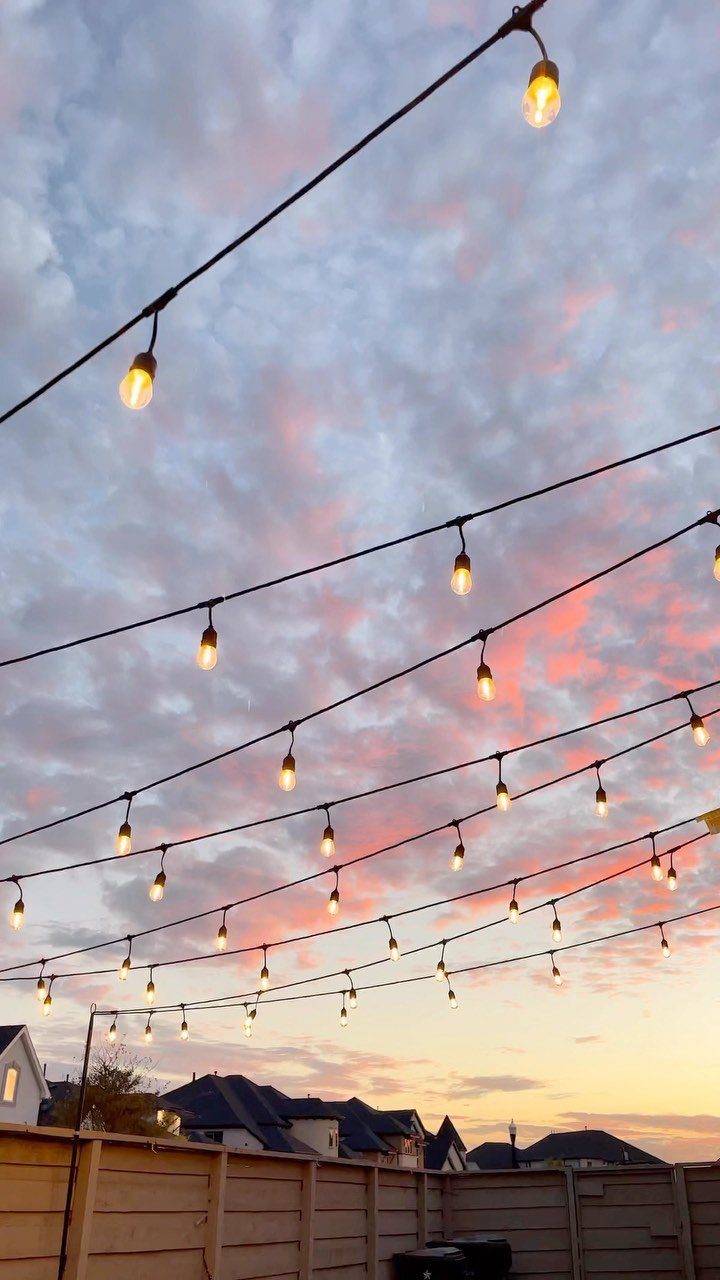
Edison bulbs on a warm string turn a plain backyard into usable space after dark without a big outlay.
I would buy commercial-grade strands if they will stay up year-round; the cheap holiday sets fail at the socket in about a year and a half of weather.
Plan your anchor points first: fence posts, a wall, or guide wires between poles. Bulbs against open sky mean no tree canopy to catch heat; paper or plastic shades would melt, but bare bulbs work fine.

Safety and Energy saving Led Halloween Lights: Bring classic Halloween colors to your decorating space with these 10FT ST40 Halloween Orange Purple String Lights. Featuring 10 vibrant orange and purple LED bulbs with C9/E17 intermediate base, against a black wire, halloween porch lights add a festive glow to your Halloween display, haunted houses, or adding a touch of festive spirit to your home decor.

Superior Brightness & Connectable - Unlike dim low-voltage string lights, our 120V outdoor lights provide 2X the brightness for full illumination. Built with pure copper wiring for improved conductivity and safety, they support end-to-end connection of up to 15 strands without voltage drop or dimness, ideal for large spaces. If you need powerful lighting for a grand setup, this is your good choice.

【Dimmable E26 Bulb】 S14 light bulbs with a plastic high clear shell are a reliable and drop-resistant alternative to glass bulbs. Dimmable edison light bulbs would be perfect Christmas decoration lights for your garden, backyard and balcony terrace, they are also an excellent decorative lighting for indoor wedding party
5. Pallet Furniture
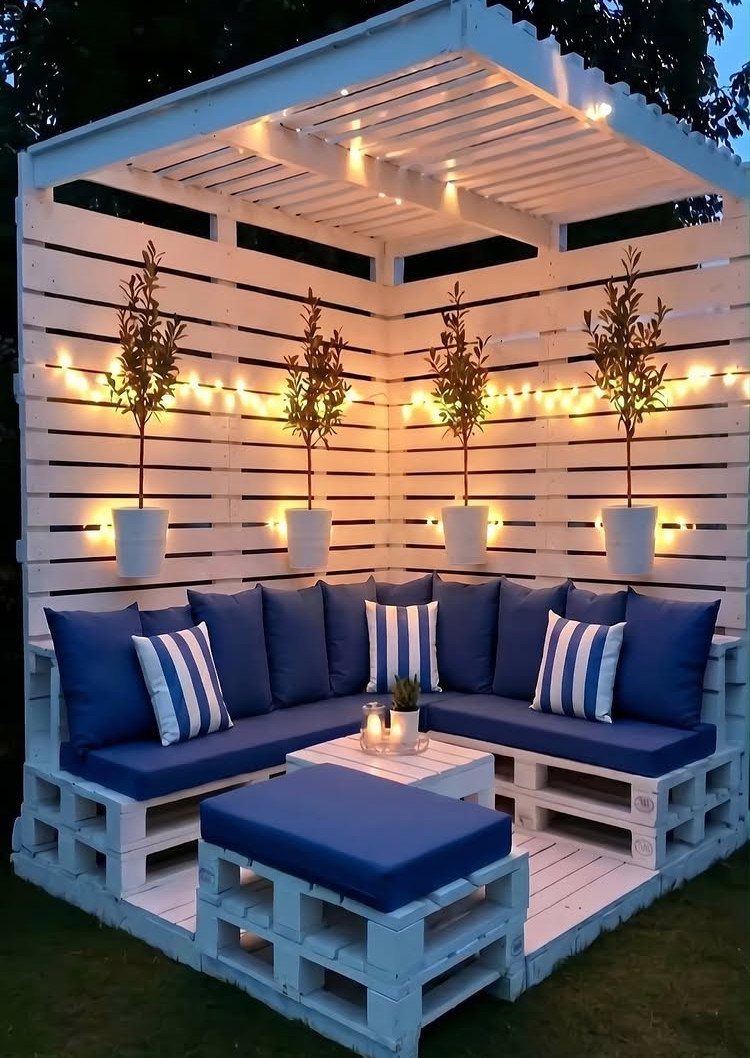
Pallets broken down and rebuilt into a sectional give you outdoor seating for the cost of paint, cushions, and a weekend with a drill.
I would use heat-treated pallets marked HT; the chemically treated ones are not safe to sit against or let kids climb on. White paint and blue cushions read coastal, but any outdoor-grade paint and Sunbrella fabric works.
The build includes a roof structure; that is a bigger project, and I would start with just the seating to see if I used it enough to justify the overhead.

Wet-Area Ready, No Sealing Required: Pre-finished with cured linseed oil — a natural plant-based wood finish — these tiles install straight from the box — no sealant, no prep, no waiting. Raised base channels water underneath for patios, balconies, pool surrounds, and shower floors

Wet-Area Ready, No Sealing Required: Pre-finished with cured linseed oil — a natural plant-based wood finish — these tiles install straight from the box — no sealant, no prep, no waiting. Raised base channels water underneath for patios, balconies, pool surrounds, and shower floors

6. Potted Plants on Gravel Border
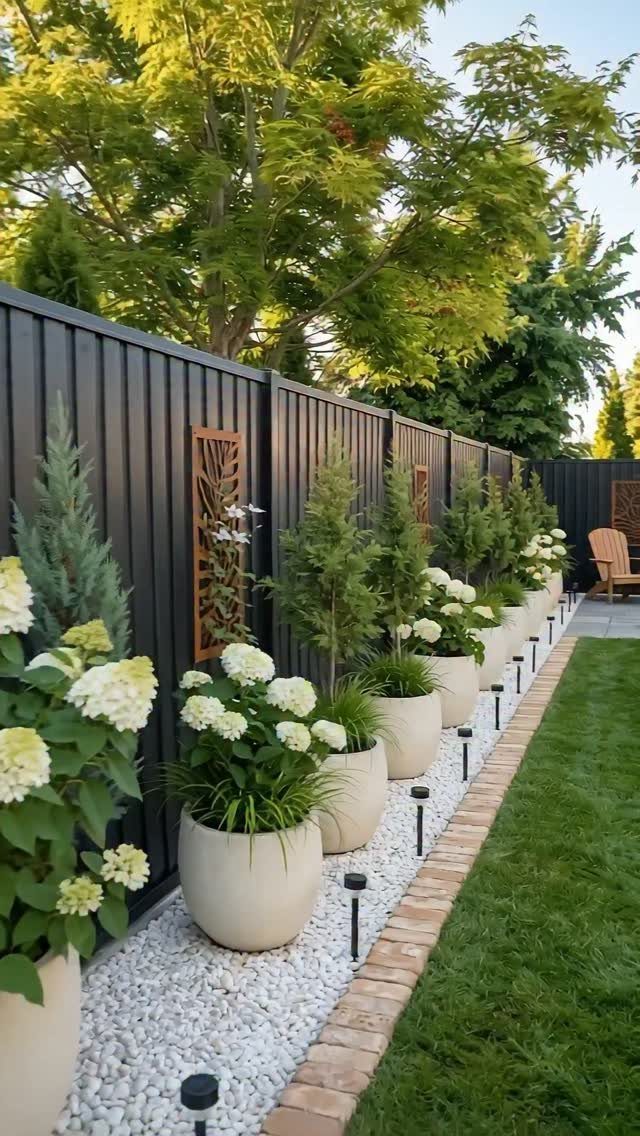
Large white ceramic pots on white gravel against a dark fence give you a garden border that never needs weeding and moves when you do.
I would spend the money on one or two oversized planters rather than filling the row with small ones; the scale against that fence is what makes the photo work.
Hydrangeas in pots need water more often than those in ground, so this setup suits someone who will check them frequently in July heat. Brick edging between gravel and lawn keeps both materials where they belong without much upkeep.

VERSATILE WALL DECOR: Perfect for flowers, herbs, succulents or faux greenery. Ideal for indoor walls, balconies, patios, kitchens, or entryways.

【Package includes】Pack of 3 hanging wire baskets,each size is 9x3.9x3.1 inches.

{Premium Material}: Our garden wall planters bags choosing high-quality felt materials with good air permeability can better store and release water to promote healthy plant growth. It is lightweight, sturdy, convenient, foldable, durable and anti-aging.
7. LED Patio Border Lighting
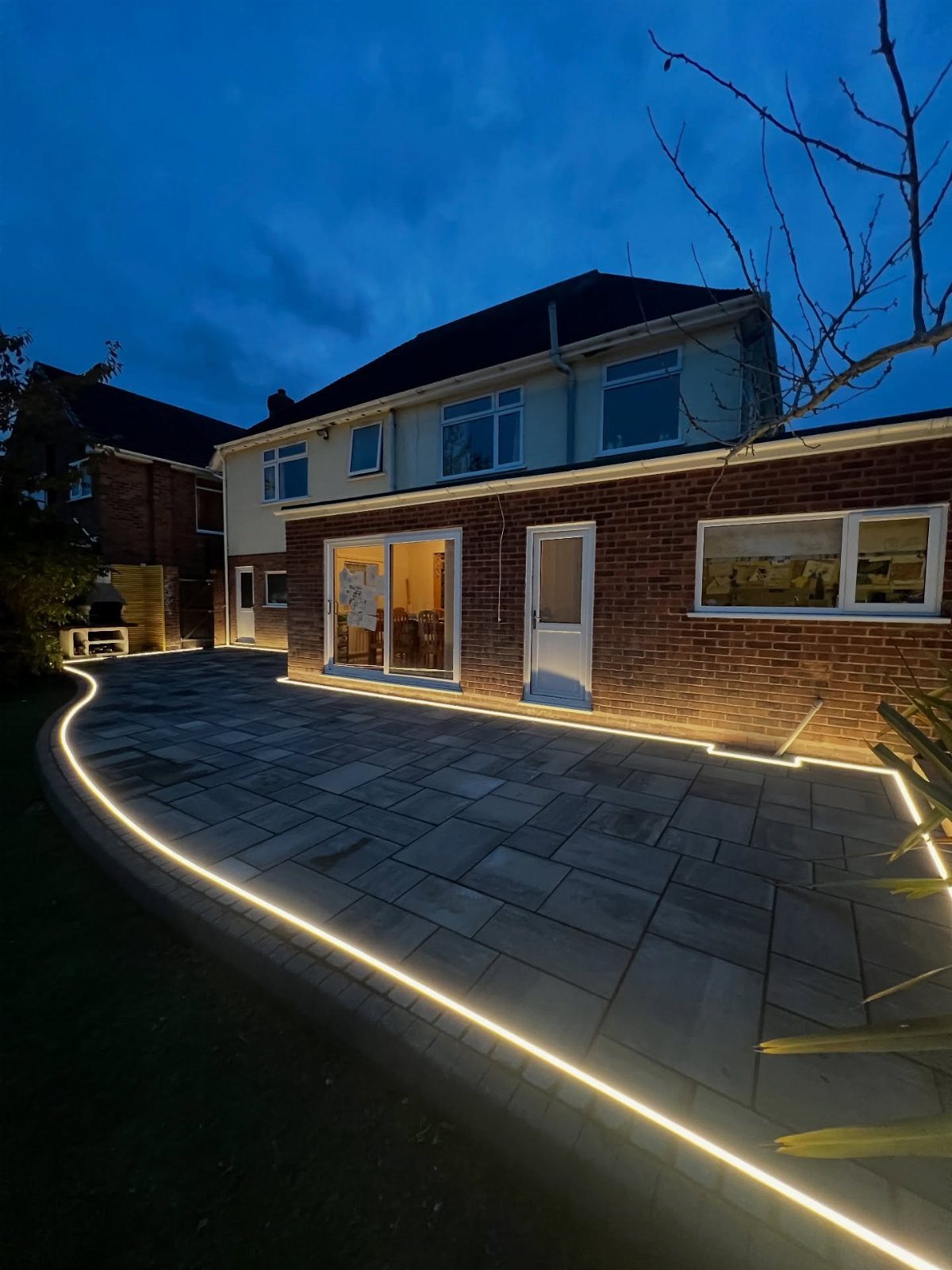
LED strip lighting tucked along a patio edge gives you clean glow without pendant cords or post lamps to knock into.
I would look for 2700K warm white; anything bluer reads clinical against brick and stone. The strips want a channel or at least a lip to hide the adhesive back from dirt and pressure-washer spray.
A transformer near the house keeps cable runs short, and I would put the whole circuit on a timer so you are not climbing out to flip a switch once the evening settles in.

★ Easy to operate and does not require professional skills. Filling the with a concrete mixture, the surface is smooth and easy to clean, and even inexperienced people can create beautiful roads.

【High-Quality ABS Materials】Concrete molds are made of ABS Materials which allows you to use the molds over and over.

Efficient Paver Removal Tool: Remove interlocking pavers, stones, bricks, and blocks with ease using this paver puller. The built-in two joint scraper with micro teeth and gripper slots allows you to lift sunken or locked pavers quickly and efficiently.
8. Fabric Patio Shade Sails
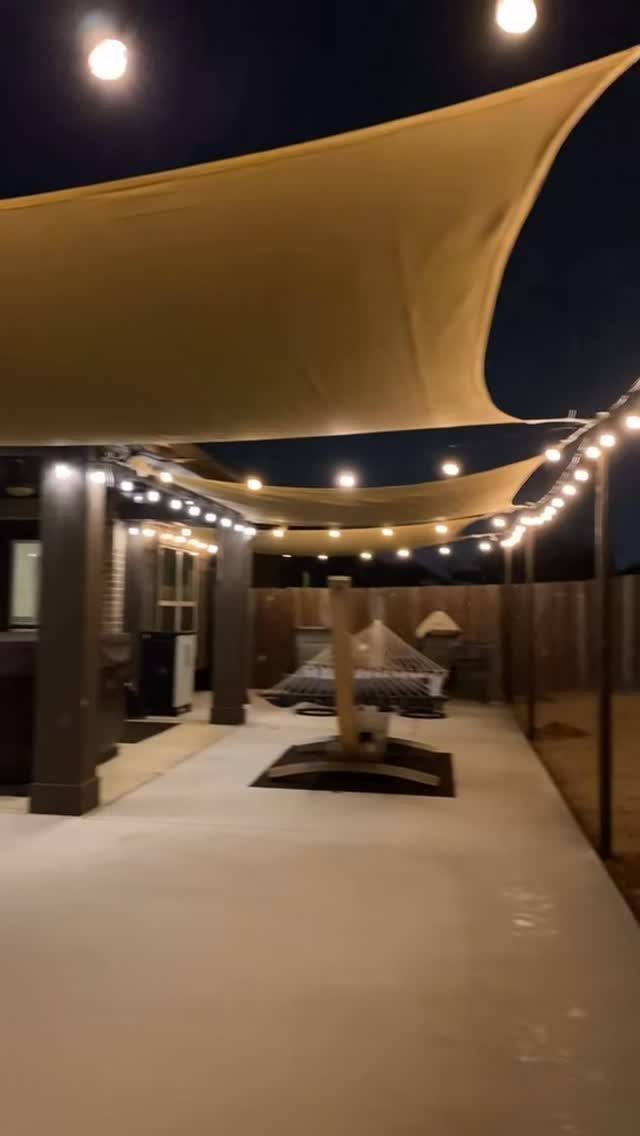
Shade sails and string lights together turn a bare concrete slab into an evening room for the cost of hardware and fabric tension.
The sails need anchor points rated for a thousand pounds of pull or more; a fence post will lean over time unless it was set in concrete with this load in mind.
Tan fabric disappears against most siding and warms up under bulb glow better than gray or blue.
I would set one corner higher than its opposite and keep the center raised, since a shade sail needs that hypar twist or a peaked middle to shed rain rather than pool it.
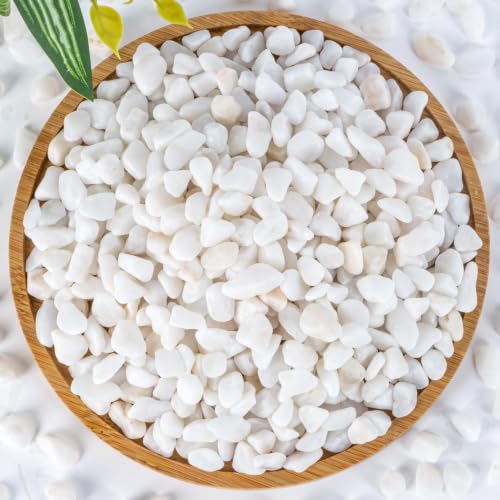
The Tiny White Pebble Brigade: Don’t let their size fool you – these 1/5" white pebbles for indoor plants are true drainage ninjas! Whether you use them as white stones for garden paths, stylish touches for succulents plants live, or charming cactus decor, they keep your pots fresh and your roots happy. Overwatering? Not on their watch
9. Artificial Turf and Stepping Stones
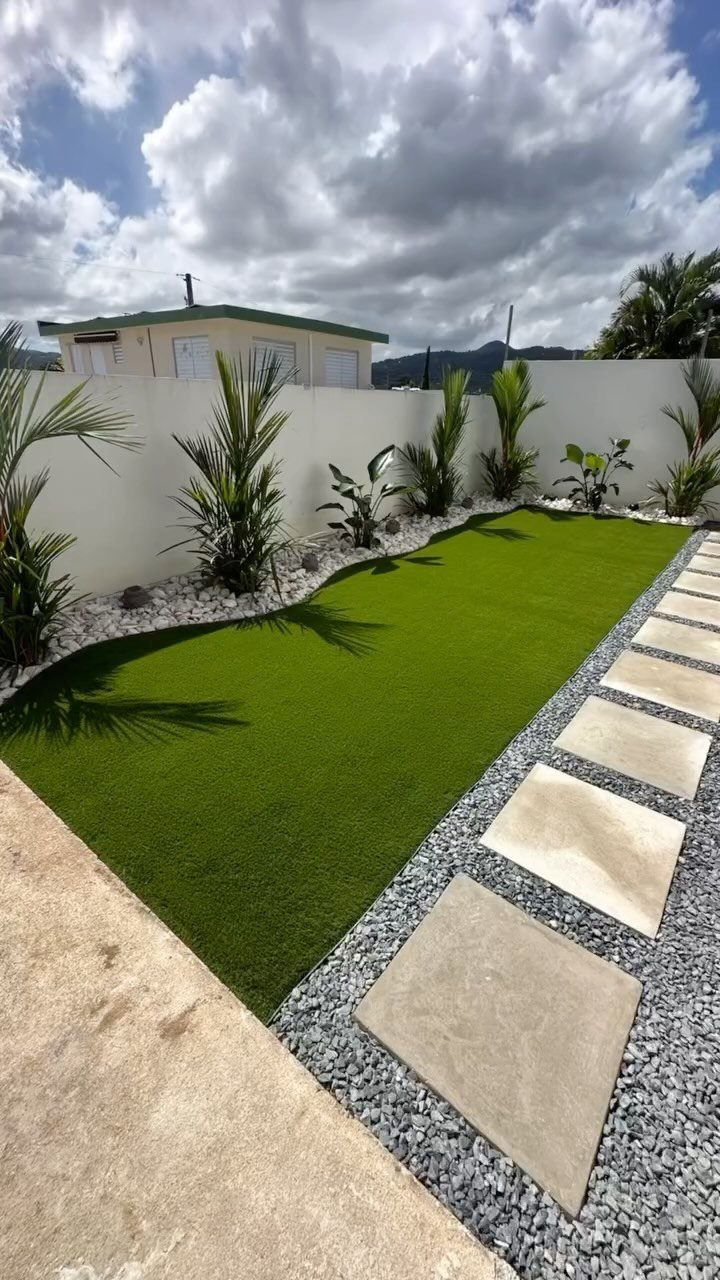
Artificial turf patches with stepping stones give you a lawn-like spot that needs no mower and no sprinkler in a space too small for real grass to survive anyway.
The turf wants a compacted gravel base underneath or it wrinkles and holds water; concrete pavers set into it need to sit half an inch above the blade line or they look swallowed.
I would vacuum or leaf-blow it monthly, and keep a grill off it; polypropylene melts. This suits renters or anyone tired of mud where a dog runs.
10. Tiered Stone Garden Bed
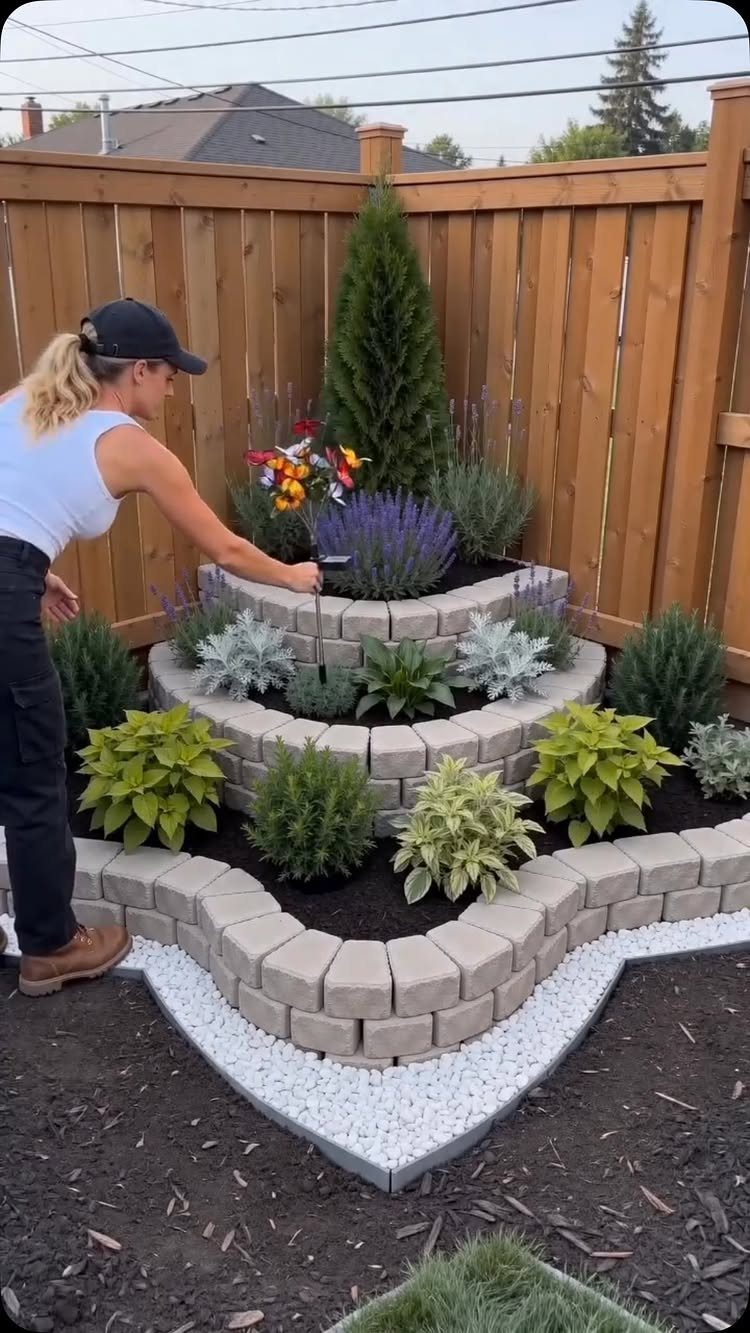
Stacked stone blocks in 3 levels let you plant deep-rooted shrubs on top and trailing ground cover below without terracing your whole yard.
A corner against a fence is the smart place for this; free-standing tiers need more width than most patios allow and look bulky from the side.
I would back each level with landscape fabric and a handful of gravel so soil does not wash through the face joints.
The block itself is heavy; a build of any real size is a full Saturday, not a morning project.
11. Flagstone Patio with Ground Cover
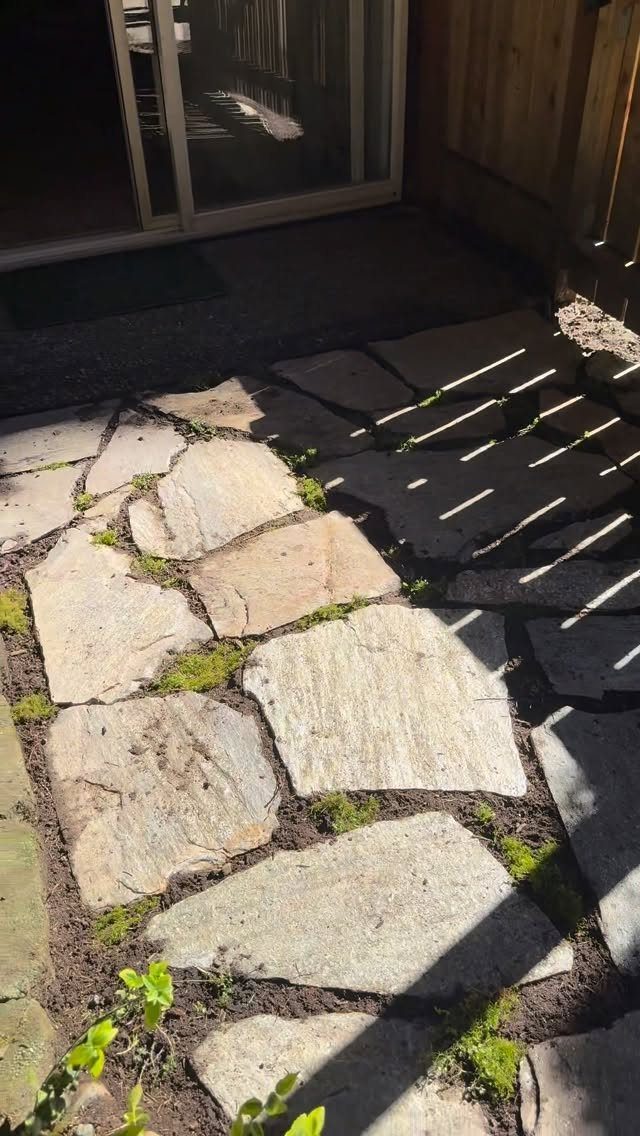
Flagstone laid with moss in the gaps gives you a patio that softens year by year instead of cracking like mortar would.
The stone wants a sand base leveled to within half an inch; moss fills the rest and holds dirt in place, but it needs shade and moisture to establish, so full sun locations go dry and bare.
I would start with plugs between stones in spring, not seed, and keep foot traffic off until the roots take hold. After that it takes occasional weeding and, in dry spells, a hose.
12. Solar Light Rock Garden Border
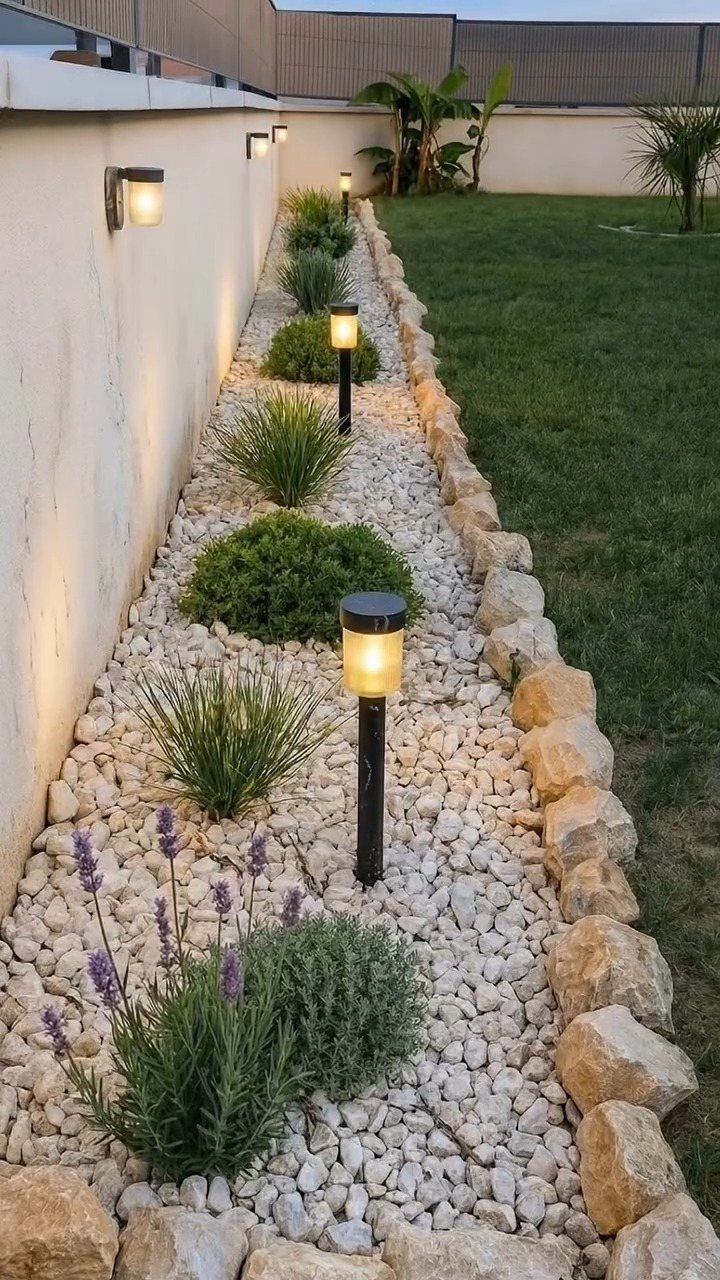
A rock border with white gravel, lavender and solar lights along a wall gives you a garden bed that needs no outlet and no extension cord.
The solar stakes store up during the day and throw enough light to find the edge of the lawn after dark; I would space them close enough for a continuous glow, not a runway look.
Lavender wants the drainage that gravel provides, and the silver-green reads right against white stone. I would pull the gravel back slightly from the wall base so siding does not stay damp.
13. Modern Paver and Pebble Garden
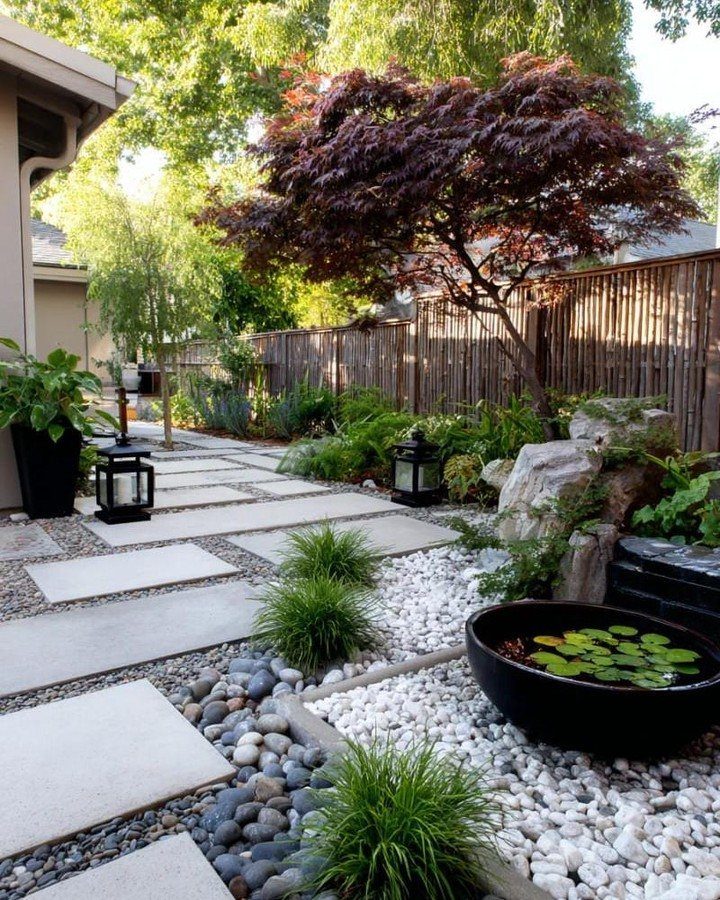
Rectangular concrete pavers set in white pebble give you a clean path through planting without the grade work a full patio needs.
I would keep the joints between pavers wide enough that the stone shows as a deliberate grid, not an accident.
Dark river rock in a separate band adds depth, but 2 stone colors already push the busyness limit; a third would fight the maple and grasses for attention.
The black water bowl is optional and needs a line run from a spout or a refill habit you will actually keep.
I like this best for narrow side yards where a full pour would crack against the house foundation, and for anyone who wants a Japanese garden feel without the maintenance a moss or raked-gravel version demands.
Plan Your Backyard Layout
Measure your space accurately before you buy anything.
Trees, fences, or retaining walls that intrude on the work area dictate where each element can sit and whether you will need to cut around them, so I would check for those first.
Slope, sun exposure, and drainage patterns matter more than most people think. A spot that bakes all afternoon needs different plants and materials than one that stays shaded until evening.
I would sketch a rough layout with zones marked for sun and shade, then use that to choose materials that work with what the yard actually offers rather than fighting it.
Soil quality and drainage should go on that same sketch. Poor drainage turns a paver patio into a puddle in year two, and full-sun assumptions about moss or shade-loving ground cover waste money fast.
Set Realistic Budget Goals
Decide your total dollar amount first, then split it into plants, materials like soil and mulch, and tools. I would keep that list visible while shopping so one category does not swallow the whole budget.
Secondhand materials, repurposed items, and seasonal nursery sales stretch it further.
I would check clearance racks, curbside giveaways, and plant swaps with neighbors or community gardening groups. Each can land quality plants and materials for little or nothing.
Jot down local deals as you spot them so you do not forget. What shows up in March may be gone by May, and knowing your usual prices keeps you from grabbing something that only looks like a bargain.
Spend on the parts that matter most to you before filling in the rest. That ranking keeps the budget in order when choices conflict.
Maintain a Budget-Friendly Landscape
Pulling debris, trimming dead growth, and topping off mulch keeps weeds, pests, and disease from turning into expensive problems. I would handle this a little each season rather than letting it pile into a major project.
Composting yard waste turns shredded leaves and clippings into soil amendment, saving fertilizer costs and improving plant health. Fall leaves especially: mulch with them or add them to the bin instead of bagging for curbside pickup.
A clean edge cut around beds and lawn, with fresh mulch on top, costs almost nothing and makes the whole yard read as finished. I would do this before any bigger purchase; it often changes what actually needs replacing.
Frequently Asked Questions
What are some inexpensive ways to create a patio?
Gravel, pavers, and concrete all work for a low-cost patio surface. A gravel sitting area with steel or brick edging costs almost nothing beyond the stone itself and needs no pouring or curing time.
For something more finished, a herringbone brick pattern uses the same material as standard running bond and only asks more of your labor, not your wallet.
How long does it take to build a patio?
A small gravel sitting area or pallet furniture build takes a weekend.
Stacked stone tiers or a herringbone brick patio with clean border cuts is a full Saturday or more, not a morning project. The real variable is how much cutting and leveling your chosen material demands.