These ideas run from free chipped hardwood mulch to lumber, stone, or a submersible pump, with most finishing in a single weekend.
What decides which one belongs in your yard is the ground you already have: fast-draining slope, flat lawn that needs a path, or a blank wall with no floor space to spare.
I would check my local tree service first for free mulch before I bought a single bag, and that same habit of asking what is available nearby runs through every section below.
[link-whisper-related-posts]1. Organic Mulch
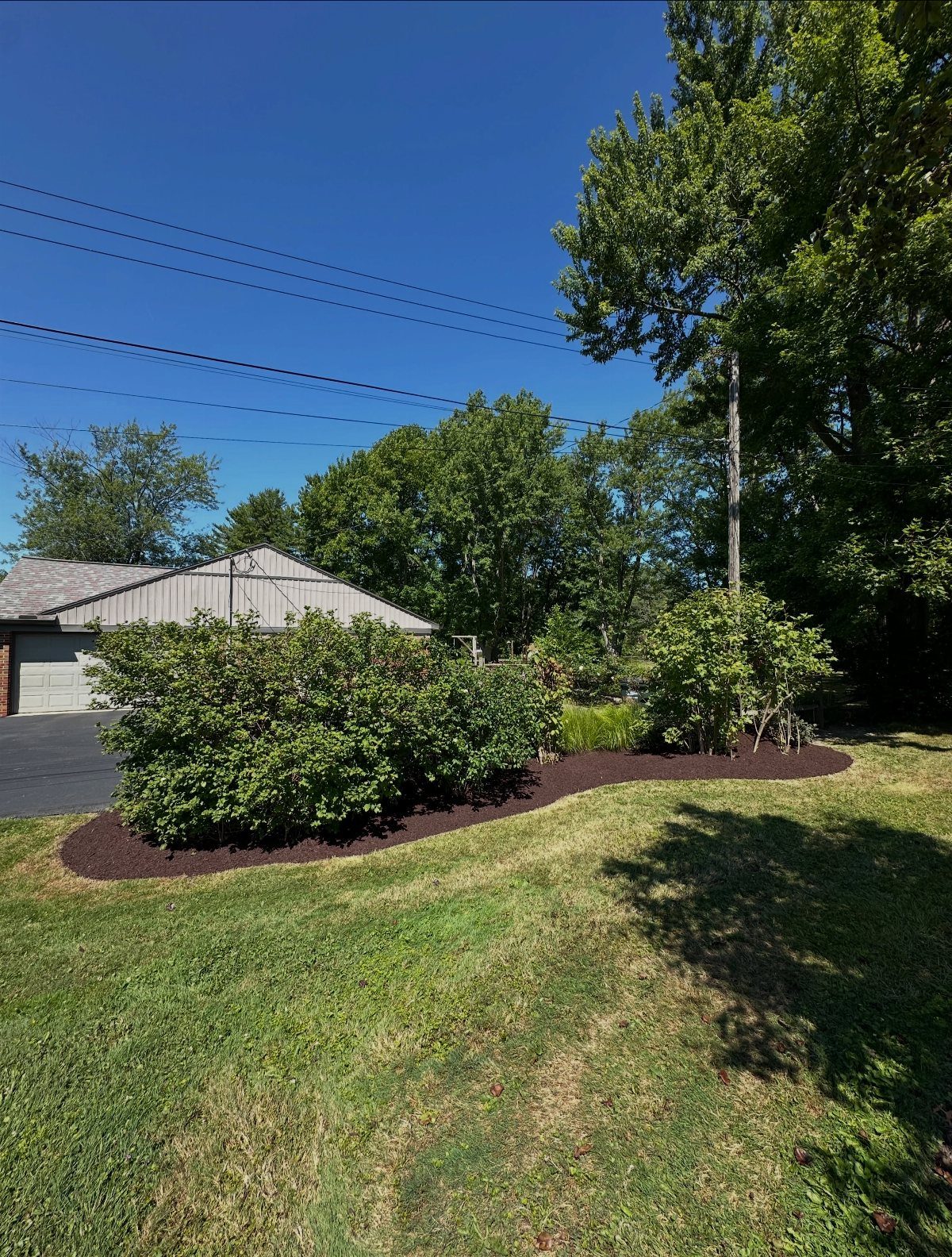
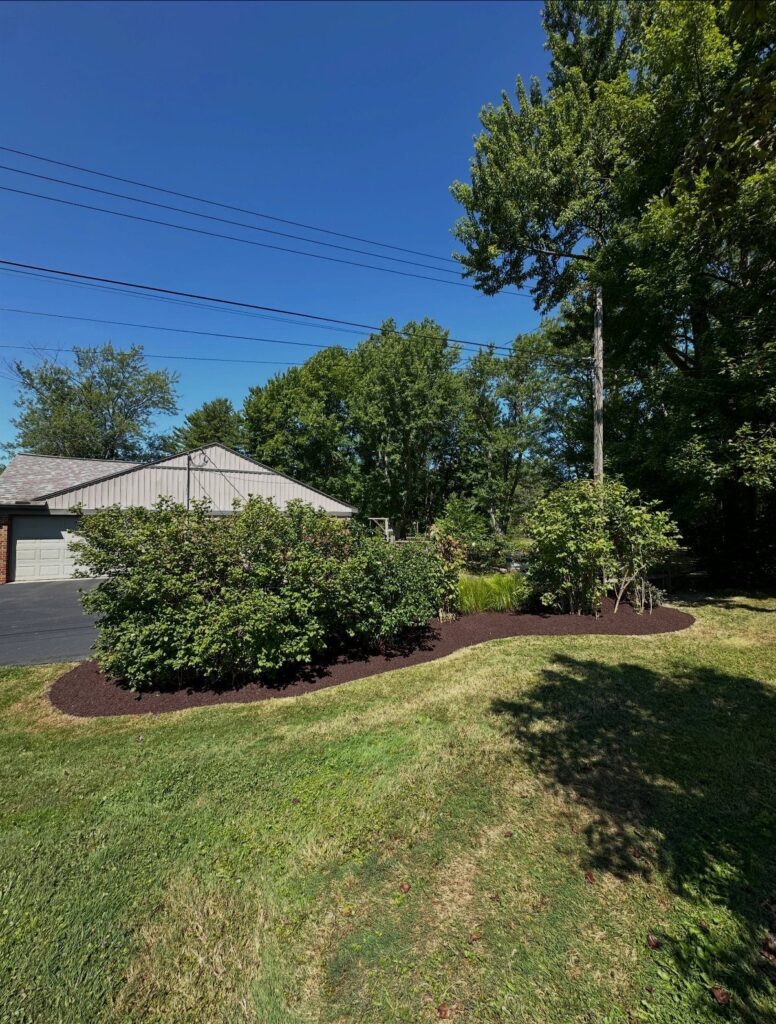
Dark organic mulch is the fastest way to make a garden bed look finished while it holds moisture and keeps weeds down.
I check what my local tree service or municipality gives away before I buy bags; chipped hardwood often runs free if I haul it myself.
Partially broken-down mulch holds moisture longer than fresh chips and does not pull nitrogen from my plants while it finishes decomposing.
I lay it deep enough to block weeds and hold moisture, keeping it back from any trunk so I don’t suffocate the shrub.
A single scoop from most landscape supply yards covers my front bed at mulch depth, which makes the math easy for what my truck bed holds.

[MULTIPURPOSE LANDSCAPING MULCH]: Ideal mulch for landscaping, garden beds, flower borders, trees, shrubs, and pathways. Designed for both decorative and functional garden use.

SUSTAINABLE USA-SOURCED BLACK MULCH: Proudly crafted from 100% natural, organic materials harvested in the USA’s heartland, this eco-conscious black mulch for landscaping in bags supports responsible land stewardship, reduces environmental impact, and appeals to gardeners who prioritize sustainable choices for their outdoor spaces.

Versatile Mulch: This 42 quart bag contains red colored hardwood mulch, perfect for landscaping, gardens, and flower beds.
2. Build a Rock Garden
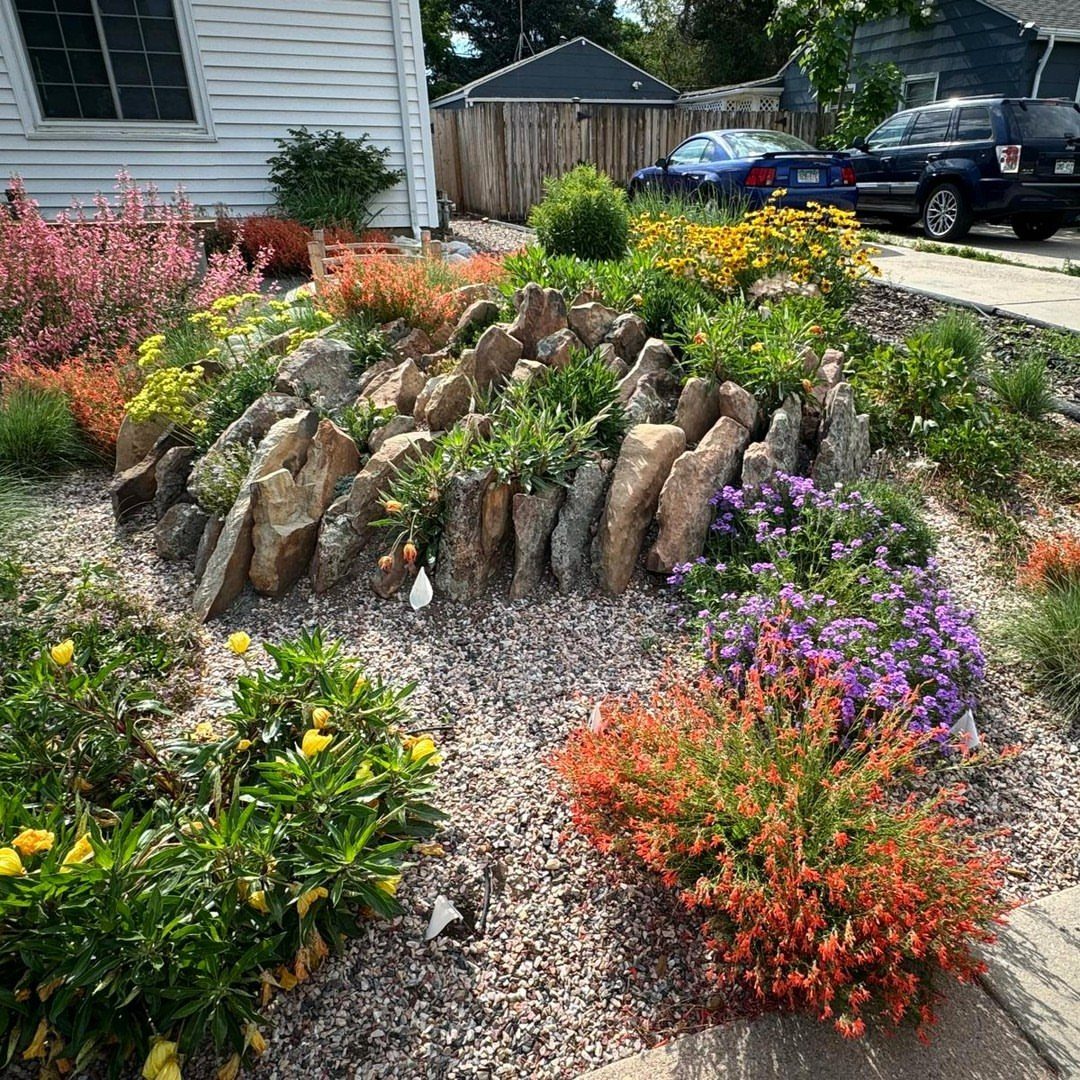
A rock garden suits ground that drains fast or bakes in afternoon sun where lawn struggles.
Stones with at least one flat side sit steady when half-buried upright; vertical placement catches light differently than flat-laid stone and shows off texture I would miss otherwise.
I would plant around the base with drought-tolerant perennials in small groups, not singles, so the bed reads as intentional from the start.
The gravel between stays cleaner if I lay landscape fabric underneath, though I know some gardeners hate the stuff. On a busy corner lot where I pull weeds already, the extra work of fitting stone around plantings beats constant edging.

[3.2oz Woven Weed Barrier] This PRO-FOR 4FT x 50FT weed barrier landscape fabric is made from black woven polypropylene to help block sunlight at ground level and reduce weed growth in garden and landscape areas.
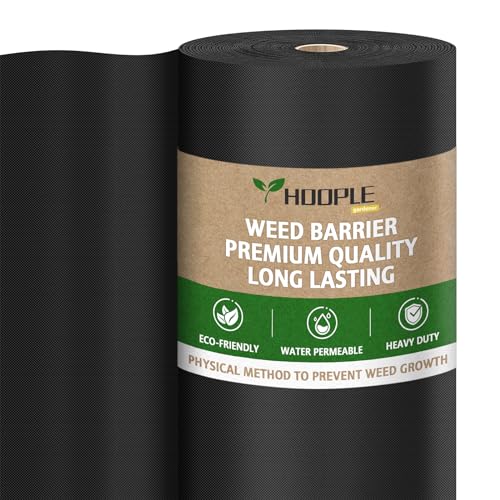
3ft x 300ft Large Coverage Roll: This 3ft x 300ft landscape fabric weed barrier provides wide coverage for garden beds, flower beds, walkways, gravel paths, mulch areas, greenhouses, and driveway base layers. The long ground cover roll is ideal for larger outdoor landscaping projects.

Using thick 3 oz fabric tightly woven by industrial grade looms, it makes it much more difficult for weeds to puncture through the fabric.
3. Vertical Gardens
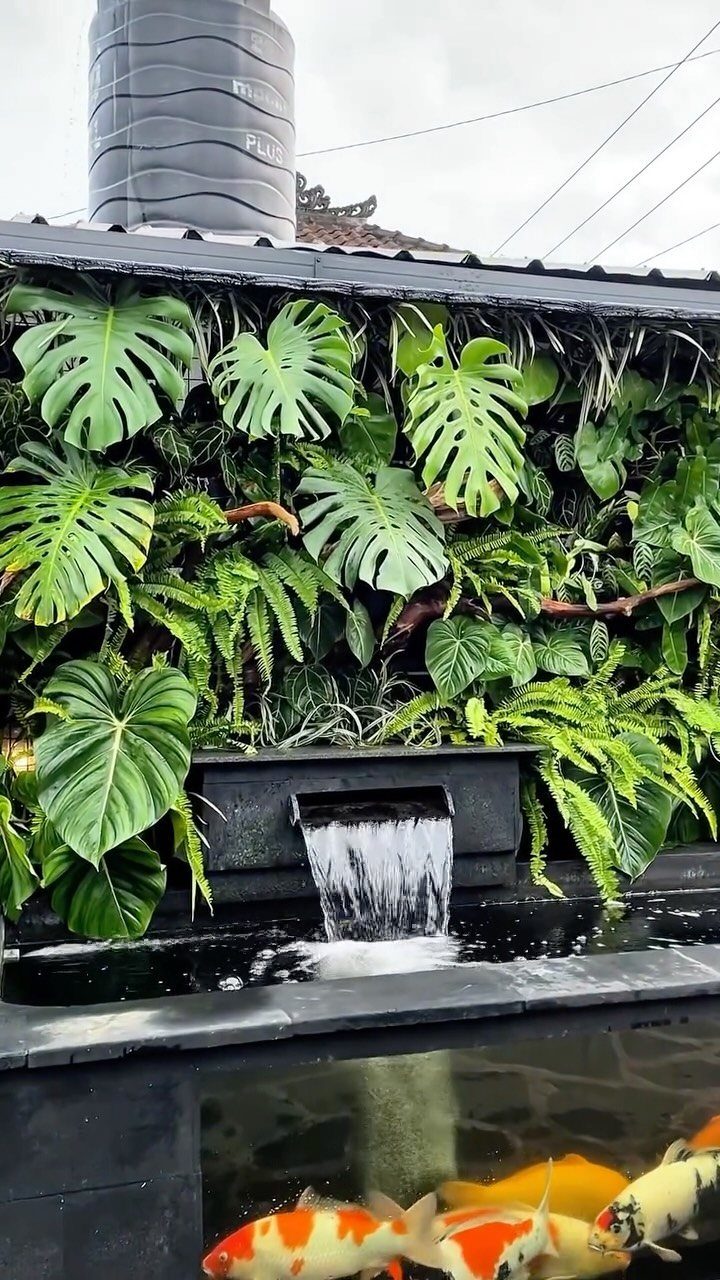
Growing up a wall buys back floor space on a small patio or balcony where every square foot counts.
Tropical vertical setups need consistent moisture and some shade; I would not try this exact look in full desert sun without running drip lines I do not want to build.
For my own wall I would use a simpler grid of pocket planters or a mounted trellis with vines I train, not an engineered living wall with its own irrigation.
The visual effect still reads as lush without the koi-pond complexity. Weight matters more than people think: saturated soil and plants run heavy fast, so I anchor to studs or masonry, never siding alone.

【36 Pocket Vertical Garden】Features 36 individual planting pockets, allowing you to grow herbs, flowers, succulents, strawberries, vegetables, and other plants while maximizing vertical space.

PREMIUM MATERIAL - The main component of these wall hanging plant bags is felt, which can maintain sufficient moisture, drainage and ventilation at the same time. Its back lining adopts a waterproof design, effectively protecting the wall from being wet or dirty.

Innovative Space-saving Design: maximize your gardening potential with our stackable wall planter system; Each piece measures 9.45" x 5.71" x 5.51" and features two pockets, The overall dimensions are 47.5"x33"x5.5" offering ample growth space for a variety of plants; Nice for Fence Balcony Wall Decor, these vertical wall planters change limited spaces into gardens effortlessly
4. Stone Paths
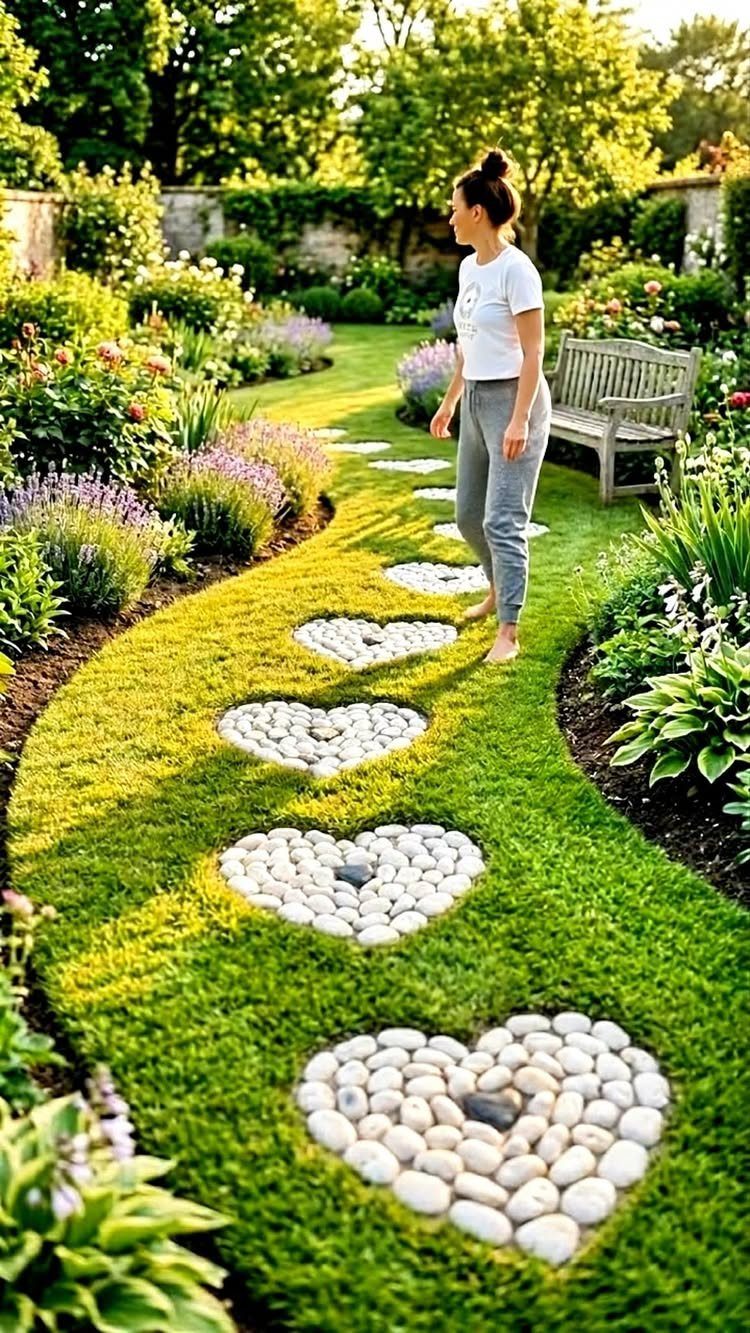
A stepping path through lawn like this one keeps my feet dry and saves the grass from a worn dirt track.
Heart-shaped stones are cut stone or poured pebble mosaic; either way I would map my walking line first with spray paint or hose, then set stones flush with the turf so my mower glides over without catching.
I dig out sod enough to hold sand, spread it, and level each piece before I fill joints with soil and tamp. The grass grows right up to the edge, which hides the path in winter when perennials die back.
A patterned stone path takes longer than plain rectangles; I would allow a full weekend if I work alone, though the personal stamp is hard to fake with anything else.

15-SECTION NATURAL WOODEN LADDER:Crafted from 15 pieces of durable, natural wood, this wooden ladder plant trellis offers strong and rust-free support for your indoor and outdoor climbing plants. The smooth wood finish promotes healthy vine growth while adding a touch of natural elegance to your space.

Package Contents - 20pcs crosshead hubs(for 5/64'' or 2mm cable), 5/64" x 98.43ft wire rope, 20 plastic expansion anchors, 20pcs washers, 80 PVC end caps, a small bundle of plant ties, 1 masonry drill bit, 1 Allen key, 1 all-purpose spanner, 1 instruction manual, trellis system calculator included. We offer a lifetime after-sales guarantee
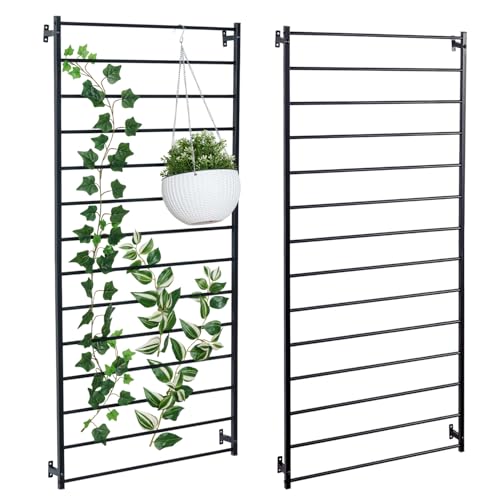
Set of 2 Hanging wall mounted modern matte black metal trellis for climbing plants and crawling vines in outdoor gardens
5. Install Raised Garden Beds
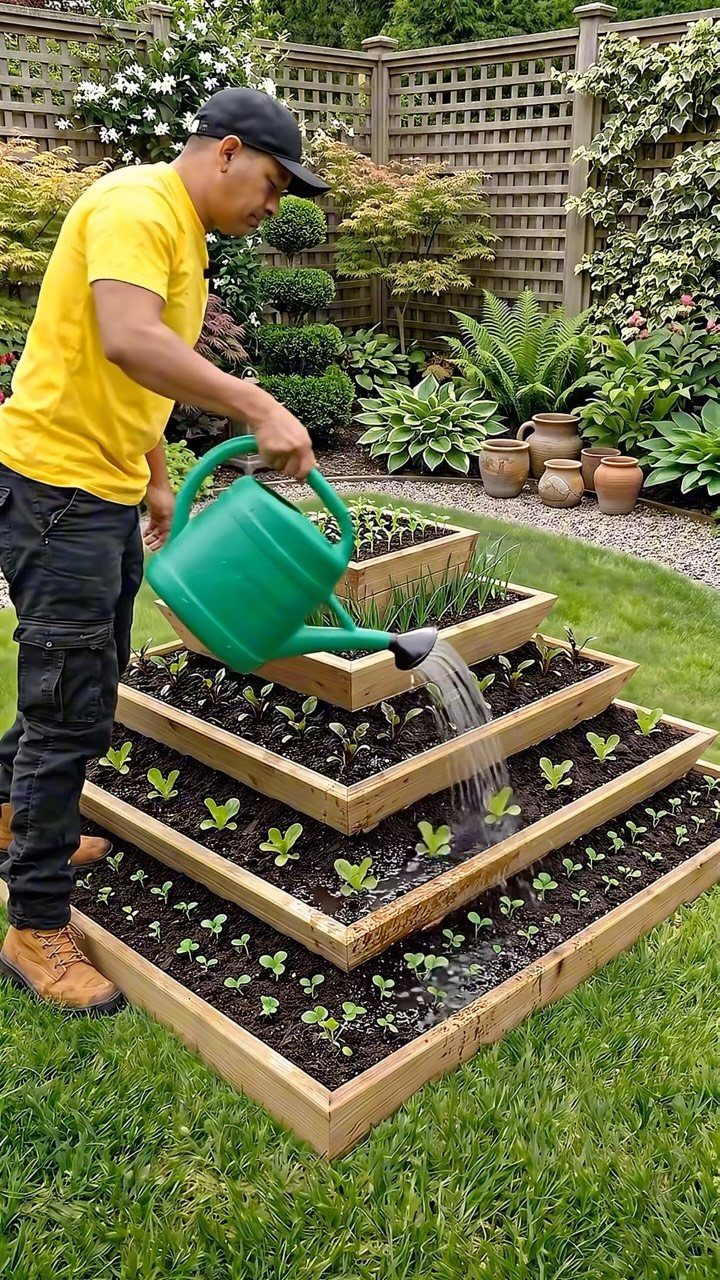
Raised beds warm faster in spring and let me control soil quality without amending what I have.
Tiered pyramids shrink each bed as they rise and are built from stacked lumber; I would use cedar or a composite that lasts, not pine that rots fast and leaves me rebuilding.
Each tier needs drainage or the top becomes a swamp, so I leave gaps between boards or drill holes I do not regret later.
I fill bottom layers with logs and chipped brush if I have them, saving on soil mix that gets expensive in a bed this deep.
New raised beds dry out faster than ground-level plantings, so I account for that in my watering schedule or I lose seedlings to thirst I did not expect.

Weather-Resistant & Built to Last: Crafted from durable PC+ABS resin, these stepping stones are heat-resistant, crack-proof in freezing temps, and impact-resistant. Designed for year-round outdoor use, they won’t fade, warp, or lose their shape—rain or shine.

【Natural Stones】This river rocks are natural lightly polished for smooth effect, comes in a variety of natural colors. Resists fading for long-lasting beauty

UNIQUE OUTDOOR WALKWAY SOLUTION: Elevate your garden, lawn, or backyard with BIRDROCK HOME Rubber Stepping Stones. These durable pavers create a functional and stylish walkway, enhancing your landscape while providing a solid and reliable surface to walk on.
6. DIY Water Features
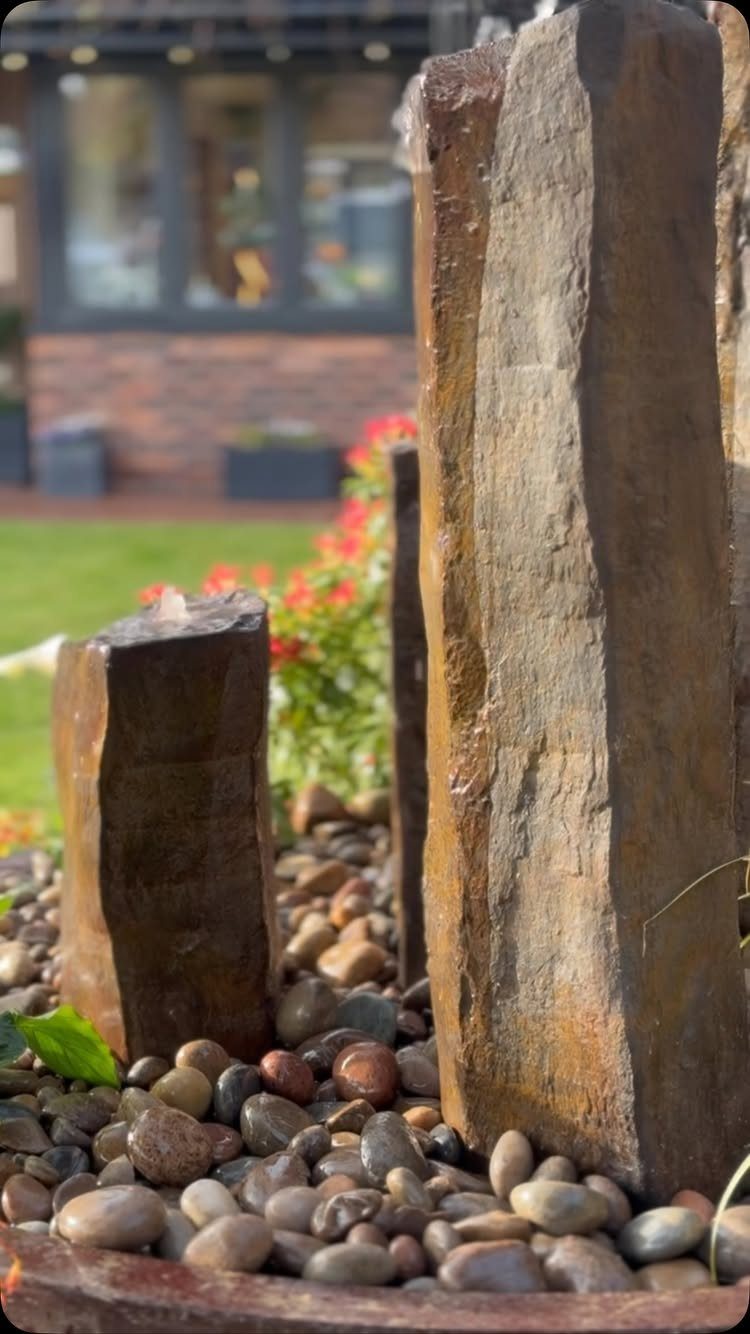
A bubbling column like this one masks street noise without the footprint or safety worry of a standing pool.
Vertical stones with water sheeting down faces into river pebbles need a submersible pump rated for the lift to the tallest stone, sized in gallons per hour.
I would set my reservoir below frost line or plan to pull the pump each fall, because frozen water splits concrete basins I cannot fix.
The pebble surround stays cleaner than bare soil splashing up, and I like the sound of water hitting stone more than the hollow trickle of a plastic fountain.
Solar pumps exist now but I find them weak; for steady flow I run low-voltage cable from the house, which means a trench I dig once and forget.

Enhances curb appeal with its rich, deep black color

RECYCLED MATERIAL: Made from shredded paper board material that naturally biodegrades while providing effective ground coverage
7. Gravel Pathways
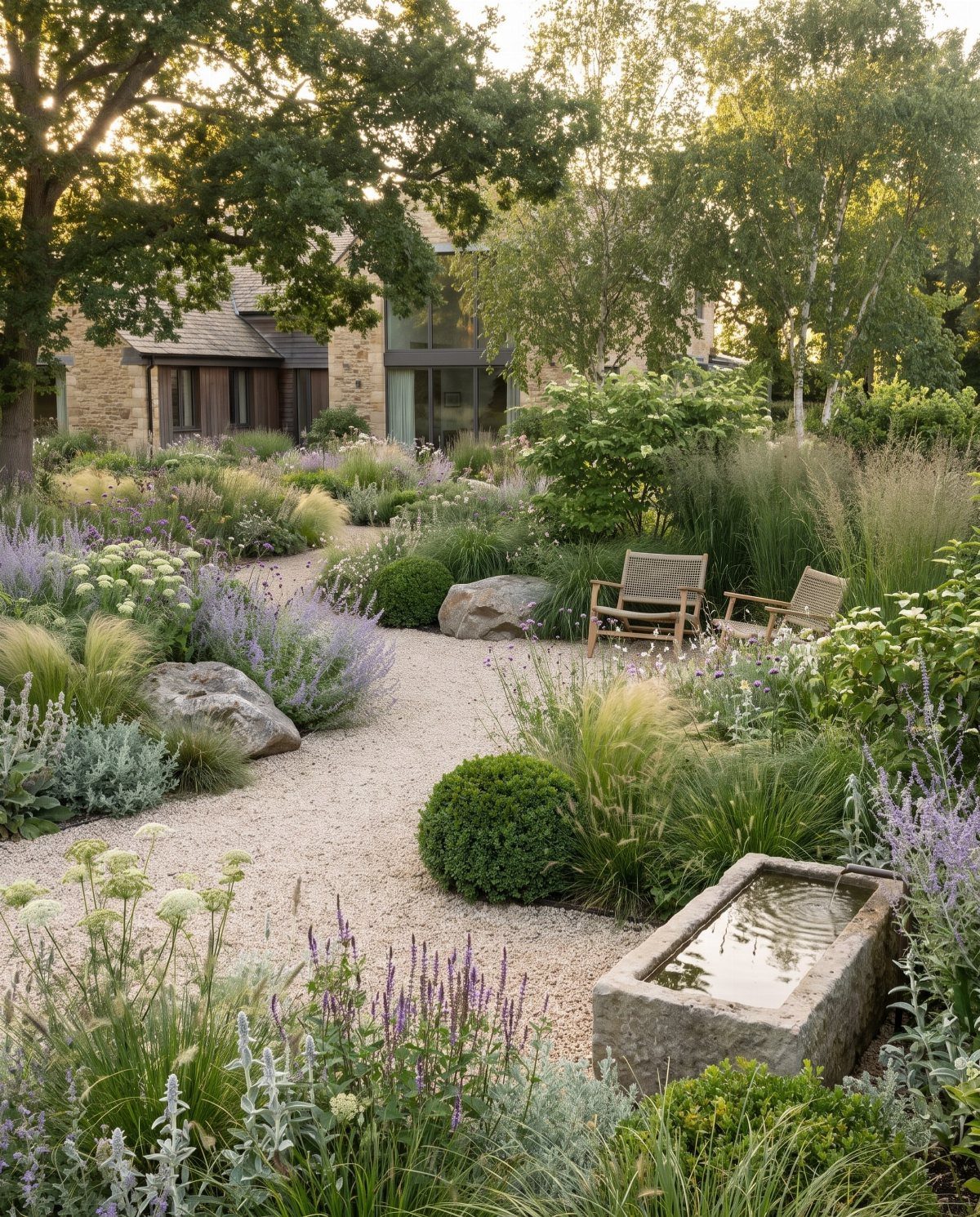
Loose stone underfoot crunches satisfyingly and drains fast after rain, which matters more than people think until they walk a muddy track.
I choose angular stone over rounded pea gravel for anywhere I actually walk; flat faces lock together and the path stays put, while rounded stone scatters like marbles under a bike tire or heel.
Width fixes the cost: a garden path needs far less stone than a sitting area. I would lay landscape fabric or at least cardboard underneath, or I spend the next while weeding gravel.
A steel or brick edge keeps the stone from migrating into lawn, which it will do slowly and stubbornly if I skip it.

HEAVY DUTY WEED BARRIER FABRIC: True 5 oz dual layer landscape fabric; a woven polypropylene layer for strength plus a needle punched layer to help filter and retain water

3.2 oz Heavy Duty Fabric: This 4 ft x 100 ft weed barrier landscape fabric is made from woven polypropylene geotextile, providing a durable ground cover for garden beds, flower beds, gravel paths, mulch areas, and landscaping projects.

Clean Weed Control: Made from 5 oz/141.7g high-density PP woven material, our garden weed fabric blocks sunlight from passing through and limits weed growth without frequent manual removal. By reducing competition for water and nutrients, it supports healthier plants while keeping gardens, beds, and walkways neat.
8. DIY Planters
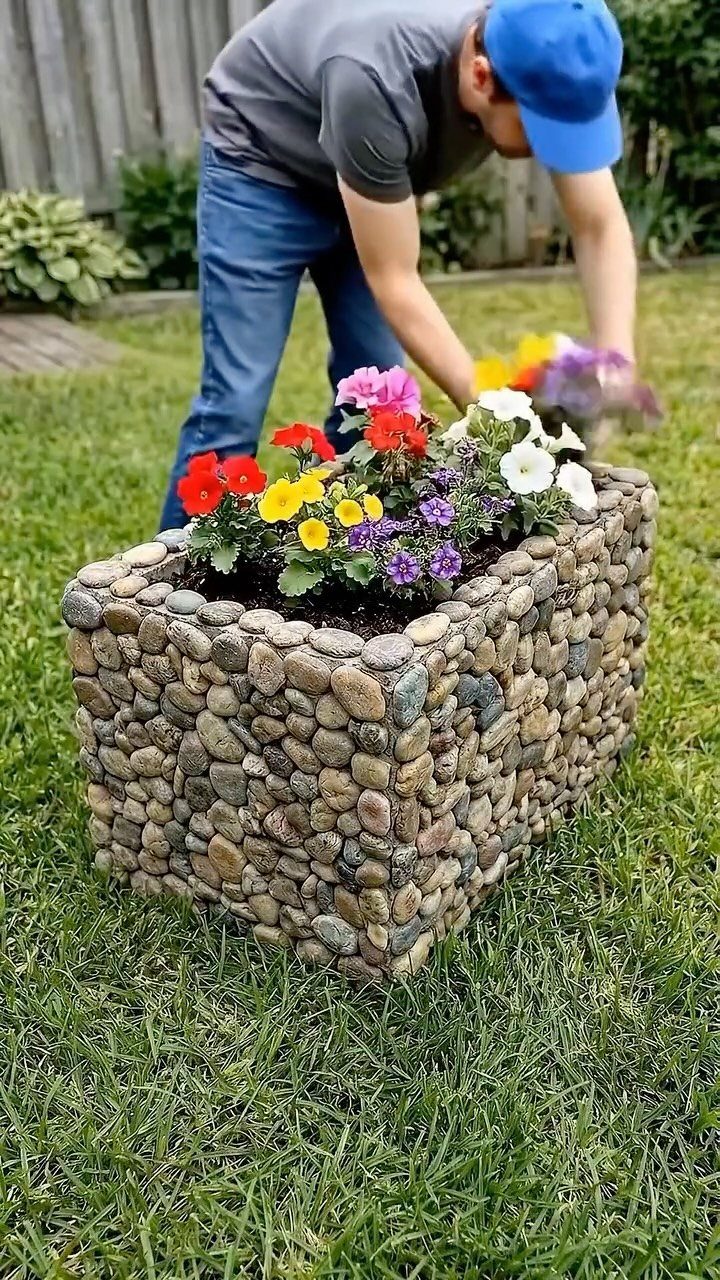
A box wrapped in river stone reads as built from it, though this maker used simple materials to get the look.
Thin flat stones press onto mortar or construction adhesive over a basic frame; the weight adds up fast, so I would not build tall without planning how I move what I make.
I like the method for matching stone already in my yard. The builder called it satisfying, and I believe it; the labor is in pressing each stone flat and even, not in cutting or lifting.
Drainage holes go in the base before the stone goes on, or I drill later through gravel and cement and regret my timing.


Space-Saving Vertical Garden – Turn fences, balcony rails, patios, and indoor walls into a compact growing area.

SPACE-SAVING WALL PLANTER: Create a vertical wall planter display on indoor walls or outdoor fences—perfect for kitchens, patios, terraces, balconies, and entryways (no floor space needed).
9. Landscape Lighting
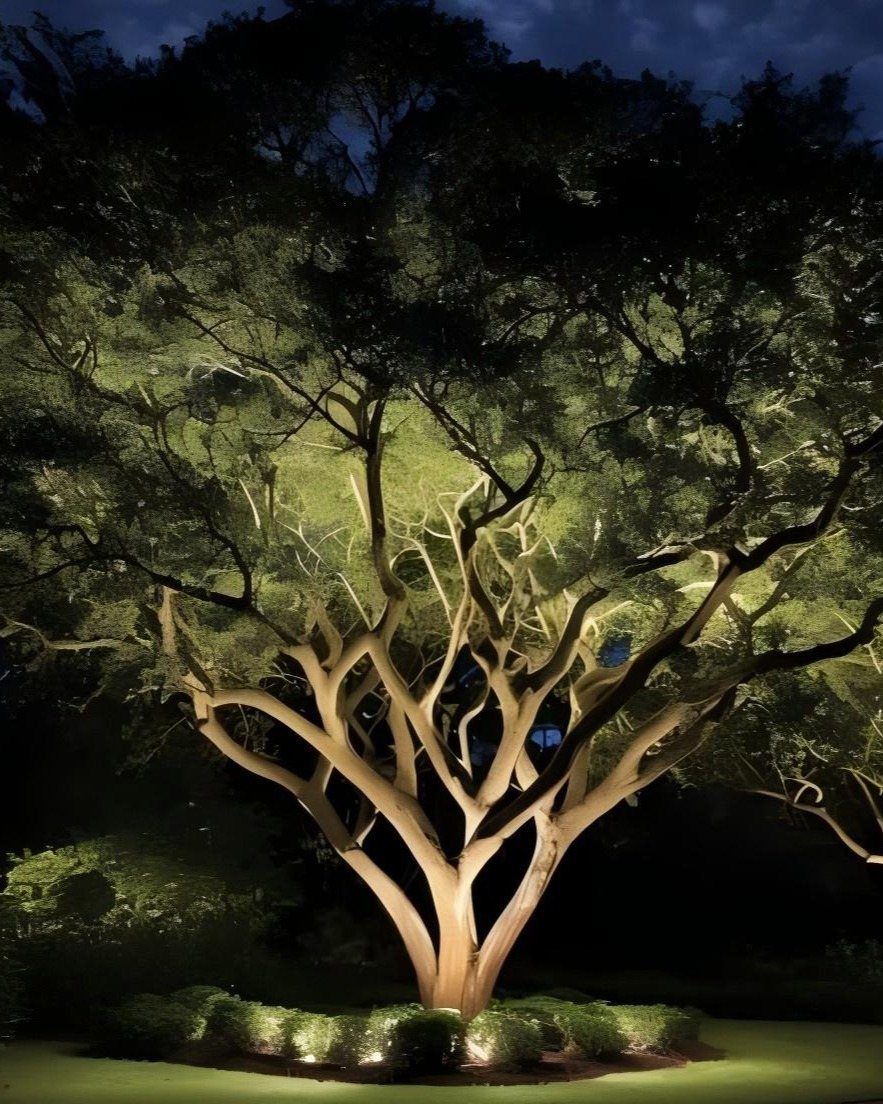
Uplighting a tree from the ground catches bark texture and throws canopy shadow overhead, which does more for my yard after dark than path lights ever manage.
Low-voltage LED runs safe to bury and sips power; solar exists but I find the output weak and the battery dies in 2 seasons.
I would install a transformer I can expand, even if I start with one light.
Aiming matters: too steep and I lose the canopy, too flat and I glare across the lawn. I adjust at dusk, not in daylight, and I check from the windows I actually look out, not just from the path below.
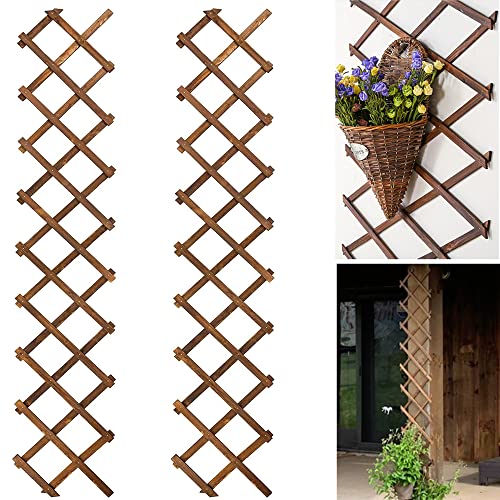
🌲【Natural Wooden Fence】 :Wooden lattice wall planter are perfect for climbing plant and provide them enough places to stretch branches. Besides, they can be used as wall-mounted flower pots shelf, garden fences, and home decorations that can hang family photos or string lights.

Wall mounted matte black metal wire geometric grid lattice garden trellis to support climbing plants and crawling vines with an artistic aesthetic **Some assembly required**

Product Packaging: 1 set of chain trellies for climbing plant (includes 10 black stars, 10 black moons, 20 Metal Spring O Rings Clip, 6 traceless hooks, 6 traceless nails, 6 plastic-coated hooks, and 10 zip ties).
10. Use Native Plants
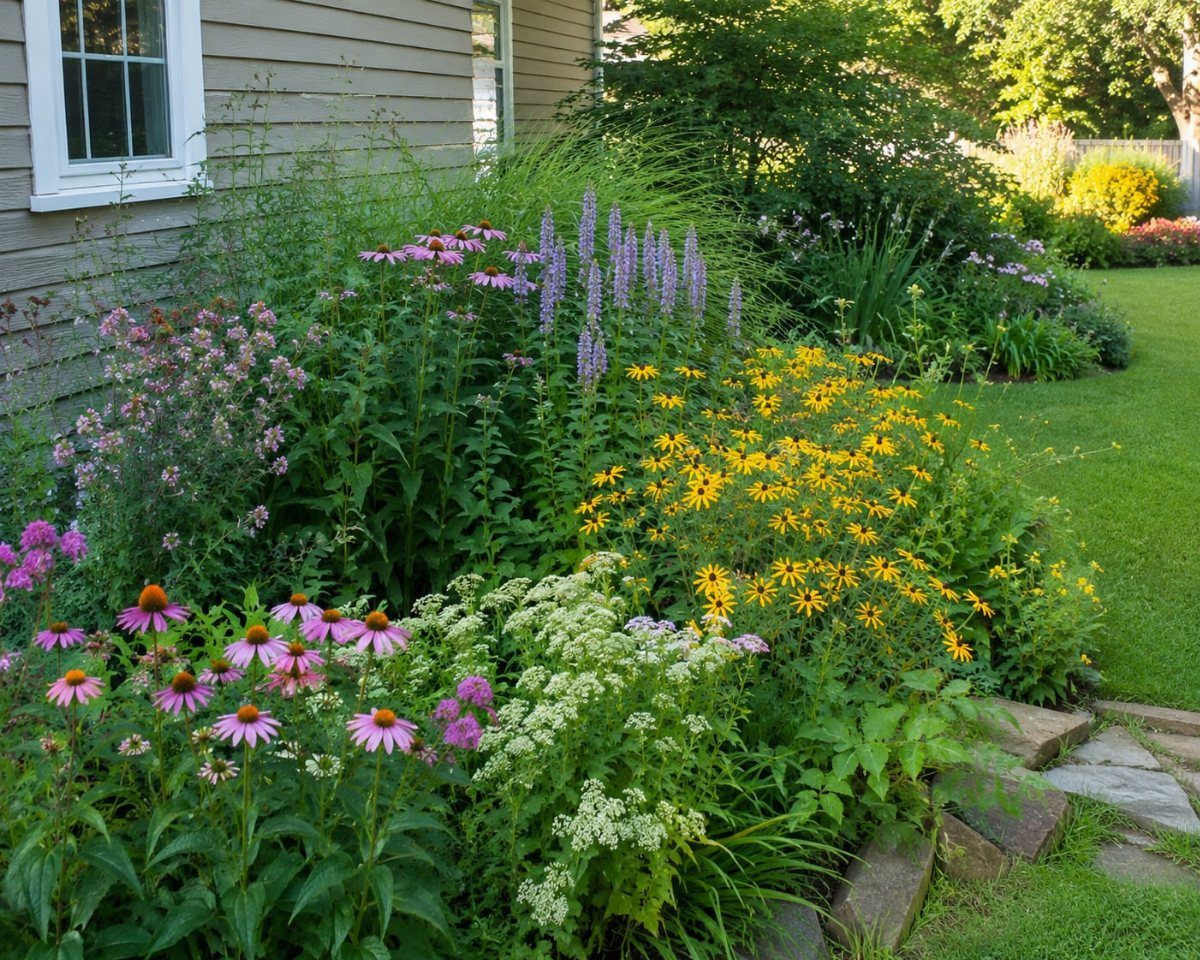
Coneflowers and black-eyed Susans grow here without my input because they evolved for this summer humidity and winter cold; I add non-native lavender sparingly in spots with sharp drainage.
Big-box garden centers push what looks good in bloom that weekend; I read tags for zone and check my state extension list, or I buy annuals that never feel like mine.
A bed of natives fills out slower than fertilizer-pumped hybrids, year one, and I have to resist filling gaps with impulse color.
By year 3 the roots run deep enough to laugh at dry spells, and I am weeding less than my neighbor who replants every May.
I would group by water need, not color blend, or I lose the low-maintenance win to a corner I have to hand-water.

9-inch Standard Size:Each circlular paver measures 9 inches in diameter,,the smooth poslished pebble surface delivers a comfortable barefoot walking experience.

Sturdy Cast Iron Construction: Lawei turtle stepping stone is made of heavy-duty cast iron with genuine verdigris finish, this metal stepping stone withstands all weather extremes—perfect for year-round outdoor use in gardens, lawns and patios without rusting or cracking.

11. DIY Outdoor Bench
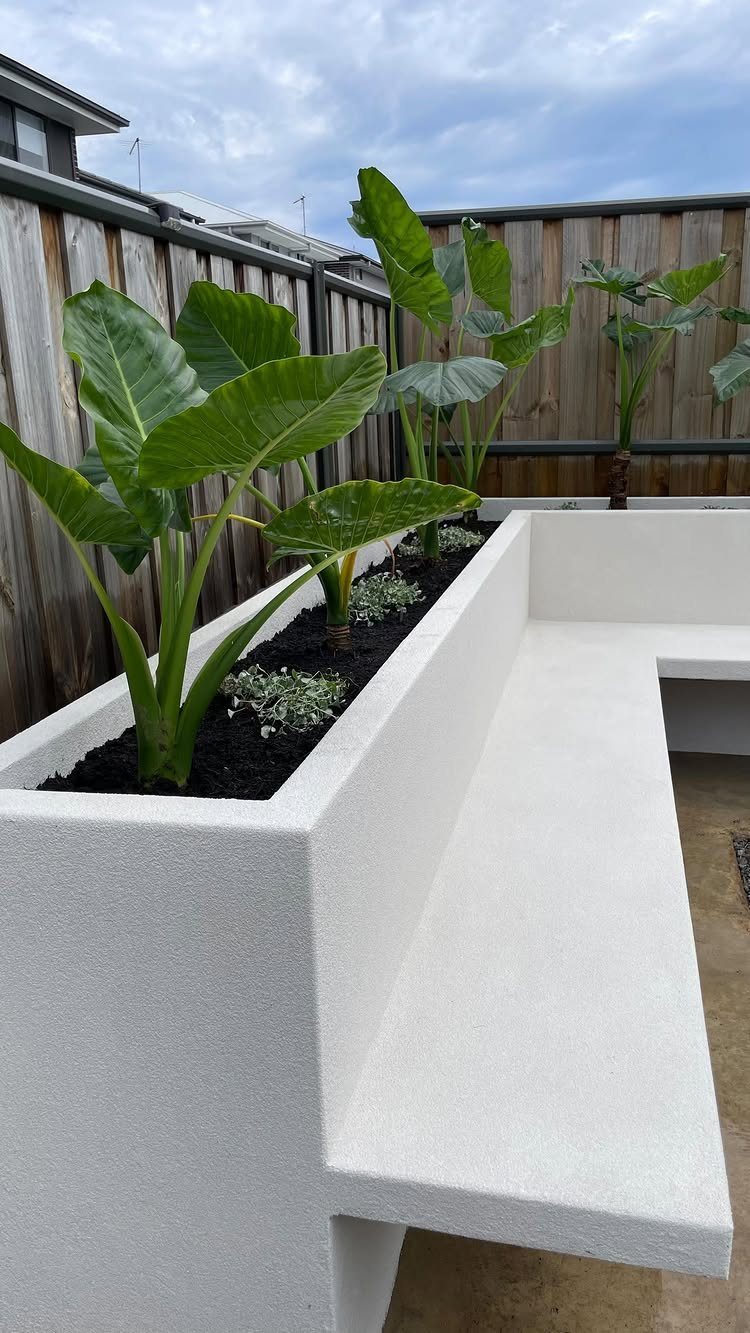
Built-in seating against a planter doubles as wall and saves buying both separately.
Concrete or stucco over block is heavy forever, so I would pour footings below frost line or use steel legs I bolt down; anything less drifts with ground heave and cracks my work.
The planter behind saves space on a narrow lot where a freestanding bench would need clearance I do not have.
I would angle the seat slightly backward for comfort; flat reads modern but I slide forward after a few minutes. Drainage in the planter is non-negotiable, or I grow swamp and smell it every time I sit.
12. Flowering Shrubs
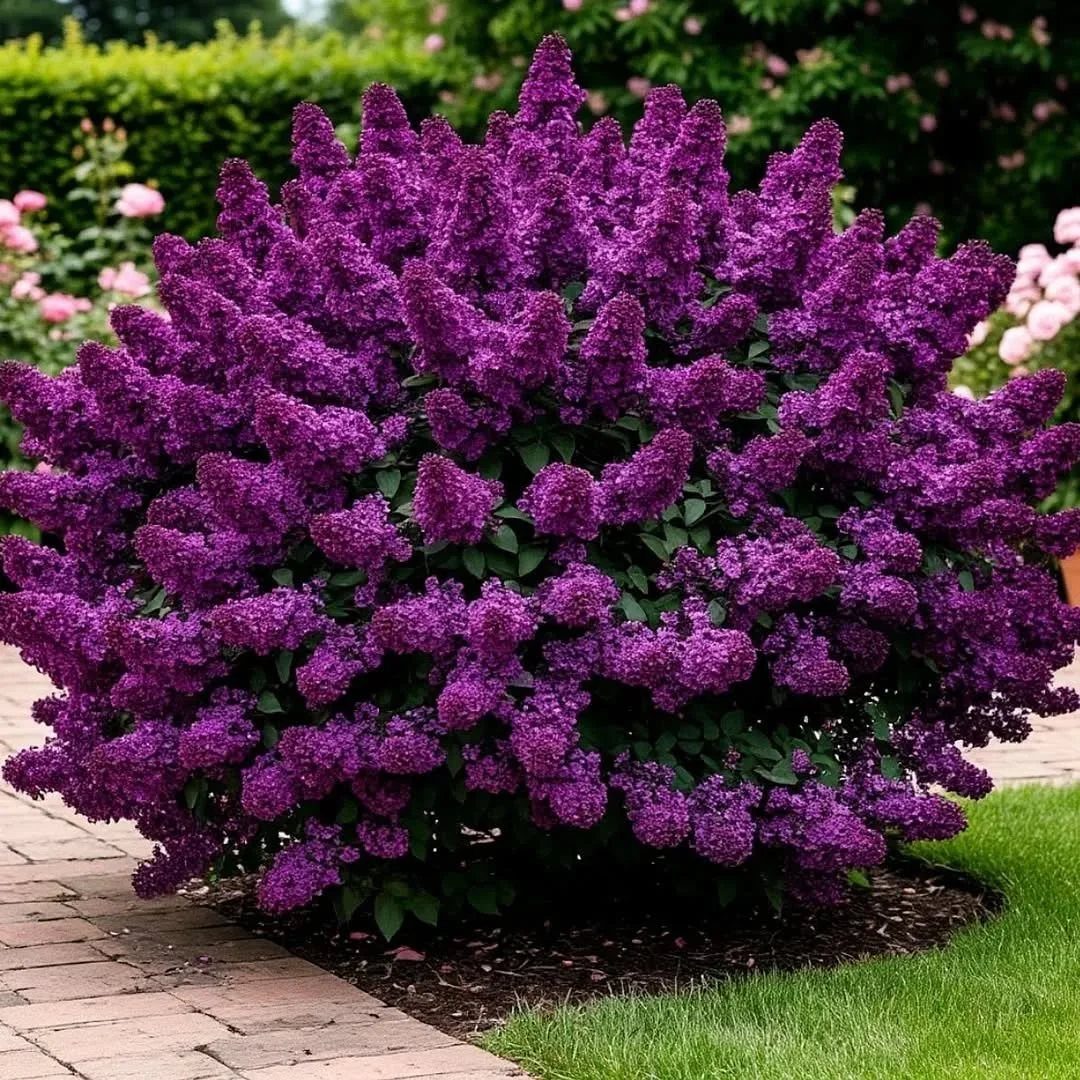
One mature shrub in full bloom carries more garden impact than a dozen scattered perennials, and it stays present the weeks between perennial flushes.
I plant in fall so roots establish through cool rains instead of baking through summer transplant shock.
Size on the tag is mature growth, not what I bring home; I space for maturity or I am pruning into a hedge I did not plan.
Purple varieties against brick warm the color; against painted siding I would check the undertone so it does not read muddy. Mulch keeps the root zone cool and the show going longer than bare soil allows.
13. Fire Pits
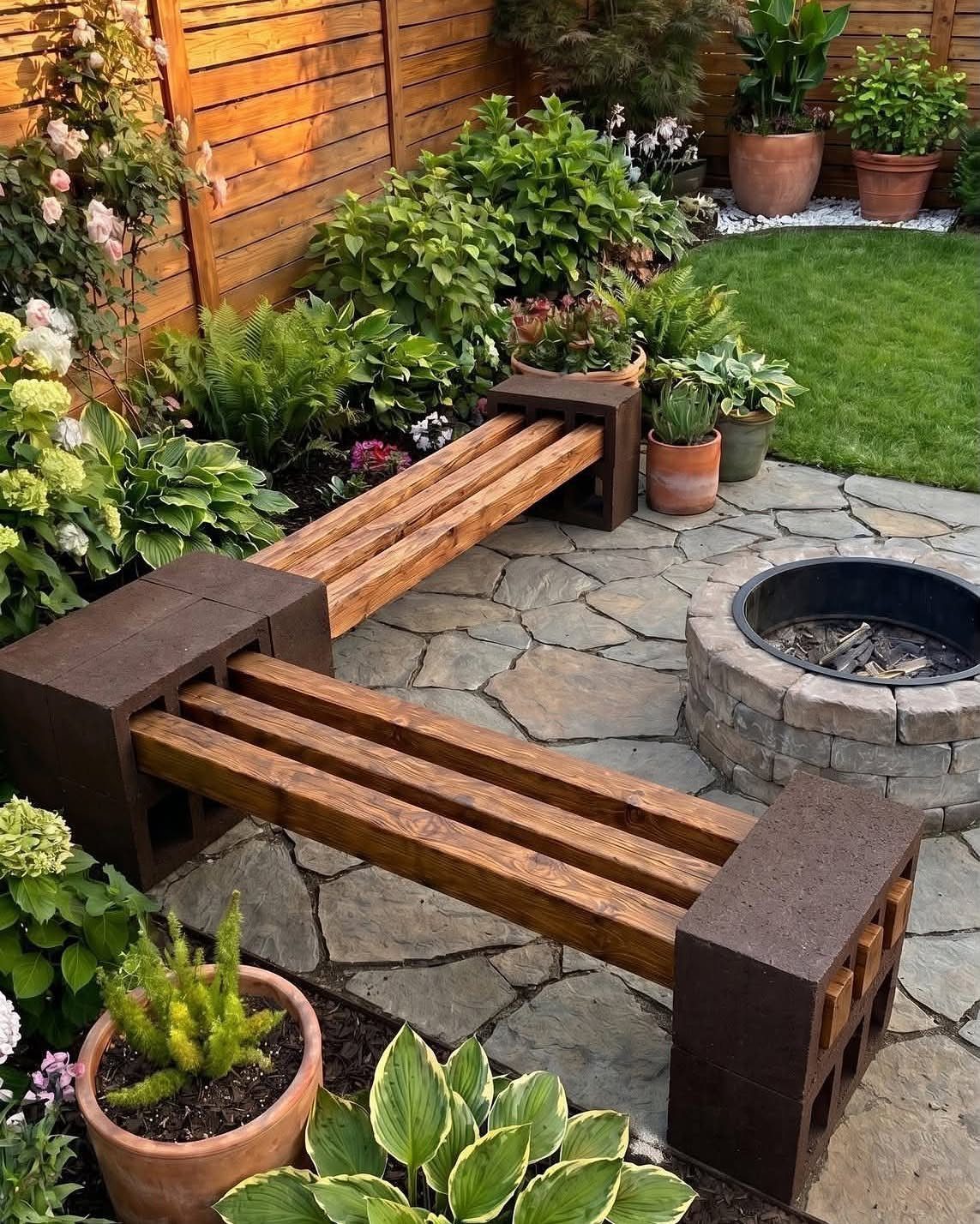
A metal bowl set into stone gives you controlled flame without the masonry skill of a full brick pit.
I would check my local fire code first; many towns require pits to sit a set distance from structures and ban open burn during dry spells.
The visible bench wraps block and timber, which matches the stone surround without matching its cost. I would build on compacted gravel, not bare soil, or the base shifts and the rim goes wobbly in a season.
14. Stone Edging
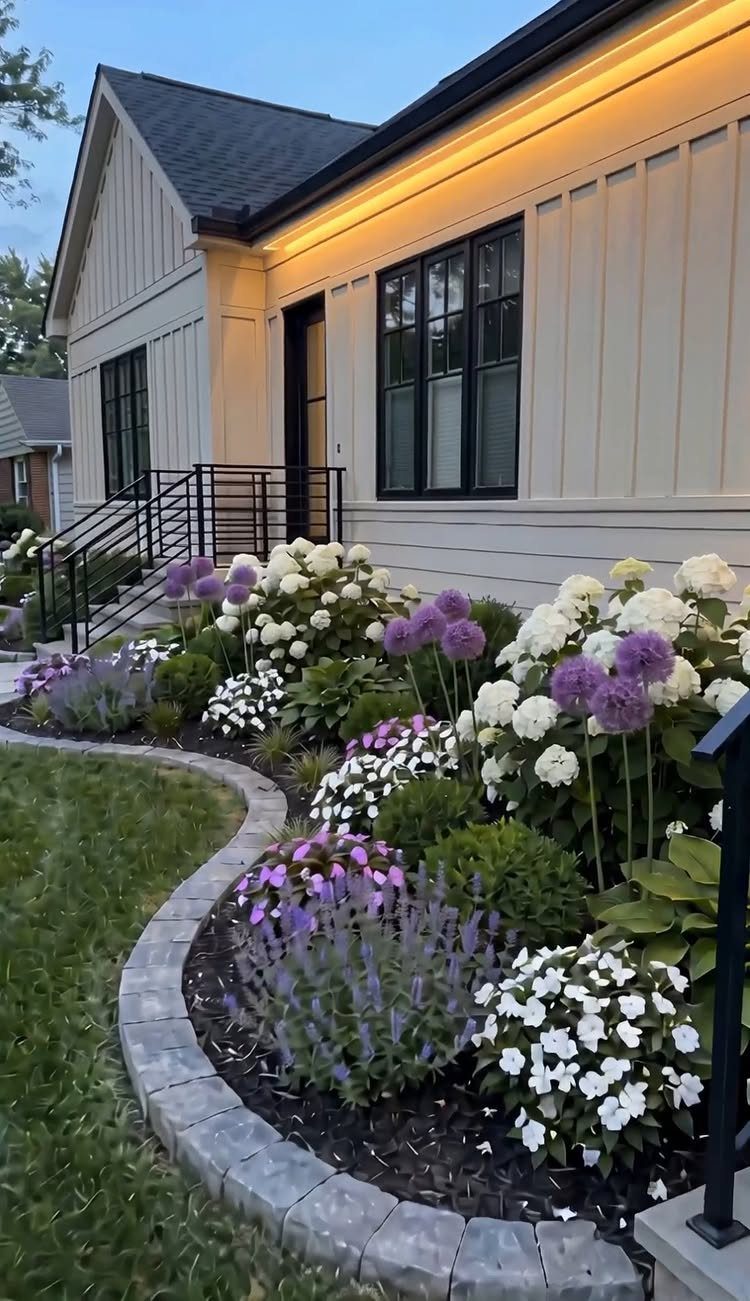
Curved grey block set flush with the lawn lets my mower pass without scalping and holds mulch where I want it.
I would dig a shallow trench, level the first course with sand, and check with a string line so the curve does not wander.
The cost scales with bed length; a front foundation bed like this one runs longer than you might expect, which I can still handle in an afternoon if I stage blocks close.
Hydrangeas behind want moist soil, so the edging doubles as a dam for the water I give them.
15. Tiered Planting Beds
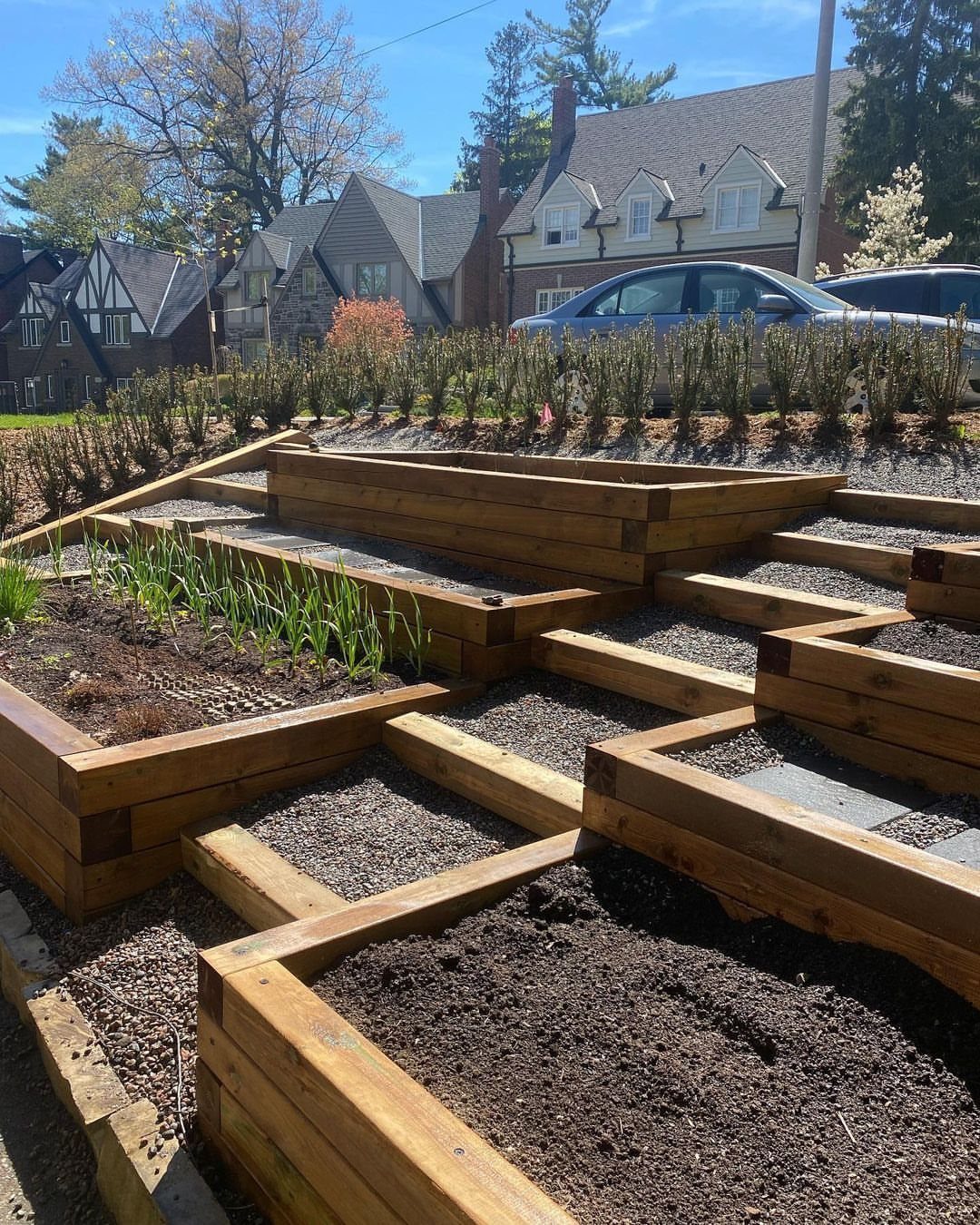
Wooden tiers following a slope turn erosion into planting space and give each level its own drainage.
I would use 2-inch lumber or thicker, held with timber screws I can drive and back out; anything thinner bows under soil weight and wet season swelling.
Gravel between tiers stays cleaner than bare dirt and gives me a place to kneel.
The slope decides the tier height; I would not build wider than I can reach across or I am stepping into beds and compacting what I planted.
16. Beautify a Lonely Mailbox
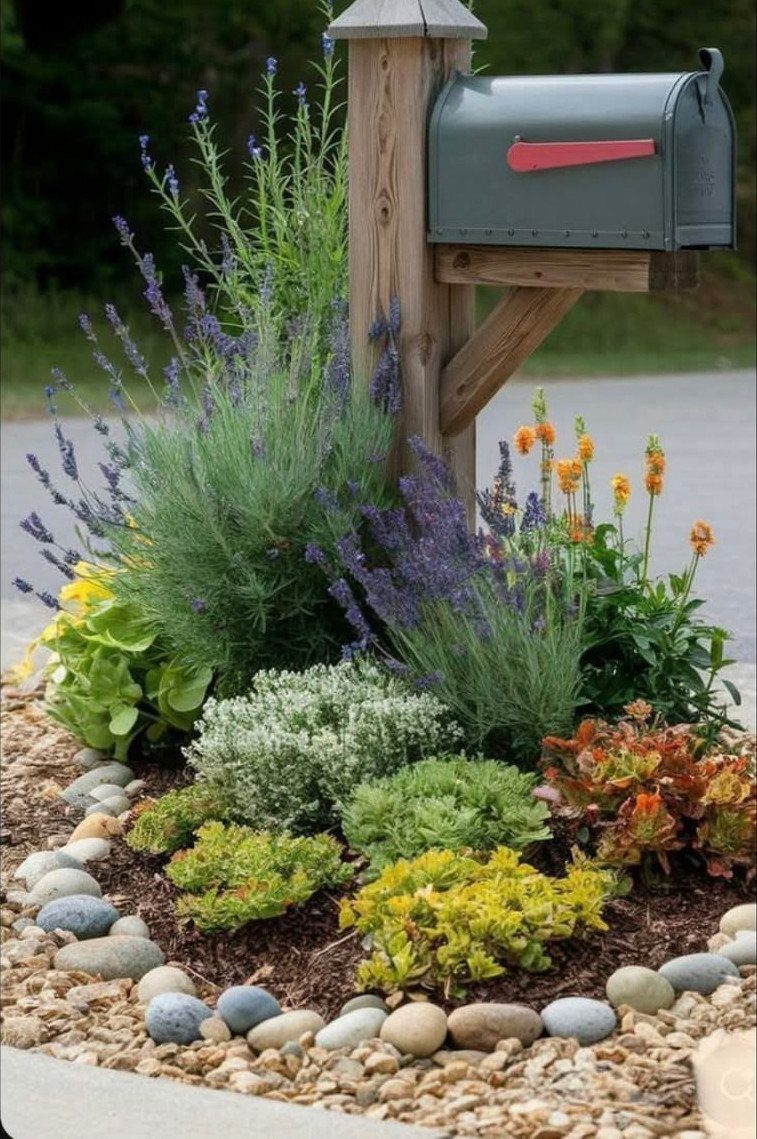
A bed around the post turns a roadside eyesore into a stopping point that slows the eye.
I would keep plantings low enough that a carrier can open the door without brushing stems, and I would avoid anything thorny near the handle.
Stone or block border keeps mulch from washing into the road during hard rain. Lavender and succulents here mean low water once established, which matters at a curb where I may not run a hose.
17. Birdbath
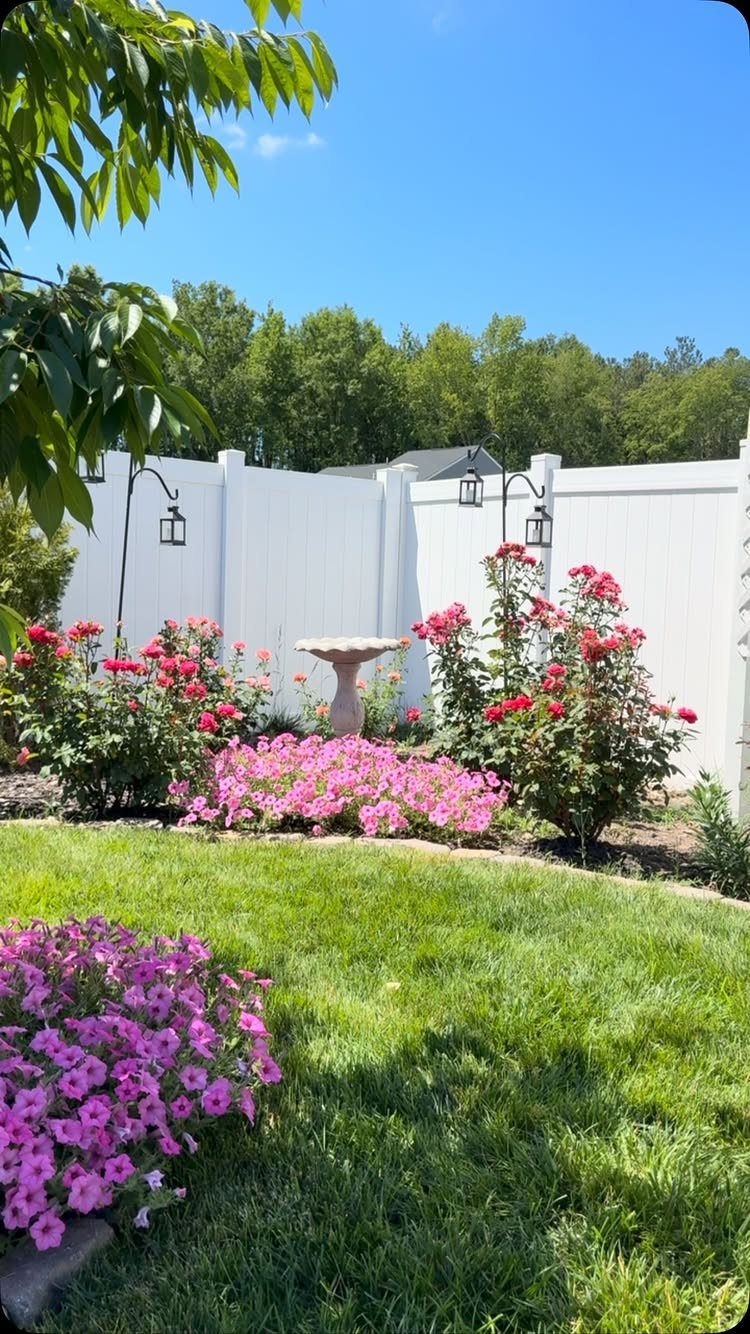
A shallow stone basin centered in a bed gives birds water they can reach from surrounding perches and gives me something to watch from a window.
Depth matters more than diameter; an inch or 2 is plenty, or smaller birds drown and larger ones ignore it.
I would set it on a paver base, not press it into soil, or it tilts the first time something leans. Moving water, even a cheap solar bubbler, cuts mosquito risk more than any chemical I would rather not add.
18. Colorful Containers
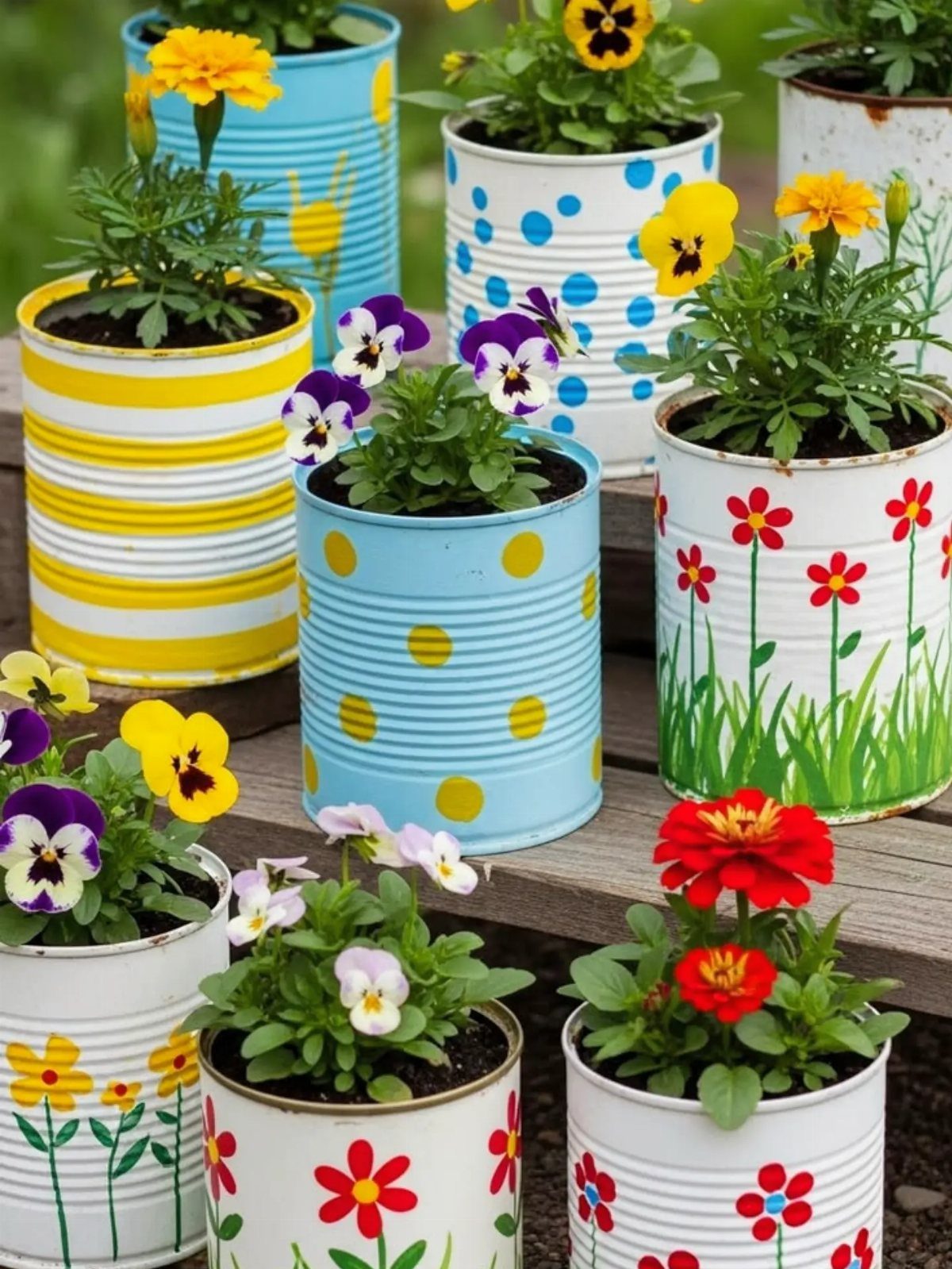
Painted metal cans on steps give me annual color without the commitment of digging bed space. I would punch drainage holes in the base before planting, using a nail and block of wood, or roots rot in days of rain.
The paint here is exterior grade; anything less flakes by August and reads as neglect rather than charm.
I like the scale for steps, where a full pot would crowd the tread, and I would group odd numbers, not pairs, for the rhythm my eye prefers.
19. Install Window Boxes
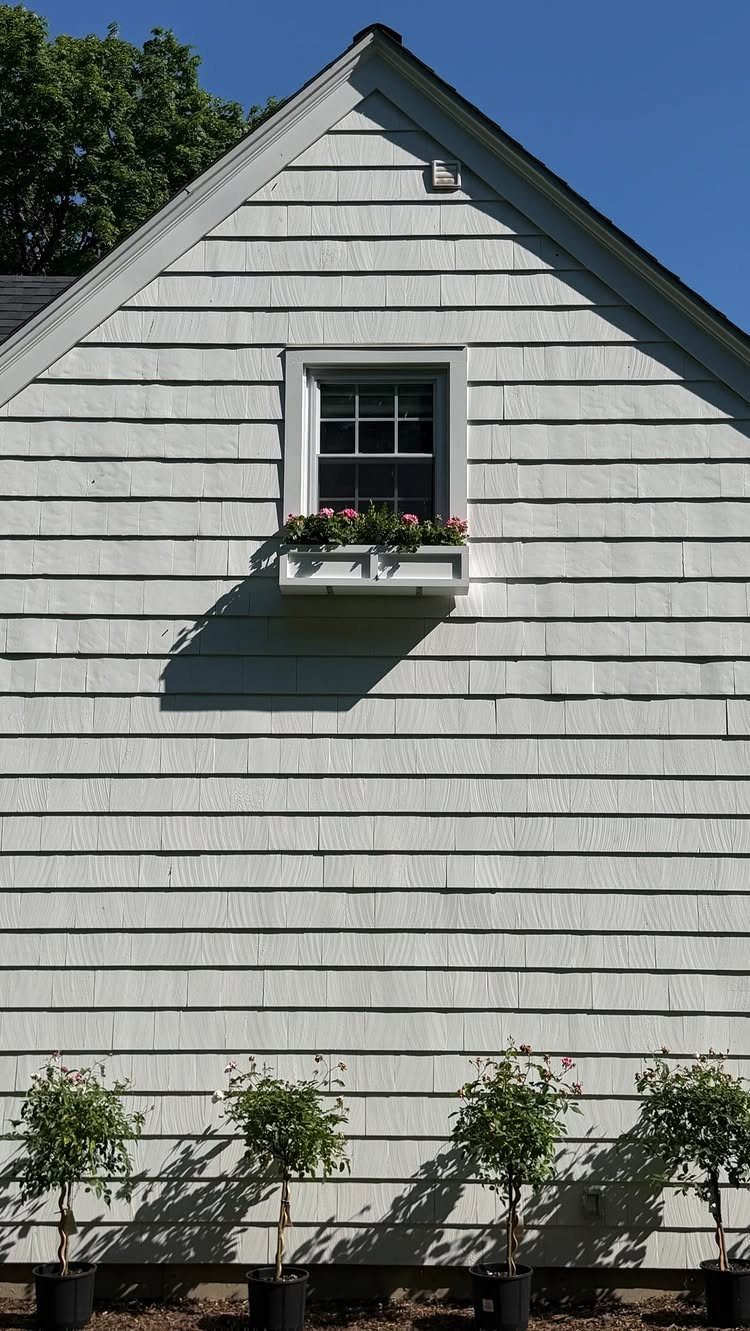
A window box turns any sill into a planting bed where I would not otherwise have soil, and painted white trim against gray shingles works the same way: clean, not competing.
I would size it to the window width, not wider, or it reads as an afterthought bolted on.
Weight is the thing I check first. Soil, water, and cedar boards run 15 pounds per foot or more; I would anchor into framing, not siding alone, or I watch my work pull loose in the first hard rain.
Drainage gaps in the base keep roots from drowning, and I line with plastic to spare the paint from constant wet.
I would plant with the thriller-filler-spiller rule in mind, though scaled tight: something upright at the back, something mounding, something to trail the front edge.
Pink blooms read from the street, and that is the only distance that matters on a second-story install.
Annuals suit me here over perennials; I swap color schemes by season without committing to root systems I cannot easily reach. One long box fills in an hour, fertilizes in minutes, and asks nothing until frost.
Budget Planning for Landscaping
I divide my budget into 3 buckets before I start: plants, materials like soil and mulch, and tools I do not already own.
A running list of local deals stretches the dollar hardest; I watch for nursery clearance racks, curbside giveaways, and neighbor plant swaps. Seasonal sales matter more than brand loyalty.
A plan saves money faster than a coupon. I sketch what I want for each bed and container, then number the spaces so I buy once.
Gravel paths cost less than pavers and I can move them later; I count that as flexibility, not settling. I check my climate zone before I fall for a bloom that quits in August heat.
Landscaping on a budget is entirely achievable with careful planning, creative thinking, and strategic use of resources. By incorporating native plants, utilizing DIY projects, and focusing on cost-effective materials, you can transform your backyard into a beautiful landscape without overspending.
Choosing the Right Plants
I read plant tags for water and sun needs before I buy, even when the flower is perfect that morning.
Mismatched neighbors mean I am pruning one back while the other struggles, or worse, pulling a dead shrub in year two.
Free extension service lists for my state sort what thrives here from what merely survives; I keep the link on my phone.
Year-round interest matters more than peak-week drama.
Maintaining a Budget-friendly Landscape
Hardscaping buys me weekends back.
Stone paths and a gravel sitting area do not wilt, need fertilizer, or invite aphids. I spend the time I save on weeding beds where weeds actually grow, not on edging a lawn line that creeps anyway.
I check irrigation after each freeze and adjust heads before summer stress, not during it.
Plants that fail in my yard get no second try; I note what died and swap in a different genus, not a different color of the same mistake.
Frequently Asked Questions
What is the least expensive way to landscape?
Free chipped hardwood from a local tree service or municipality is hard to beat, and native plants that evolved for your climate keep you from buying replacements every season.
A layer of organic mulch over finished beds holds moisture in and keeps weeds from pushing through, and the same municipal piles that offer free compost often have mulch too.
Nursery clearance racks after holiday weekends, curbside giveaways when someone is redoing their yard, and neighbor plant swaps have all filled spots in my beds without a trip to the garden center.
What are some DIY landscape projects I can do myself?
Raised beds, rock gardens, stone paths, a small bubbling water feature, or a simple bench backed by a planter are all projects I would tackle myself before calling anyone in.
The bench doubles as seating and a retaining wall; raised beds let you control soil without amending what you have.
Start with one project, finish it, then move to the next so you do not have five half-done beds by July.
What are some good landscape ideas for beginners?
Mulch a bed, install a simple window box, or swap in native coneflowers and black-eyed Susans where struggling plants already sit. These do not demand new skills, just the patience to read a tag for sun and zone.
Sketch your space first so you buy once; nothing teaches faster than planting something in the wrong light and watching it fail by August.